


Over 80 percent of all dirt found in American commercial buildings comes from shoes tracking it inside. Understanding how different types of mats and soil patterns impact cleanliness is crucial for facility managers aiming to reduce costly wear and safeguard indoor air quality. This guide outlines proven strategies to help you assess, clean, and maintain every commercial floor mat, ensuring your workplace stays cleaner while extending mat life.
Table of Contents
- Step 1: Assess Mat Types And Identify Soiling
- Step 2: Prepare Equipment And Cleaning Solutions
- Step 3: Remove Loose Dirt And Debris Thoroughly
- Step 4: Apply Deep Cleaning Methods For Stubborn Stains
- Step 5: Rinse, Dry, And Inspect Mats For Readiness
- Step 6: Schedule Regular Maintenance And Record Results
Quick Summary
| Key Message | Explanation |
|---|---|
| 1. Assess Mat Types First | Understanding the types of mats helps select appropriate cleaning methods and solutions for effective maintenance. |
| 2. Prepare Cleaning Tools | Gathering the right equipment and cleaning solutions tailored to mat materials ensures optimal cleaning results. |
| 3. Remove Loose Dirt First | Thoroughly vacuuming mats before deep cleaning prevents soil from embedding further into fibers. |
| 4. Use Appropriate Deep Cleaning | Employing targeted methods like hot water extraction addresses stubborn stains without harming mat integrity. |
| 5. Schedule Regular Maintenance | Documenting and scheduling consistent cleaning helps recognize wear patterns and extend mat lifespan. |
Step 1: Assess Mat Types and Identify Soiling
Successfully cleaning commercial floor mats starts with a strategic assessment of mat types and understanding the specific soiling patterns. Different environments and traffic zones require targeted cleaning approaches based on the materials present and contaminants accumulated.
Mat types range from scraper mats designed for heavy soil removal to fine wiper mats intended for light moisture and debris. Entrance matting programs categorize mats into three distinct cleaning levels: coarse cleaning (aggressive scraper mats), general cleaning (combination wiper and scraper mats), and fine cleaning (delicate wiper mats). By understanding these classifications, facility managers can select appropriate mats and develop precise cleaning protocols.
The next critical step involves identifying soil composition. Commercial environments encounter multiple soil types including water soluble substances like sugars, dry solvent soluble oils and greases, and insoluble particulates such as sand and fibers. Each soil category requires different removal techniques and cleaning solutions. Thoroughly inspecting your mats will help determine the most effective cleaning method and prevent premature wear.
Pro tip: Take periodic photographs of your entrance mats to track soil accumulation patterns and establish a baseline for your cleaning schedule.
Here’s a concise comparison of main floor mat types and their optimal cleaning strategies:
| Mat Type | Ideal Cleaning Method | Typical Soil Types |
|---|---|---|
| Scraper | Aggressive brushing or vacuuming | Mud, grit, heavy soil |
| Wiper-Scraper | Vacuuming plus spot extraction | Moisture, light debris |
| Wiper | Light vacuuming or gentle washing | Dust, moisture, fine debris |
Step 2: Prepare Equipment and Cleaning Solutions
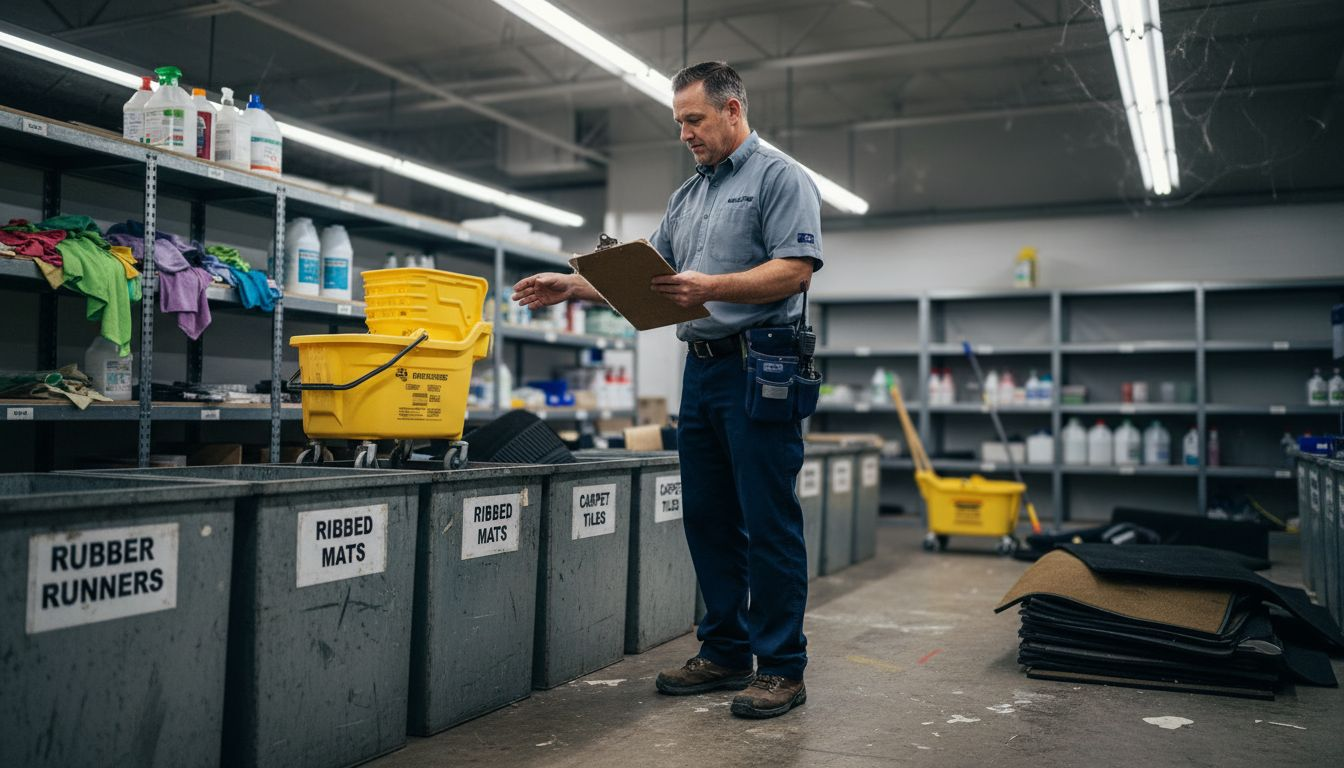
Preparing the right equipment and cleaning solutions is crucial for effective commercial mat cleaning. Your goal is to assemble a comprehensive toolkit that matches the specific requirements of different mat materials and soil types.
Professional cleaning standards recommend selecting equipment and solutions specifically tailored to the mat’s material and soiling conditions. This means gathering essential tools like industrial vacuum cleaners, specialized brushes, microfiber towels, protective gloves, and appropriate cleaning solutions. For different mat materials such as rubber, cotton, or synthetic fibers, you will need varying cleaning agents that protect the mat’s integrity while removing contaminants effectively.
Start by categorizing your mats according to their material composition and anticipated soil levels. Rubber mats might require different cleaning solutions compared to woven fabric mats. Stock up on neutral pH cleaners, spot treatment solutions, and disinfectants appropriate for commercial environments. Ensure your equipment includes both wet and dry cleaning tools like extractors, steam cleaners, and industrial vacuum systems to handle different soiling scenarios.
Pro tip: Always test cleaning solutions on a small inconspicuous mat area first to verify compatibility and prevent potential damage to the entire surface.
Step 3: Remove Loose Dirt and Debris Thoroughly
Removing loose dirt and debris is a critical first step in the commercial mat cleaning process. Your objective is to extract surface contaminants before applying any liquid cleaning solutions to prevent soil from becoming embedded deeper into mat fibers.
Professional carpet maintenance standards emphasize the importance of routine vacuuming to prevent soil buildup and protect mat surfaces. Start by selecting an industrial vacuum with adjustable height settings to accommodate different mat thicknesses. Use slow forward and backward passes to ensure maximum dirt extraction, paying extra attention to high traffic zones where soil accumulates most rapidly. For textured or ribbed mats, consider using vacuum attachments with stiff bristles that can reach into deeper crevices and dislodge trapped particles.
Different mat materials require nuanced approaches. Rubber mats might benefit from initial dry brushing to loosen compacted dirt before vacuuming, while fabric mats need gentler suction to prevent fiber damage. Rotate your cleaning direction periodically to lift dirt from multiple angles and prevent directional matting. Systematic cleaning ensures you cover every section thoroughly without missing critical areas near edges or corners.
Pro tip: Invest in a commercial vacuum with HEPA filtration to capture fine dust particles and improve overall air quality during the cleaning process.
Step 4: Apply Deep Cleaning Methods for Stubborn Stains
Deep cleaning stubborn stains requires a strategic approach tailored to specific mat materials and soil types. Your primary goal is to remove embedded contaminants without causing damage to the mat’s fibers or structural integrity.
Professional carpet cleaning research highlights multiple deep cleaning techniques designed to address challenging stains effectively. Hot water extraction stands out as a premier method for commercial mats. This technique uses high temperature water and specialized cleaning solutions to break down tough stains and extract deeply embedded dirt. Begin by selecting cleaning agents compatible with your specific mat material. For synthetic mats, use more aggressive solutions. For natural fiber mats like wool or cotton, choose gentler cleaning agents that preserve fiber structure.
Implement a systematic stain removal approach by first identifying the stain type organic oil based or water soluble and selecting corresponding treatment solutions. Blot stains rather than rubbing to prevent spreading and fiber damage. Apply cleaning solutions sparingly and work from the stain edges toward the center to contain the affected area. For persistent stains consider using specialized spot treatment tools and techniques that provide targeted cleaning without compromising mat quality.
Pro tip: Always perform a spot test on an inconspicuous mat area to verify cleaning solution effectiveness and prevent potential color bleeding or material damage.
This table summarizes deep cleaning methods and their unique benefits for different mat materials:
| Deep Cleaning Method | Suitable Mat Materials | Main Benefit |
|---|---|---|
| Hot Water Extraction | Synthetic, mixed fibers | Deep dirt and stain removal |
| Low-Moisture System | Natural fibers, delicate mats | Faster drying, less risk |
| Spot Treatment | All mat types | Targets localized stains |
Step 5: Rinse, Dry, and Inspect Mats for Readiness
The final stage of commercial mat cleaning involves thorough rinsing, complete drying, and comprehensive inspection to ensure optimal performance and longevity. Your goal is to remove all cleaning solution residues and prepare the mats for immediate redeployment in high traffic areas.
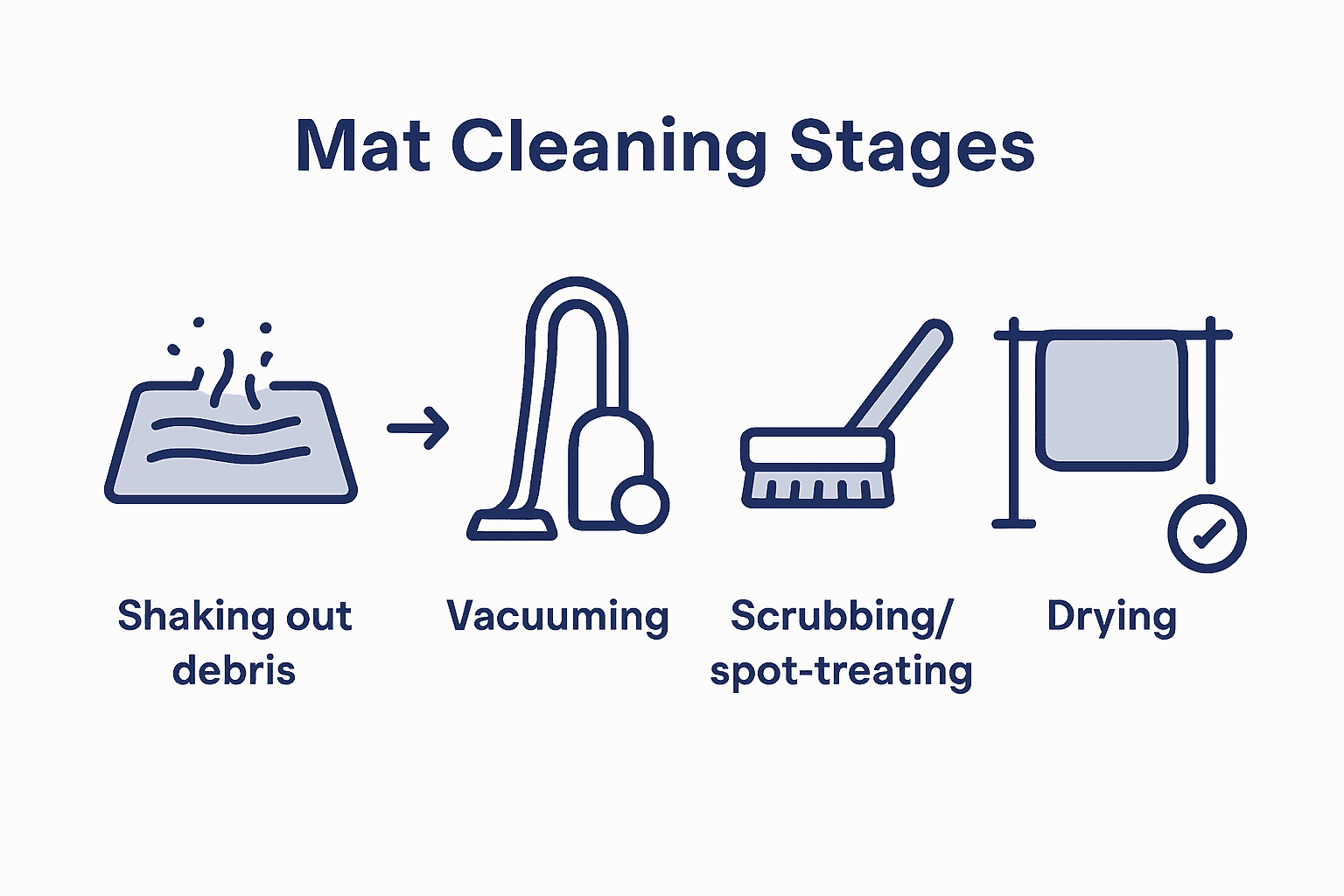
Comprehensive cleaning standards emphasize the critical importance of proper post cleaning processes to prevent moisture related damage and maintain mat integrity. Begin by thoroughly rinsing mats with clean water to eliminate any remaining cleaning solutions. Use low pressure water streams that prevent fiber damage while effectively flushing out chemical residues. Depending on mat material select appropriate drying methods some synthetic materials can tolerate higher temperatures while natural fiber mats require gentler air drying techniques.
Inspect each mat meticulously after cleaning. Check for any remaining stains signs of fiber damage or structural weaknesses. Look closely at mat edges seams and high wear areas. Ensure the mat is completely dry before returning it to service moisture trapped within fibers can lead to mold growth and unpleasant odors. Utilize industrial fans or designated drying areas with good air circulation to expedite the drying process. For mats in critical environments like healthcare or food service additional sanitization steps might be necessary.
Pro tip: Maintain a cleaning log that records each mats cleaning date material type and any specific treatment applied to track long term maintenance and identify potential replacement needs.
Step 6: Schedule Regular Maintenance and Record Results
Developing a systematic approach to commercial mat maintenance ensures consistent cleanliness and extends the lifespan of your floor coverings. Your ultimate goal is to create a proactive maintenance strategy that prevents excessive wear and tracks mat performance over time.
Professional maintenance standards recommend establishing a comprehensive documentation system for tracking cleaning intervals and mat condition. Begin by creating a standardized maintenance log that captures critical information for each mat including cleaning dates material type location wear patterns and specific treatment methods. Consider developing a color coded or digital tracking system that allows quick visual assessment of each mats maintenance history. Different areas within your facility might require varying cleaning frequencies based on traffic patterns so customize your schedule to match specific environmental demands.
Implement a tiered maintenance approach that includes daily spot cleaning weekly thorough cleaning and quarterly deep cleaning protocols. Assign specific team members responsible for each maintenance task and establish clear accountability measures. Use digital tools or specialized software to automate maintenance reminders and track cleaning performance metrics. Regular documentation helps identify potential issues early detect emerging wear patterns and make informed decisions about mat replacement or repair.
Pro tip: Create a digital spreadsheet or use maintenance management software that allows real time tracking and generates automatic maintenance reports to streamline your record keeping process.
Enhance Your Commercial Mat Cleaning with Durable Solutions from Mats4U
Maintaining clean and effective floor mats is essential to preserving the appearance and safety of your business space. The challenges detailed in the commercial mat cleaning guide show how diverse mat types and heavy soiling require tailored cleaning methods and durable materials that withstand frequent maintenance. Whether you are managing scraper, wiper-scraper, or wiper mats, having the right commercial mats is key to reducing stubborn stains and soil buildup.
Discover a wide selection of premium Commercial Mats designed for high-traffic environments. Our mats combine durability with easy maintenance to support your cleaning protocols and extend mat life against tough contaminants. To complement your cleaning regimen, explore our Indoor Mats and necessary Accessories to optimize mat performance every day. Take control of your floor mat care now by visiting Mats4U.com and find the perfect solution that matches your facility’s needs while benefiting from competitive pricing and free delivery over $100.
Frequently Asked Questions
What types of mats should I consider for commercial spaces?
To effectively clean commercial mats, consider the different types such as scraper mats for heavy soil, wiper-scraper mats for general cleaning, and fine wiper mats for light moisture. Assess the specific needs of your facility and traffic patterns to select the appropriate mat types.
How can I prepare the right cleaning solutions for different mat materials?
Prepare by categorizing your mats according to their material, such as rubber, cotton, or synthetic fibers. Gather cleaning solutions that are specifically formulated for each type, ensuring they are compatible with the material and effective against the expected soil types.
What is the best method to remove loose dirt from commercial mats before deep cleaning?
Start by using an industrial vacuum cleaner with adjustable height settings to remove loose dirt and debris thoroughly. Make sure to vacuum high traffic areas slowly to capture maximum dirt, and consider using attachments suitable for textured mats to better dislodge trapped particles.
How often should I schedule deep cleaning for commercial mats?
Establish a regular cleaning schedule that includes deep cleaning at least quarterly, along with more frequent spot cleaning and thorough cleaning every week. Adjust the frequency based on traffic levels in different areas to maintain a consistent appearance and prolong mat life.
What should I inspect after cleaning mats to ensure they are ready for use?
After cleaning, inspect each mat carefully for any remaining stains, signs of damage, or excessive wear, especially at the edges and seams. Ensure mats are completely dry before placing them back into service to prevent mold growth and unpleasant odors.
How can I track the maintenance history of my commercial mats?
Create a standardized maintenance log that includes cleaning dates, material types, and specific treatments for each mat. Utilize a digital tracking system to monitor and visualize maintenance history, enabling you to identify potential replacement needs and adapt cleaning protocols as necessary.


