


Selecting long-lasting floor tiles for busy commercial spaces poses a real challenge for American facility managers. Every decision can impact worker safety and future maintenance expenses. With so many flooring options claiming durability, understanding the science behind high traffic floor tiles and industry standards is key. This guide cuts through the confusion, clarifying common misconceptions and helping you identify tile solutions that protect your facility, your staff, and your bottom line.
Table of Contents
- Defining High Traffic Floor Tiles And Misconceptions
- Leading Materials And Tile Varieties Explained
- Durability, Safety Ratings, And Performance Features
- Maintenance Needs And Long-Term Costs
- Comparing Tile To Alternative Commercial Flooring
- Mistakes Facility Managers Should Avoid
Key Takeaways
| Point | Details |
|---|---|
| Durability Matters | High traffic floor tiles must meet stringent standards for wear resistance, compressive strength, and slip resistance to ensure safety and longevity in commercial settings. |
| Material Selection is Critical | Different tile materials have unique strengths; choosing the right one based on the environment and expected traffic is essential for performance. |
| Proactive Maintenance is Key | Implementing a systematic maintenance schedule can significantly reduce long-term costs and extend the lifespan of high traffic floor tiles. |
| Avoid Common Mistakes | Facility managers should regularly inspect floors and document maintenance history to prevent costly reactive repairs and ensure safety compliance. |
Defining High Traffic Floor Tiles and Misconceptions
In commercial and industrial environments, not all floor tiles are created equal. High traffic floor tiles represent a specialized category of flooring designed to withstand constant use, heavy loads, and repetitive stress without compromising performance or safety. Ceramic tile standards play a critical role in defining what qualifies as a truly durable floor solution.
High traffic floor tiles are characterized by several key attributes that distinguish them from standard residential or light-use tiles:
- Exceptional wear resistance
- Higher compressive strength
- Improved surface hardness
- Enhanced slip resistance
- Greater dimensional stability
Misconceptions about high traffic floor tiles often stem from a lack of understanding about their technical specifications and performance requirements. Many facility managers mistakenly believe that all ceramic or porcelain tiles can handle heavy commercial use, which is fundamentally incorrect.
Not every tile is engineered to withstand continuous industrial or commercial traffic patterns.
The American National Standards Institute (ANSI) provides crucial guidelines for determining tile suitability. According to their specifications, high traffic floor tiles must meet rigorous criteria beyond basic aesthetic considerations. Floor surface testing methods evaluate critical performance indicators like flatness, levelness, and wear resistance.
Key misconceptions about high traffic floor tiles include:
- Assuming all tiles have equal durability
- Believing aesthetic appearance equals performance
- Overlooking critical technical specifications
- Neglecting proper installation requirements
Pro tip: Always request detailed technical specifications and independent testing results before selecting floor tiles for high traffic commercial environments.
Leading Materials and Tile Varieties Explained
Commercial and industrial environments demand specialized floor tile materials that can withstand extreme conditions and heavy traffic. Tile installation standards provide critical guidance for selecting the most appropriate materials for different high-traffic applications.
Several primary tile materials dominate the high-traffic flooring landscape:
- Ceramic tiles: Durable and versatile
- Porcelain tiles: Extremely dense and wear-resistant
- Vinyl composition tiles: Cost-effective and resilient
- Linoleum tiles: Sustainable and antimicrobial
- Natural stone tiles: Premium and aesthetically sophisticated
Each material offers unique performance characteristics that make it suitable for specific commercial environments. Porcelain tiles, for instance, provide exceptional hardness and minimal water absorption, making them ideal for areas with consistent heavy foot traffic and potential moisture exposure.
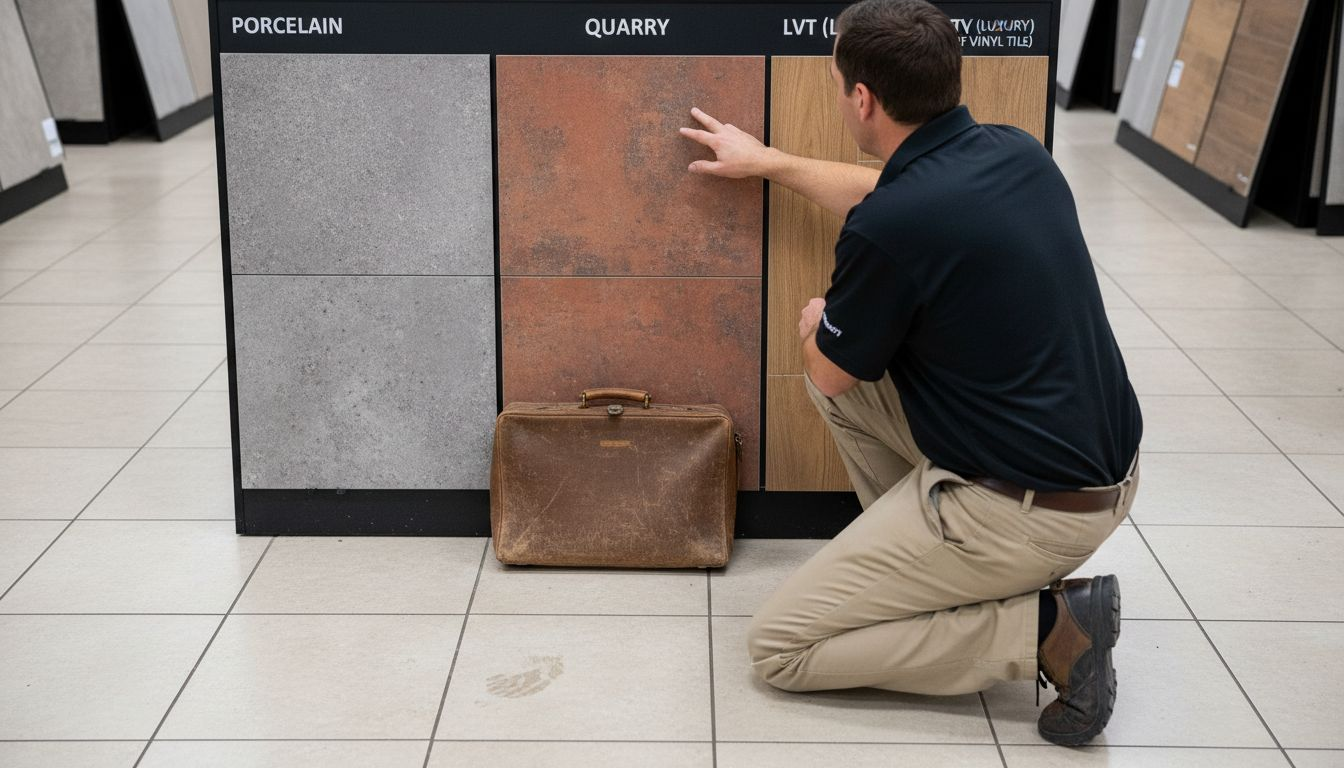
Here’s a side-by-side comparison of popular high-traffic floor tile materials and their unique strengths:
| Material Type | Notable Strength | Ideal Environment |
|---|---|---|
| Porcelain Tile | Exceptional hardness | Airports, malls, transit stations |
| Vinyl Composition | Cost-effective upkeep | Schools, hospitals, retail stores |
| Ceramic Tile | Versatile design | Restaurants, offices, lobbies |
| Natural Stone | Luxurious appearance | Hotels, upscale commercial spaces |
| Linoleum | Antimicrobial surface | Healthcare, labs, daycare centers |
Not all high-traffic tiles are created equal - material selection matters critically.
Resilient flooring standards help facility managers understand the critical properties that differentiate tile materials. Key evaluation metrics include:
- Abrasion resistance
- Impact tolerance
- Flexibility under stress
- Maintenance requirements
- Installation complexity
The selection process requires careful consideration of environmental conditions, expected traffic patterns, maintenance capabilities, and budget constraints. Vinyl composition tiles might work perfectly in one setting, while porcelain could be the superior choice in another.
Pro tip: Request material performance test data and independent certification before making final tile selections for commercial spaces.
Durability, Safety Ratings, and Performance Features
Commercial floor tiles undergo rigorous testing to ensure they can withstand extreme conditions and maintain safety standards. Resilient flooring standards provide comprehensive guidelines for evaluating tile performance across multiple critical dimensions.
Key performance metrics for high-traffic floor tiles include:
- Abrasion resistance
- Breaking strength
- Slip resistance
- Impact tolerance
- Thermal shock durability
Safety ratings represent more than just a theoretical measurement. They directly translate to workplace protection, employee well-being, and long-term facility maintenance costs. Ceramic tile testing standards outline precise methodologies for assessing these critical performance indicators.
Performance standards aren’t optional - they’re fundamental to workplace safety and operational efficiency.
Durability testing evaluates multiple critical factors that impact long-term tile performance:
- Surface wear under continuous stress
- Resistance to chemical interactions
- Structural integrity under heavy loads
- Color and finish stability
- Moisture and temperature resilience
Facility managers must look beyond aesthetic considerations and prioritize scientifically validated performance metrics. The most expensive tile isn’t necessarily the most durable, and the cheapest option can become a costly mistake when replacement and maintenance costs are considered.
Pro tip: Request comprehensive performance test documentation that includes independent third-party certification before making final tile selections.
Maintenance Needs and Long-Term Costs
Facility maintenance protocols represent a critical investment strategy for commercial floor tile management. Understanding the nuanced relationship between routine maintenance and total lifecycle expenses can help facility managers dramatically reduce long-term operational costs.
Key maintenance considerations for high-traffic floor tiles include:
- Regular visual inspections
- Prompt damage repair
- Consistent cleaning protocols
- Protective surface treatments
- Professional periodic assessments
Proactive maintenance transforms floor tiles from a potential liability into a strategic asset. By implementing systematic care protocols, organizations can extend tile lifespan, minimize replacement frequency, and maintain optimal safety standards.
Preventive maintenance is significantly less expensive than reactive replacement.
Pavement maintenance strategies reveal that comprehensive care involves more than surface-level cleaning. Critical long-term cost reduction tactics include:
- Implementing daily cleaning routines
- Addressing minor damages immediately
- Using appropriate cleaning technologies
- Training staff on proper maintenance techniques
- Scheduling professional deep cleaning annually
The financial implications of maintenance extend far beyond immediate expenses. A tile that costs 20% more initially but requires 50% less maintenance over its lifetime represents a superior long-term investment. Facility managers must evaluate total cost of ownership, not just upfront price.
The table below outlines the impact of proactive vs. reactive maintenance strategies on commercial flooring costs and longevity:
| Approach | Long-Term Cost | Floor Longevity | Risk of Downtime |
|---|---|---|---|
| Proactive | Lower overall | Extended lifespan | Rarely occurs |
| Reactive | Higher over time | Frequent replacements | Increased safety hazards |
Pro tip: Develop a comprehensive maintenance log that tracks every intervention, repair, and cleaning to identify patterns and optimize future maintenance strategies.
Comparing Tile to Alternative Commercial Flooring
Green flooring alternatives offer facility managers diverse options beyond traditional ceramic tiles, each with unique performance characteristics. Understanding the nuanced differences between flooring materials can significantly impact long-term operational efficiency and cost management.
Key commercial flooring alternatives include:
- Linoleum: Sustainable and antimicrobial
- Cork: Natural sound absorption
- Natural rubber: Excellent shock absorption
- Vinyl: Cost-effective and versatile
- Engineered wood: Aesthetic with moderate durability
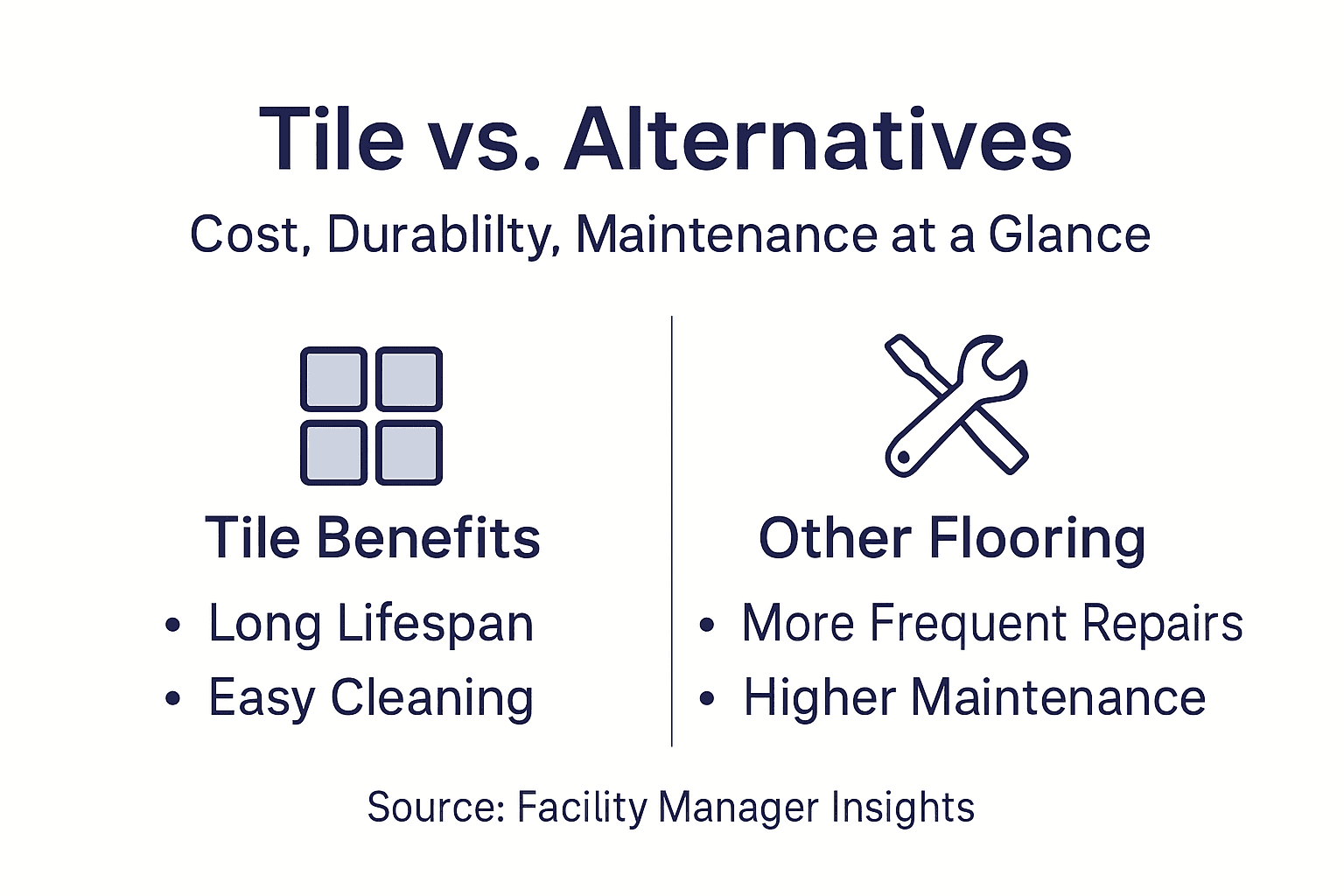
Ceramic tiles remain a benchmark for high-traffic environments due to their exceptional durability and low maintenance requirements. Commercial flooring comparisons reveal that while alternatives exist, tiles often outperform in critical metrics like wear resistance and lifecycle cost.
Not all flooring materials are created equal - context determines optimal selection.
Comparative advantages of different flooring types depend on specific environmental demands:
- Traffic volume
- Moisture exposure
- Impact resistance requirements
- Budget constraints
- Aesthetic preferences
Each flooring type presents unique trade-offs between initial investment, maintenance complexity, and long-term performance. Vinyl might offer lower upfront costs, while ceramic tiles provide superior longevity and resilience in demanding commercial settings.
Pro tip: Conduct a comprehensive cost-of-ownership analysis that considers installation, maintenance, replacement frequency, and performance degradation before selecting commercial flooring.
Mistakes Facility Managers Should Avoid
Walking surface safety regulations reveal critical pitfalls that facility managers must carefully navigate when managing high-traffic floor environments. Understanding and avoiding these common mistakes can significantly reduce operational risks and potential financial liabilities.
Key mistakes facility managers frequently encounter include:
- Neglecting routine floor surface inspections
- Ignoring minor damage and wear signs
- Using inappropriate cleaning techniques
- Failing to document maintenance history
- Overlooking slip and fall prevention strategies
Reactive maintenance represents one of the most expensive approaches to facility management. Instead of addressing potential issues proactively, managers who wait for complete system failure often face exponentially higher repair and replacement costs.
Prevention is always more cost-effective than emergency intervention.
Facility management best practices highlight several critical areas where managers commonly make significant errors:
- Underestimating total cost of ownership
- Avoiding comprehensive performance data tracking
- Implementing inconsistent maintenance protocols
- Neglecting staff training on proper floor care
- Postponing necessary repairs or replacements
Each mistake represents a potential pathway to increased operational expenses, safety risks, and reduced facility performance. Successful facility managers must develop a systematic, data-driven approach that anticipates and mitigates potential issues before they escalate.
Pro tip: Develop a comprehensive digital tracking system that logs every floor maintenance activity, repair, and performance metric to enable predictive and preventative management strategies.
Enhance Safety and Cut Costs with the Right Floor Solutions
Managing high traffic floor tiles comes with challenges like durability, safety, and long-term maintenance costs. This article highlights the importance of choosing materials that meet rigorous performance and safety standards to reduce risks and avoid costly replacements. Facility managers striving to protect their workplace and budget must prioritize abrasion resistance, slip prevention, and proactive maintenance.
At Mats4U.com, we understand these critical pain points. Our wide selection of Waterhog Tiles and Indoor Mats is expertly designed to provide commercial spaces with durable, slip-resistant products made in the USA. These mats support high-traffic environments by improving safety while reducing wear on floors and helping you save on costly repairs. Explore our collection today to find the ideal floor protection solution that aligns with the performance standards emphasized in this article.
Don’t wait until small problems become expensive liabilities. Visit Mats4U.com now to secure flooring products that enhance safety, increase durability, and empower you to manage maintenance costs effectively.
Frequently Asked Questions
What are high traffic floor tiles?
High traffic floor tiles are specially designed flooring solutions engineered to withstand constant use, heavy loads, and repetitive stress in commercial and industrial environments without compromising performance or safety.
How do I determine if a tile is suitable for high traffic areas?
To determine tile suitability, refer to guidelines from the American National Standards Institute (ANSI) which specify performance criteria including wear resistance, compressive strength, and slip resistance.
What are the key attributes to look for in high traffic floor tiles?
Key attributes include exceptional wear resistance, higher compressive strength, improved surface hardness, enhanced slip resistance, and greater dimensional stability, which are essential for durability in high-traffic environments.
What maintenance is required for high traffic floor tiles to extend their lifespan?
Regular maintenance includes visual inspections, prompt damage repairs, consistent cleaning protocols, protective surface treatments, and annual professional assessments to ensure the tiles remain in optimal condition.
Recommended
- The Actionable Guide to the Best Flooring for High Traffic Areas – Mats4U USA
- 8 Best Mats for High Traffic: Keep Your Business Safe – Mats4U USA
- Best High Traffic Area Flooring Solutions for Businesses – Mats4U USA
- Heavy Duty Floor Protection: A Practical Guide to Safe, Durable Floori – Mats4U USA
- Golf Cart Floor Mats: Protecting Your Ride — GOLFCARTSTUFF.COM™


