


TL;DR:
- Proper floor mat maintenance involves using specialized cleaners, protectants, and tools to ensure safety and hygiene. Regular cleaning, rinsing, and scheduled rotation prevent bacterial buildup, slip hazards, and premature degradation. Choosing the right products and protocols based on mat material and environment extends mat lifespan and reduces liability risks.
Cleaning supplies for floor mats are specialized products formulated to remove embedded dirt, bacteria, and grime from rubber, vinyl, and carpeted mat surfaces without leaving hazardous residue. Facility managers and business owners in high-traffic environments need more than a mop and bucket. The right floor mat maintenance supplies determine whether your mats stay hygienic, non-slip, and structurally sound for years or become a liability within months. Products like Mat ReNew, Simple Green, and Adam’s Polishes Rubber Mat Cleaner each serve distinct purposes, and selecting the wrong one creates safety risks that no amount of elbow grease will fix.
What cleaning supplies are essential for floor mat maintenance?
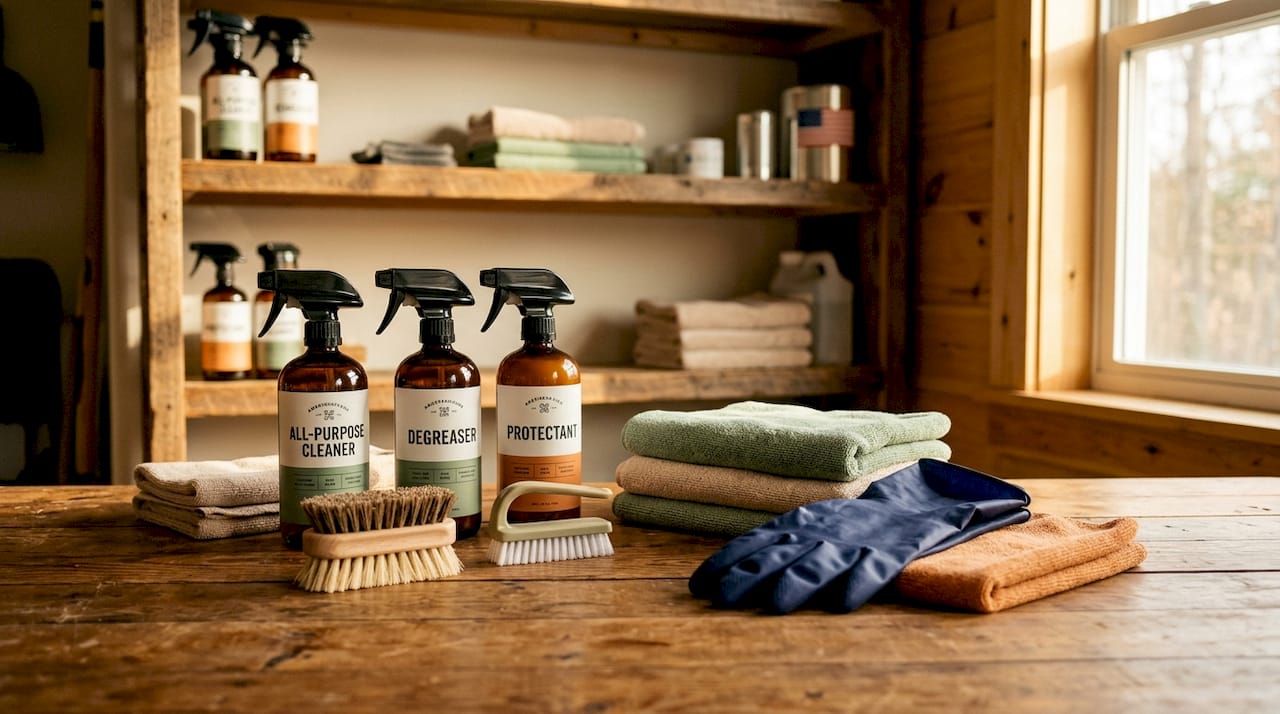
The core category of cleaning supplies for floor mats breaks into three functional groups: all-purpose cleaners, degreasers, and mat-specific protectants. Each group targets a different layer of contamination, and using only one type leaves gaps in your maintenance program.
All-purpose cleaners like Simple Green handle routine surface dirt and light organic buildup. Degreasers are necessary in industrial or food-service environments where oil, grease, or chemical residue penetrates mat fibers or rubber backing. Mat-specific protectants, such as Mat ReNew rubber and vinyl cleaner, restore color and surface integrity without leaving a glossy or slick finish that creates slip hazards.
Tools matter as much as chemistry. Stiff-bristle brushes and micro scrub brushes agitate grime from crevices without tearing rubber or vinyl surfaces. Microfiber towels handle final drying and protectant application. For high-volume facilities, a pressure washer is the most efficient tool for removing heavy salt and grime from rubber mats at scale.
Pro Tip: Never use a wire brush on rubber or vinyl mats. Wire bristles create micro-tears that trap bacteria and accelerate material degradation, shortening mat life significantly.
The table below compares the most widely used commercial mat cleaning products by function, surface compatibility, and key feature:
| Product | Type | Best For | Key Feature |
|---|---|---|---|
| Mat ReNew | Cleaner and protectant | Rubber and vinyl mats | No greasy residue, factory-fresh finish |
| Simple Green | All-purpose cleaner | All mat types | Non-toxic, biodegradable formula |
| Adam’s Rubber Mat Cleaner | Deep cleaner | Rubber mats and liners | Foam activation maximizes dirt removal |
| Meguiar’s Quik Solutions Kit | Cleaner and protectant combo | All-weather rubber mats | UV protection, non-slick finish |
How to clean and protect floor mats step by step
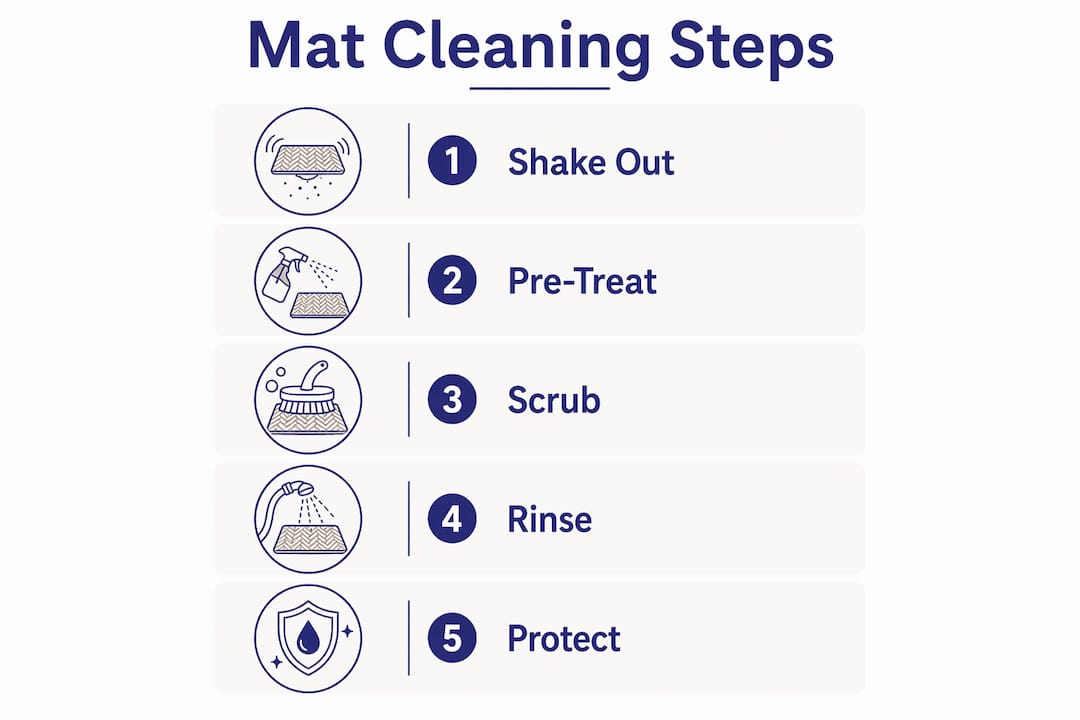
A structured cleaning process produces consistent results and prevents the product misuse that leads to slippery surfaces or premature mat wear. The following sequence applies to rubber and vinyl commercial mats in any facility environment.
- Remove and shake out the mat. Lift the mat from its position and shake or beat it to dislodge loose debris. For entrance mats in high-traffic areas, this step alone removes the majority of dry particulate.
- Rinse with warm water. A hose or pressure washer flushes surface dirt before any chemical is applied. Applying cleaner to a dry, debris-covered mat reduces product effectiveness and wastes product.
- Apply cleaner and scrub. Soap and water with scrubbing is the proven baseline method for rubber mats. For heavier contamination, apply a degreaser or mat-specific cleaner, let it dwell for 60 to 90 seconds, then agitate with a stiff-bristle brush.
- Rinse thoroughly. Residual cleaner left on the mat surface creates a slip hazard and attracts dirt faster. Rinse until the water runs clear.
- Apply a mat-specific protectant. Products like Mat ReNew or Meguiar’s Quik Solutions restore surface appearance and provide UV protection. Apply according to product instructions and allow full absorption before returning the mat to service.
- Dry completely before repositioning. A wet mat placed back on a hard floor traps moisture underneath, promoting mold growth and reducing the mat’s grip on the floor surface.
Pro Tip: Schedule deep cleaning during off-peak hours so mats have time to dry fully before foot traffic resumes. A mat returned to service while still damp is a slip-and-fall waiting to happen.
For facilities managing multiple mat types, the Mats4u guide on effective commercial mat cleaning provides frequency schedules tailored to traffic volume and mat material.
What safety and hygiene factors affect your supply selection?
Safety is the non-negotiable constraint in commercial mat cleaning. Some protectants leave slippery residue on rubber mat surfaces, creating fall risks in exactly the areas designed to prevent them. This is not a minor concern. Entrance mats and anti-fatigue mats in wet or industrial environments see constant foot traffic, and a slick surface finish compounds liability exposure significantly.
Hygiene is the second critical factor. 90% of bacteria on floors transfer from shoes to uncontaminated flooring, making entrance and transition mats the primary vector for cross-contamination in commercial facilities. A mat that looks clean but has not been sanitized is still actively spreading pathogens.
“Commercial cleaning protocols should treat mat maintenance as part of infection control, not just cosmetic upkeep.” — REMI Network
The following checklist covers the safety and hygiene non-negotiables for any mat cleaning program:
- Do select protectants labeled non-slip or non-greasy finish specifically for commercial use
- Do rinse mats completely after every cleaning cycle to remove all chemical residue
- Do rotate entrance mats on a scheduled basis so no single mat accumulates excessive bacterial load
- Do use non-toxic, biodegradable cleaners like Simple Green in food-service or healthcare environments
- Don’t apply automotive interior protectants to commercial floor mats. These products are formulated for enclosed vehicle interiors, not high-traffic walking surfaces
- Don’t return a mat to service before it is fully dry
- Don’t skip sanitizing steps when cleaning mats in healthcare, food production, or childcare facilities
How mat type and environment determine the right supplies
The material composition of a mat directly determines which cleaning products are safe and effective. Rubber mats tolerate degreasers and stiff brushes. Carpeted mats require extraction-style cleaning with low-foam detergents. Vinyl mats respond well to all-purpose cleaners but degrade under harsh solvents. Modular tiles, such as drainable anti-fatigue systems, need cleaners that penetrate the tile joints without leaving residue in drainage channels.
Usage environment adds another layer of specificity. A retail entrance mat accumulates road salt, mud, and light organic debris. An industrial mat in a manufacturing facility collects machine oil, metal particulate, and chemical splash. A gym mat carries sweat, skin cells, and high bacterial loads. Each environment calls for a different product strength and cleaning frequency. For gym-specific guidance, the Mats4u resource on cleaning gym floor mats covers material-safe methods in detail.
The table below matches mat type to recommended supplies and cleaning intervals for commercial facilities:
| Mat type | Recommended cleaner | Protectant needed | Cleaning interval |
|---|---|---|---|
| Rubber entrance mat | Simple Green or degreaser | Mat ReNew or Meguiar’s | Daily shake, weekly deep clean |
| Vinyl anti-fatigue mat | All-purpose cleaner | Mat-specific vinyl protectant | Weekly or after heavy use |
| Carpeted mat | Low-foam extraction detergent | None required | Weekly vacuum, monthly extraction |
| Modular drainable tile | Degreaser or enzyme cleaner | None required | Weekly, with tile separation monthly |
| All-weather rubber mat | Adam’s Rubber Mat Cleaner | UV protectant | Bi-weekly in high-traffic areas |
Applying rubber and vinyl protectants on a scheduled basis extends mat life by preventing UV degradation and surface cracking, which reduces replacement frequency and total cost of ownership.
What common mistakes undermine floor mat cleaning programs?
Most mat cleaning failures trace back to four repeatable errors, not product quality. Recognizing them prevents wasted spend and safety incidents.
- Using the wrong protectant. Automotive interior dressings and general-purpose floor polishes leave greasy films on mat surfaces. These products are not formulated for walking surfaces and create slip hazards regardless of how well the mat was cleaned beforehand.
- Skipping the rinse cycle. Residual cleaner on a mat surface attracts dirt faster than a clean mat, negating the cleaning effort within hours of the mat returning to service.
- Cleaning too infrequently. Frequent mat cleaning and rotation is a documented infection-control strategy. Treating mat cleaning as a monthly cosmetic task rather than a weekly hygiene protocol allows bacterial loads to accumulate between cycles.
- Using inappropriate brushes. Wire brushes damage rubber and vinyl surfaces. Brushes that are too soft fail to dislodge embedded grime. Match bristle stiffness to mat material: medium-stiff nylon for rubber, softer nylon for vinyl and carpeted mats.
Pro Tip: Keep a dedicated set of brushes and microfiber towels for mat cleaning only. Cross-using tools from general floor cleaning introduces contaminants and defeats the purpose of a thorough mat cleaning cycle.
Key takeaways
The most effective commercial mat cleaning program combines material-matched cleaners, non-slip protectants, and a scheduled rotation protocol that treats mat hygiene as infection control.
| Point | Details |
|---|---|
| Match cleaner to mat material | Rubber, vinyl, and carpeted mats each require different product formulations to clean safely. |
| Non-slip protectants are mandatory | Products like Mat ReNew and Meguiar’s Quik Solutions restore mats without creating slip hazards. |
| Hygiene drives frequency | 90% of floor bacteria transfer from shoes, making weekly deep cleaning a hygiene requirement. |
| Rinse and dry completely | Residual cleaner and moisture both create safety risks and accelerate mat degradation. |
| Treat mat care as infection control | Rotating and frequently cleaning entrance mats interrupts cross-contamination in commercial facilities. |
What I’ve learned from watching facilities get mat cleaning wrong
After working with facility managers across retail, industrial, and healthcare environments, the pattern I see most often is this: organizations spend significant budget on high-quality mats, then maintain them with whatever all-purpose cleaner is already in the supply closet. The mat degrades in 18 months instead of five years, gets replaced, and the cycle repeats. Nobody connects the cleaning protocol to the shortened lifespan.
The second mistake is treating protectants as optional. I’ve seen facility managers skip the protectant step to save time, then wonder why their rubber mats crack and fade within a year of installation. Protectants are not cosmetic. They seal the surface against UV degradation and moisture penetration. Skipping them is the equivalent of washing a car but never waxing it and expecting the paint to last.
The most practical shift I recommend is separating mat cleaning from general floor cleaning in your maintenance schedule. Mats need different products, different tools, and different drying time. When mat cleaning is folded into a general floor sweep, corners get cut and the process fails. Assign it as a standalone task with its own supply kit, its own schedule, and its own accountability. The Mats4u guide on mat maintenance for property managers outlines exactly how to structure that program for multi-zone commercial facilities.
The facilities that get this right spend less on mat replacement, have fewer slip-and-fall incidents, and pass hygiene audits without scrambling. That outcome is entirely a function of supply selection and protocol discipline, not mat quality alone.
— Werner
Upgrade your mats to make cleaning easier
The right cleaning supplies only deliver full value when the mat itself is built for commercial maintenance. Mats4u supplies commercial and industrial floor mats designed for durability, easy cleaning, and high-traffic performance. The premium custom logo mat combines brand visibility with a surface that responds well to standard mat cleaning protocols. For industrial environments, the Hog Heaven drainable modular tiles allow thorough cleaning between tile sections, eliminating the moisture and bacteria traps that solid mats create. Free delivery applies to orders over $100, and all products are Made in the USA.
FAQ
What is the best floor mat cleaner for commercial rubber mats?
Mat ReNew and Adam’s Polishes Rubber Mat Cleaner are the top-performing options for commercial rubber mats. Both clean without leaving greasy residue and include protectant properties that extend mat life.
How often should commercial floor mats be cleaned?
High-traffic entrance mats require a daily shake-out and a weekly deep clean. Facilities with hygiene requirements, such as healthcare or food service, should treat mat rotation as part of their infection-control schedule.
Are eco-friendly mat cleaners effective for commercial use?
Simple Green is a non-toxic, biodegradable cleaner that performs effectively on all commercial mat types. It is a practical choice for facilities that require non-toxic floor cleaners in food-service or healthcare environments.
What happens if you use the wrong protectant on a floor mat?
Protectants not formulated for walking surfaces leave slippery residue on rubber mats, creating fall hazards. Always select products specifically labeled for rubber or vinyl mat use in commercial settings.
How do you clean carpeted commercial floor mats?
Carpeted mats require low-foam extraction detergent and a wet-vacuum or extraction machine. Standard spray-and-wipe methods do not penetrate carpet fibers deeply enough to remove embedded bacteria and debris.


