


TL;DR:
- High traffic matting is specialized commercial flooring designed to absorb moisture, trap debris, and prevent slips under heavy foot traffic. Proper selection, sizing, placement, and condition-based maintenance are crucial for safety and cost-effectiveness, with standards like ANSI/NFSI B101.6-2012 and ASTM F1637-21 guiding performance. Facilities often err by undersizing mats or neglecting ongoing performance assessments, risking increased slip incidents and floor damage.
Matting for high traffic areas is defined as specialized commercial floor covering engineered to remove contaminants, absorb moisture, and protect flooring surfaces under sustained heavy footfall. In the commercial matting industry, the recognized term is entrance matting or commercial floor matting, and the standards governing it include ANSI/NFSI B101.6-2012 and ASTM F1637-21. Facility managers who treat these products as interchangeable commodity items pay for it in slip-and-fall incidents, accelerated floor damage, and liability exposure. The right mat in the right location, sized correctly and maintained on schedule, is one of the most cost-effective safety investments a building can make.
What are the key features of matting for high traffic areas?
Effective high-traffic matting is not defined by thickness or price. It is defined by measurable performance across four categories: slip resistance, structural durability, moisture management, and maintenance efficiency.
Slip resistance is the non-negotiable baseline. ANSI/NFSI B101.6-2012 and ASTM F1637-21 require that entrance matting keep walking surfaces dry by removing grit, dust, and moisture before it reaches the floor. A mat that looks clean but has lost its surface texture no longer meets this standard, regardless of how new it appears.
Key performance features to evaluate before purchasing include:
- Slip-resistance rating: Look for mats tested to ANSI/NFSI B101.6 or ASTM C1028 standards. Certified ratings give you documented proof of performance, which matters in liability situations.
- Material durability: Rubber, PVC, polypropylene, and nylon each behave differently under load. The material must resist deformation from both foot traffic and rolling loads such as carts and dollies.
- Moisture absorption and dirt trapping: Fiber-surface mats with a bi-level construction scrape debris from shoe soles while channeling water below the surface. This dual action is what separates purpose-built commercial mats from general-purpose rugs.
- Ease of cleaning: Mats that require specialized equipment or extended drying time create operational gaps. Rubber-backed mats with synthetic fiber surfaces can typically be vacuumed daily and machine-washed weekly without degradation.
- Backing integrity: Moisture-impermeable backing prevents water from migrating to the subfloor, which causes both slip hazards and long-term floor damage.
Pro Tip: Request the mat manufacturer’s documented slip-resistance test results before purchasing. A certified DCOF (Dynamic Coefficient of Friction) rating above 0.42 is the minimum threshold for commercial pedestrian surfaces under ANSI A137.1.
How do different matting materials compare for high traffic use?
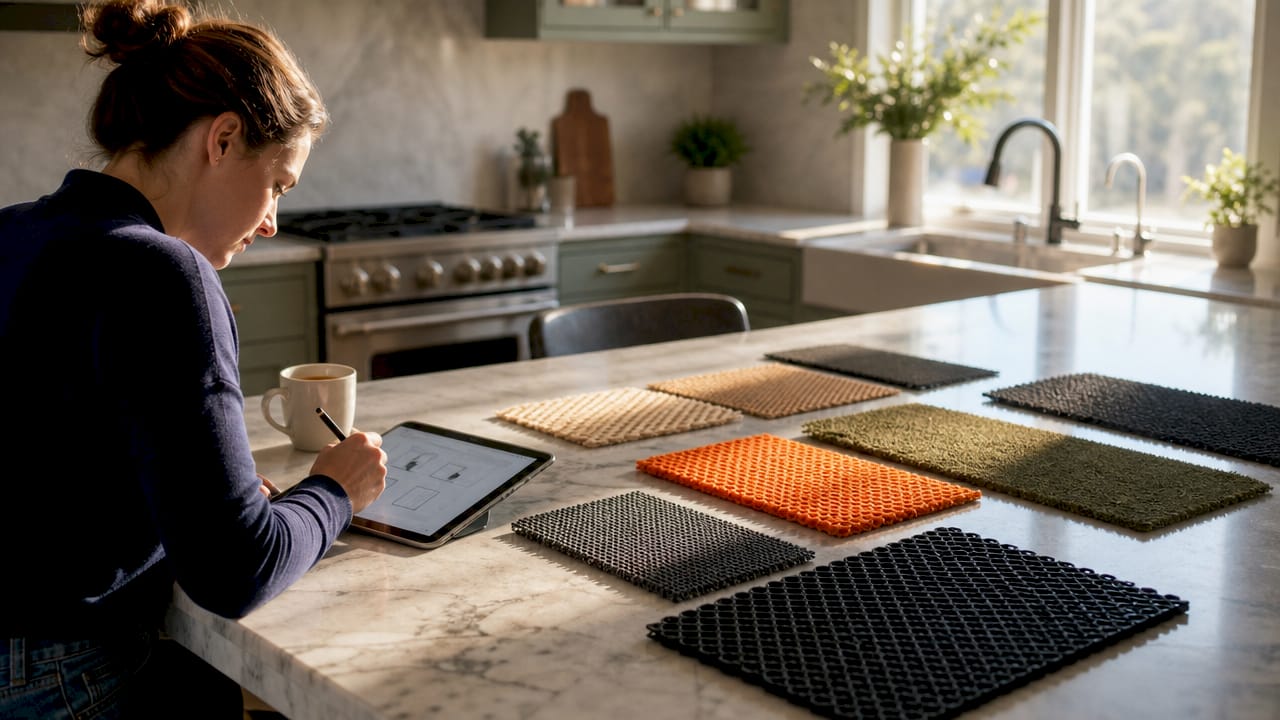
Material selection determines how a mat performs under your specific conditions. No single material wins across all environments. The right choice depends on the type of traffic, the contaminants present, and the aesthetic requirements of the space.
| Material | Best environment | Key strength | Key limitation |
|---|---|---|---|
| Rubber | Industrial, wet zones | Fluid impermeable, heavy-duty load resistance | Limited color and branding options |
| Nylon fiber (WaterHog style) | Retail, office, healthcare entrances | Superior dirt scraping and moisture absorption | Not suitable for oily or chemical environments |
| Polypropylene | Indoor low-moisture zones | Lightweight, cost-effective, easy to clean | Lower durability under sustained heavy loads |
| PVC mesh | Kitchens, wet industrial floors | Slip-resistant, fluid drainage, chemical resistant | Minimal aesthetic appeal |
| Berber/nylon loop | Corporate lobbies, branded entrances | High-definition logo printing, professional appearance | Requires more frequent cleaning in heavy-dirt zones |
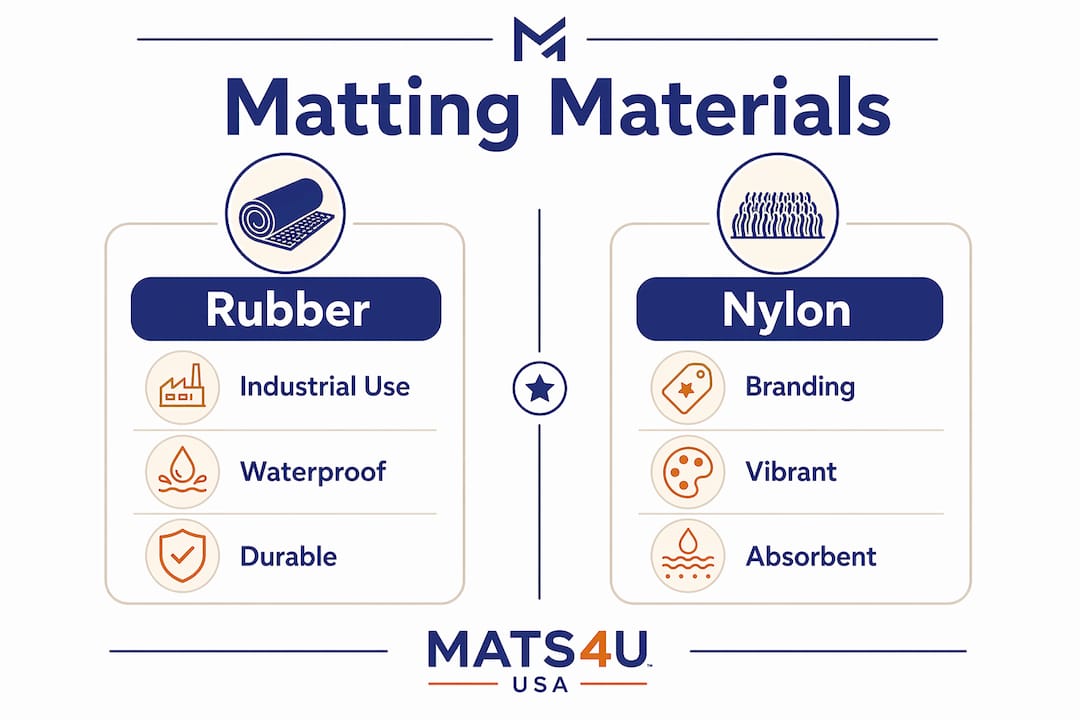
Rubber and PVC matting excel in industrial environments because of their impermeability and resistance to heavy loads. Fiber mats like WaterHog-style products provide superior dirt scraping and moisture absorption for entrance zones where appearance also matters. The distinction is practical: a hospital loading dock needs PVC mesh; a hotel lobby needs nylon fiber with a branded surface.
Longevity is directly tied to material quality. A commercial-grade rubber mat with a reinforced face can sustain 10 to 15 years of service in a properly maintained program. A budget polypropylene mat in the same location may need replacement within 18 months. The per-year cost of the premium mat is often lower.
Pro Tip: For entrances where branding matters, custom logo mats built on nylon fiber substrates deliver vibrant, long-lasting print quality without sacrificing the dirt-trapping performance your entrance requires. Mats4u offers high-definition printed options that hold color through repeated commercial cleaning cycles.
What are best practices for selecting and placing mats in high traffic areas?
Mat placement is where most facilities make their most expensive mistakes. A mat that is too short, positioned incorrectly, or used alone in a multi-zone entry fails to prevent contaminants from reaching interior floors. Insufficient mat length allows grit and moisture to escape onto flooring surfaces, directly increasing slip risk. ANSI/NFSI B101.6-2012 is explicit: matting must be long enough to remove contaminants from footwear before entry.
Follow this placement sequence for any commercial entrance or high-traffic zone:
- Calculate minimum mat length. Industry guidance recommends a minimum of 6 to 8 feet of mat coverage at primary entrances. High-volume entries or those exposed to outdoor weather should use 10 to 15 feet of coverage. The standard benchmark is that a person takes three to four steps on the mat before reaching the interior floor.
- Use a layered system during inclement weather. A scraper mat at the exterior door removes heavy debris and snow. A wiper-absorber mat at the interior threshold captures residual moisture. Single-mat systems are insufficient when rain, snow, or mud is tracked in at volume.
- Identify secondary risk zones. Entrances are the obvious priority, but high-traffic floor protection is also needed at elevator banks, stairwell exits, cafeteria entries, and loading dock transitions. Each zone has different contamination profiles and requires a mat matched to that specific load.
- Confirm mat-to-floor compatibility. Non-slip backing must be matched to the floor surface type. A rubber backing that grips well on sealed concrete may migrate on polished marble. Test before committing to a full deployment.
- Integrate with facility aesthetics. Mats in customer-facing areas should align with brand color schemes and floor design. A commercial entrance mat that looks out of place undermines the professional impression the space is meant to create.
- Set a replacement trigger, not just a cleaning schedule. Define the visual and functional criteria that trigger mat replacement: fraying edges, loss of surface texture, backing separation, or repeated saturation events within a single shift.
How should facilities maintain matting for optimal performance?
Maintenance is where mat programs succeed or fail. The most common failure mode is not wear. It is saturation. Saturated mats stop functioning and must be replaced or swapped promptly during inclement weather. ASTM F1637-21 requires replacement when mats reach saturation, because a wet mat surface creates the exact slip hazard the mat was installed to prevent.
Effective maintenance practices for durable floor mats include:
- Daily vacuuming for fiber-surface mats in high-traffic zones. Accumulated grit acts as an abrasive that degrades both the mat surface and the floor beneath it.
- Material-specific cleaning schedules. Rubber and PVC mats can be hosed down or pressure-washed. Nylon and polypropylene fiber mats require extraction cleaning or machine washing at temperatures specified by the manufacturer. Using the wrong method accelerates backing failure.
- Rotation programs. Facilities with multiple mat sets can rotate mats on a defined schedule, allowing one set to dry and recover while the other is in service. This extends total mat lifespan and maintains consistent performance.
- Inspection at every cleaning cycle. Regular inspections per ANSI/NFSI B101.6-2012 should check for curled edges, backing separation, surface compression, and color loss. Any of these signals reduced performance.
- Employee training. Custodial staff must understand that a visually clean mat can still be functionally saturated. Training should include how to assess moisture load, not just surface appearance.
- Wet floor signage. During mat swaps or cleaning, wet floor signs are required to cover the gap in protection. This is both a safety practice and a liability management step.
Remanufacturing or refurbishing mats is a cost-effective option for facilities managing large mat inventories. Some commercial mat suppliers offer programs that restore backing integrity and resurface fiber tops, extending service life by two to four years at a fraction of replacement cost.
Key takeaways
Effective matting for high traffic areas requires the right material, correct sizing, strategic placement, and condition-based maintenance rather than fixed cleaning schedules alone.
| Point | Details |
|---|---|
| Standards compliance matters | ANSI/NFSI B101.6-2012 and ASTM F1637-21 define minimum performance requirements for commercial entrance matting. |
| Material drives performance | Rubber and PVC suit industrial zones; nylon fiber mats like WaterHog suit entrance and retail environments. |
| Size and coverage are critical | Minimum 6 to 8 feet of mat coverage at entrances; inclement weather requires layered mat systems. |
| Saturation triggers replacement | A saturated mat creates slip hazards. Replace or rotate mats based on moisture load, not just appearance. |
| Branding and safety coexist | Custom logo mats on nylon substrates deliver high-definition print quality without sacrificing dirt-trapping performance. |
What facility managers get wrong about high-traffic matting
Most mat failures I see in commercial facilities come down to one misunderstanding: facility managers treat mat maintenance as a cleaning task rather than a safety monitoring task. They set a vacuum schedule, follow it, and assume the mat is performing. It is not. A mat that has been vacuumed daily for two years but never assessed for backing integrity or surface compression is a liability waiting to materialize.
The second pattern I see consistently is undersizing. A 3-by-5-foot mat at a primary entrance handles maybe 40% of the contamination load that a properly sized system would capture. The rest ends up on the interior floor. The entrance mat system needs to be sized to the traffic volume and the weather exposure of the specific entry point, not to what fits aesthetically or what was budgeted for.
The standards are not bureaucratic formalities. ANSI/NFSI B101.6 and ASTM F1637-21 exist because slip-and-fall incidents are predictable and preventable. Facilities that align their mat programs with these standards see measurable reductions in incident rates. Those that do not eventually learn the cost through claims, not compliance.
— Werner
High-traffic matting solutions from Mats4u
Mats4u stocks a direct selection of commercial matting built for the performance requirements described in this article. The WaterHog Max Herringbone delivers heavy-duty dirt scraping and moisture absorption in a construction rated for sustained commercial traffic. The Berber Logo Mat HD combines commercial-grade durability with high-definition logo printing for branded entrance applications. For facilities that need custom sizing, color matching, or logo integration, Mats4u’s premium logo clarity mats are produced in the USA with vibrant, long-lasting print quality. Free delivery applies to orders over $100. Browse the full range at Mats4u or contact the team for product recommendations matched to your specific facility requirements.
FAQ
What are high traffic mats made of?
High traffic mats are most commonly constructed from rubber, nylon fiber, polypropylene, or PVC mesh, each suited to different environments. Nylon fiber mats with rubber backing are the standard for commercial entrances; rubber and PVC are preferred in industrial or wet zones.
How long should an entrance mat be for a commercial building?
ANSI/NFSI B101.6-2012 recommends a minimum of 6 to 8 feet of mat coverage at primary entrances, with 10 to 15 feet advised for high-volume or weather-exposed entries. The goal is three to four full steps on the mat before reaching the interior floor.
When should a commercial mat be replaced?
Replace a commercial mat when it shows curled edges, backing separation, compressed surface texture, or repeated saturation during a single shift. ASTM F1637-21 requires removal when a mat reaches saturation, as a wet mat surface creates the slip hazard it was installed to prevent.
Can entrance mats include custom branding without losing performance?
Yes. Nylon fiber mats with high-definition printed surfaces maintain dirt-scraping and moisture-absorption performance while displaying logos and brand colors. The key is selecting a mat built on a commercial-grade substrate, not a decorative rug with printing applied.
How often should high-traffic mats be cleaned?
Fiber-surface mats in high-traffic zones should be vacuumed daily and extraction-cleaned or machine-washed weekly. Rubber and PVC mats can be hosed down or pressure-washed on a schedule matched to contamination load. Cleaning frequency should increase during wet weather seasons when saturation risk is highest.


