


Facility managers face a constant challenge: keeping commercial spaces safe while controlling costs. Poorly maintained floor mats contribute to over 30% of workplace slip and trip incidents, creating liability risks and potential injury claims. Yet proper maintenance can double mat lifespan in high-traffic areas, delivering substantial cost savings. This guide provides actionable strategies to maximize mat performance, enhance workplace safety, and reduce replacement frequency through systematic cleaning and inspection routines tailored for commercial environments.
Table of Contents
- Key takeaways
- Understanding the importance of mat maintenance
- Preparing for effective mat maintenance: assessing needs and tools
- Step-by-step guide to cleaning and maintaining commercial floor mats
- Verifying maintenance effectiveness and troubleshooting common issues
- Enhance your facility’s safety with premium mats from Mats4U
- FAQ
Key Takeaways
| Point | Details |
|---|---|
| Mats trap contaminants | Commercial floor mats trap 80 percent or more of contaminants before they spread through the building. |
| Maintenance doubles lifespan | Regular maintenance can double mat lifespan in high traffic areas, reducing replacement costs. |
| Poor mats drive injuries | Over 30 percent of workplace slip and trip incidents are linked to poor mat conditions. |
| Appropriate mats and methods | Using appropriate mats and cleaning methods optimizes performance and safety. |
Understanding the importance of mat maintenance
Commercial floor mats serve as your facility’s first line of defense against tracked dirt, moisture, and debris. Commercial mats trap 80% or more of contaminants before they spread throughout your building, protecting flooring and reducing cleaning costs. However, this protective function only works when mats receive proper care.
The stakes are high. Unmaintained mats lose their effectiveness and become safety hazards themselves. When debris accumulates, backing deteriorates, or edges curl, mats transform from protective barriers into tripping hazards. Industry data shows that over 30% of workplace slipping and tripping incidents connect directly to poor mat conditions, creating liability exposure and potential workers’ compensation claims.
Financial implications extend beyond injury costs. Quality commercial mats represent significant capital investments, with premium entrance systems costing hundreds to thousands of dollars. Without systematic maintenance, these assets degrade prematurely, requiring replacement every 12 to 18 months. Proper care can double mat lifespan in high-use areas, stretching replacement cycles to three years or more.
Effective mat maintenance reduces total facility operating costs by preventing premature replacement, minimizing floor damage, and decreasing slip-related incidents that drive insurance premiums higher.
Well-maintained mats deliver multiple operational benefits:
- Enhanced safety through consistent traction and stable positioning
- Improved aesthetics that reinforce professional facility image
- Extended service life that reduces capital expenditure frequency
- Better indoor air quality by preventing dirt recirculation
- Regulatory compliance with workplace safety standards
The commercial floor mat cleaning service guide emphasizes that maintenance isn’t optional overhead but strategic investment. Facilities that implement structured cleaning protocols report fewer safety incidents, lower replacement costs, and better tenant or employee satisfaction. Understanding this foundation helps property managers justify maintenance budgets and prioritize mat care within broader facility operations. For comprehensive cleaning strategies, explore the commercial mat cleaning business guide for industry best practices.
Preparing for effective mat maintenance: assessing needs and tools
Successful mat maintenance begins before you touch a vacuum or mop. Strategic preparation ensures you have appropriate resources and realistic schedules aligned with your facility’s specific demands.
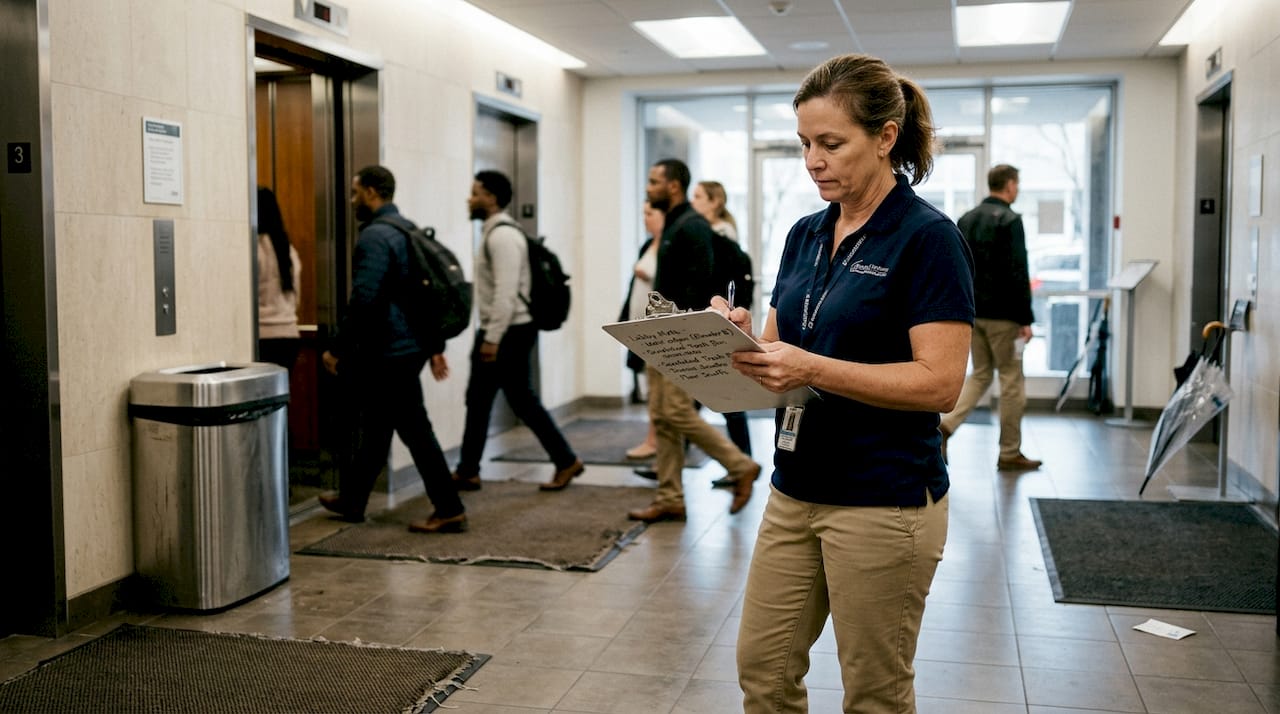
Start by evaluating foot traffic patterns across your property. Entrance areas, elevator lobbies, and cafeterias experience heavy use requiring daily attention, while back corridors or administrative zones need less frequent care. This traffic assessment determines both mat selection and maintenance intensity. Proper mat maintenance includes selecting appropriate mats that match usage levels, making subsequent cleaning more efficient.
Mat material dictates maintenance requirements. Understanding these differences prevents damage and optimizes cleaning effectiveness:
| Mat Type | Primary Use | Cleaning Method | Frequency |
|---|---|---|---|
| Waterhog/Polypropylene | Entrance moisture control | Vacuum, extract, air dry | Daily vacuum, weekly wash |
| Rubber anti-fatigue | Industrial workstations | Mild detergent, scrub, rinse | Weekly spot clean, monthly deep clean |
| Carpet/Berber | Interior traffic zones | Vacuum, steam clean | Daily vacuum, monthly extraction |
| Vinyl-backed carpet | Moderate traffic areas | Vacuum, damp mop edges | Every other day |
Assemble your maintenance toolkit before establishing routines. Essential supplies include:
- Commercial-grade vacuum with beater bar for carpet mats
- Wet/dry vacuum or carpet extractor for deep cleaning
- Soft-bristle scrub brush for textured surfaces
- pH-neutral detergent formulated for commercial mats
- Drying racks or designated air-dry space
- Inspection checklist and maintenance log
- Replacement mats for rotation during cleaning
Scheduling proves critical. Create a maintenance calendar that accounts for seasonal variations. Winter months demand more frequent cleaning due to salt, snow, and mud tracked indoors. Summer may allow slightly extended intervals in some climates. Block specific time windows when traffic is lightest, typically early mornings or evenings, to minimize disruption while mats dry.
Pro Tip: Choose mats with modular designs or replaceable inserts for high-traffic zones. Systems like waterhog mats with removable sections allow you to clean one portion while others remain in service, eliminating downtime and maintaining continuous protection.
Consider ergonomic factors when planning maintenance. Heavy saturated mats strain workers during handling. Invest in mat carts or dollies for transport, and ensure adequate ventilation in drying areas to prevent mold growth. Document your maintenance protocols in writing so any team member can execute them consistently. For guidance on selecting mats that simplify maintenance, review effective commercial floor mat cleaning strategies. Additionally, explore industrial non-slip mats for specialized workplace applications requiring specific care approaches.
Step-by-step guide to cleaning and maintaining commercial floor mats
Systematic cleaning routines maximize mat performance and longevity. Frequency-based protocols ensure nothing gets overlooked while preventing unnecessary labor.
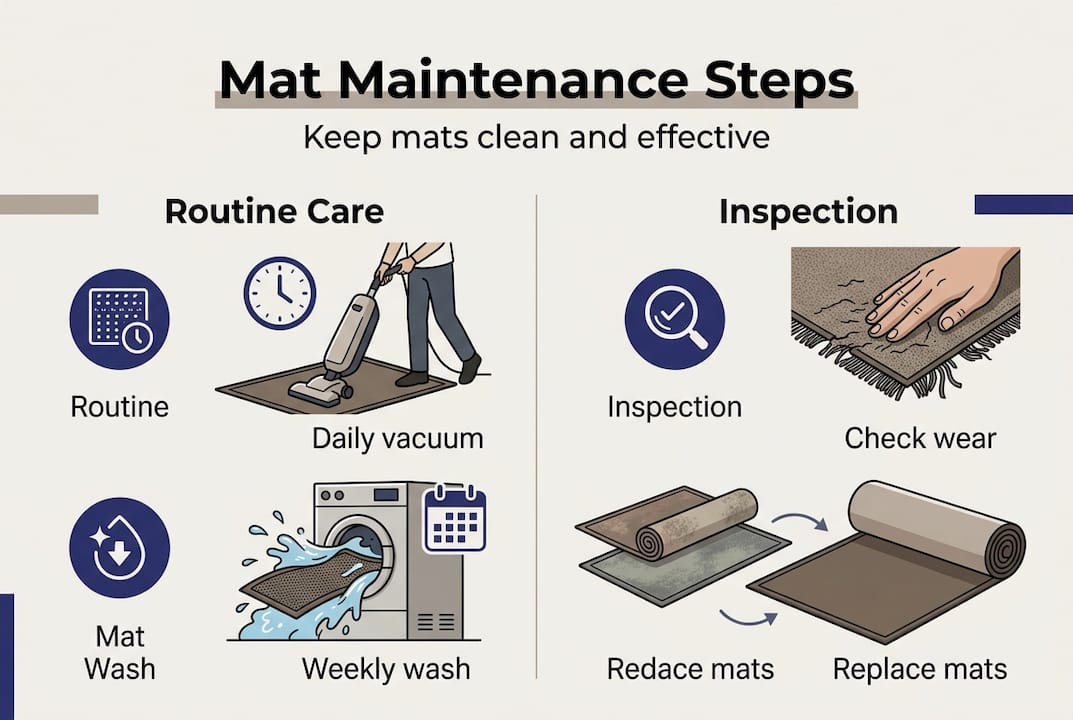
Daily maintenance tasks for high-traffic mats:
- Vacuum thoroughly using overlapping passes to capture embedded debris
- Inspect edges and corners for curling or separation from backing
- Check for visible stains or spills requiring immediate spot treatment
- Verify mats remain flat and properly positioned without bunching
- Remove any large debris or objects that could damage mat fibers
Weekly deep cleaning procedures:
- Remove mats from service and transport to cleaning area
- Shake or beat outdoors to dislodge loose dirt before washing
- Apply pH-neutral detergent diluted per manufacturer specifications
- Scrub with soft-bristle brush in circular motions, working detergent into fibers
- Rinse thoroughly with clean water until no soap residue remains
- Extract excess moisture using wet vacuum or squeegee
- Hang or lay flat in well-ventilated space for complete air drying
- Inspect backing integrity and fiber condition during drying period
Monthly comprehensive maintenance:
- Perform deep extraction cleaning using commercial carpet cleaning equipment
- Examine all edges for fraying and trim loose threads to prevent further unraveling
- Check backing adhesion and repair any separation with appropriate adhesive
- Measure mat thickness at multiple points to identify excessive wear patterns
- Rotate mats between locations to distribute wear evenly across inventory
- Update maintenance logs documenting cleaning dates and observed conditions
Critical cleaning considerations:
- Never use harsh chemicals, bleach, or high-heat drying that degrades rubber backing
- Ensure mats dry completely before returning to service to prevent mold and odor
- Clean both mat surfaces; debris accumulates on undersides affecting grip
- Test new cleaning products on small inconspicuous areas first
- Follow manufacturer guidelines for specialized materials like anti-static mats
Pro Tip: Maintain a rotation system with backup mats for each critical location. While primary mats undergo weekly washing and drying, immediately deploy clean backups to maintain continuous protection. This approach eliminates the pressure to rush drying, which often leads to mildew problems and shortened mat life.
Proper maintenance including scheduled cleaning can double mat lifespan in high-use areas, making these routines worthwhile investments. For entrance-specific strategies, consult tips on how to keep your entrance mat clean. The commercial floor mat cleaning service guide offers additional techniques for challenging commercial environments.
Safety protocols during maintenance prevent injuries. Wear slip-resistant footwear when handling wet mats, use proper lifting techniques for heavy items, and ensure adequate lighting in cleaning areas. Post temporary signage when mats are removed from service so occupants remain aware of potentially slippery floors. These precautions protect both maintenance staff and building occupants throughout the cleaning process.
Verifying maintenance effectiveness and troubleshooting common issues
Even well-intentioned maintenance programs fail without verification systems. Regular assessment ensures your efforts translate into actual performance improvements and helps identify problems before they escalate.
Inspect mats systematically during each cleaning cycle. Look for these deterioration indicators:
- Fiber matting or permanent compression that reduces dirt-trapping capacity
- Backing separation or crumbling rubber that compromises stability
- Edge curling or fraying that creates tripping hazards
- Persistent odors despite thorough cleaning indicating bacterial growth
- Color fading or staining that affects professional appearance
- Loss of drainage capacity in mats designed for moisture control
When mats no longer respond to cleaning or show structural damage, replacement becomes more cost-effective than continued maintenance. Proper maintenance not only extends mat life but also reduces workplace injuries by maintaining optimal safety conditions. However, knowing when to retire a mat prevents throwing money at assets beyond their useful life.
Common maintenance challenges and solutions:
| Issue | Cause | Solution |
|---|---|---|
| Persistent musty odor | Incomplete drying, bacterial growth | Extend drying time, use antimicrobial treatment, improve ventilation |
| Rapid resoiling | Inadequate initial cleaning | Increase vacuum frequency, use extraction cleaning |
| Edge curling | Heat exposure, improper storage | Store flat, avoid high-heat drying, replace if permanent |
| Backing deterioration | Harsh chemicals, age | Switch to pH-neutral cleaners, budget replacement |
| Stains won’t lift | Wrong cleaning agent, set-in spills | Treat immediately, use enzymatic cleaners for organics |
| Mat slides on floor | Worn backing, smooth floor surface | Add gripper pad, replace mat, treat floor for texture |
Frequent maintenance mistakes that undermine effectiveness:
- Inconsistent cleaning schedules that allow dirt buildup between services
- Using household cleaning products not formulated for commercial mats
- Returning mats to service before completely dry
- Ignoring minor damage that worsens into major failures
- Failing to adjust maintenance frequency based on seasonal changes
- Neglecting to clean mat undersides where grit accumulates
Implement inspection logs to track mat conditions over time. Simple spreadsheets recording cleaning dates, observed issues, and corrective actions provide valuable data. Patterns emerge showing which locations need more frequent attention or which mat types perform best in specific applications. This documentation also helps justify maintenance budgets by demonstrating program effectiveness and cost avoidance.
Set up quarterly reviews of your entire mat inventory. Walk through facilities with your maintenance log, physically inspecting each mat against documented history. This practice catches degradation early and informs replacement planning. Budget 10 to 15% of your mat inventory for annual replacement in typical commercial environments, adjusting based on traffic intensity and maintenance quality.
For guidance on replacement timing, review the how often to replace mats guide which provides industry benchmarks. When verification reveals maintenance can’t restore adequate performance, timely replacement protects both safety and facility image. The key is catching that transition point before mats become liabilities rather than assets.
Enhance your facility’s safety with premium mats from Mats4U
Effective maintenance starts with quality mats designed for commercial durability and easy care. Mats4U specializes in commercial-grade floor protection engineered to withstand intensive use while simplifying cleaning routines. Our premium custom floor mats combine professional appearance with practical maintenance features, letting you reinforce brand identity while protecting high-traffic areas.
The Waterhog Max Herringbone Mat exemplifies maintenance-friendly design, with raised construction that traps moisture and dirt while allowing airflow for faster drying. Rubber backing stays flexible through repeated cleaning cycles, and dense polypropylene fibers resist matting even in entrance areas seeing thousands of daily footfalls. These characteristics reduce your maintenance burden while extending service life.
Explore the complete Mats4U product range to find solutions matching your specific facility requirements. From anti-fatigue mats for industrial workstations to elegant entrance systems for corporate lobbies, we offer options that balance performance, aesthetics, and maintainability. Free delivery on orders over $100 and Made in the USA quality ensure your investment delivers lasting value.
FAQ
How often should commercial floor mats be cleaned?
Cleaning frequency depends on foot traffic intensity and environmental conditions. High-traffic entrance mats need daily vacuuming and weekly deep cleaning, while moderate-use interior mats perform well with twice-weekly vacuuming and monthly washing. Low-traffic areas may only require weekly attention. Regular inspection helps you adjust schedules based on actual soil accumulation rather than arbitrary timelines. For detailed protocols, see effective commercial floor mat cleaning strategies.
What are the signs that a commercial mat needs replacing?
Visible fraying along edges, permanent fiber compression, loss of backing integrity, and persistent odors despite thorough cleaning indicate replacement time. When mats no longer lay flat, show significant thinning, or fail to trap dirt effectively, continued maintenance becomes uneconomical. If cleaning no longer restores acceptable appearance and function, replacement protects both safety and facility image. Consult the how often to replace mats guide for detailed replacement criteria and timing recommendations.
What cleaning methods are safest for industrial anti-fatigue mats?
Use mild pH-neutral detergents with lukewarm water, avoiding harsh chemicals that degrade rubber compounds. Gentle scrubbing with soft-bristle brushes removes contaminants without damaging surface texture. Always air dry completely rather than using high heat, which causes cracking and premature aging. Never use solvents or petroleum-based cleaners on rubber mats. For specialized anti-fatigue mat care, review guidance on industrial anti-fatigue mat maintenance and selection.
Can professional mat cleaning services save facility management time?
Professional services handle pickup, cleaning, and delivery on scheduled intervals, eliminating in-house labor and equipment costs. They use commercial-grade extraction equipment and specialized detergents that achieve deeper cleaning than typical facility capabilities. For large mat inventories or facilities lacking adequate cleaning infrastructure, outsourcing often proves more cost-effective than internal programs. Services also maintain backup inventory, ensuring continuous mat coverage during cleaning cycles.
How does proper mat maintenance impact workplace safety ratings?
Well-maintained mats reduce slip and trip incidents that drive workers’ compensation claims and OSHA recordables. Facilities demonstrating systematic mat care through documented maintenance programs often receive favorable insurance underwriting and lower premiums. Clean, properly functioning mats also support ADA compliance by maintaining stable, level walking surfaces. Safety audits specifically examine mat conditions, making maintenance a visible component of overall workplace safety culture and performance metrics.


