


Finding the right pool flooring can be frustrating when outdated myths still influence safety decisions. Facility managers across the United States know high-traffic deck areas demand reliable protection against slips and injuries. This guide addresses core misconceptions about durable pool rubber flooring, explains how thickness and installation impact performance, and helps you compare options that meet strict American safety standards for long-lasting, low-maintenance pool environments.
Table of Contents
- Pool Rubber Flooring Fundamentals And Misconceptions
- Available Types And Design Options For Pools
- Safety Features, Durability, And Performance Factors
- Compliance With U.S. Safety Regulations And Standards
- Cost, Maintenance, And Comparison With Alternatives
Key Takeaways
| Point | Details |
|---|---|
| Rubber Flooring Functionality | Pool rubber flooring is engineered for safety, offering slip resistance, impact absorption, and drainage in wet environments. |
| Thickness Importance | The thickness of rubber flooring is crucial; thicker materials provide better safety and durability, reducing long-term replacement costs. |
| Durability and Maintenance | High-quality rubber flooring resists deterioration from pool chemicals and requires simple maintenance, ensuring longevity and cost-effectiveness. |
| Regulatory Compliance | Facility managers must ensure flooring meets local safety regulations to avoid liability and ensure visitor safety. |
Pool rubber flooring fundamentals and misconceptions
Pool rubber flooring isn’t just another floor covering—it’s a specialized solution designed to protect both people and facilities. Many facility managers operate under outdated assumptions about rubber flooring, which can lead to poor purchasing decisions and safety compromises. Let’s clarify what rubber flooring actually does and dispel the myths that could be costing you money and safety.
What pool rubber flooring actually is
Pool rubber flooring consists of manufactured mats or tiles made from elastomeric materials, engineered specifically for wet environments. These products aren’t the same as general-purpose rubber flooring you might find in gyms or warehouses. ASTM’s resilient floor covering standards establish specific performance benchmarks for materials like this, ensuring they meet safety and durability requirements across different applications.
Rubber pool flooring serves three core functions:
- Slip resistance: Textured surfaces keep people upright even when wet
- Impact absorption: Cushioning reduces fall-related injuries
- Drainage: Proper engineering allows water to flow away from walking surfaces
The thickness myth
One dangerous misconception is that all rubber flooring performs the same regardless of how thick it is. This isn’t true. Rubber flooring thickness directly influences safety, durability, and comfort in ways that matter to your facility.
Thicker installations (typically 1/2 inch or more) offer:
- Better shock absorption for high-impact areas
- Longer lifespan in heavy-traffic pool decks
- Superior comfort for staff standing for extended periods
Thin rubber mats may cost less upfront but wear out faster and provide inadequate fall protection. For facility managers, this is a false economy—you’ll replace cheap flooring twice while quality flooring lasts much longer.
Thickness isn’t a luxury feature—it’s a safety and investment protection factor that directly affects how many years your flooring will perform reliably.
The durability debate
Many believe rubber flooring deteriorates quickly in pool environments. Reality: High-quality rubber resists chlorine, UV exposure, and moisture far better than alternatives like concrete or wood. The key is material specification and installation quality, not the material category itself.
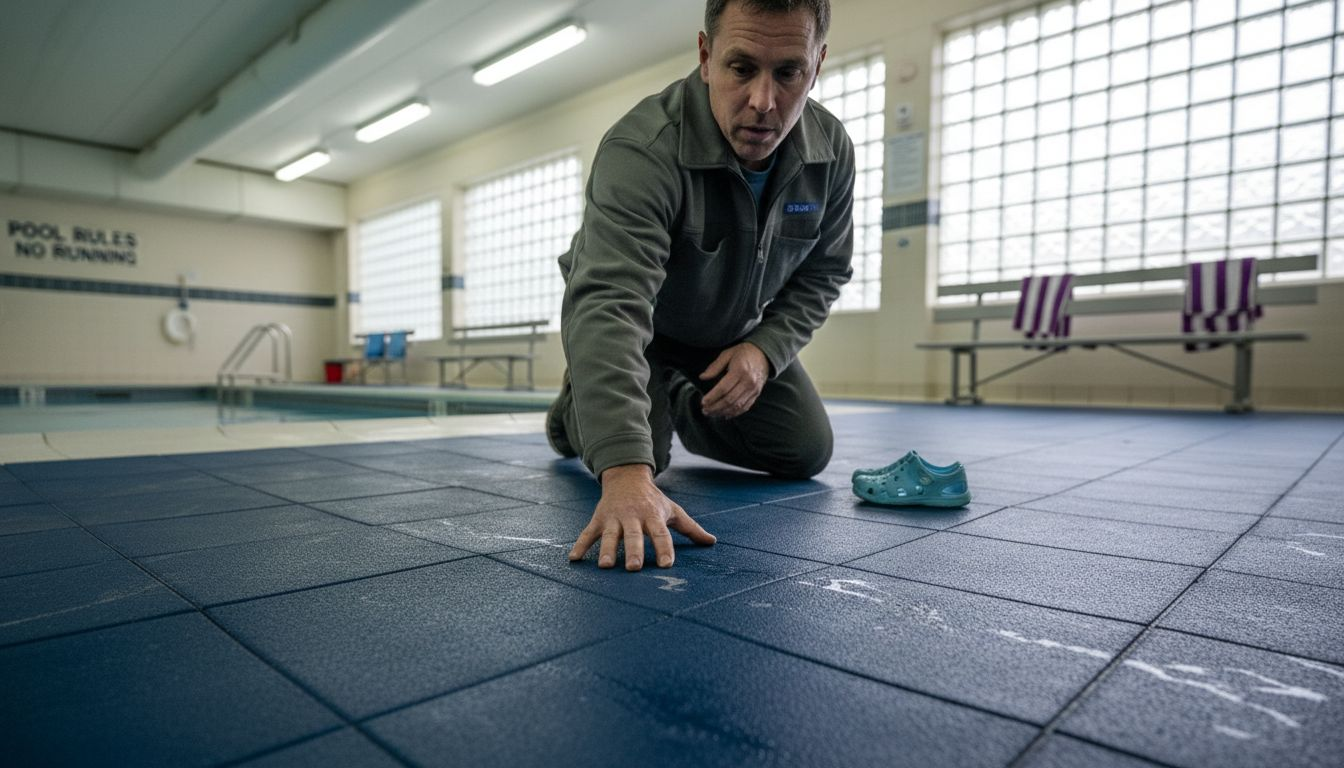
The floor mat considerations for pool safety help ensure your selection meets actual facility needs rather than relying on general assumptions.
Installation and maintenance confusion
Another myth: “Rubber flooring is complicated to install.” Most commercial pool rubber flooring uses interlocking tiles or adhesive-backed sheets designed for straightforward installation. Proper installation matters, but it’s well within standard facility maintenance capabilities.
Maintenance is similarly straightforward:
- Daily: Sweep to remove debris
- Weekly: Clean with mild soap and water
- Monthly: Check for shifts or damage
Pro tip: When evaluating rubber flooring options, always verify the product meets ASTM standards for your specific application—this single check eliminates most inferior products before they enter your facility.
Available types and design options for pools
Pool rubber flooring comes in several distinct formats, each with its own advantages depending on your facility’s specific needs. Understanding the differences between installation types and design options helps you make informed decisions that balance safety, aesthetics, and long-term performance. Your choice directly impacts both the user experience and your maintenance workload.
Poured-in-place rubber (PIP)
Poured-in-place rubber is mixed and applied directly onsite, creating a seamless surface without seams or joints. This installation method offers complete design flexibility since you can customize colors, patterns, and textures across the entire pool deck area. The result is a professional, unified appearance that flows naturally around pool features.
PIP advantages for facility managers:
- Seamless coverage eliminates tripping hazards from tile edges
- Custom designs enhance facility branding and aesthetics
- Excellent water drainage with proper slope engineering
- Long-lasting when installed by qualified contractors
The main trade-off is upfront installation cost and the need for professional application. You cannot install this yourself—it requires specialized equipment and expertise.
Rubber tile systems
Rubber tiles are pre-manufactured and delivered ready to install, offering modular flexibility and faster setup. Rubber pool surfaces using tiles provide easier installation compared to poured systems, making them attractive for budget-conscious facilities. Tiles interlock or adhere to create finished deck surfaces.
Tile system benefits:
- Quick installation with minimal downtime for your pool
- Easy replacement of individual damaged tiles
- Lower upfront labor costs than poured systems
- Design variety through different color and pattern combinations
- Modular aesthetic that many facilities prefer
Tiles work particularly well for facilities wanting phased installations or future modifications to their pool deck layout.
Here’s how poured-in-place rubber compares to rubber tile systems for pool facilities:
| Feature | Poured-in-Place Rubber | Rubber Tile Systems |
|---|---|---|
| Installation Method | Onsite mixing, seamless | Pre-made, modular tiles |
| Custom Design Options | Unlimited colors/styles | Limited to tile designs |
| Downtime During Install | Longer due to curing time | Short, quick setup |
| Repair Approach | Requires professional patch | Swap out damaged tiles easily |
| Long-Term Durability | Extended lifespan if sealed | Good, may need tile replacement |
Design and customization options
Both installation types offer substantial design flexibility. Color options range from neutral grays and blacks to vibrant blues, greens, and custom corporate branding colors. Many facilities incorporate pattern designs—stripes, checkerboards, or facility logos—to enhance visual appeal while maintaining safety.
Your design choices shouldn’t compromise safety—select colors and patterns that provide excellent contrast and visibility in wet conditions.
Accessibility considerations
Accessibility standards like ADA requirements influence rubber flooring selection for pools. Surfaces must accommodate wheelchair users and maintain slip resistance for all visitors. Proper slope design and texture consistency ensure everyone can safely navigate your pool deck.
Key accessibility features:
- Firm, level surfaces for wheelchair navigation
- Consistent texture preventing unexpected grip changes
- Proper drainage preventing water pooling
- Slip resistance meeting or exceeding ADA standards
Pro tip: When selecting between poured and tile systems, consider your facility’s budget timeline and future maintenance capacity—tiles offer easier repairs, while poured systems provide superior seamless protection and longer intervals between major maintenance.
Safety features, durability, and performance factors
Pool rubber flooring isn’t just about preventing slips—it’s engineered to perform consistently under harsh chemical and UV exposure while meeting rigorous safety standards. Facility managers need to understand what makes quality rubber flooring actually work and last, beyond the marketing claims. The difference between adequate flooring and truly durable flooring comes down to material science and installation precision.
Slip resistance and impact protection
Slip resistance is the primary safety concern for pool decks. Quality rubber flooring maintains grip even when soaking wet, preventing the falls that lead to injuries and liability issues. The textured surface creates friction that works whether people are barefoot or wearing wet footwear.
Impact absorption protects people during falls. Thicker, properly installed flooring cushions impacts and reduces injury severity when accidents occur. This protection matters especially around diving areas and for elderly visitors.
Safety benefits include:
- Reduced slip incidents in wet conditions
- Lower fall-related injury severity
- Decreased facility liability exposure
- Better experience for visitors with mobility concerns
Material composition and chemical resistance
ASTM F1344 specifies rubber tile requirements including vulcanized thermoset polymeric binders designed to resist damage from chlorine, cleaning agents, and pool chemicals. This isn’t marketing—it’s an engineering requirement that separates quality products from inferior alternatives.
Pool environments are harsh. Chlorine, UV exposure, moisture, and temperature fluctuations degrade inferior materials quickly. Properly formulated rubber flooring withstands these conditions for years without degradation, discoloration, or surface breakdown.
Chemical resistance factors:
- Resistance to chlorine and bromide sanitizers
- Protection against common pool deck cleaners
- Stability under intense UV exposure
- Moisture resistance preventing water absorption
Thickness, installation, and longevity
Performance of rubber flooring is influenced by thickness, material composition, and installation quality. These three factors work together—superior materials in thin installations still underperform, and thick flooring installed poorly fails prematurely.
Thicker installations absorb impacts better and last significantly longer in high-traffic areas. Poor installation introduces movement, creates tripping hazards, and causes premature wear at seams and edges.
The best flooring material installed poorly becomes a liability. Installation quality is just as critical as material specifications for long-term performance.
Performance testing and standards compliance
Quality rubber flooring undergoes rigorous testing for abrasion resistance, heat resistance, dimensional stability, and light resistance. These tests simulate real-world conditions over extended periods, identifying products that will actually survive pool deck environments.
When evaluating products, verify they meet ASTM standards and request documentation of test results. Don’t assume all rubber flooring is equivalent—testing separates proven performers from untested alternatives.
Pro tip: Request material safety data sheets (MSDS) and ASTM test certifications before purchasing—these documents prove your flooring meets safety and durability standards, protecting your facility legally and operationally.
Compliance with U.S. safety regulations and standards
Pool rubber flooring isn’t optional from a legal standpoint—it’s a compliance requirement across most U.S. jurisdictions. Facility managers operating commercial pools face specific safety regulations that dictate flooring performance, installation standards, and maintenance protocols. Understanding these requirements protects your facility from liability and ensures visitor safety.
Federal and state regulatory framework
Multiple layers of regulation govern pool safety. Federal, state, and local regulations aim to prevent swimming pool accidents through comprehensive safety standards. These regulations address everything from barrier design to surface requirements. Your flooring choice directly impacts compliance status.
Regulatory standards typically cover:
- Non-slip surface requirements for deck areas
- Drainage and water management specifications
- Material durability under chemical exposure
- Accessibility standards for all visitors
- Installation quality and maintenance documentation
The International Swimming Pool and Spa Code
The International Swimming Pool and Spa Code sets comprehensive regulations for pool construction and maintenance, including flooring requirements. While ISPSC focuses primarily on structural and electrical safety, flooring materials must align with these broader safety mandates. State and local building departments often adopt ISPSC standards into their codes.
ISPSC compliance requires:
- Proper slip resistance ratings for wet surfaces
- Adequate drainage preventing water accumulation
- Material durability meeting chemical resistance standards
- Installation methods ensuring long-term stability
Slip resistance requirements
Non-slip surfaces are non-negotiable. Most codes specify minimum slip resistance values, measured using standardized testing methods. Your rubber flooring must meet these minimums consistently, even after years of use. Degraded flooring that slips more easily becomes a liability violation.
Slip resistance testing uses specific metrics that professionals understand. When selecting flooring, verify the product provides test documentation proving compliance with your jurisdiction’s slip resistance standards.
Non-compliance with slip resistance standards creates immediate liability exposure and regulatory violations—this is where facility managers face serious legal consequences.
State and local variations
Regulations vary by state and municipality. Some states enforce stricter standards than federal minimums. Your facility’s location determines which specific codes apply. This means a compliant installation in one state might not meet another state’s requirements.
Compliance steps:
- Research your state and local pool safety codes
- Identify specific flooring performance requirements
- Request compliance documentation from flooring suppliers
- Verify installation methods meet code requirements
- Document compliance for inspection and liability purposes
Documentation and liability protection
Keeping records protects your facility legally. Documentation proves you selected compliant materials, installed them properly, and maintained them according to standards. If an injury occurs, these records demonstrate due diligence.
Maintain:
- Product certifications and test results
- Installation records and contractor qualifications
- Maintenance logs and inspection reports
- Compliance verification from building officials
Pro tip: Before purchasing pool flooring, request written verification from your local building department confirming which safety standards apply—this prevents costly mistakes and ensures your investment meets actual legal requirements.
Cost, maintenance, and comparison with alternatives
Rubber flooring requires upfront investment, but comparing only initial costs ignores the real financial picture. Facility managers must evaluate total cost of ownership—installation, maintenance, replacements, and liability reduction over the flooring’s lifespan. When you factor in durability and safety benefits, rubber often outperforms cheaper alternatives.
Understanding rubber flooring costs
Rubber flooring costs vary based on thickness, quality, and installation complexity. Poured-in-place rubber typically runs higher than tile systems upfront. Thicker installations cost more but last longer and perform better—a genuine investment rather than an expense.
Cost factors include:
- Material grade and thickness specifications
- Installation method (poured versus tile)
- Facility size and deck complexity
- Professional installation versus DIY capability
- Geographic location and labor rates
Expect to invest $5-15 per square foot for quality commercial rubber flooring, depending on these variables. Budget higher for poured systems and thicker installations in high-traffic areas.
Maintenance requirements and costs
Maintenance is straightforward but essential. Rubber flooring maintenance involves regular cleaning and inspection for wear, which impacts long-term cost-effectiveness. Neglecting maintenance accelerates degradation and voids warranties.
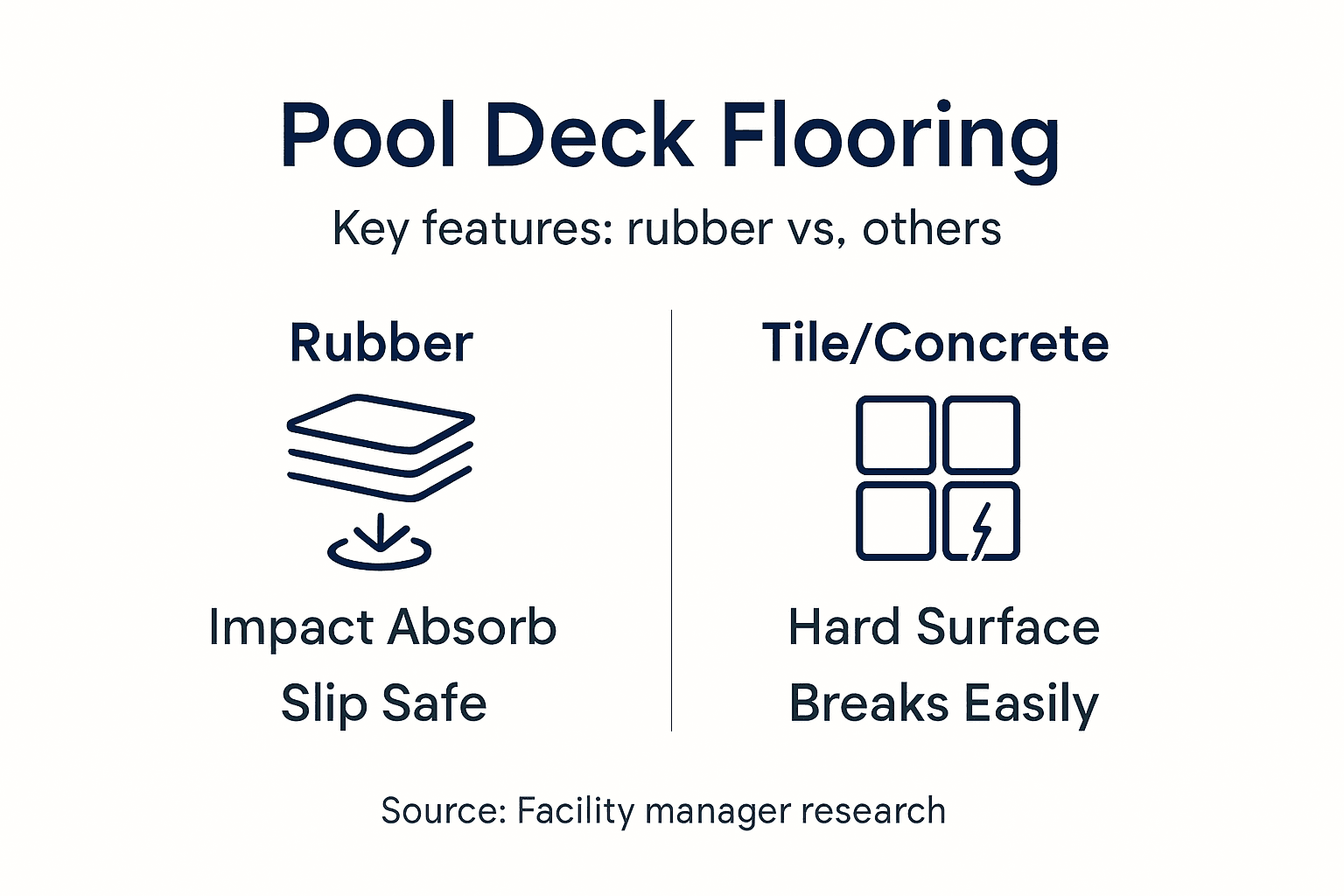
Monthly maintenance costs typically run $0.50-2 per square foot for commercial facilities, depending on traffic volume and cleaning intensity. This is reasonable compared to emergency replacement costs when flooring fails prematurely.
Maintenance tasks:
- Daily sweeping to remove debris
- Weekly cleaning with appropriate detergents
- Monthly slip-resistance testing
- Quarterly deep cleaning and inspection
- Annual professional assessment
Comparison with concrete
Concrete costs less initially but creates multiple problems. Hard surfaces don’t absorb impacts, leading to more severe injuries and higher liability costs. Concrete cracks, stains, becomes slippery when wet, and requires frequent sealing—maintenance rivals rubber flooring costs.
When someone slips on concrete and sustains a serious injury, legal costs and settlement expenses dwarf any initial savings. Facility liability insurance also reflects surface safety ratings.
Comparison with ceramic tile
Ceramic tile provides decent slip resistance but fractures easily in high-traffic areas. Broken tiles create tripping hazards and require replacement. Grout lines trap moisture and chemicals, degrading over time. Replacement costs escalate quickly when you need to replace tiles in pattern sequences.
Tile maintenance exceeds rubber maintenance. Grout cleaning, resealing, and individual tile replacement consume time and money. The aesthetic appeal doesn’t compensate for operational headaches.
This table provides a snapshot of lifetime costs and maintenance demands for pool flooring types:
| Flooring Type | Upfront Cost (per sq ft) | Typical Lifespan | Annual Maintenance Effort |
|---|---|---|---|
| Rubber Flooring | $5–$15 | 10–15 years | Low, simple cleaning |
| Concrete | $3–$8 | 5–10 years | High, frequent sealing |
| Ceramic Tile | $6–$20 | 5–10 years | Moderate, grout upkeep |
The cheapest flooring option at purchase becomes the most expensive when you factor in injuries, liability, maintenance, and premature replacement.
Long-term investment analysis
ASTM standards for resilient floor coverings show rubber offers superior shock absorption and slip resistance, reducing injury risk and offsetting higher installation expenses. Proper maintenance extends floor life significantly, influencing overall investment value across 10-15 years.
Over 15 years, quality rubber flooring typically outperforms alternatives despite higher initial costs due to:
- Fewer injury-related claims
- Lower liability insurance premiums
- Extended replacement cycles
- Reduced maintenance labor
- Superior durability in chemical environments
Pro tip: Calculate total cost of ownership over at least 10 years, including maintenance, liability reduction, and replacement costs—this reveals rubber flooring’s true value compared to cheaper alternatives that fail prematurely.
Elevate Pool Safety with Durable Commercial Mats
Ensuring safety and durability around your pool area is a critical challenge many facility managers face. The article highlights key issues such as slip resistance, impact absorption, and chemical resistance—factors that directly affect visitor safety and long-term flooring performance. Selecting the right flooring thickness and material quality can reduce liability risks and maintenance costs while enhancing the overall user experience. At Mats4U, we understand these concerns and offer a wide range of Commercial Mats engineered to provide reliable traction, comfort, and resilience in demanding environments.
Explore our premium selection of mats designed to complement your pool facilities with superior slip resistance and durability. Take action now to protect your patrons and investment by choosing mats that meet stringent safety standards. Visit Mats4U.com and discover how our trusted solutions combined with competitive pricing and free delivery over $100 can elevate your pool safety strategy today. Don’t wait until maintenance issues or accidents arise—secure your facility’s future with expertly crafted mats designed for commercial success.
Frequently Asked Questions
What is pool rubber flooring made of?
Pool rubber flooring is constructed from elastomeric materials specifically designed for wet environments. These materials offer superior slip resistance, impact absorption, and drainage capabilities compared to general-purpose rubber flooring used in gyms or warehouses.
How does thickness affect the performance of rubber flooring in pools?
The thickness of rubber flooring directly influences its safety, comfort, and durability. Thicker installations (typically 1/2 inch or more) provide better shock absorption, a longer lifespan in high-traffic areas, and superior comfort, especially for staff standing for extended periods.
What are the maintenance requirements for rubber pool flooring?
Maintaining rubber pool flooring is simple. Daily sweeping to remove debris, weekly cleaning with mild soap and water, and monthly checks for any shifts or damage are recommended to ensure the longevity and safety of the flooring.
How do poured-in-place rubber and rubber tile systems compare for pool usage?
Poured-in-place rubber offers seamless coverage and unlimited design flexibility, but requires professional installation and has higher upfront costs. Rubber tile systems are pre-manufactured, allowing quicker installation and easier replacement of individual tiles, making them more budget-friendly for phased projects.
Recommended
- The Ultimate Guide to Cleaning Rubber Flooring for Longevity and Safet – Mats4U USA
- Outdoor Pool Matting: Boosting Safety and Style – Mats4U USA
- Rubber Mat Pool Safety – Boosting Hygiene in Hospitality – Mats4U USA
- Floor Mat for Pool Safety and Cleanliness – Mats4U USA
- Floor Graphics Printing London | Anti-Slip Vinyl Floor Stickers UK


