


Not all anti-slip mats are created equal. While many facility managers assume their pool area surfaces provide adequate protection, slip-and-fall incidents remain common even in facilities with seemingly safe flooring. The difference between effective pool safety mats and inadequate ones can mean the difference between a safe environment and costly liability claims. This guide will walk you through the critical factors that make pool safety mats truly effective, helping you select solutions that drastically reduce slip hazards and protect both visitors and your facility’s bottom line.
Table of Contents
- Why Pool Safety Mats Matter: Understanding Slip Risks
- Key Features That Make Pool Safety Mats Effective
- Comparing Pool Mat Materials And Surface Options
- Practical Tips For Choosing, Installing, And Maintaining Pool Safety Mats
- Enhance Your Pool Area Safety With Mats4U Solutions
- Frequently Asked Questions
Key takeaways
| Point | Details |
|---|---|
| Incident reduction | Anti-slip mats can reduce slip-and-fall incidents in pool areas by up to 85% when properly selected and maintained. |
| Wet traction matters | Materials with high wet coefficient of friction (COF) offer superior traction, while traditional surfaces like concrete lose significant grip when wet. |
| Texture design | Multi-directional textured mats outperform single-direction patterns, providing reliable traction regardless of foot placement or movement direction. |
| Maintenance is critical | Proper installation and routine maintenance are essential to preserving mat effectiveness and ensuring long-term safety performance. |
Why pool safety mats matter: understanding slip risks
Commercial pool environments present unique safety challenges that demand specialized flooring solutions. Falls, trips, and slips account for 21.8% of serious workers’ compensation claims in commercial settings, with pool areas representing particularly high-risk zones. The combination of water, foot traffic, and smooth surfaces creates conditions where traditional flooring materials fail to provide adequate protection.
Wet surfaces drastically compromise traction on common materials. Concrete pool decks, ceramic tiles, and even standard rubber mats lose much of their slip resistance when water is present, leaving visitors vulnerable to falls. The financial impact extends beyond immediate medical costs to include potential litigation, increased insurance premiums, and reputational damage that can affect your facility’s long-term viability.
Anti-slip mats significantly reduce slip-and-fall incidents in wet areas like pool decks, with reductions up to 85% when properly implemented. However, this protection depends entirely on selecting mats with appropriate characteristics for pool environments. Many facility managers discover too late that their chosen mats degrade quickly under UV exposure, lose texture from chemical contact, or simply lack the wet traction needed for meaningful safety improvements.
Consider these critical factors:
- Water presence changes everything: surfaces safe when dry become hazardous when wet
- High foot traffic accelerates wear patterns that compromise safety over time
- Chemical exposure from pool treatments affects material integrity and slip resistance
- Temperature fluctuations and UV exposure degrade certain materials faster than others
“The right pool safety mat doesn’t just provide traction. It maintains that traction consistently across varying conditions while resisting the environmental factors that destroy inferior products.”
Facility managers must approach mat selection strategically, evaluating products against the specific demands of pool environments. Understanding anti slip pool mats safety requirements helps you move beyond surface-level comparisons to identify solutions that deliver lasting protection. Your choice impacts visitor safety, operational costs, and legal exposure, making it one of the most important decisions for pool area management. Prioritizing non slip poolside mats safety considerations ensures you implement solutions that truly protect your facility.
Key features that make pool safety mats effective
Understanding what separates effective pool safety mats from inadequate ones requires examining specific technical characteristics that directly impact performance. The coefficient of friction (COF) measures slip resistance, with wet COF being the critical metric for pool environments. Aqua Tile maintains a wet COF of 0.85 or higher, exceeding safety standards and providing reliable traction even when saturated.
Material durability determines whether mats maintain their safety properties over time. UV exposure, chemical contact from pool treatments, and constant foot traffic all degrade mat materials. Most slip-and-fall incidents occur on surfaces originally considered safe but which lost slip resistance over time. This reality makes material selection crucial for long-term safety performance rather than just initial installation success.
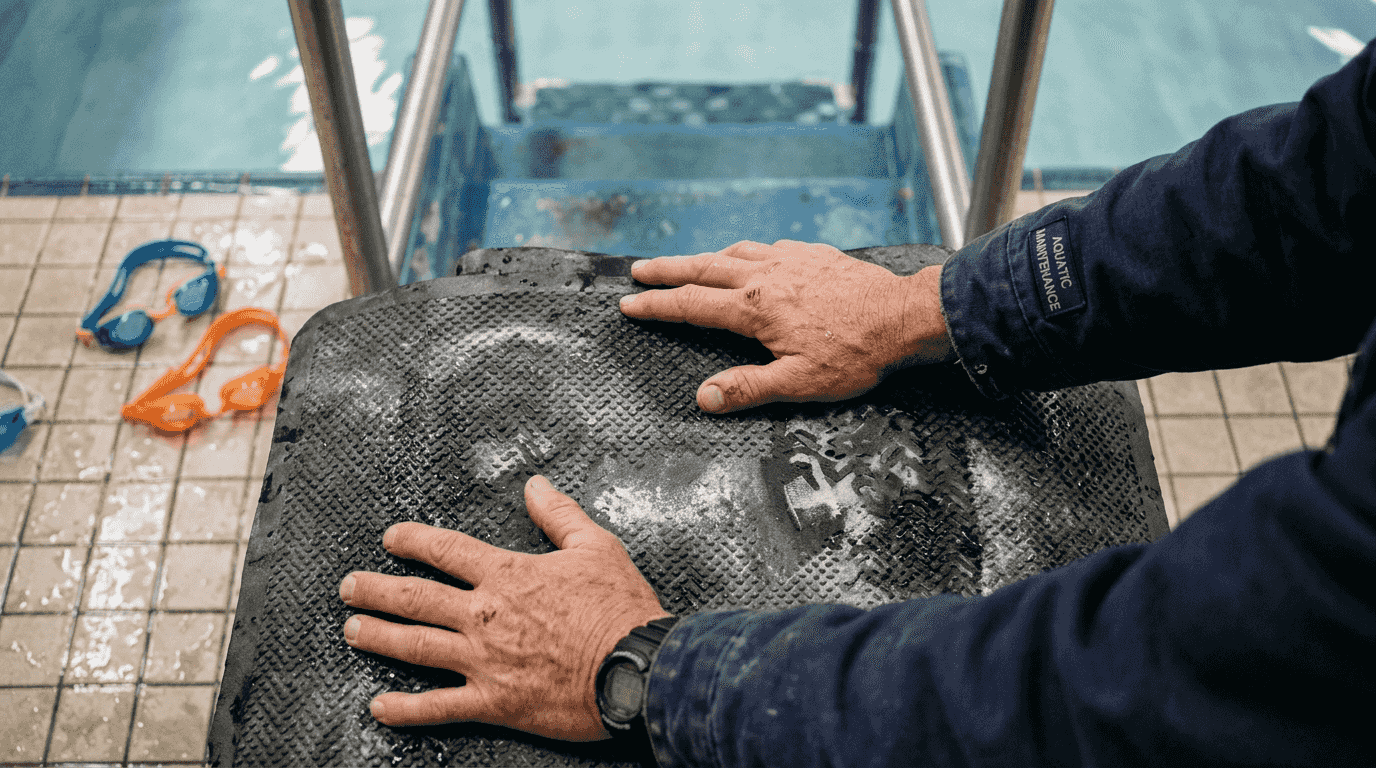
Texture design influences how effectively mats provide traction across different movement patterns. Multi-directional textures enhance grip regardless of foot placement or movement direction, while single-direction patterns create vulnerabilities when feet move perpendicular to texture lines. The texture must also resist becoming clogged with debris or biofilm that would compromise its effectiveness.
Key material and design features include:
- High wet COF ratings (0.6 minimum, 0.8+ preferred for pool areas)
- UV-resistant materials that maintain properties under sun exposure
- Chemical resistance to chlorine, bromine, and other pool treatment chemicals
- Drainage capabilities that prevent water pooling on mat surfaces
- Flexible construction that conforms to substrate without creating trip hazards
- Color stability that prevents fading and maintains visual appeal
Pro Tip: When evaluating mat samples, test them under actual use conditions rather than just dry showroom environments. Pour water on samples, walk across them with wet feet, and assess whether texture provides consistent grip from multiple angles.
Regular cleaning and inspection maintain mat safety and lifespan. Organic matter, body oils, sunscreen residues, and mineral deposits accumulate on mat surfaces, creating slippery films that negate the benefits of textured designs. Establishing cleaning protocols prevents this degradation, extending the period between replacements while maintaining safety standards.
Consider how outdoor pool matting safety style requirements differ from indoor applications. Outdoor mats face harsher conditions including temperature extremes, direct sunlight, and environmental contaminants that accelerate wear. Selecting mats engineered for these conditions prevents premature failure and maintains consistent safety performance throughout their service life.
The interaction between all these features determines real-world safety performance. A mat with excellent initial COF but poor UV resistance will fail prematurely. Similarly, a durable mat with inadequate drainage allows water pooling that creates slip hazards despite texture. Comprehensive evaluation using 7 smart tips for choosing outdoor mat for pool areas helps you identify products that excel across all critical dimensions rather than just one or two features.
Comparing pool mat materials and surface options
Material choice fundamentally determines pool safety mat performance, with significant variations in slip resistance, durability, and long-term cost effectiveness. Aqua Tile surfaces are 68% more slip-resistant than traditional rubber mats and 45% more impact absorbent than poured concrete, demonstrating how engineered solutions outperform conventional options.
Rubber mats represent a common but often inadequate choice for pool areas. While initially providing reasonable traction, rubber degrades under UV exposure and loses grip as plasticizers leach out over time. The material also becomes brittle with temperature fluctuations, developing cracks that harbor bacteria and create trip hazards. Chemical exposure from pool treatments further accelerates this degradation, requiring frequent replacement that increases long-term costs.
Concrete and ceramic tile surfaces fail to maintain consistent traction when wet despite being popular in pool construction. Concrete decks can lose up to 50% of their traction when wet, dropping COF below OSHA’s recommended 0.6 minimum. Ceramic tiles present similar challenges, with their smooth surfaces becoming dangerously slippery regardless of whether they feature subtle texture patterns.
| Material | Wet COF | UV Resistance | Chemical Resistance | Impact Absorption | Typical Lifespan |
|---|---|---|---|---|---|
| Aqua Tile | 0.85+ | Excellent | Excellent | High | 15+ years |
| Rubber Mats | 0.55-0.65 | Poor | Moderate | Moderate | 3-5 years |
| Concrete | 0.3-0.5 (wet) | Good | Good | Low | Permanent (unsafe when wet) |
| Ceramic Tile | 0.4-0.6 | Excellent | Excellent | Very Low | Permanent (unsafe when wet) |
| Foam Mats | 0.6-0.7 | Poor | Poor | High | 1-2 years |
Foam mats offer cushioning but lack durability for commercial pool environments. They compress under repeated foot traffic, losing both cushioning and slip resistance properties. Chemical exposure causes rapid deterioration, with mats often requiring replacement within one to two years. The material also provides ideal conditions for bacterial growth when not thoroughly dried between uses.
Pro Tip: Calculate total cost of ownership rather than just initial purchase price. A premium mat lasting 15 years with minimal maintenance costs far less over its lifetime than cheap mats requiring replacement every two years plus the labor costs for removal and reinstallation.
The data clearly shows engineered tile systems provide superior performance across all critical metrics. They maintain slip resistance under wet conditions, resist environmental degradation, and deliver long service lives that offset higher initial costs. For facility managers focused on both safety and budget efficiency, pool rubber flooring safety durability comparisons reveal why traditional rubber often represents a poor value proposition despite lower upfront costs.
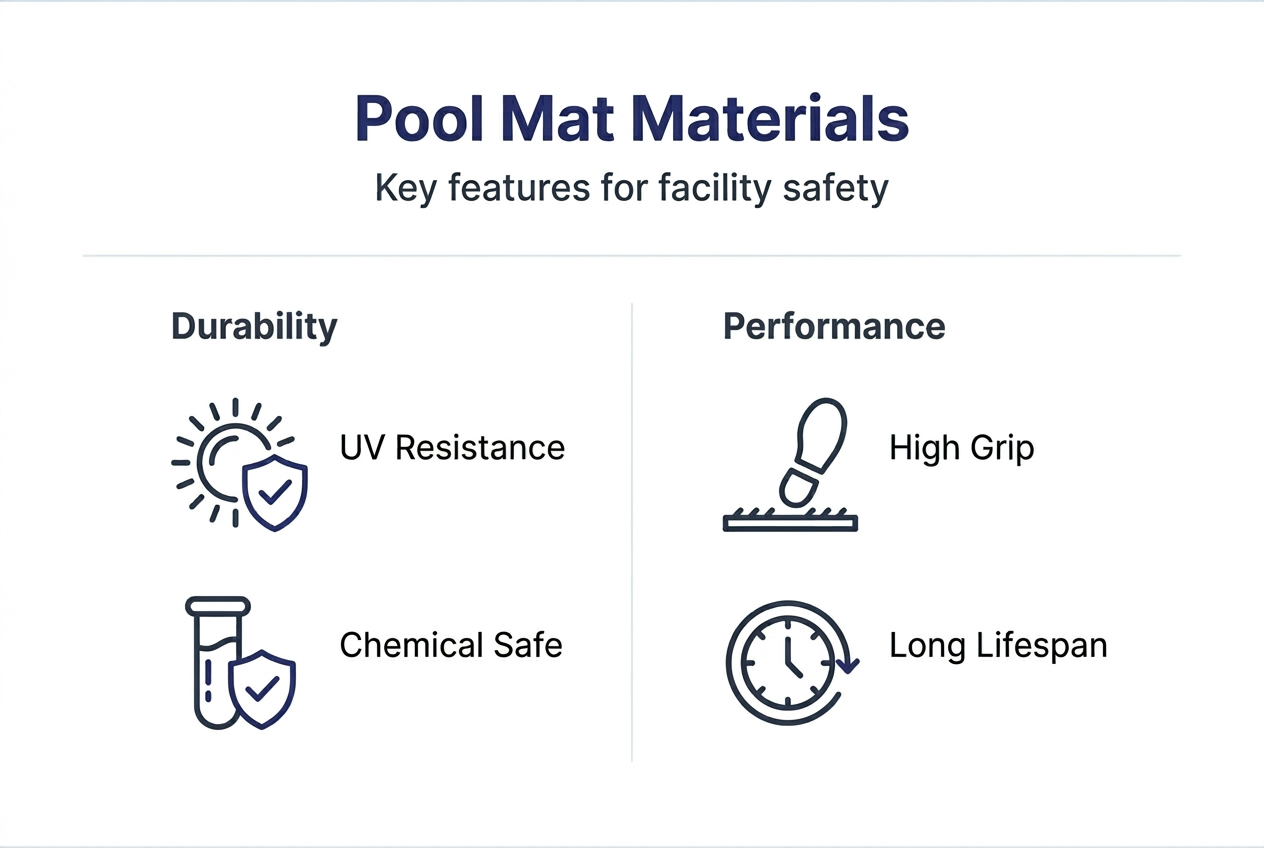
Material selection should align with your specific facility conditions. High-traffic commercial pools demand more durable solutions than residential applications. Outdoor installations require superior UV resistance compared to indoor facilities. Chemical usage intensity affects how quickly materials degrade, with heavily treated pools demanding more resistant options. Evaluating these factors ensures your material choice provides optimal safety performance throughout its intended service life.
Practical tips for choosing, installing, and maintaining pool safety mats
Successful implementation of pool safety mats requires careful assessment of site-specific conditions before selection. Traffic volume, user demographics, chemical usage intensity, and environmental factors all influence which products will perform optimally in your facility. Facility managers should evaluate foot traffic, chemical exposure, and environmental factors when choosing mat materials to ensure selections match operational demands.
Follow this systematic selection process:
- Measure your pool area dimensions and identify zones with highest slip risk
- Assess current surface conditions including substrate type, drainage, and slope
- Review incident reports to identify problem areas requiring enhanced protection
- Evaluate traffic patterns to determine which zones experience heaviest use
- Consider chemical exposure levels and cleaning protocols already in place
- Set budget parameters including installation costs and long-term maintenance expenses
Proper installation prevents the safety hazards that undermine even high-quality mats. Improper installation can create trip hazards as mats curl at edges; regular cleaning extends mat lifespan and effectiveness. Following manufacturer specifications for substrate preparation, adhesive selection, and curing times ensures mats perform as designed rather than creating new safety risks.
Critical installation considerations:
- Substrate must be clean, dry, and structurally sound before mat placement
- Adhesive must be rated for wet environments and compatible with both substrate and mat materials
- Seams should be minimized and sealed to prevent water infiltration and trip hazards
- Edges require proper transition strips to eliminate curling and tripping risks
- Drainage patterns must direct water away from mat surfaces rather than pooling underneath
Maintenance protocols directly impact long-term safety performance and mat lifespan. Establishing daily, weekly, and monthly cleaning schedules removes contaminants before they compromise slip resistance. Daily hosing removes loose debris and organic matter. Weekly scrubbing with appropriate cleaners eliminates biofilm and residue buildup. Monthly deep cleaning addresses embedded contaminants and mineral deposits.
Pro Tip: Create a maintenance log documenting cleaning activities and inspection findings. This documentation demonstrates due diligence for liability purposes while helping you identify developing problems before they compromise safety.
Inspection routines catch developing problems while they remain easily correctable. Check for texture wear, edge curling, adhesive failure, color fading, crack development, and drainage problems. Addressing these issues promptly through spot repairs or targeted replacements prevents small problems from escalating into major safety hazards or requiring complete mat system replacement.
Consider multi-directional slip-resistant mats for best performance across varying foot traffic patterns. These designs eliminate the directional vulnerabilities present in linear texture patterns, providing consistent traction regardless of movement direction. This feature becomes particularly important in areas where people enter and exit pools at varying angles or where circulation patterns change based on facility usage.
Leveraging resources like understanding anti slip mats for wet areas guides helps you make informed decisions throughout the selection, installation, and maintenance process. Additional insights from floor mat for pool resources ensure you implement comprehensive solutions that address all safety considerations rather than just isolated elements.
Enhance your pool area safety with Mats4U solutions
Implementing the insights from this guide becomes straightforward when you partner with a supplier offering proven commercial-grade solutions. Mats4U provides durable, slip-resistant mats specifically engineered for demanding pool environments where safety and longevity matter most. Our product lineup includes specialized options designed to improve traction, enhance drainage, and withstand the unique challenges of wet commercial applications.
Explore our Waterhog Max Herringbone Mat featuring multi-directional texture that maintains grip from any approach angle. For areas requiring enhanced drainage, our Waterhog Drainable Border Mat prevents water pooling while maintaining slip resistance. Each product in our catalog meets rigorous commercial standards, ensuring you implement solutions that protect visitors and reduce liability exposure. Visit Mats4U to discover the complete range of pool safety solutions tailored to your facility’s unique requirements.
Frequently asked questions
How often should pool safety mats be replaced?
Replacement timelines vary based on material quality, traffic volume, and maintenance practices, typically ranging from 3 to 15 years. Signs indicating replacement needs include visible texture wear, edges curling despite repairs, reduced slip resistance even after cleaning, permanent discoloration, and crack development in mat surfaces. Regular inspections using guidance from choosing outdoor mat resources help you identify when mats reach end of service life. Premium materials like engineered tile systems often outlast rubber alternatives by three to five times, making them more cost effective despite higher initial investment.
What materials are best for resisting chemical degradation in pool areas?
Materials engineered specifically for aquatic environments resist chlorine, bromine, and other pool chemicals better than general-purpose options. Some materials like Aqua Tile are designed to maintain slip resistance despite chemical exposure, outperforming rubber mats that degrade rapidly under similar conditions. Avoid standard rubber products in chemically treated pools, as plasticizer leaching compromises both safety and longevity.
Can installing pool safety mats reduce facility liability?
Effective slip-resistant mats significantly reduce incident rates, directly lowering liability exposure and insurance costs. Slip-and-fall incidents account for a large portion of workplace injury claims; proper mats can lower incident rates and liability exposure. Documenting mat selection criteria, maintenance activities, and inspection findings creates records demonstrating reasonable care, strengthening your legal position if incidents occur. Consult your insurance provider about potential premium reductions when implementing certified slip-resistant flooring systems.
Do darker colored mats show less wear than lighter options?
Color choice affects perceived cleanliness more than actual performance degradation. Darker mats hide staining and discoloration better, maintaining visual appeal longer despite similar actual wear rates. However, lighter colors reveal contamination buildup more clearly, prompting earlier cleaning that may extend functional lifespan. Select colors based on your facility’s aesthetic preferences and cleaning schedule capacity rather than assuming darker options require less maintenance.
Should transition areas between pool and locker rooms use different mats?
Transition zones benefit from specialized mat solutions addressing unique conditions in each area. Pool deck mats prioritize wet traction and drainage, while locker room mats focus on moisture absorption and antimicrobial properties. Installing appropriate mats for each zone optimizes safety and cleanliness rather than using single products throughout facilities. Proper transition strips between zones prevent trip hazards while accommodating different mat thicknesses and characteristics.
Recommended
- Non Slip Poolside Mats: Boosting Facility Safety – Mats4U USA
- Floor Mat for Pool Safety and Cleanliness – Mats4U USA
- Outdoor Pool Matting: Boosting Safety and Style – Mats4U USA
- Pool Rubber Flooring: Enhancing Safety and Durability – Mats4U USA
- Certified Playground Surfacing Ensures Child Safety - Mountain High Landscape and Hardscape Supply | Landscape Supply Yard | Marietta, GA
- Checklista för skadeförebyggande träning 2026: minska skaderisk med 35%


