


Not all playground surfaces offer equal protection. Falls cause over 70% of playground injuries, resulting in over 200,000 emergency visits annually, and the difference often comes down to what’s beneath children’s feet. Rubber flooring can dramatically reduce injury severity by absorbing impact energy that concrete or grass simply cannot handle. This guide walks you through rubber surfacing options, installation best practices, and maintenance essentials so you can create safer play environments that meet modern safety standards.
Table of Contents
- Why Rubber Flooring Matters For Playground Safety
- Types Of Rubber Playground Surfaces And Their Features
- Installation And Maintenance Essentials For Lasting Safety
- Balancing Safety, Accessibility, And Cost In Rubber Surfacing Decisions
- Explore Premium Rubber Flooring Solutions At Mats4U
- Frequently Asked Questions
Key takeaways
| Point | Details |
|---|---|
| Impact protection | Rubber surfacing reduces playground injury severity by absorbing impacts better than traditional materials. |
| Installation matters | Proper installation by certified professionals is essential for long-term safety and performance. |
| Maintenance requirements | Regular inspections prevent surface degradation and keep impact attenuation effective. |
| Cost and compliance | Different rubber surfaces vary in cost, lifespan, and safety features, with PIP offering ADA compliance. |
| Surface selection | Pour-in-place, rubber tiles, and rubber mulch each provide distinct trade-offs in durability and maintenance. |
Why rubber flooring matters for playground safety
Playground injuries don’t happen by accident. They happen when surfaces fail to absorb the energy from falls. Rubber surfaces significantly reduce head injuries and fractures compared to concrete or asphalt surfaces, making material choice a life-or-death decision for facility managers.
The science behind this is straightforward. When a child falls, kinetic energy needs somewhere to go. Hard surfaces like concrete transfer that energy directly into bones and tissue. Rubber compresses on impact, converting that energy into material deformation instead of bodily harm. This shock absorption capability is measured and regulated by ASTM F1292, the safety standard that sets benchmarks for fall impact attenuation across different surface types.
Choosing compliant materials isn’t just about following rules. It’s about creating environments where children can explore physical challenges without catastrophic consequences. Consider these critical factors:
- Surface depth and density affect how much fall height a material can safely handle
- Temperature fluctuations can alter rubber’s shock absorption properties
- Drainage design prevents water pooling that degrades impact performance
- UV resistance maintains material integrity in outdoor installations
“The right playground surface acts as an invisible safety net, catching children before injuries occur and giving parents peace of mind that exploration won’t end in the emergency room.”
Facility managers who understand these dynamics make better purchasing decisions. They prioritize surfaces that meet or exceed safety thresholds rather than choosing based solely on initial cost. The investment in quality rubber surfacing pays dividends in reduced injury rates, lower liability exposure, and extended surface lifespan. For additional insights on rubber applications in educational settings, explore rubber flooring for classrooms to see how these materials perform in high-traffic indoor environments.
Types of rubber playground surfaces and their features
Three main rubber surfacing categories dominate the playground market, each with distinct performance characteristics. Understanding these differences helps you match surface type to your specific safety requirements, budget constraints, and maintenance capabilities.
Poured-in-place rubber surfacing provides superior fall protection, seamless coverage, ADA compliance, and lasts 10 to 15 years with care. Installation involves mixing rubber granules with a polyurethane binder, then pouring and leveling the mixture on site. The result is a continuous surface without gaps or seams where tripping hazards could develop. Colors can be customized to create engaging visual patterns or delineate different play zones.
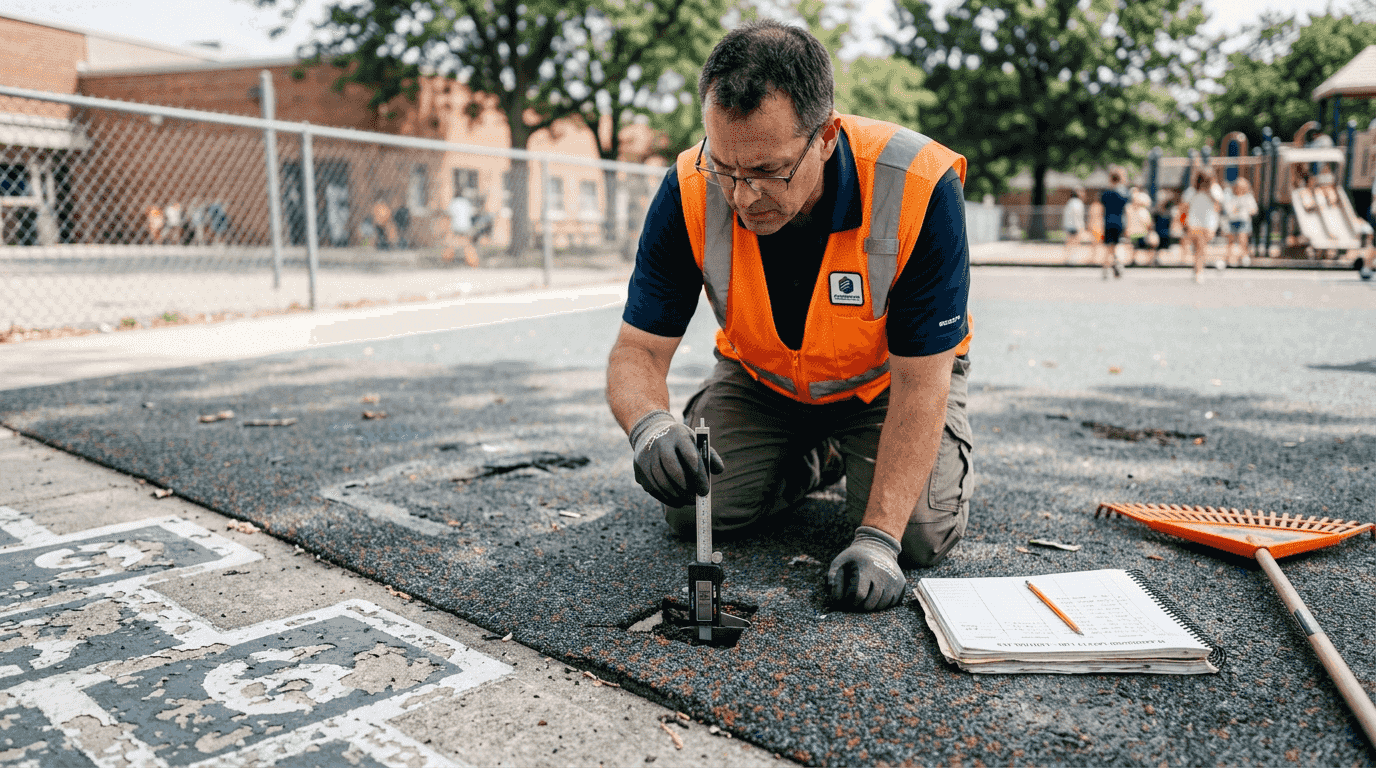
PIP surfaces excel in several areas. They drain water efficiently through their porous structure, preventing puddles that create slip hazards or freeze in winter. The seamless design accommodates wheelchairs and walkers without the bumps or gaps found in modular systems. However, upfront costs range from $15 to $25+ per square foot, making PIP the premium option in playground surfacing.
Rubber tiles offer modular flexibility that simplifies repairs and replacements. Individual tiles interlock to create stable surfaces suitable for flat play areas. Rubber tiles are easier to install but may develop gaps over time that increase tripping hazards as materials settle or shift. These gaps become particularly problematic around high-traffic equipment zones where repeated impact loosens tile connections.
The modular nature provides one significant advantage: damaged sections can be swapped out without resurfacing entire areas. This reduces long-term maintenance costs when localized wear occurs. Tiles work well for playground perimeters or lower-impact zones where seamless coverage isn’t critical for safety compliance.
Rubber mulch fills a different niche entirely. This loose-fill material consists of shredded rubber particles that provide deep cushioning when installed to proper depths. Certified rubber mulch can provide fall protection up to 16 feet when installed to recommended depths, making it suitable for equipment with significant fall heights like climbing structures or overhead ladders.
Maintenance demands differ dramatically across these options. Rubber mulch requires regular raking to maintain even distribution and depth checks to ensure adequate protection. Material migrates away from high-traffic zones, requiring periodic replenishment. PIP surfaces need occasional crack repairs but otherwise demand minimal upkeep beyond regular cleaning.
Pro Tip: When evaluating rubber quality, ask specifically about EPDM content. Higher-grade EPDM rubber maintains color vibrancy and structural integrity far longer than cheaper alternatives that fade or crack within years.
| Surface Type | Durability | Maintenance Level | Safety Features | Cost per Sq Ft |
|---|---|---|---|---|
| Pour-in-Place | 10-15 years | Low | Seamless, ADA compliant, excellent impact absorption | $15-$25+ |
| Rubber Tiles | 8-12 years | Medium | Modular, easy repairs, good impact protection | $8-$15 |
| Rubber Mulch | 6-10 years | High | Deep cushioning, handles extreme falls | $3-$8 |
Budget planning should account for total cost of ownership rather than just installation expenses. A cheaper upfront option that demands constant maintenance or replacement within five years ultimately costs more than premium materials that perform reliably for over a decade. For detailed cost breakdowns, review our guide on rubber flooring installation cost to understand what factors drive pricing.
Installation and maintenance essentials for lasting safety
Even premium rubber surfacing fails without proper installation. Proper installation by certified professionals ensures correct bonding and fall attenuation of PIP surfaces, making contractor selection as important as material choice. Here’s what successful installation requires:
- Site preparation begins with grading and drainage design to prevent water accumulation
- Base layer installation provides stable foundation using compacted aggregate or concrete
- Rubber application follows manufacturer specifications for thickness based on fall height requirements
- Curing time allows polyurethane binder to achieve full strength before playground opening
- Impact testing verifies that installed surface meets ASTM F1292 standards for designated fall zones
Contractor certification matters more than most facility managers realize. Uncertified installers often skip critical steps like proper base preparation or adequate mixing ratios, resulting in surfaces that fail prematurely or never achieve specified impact protection. Always verify certification from recognized bodies before signing contracts.
Maintenance routines determine whether your rubber surfacing reaches its full lifespan potential. Regular inspections should check for surface degradation, cracks, drainage issues, and material loss to maintain safety performance across seasons and weather conditions.
Establish a maintenance schedule that includes these essential tasks:
- Weekly visual inspections for obvious damage, displaced material, or drainage problems
- Monthly detailed assessments of high-traffic zones around swings, slides, and climbing equipment
- Quarterly cleaning with mild, pH-neutral cleaners that won’t degrade rubber binder
- Annual professional impact testing to verify continued compliance with safety standards
- Immediate repairs for any cracks, tears, or loose sections that create tripping hazards
Pro Tip: Avoid high-pressure washing that forces water between rubber layers, weakening the polyurethane binder that holds everything together. Use low-pressure rinsing or scrubbing with soft brushes instead.
Cleaning methods significantly impact surface longevity. Harsh chemicals or petroleum-based cleaners attack rubber compounds, causing premature deterioration. Stick with cleaners specifically formulated for rubber surfaces, or use simple soap and water solutions for routine maintenance. For comprehensive cleaning guidance, consult our resource on cleaning rubber flooring that covers effective techniques without damaging materials.
Drainage management prevents the most common cause of rubber surface failure. Water that pools on surfaces or saturates subsurface layers creates several problems. Freeze-thaw cycles crack and lift rubber. Standing water promotes mold growth that degrades binder. Poor drainage shortens lifespan from 15 years to under 10. Inspect drainage pathways quarterly and clear debris from channels immediately.
Documentation provides legal protection and maintenance clarity. Keep detailed records of installation dates, contractor certifications, inspection findings, maintenance activities, and impact test results. These records prove due diligence if injuries occur and help track when surfaces approach end-of-life replacement timelines. Educational applications benefit from similar diligence, as explored in rubber flooring for classrooms where maintenance consistency affects both safety and acoustics.
Balancing safety, accessibility, and cost in rubber surfacing decisions
Budget constraints force difficult trade-offs, but safety cannot be negotiable. The challenge lies in maximizing protection within financial limits while meeting accessibility requirements and planning for long-term costs. Understanding total cost of ownership shifts decision-making from lowest bid to best value.
PIP rubber surfacing costs between $15 and $25 per square foot, higher than loose-fill surfaces but offers seamless, ADA-compliant safety that eliminates many ongoing expenses. Initial sticker shock often overshadows the financial reality: premium surfaces require minimal maintenance, rarely need repairs, and last 50% longer than budget alternatives.
Accessibility compliance isn’t optional for public playgrounds. ADA standards mandate surfaces that accommodate wheelchairs, walkers, and other mobility devices without creating barriers to play access. Unitary surfaces provide excellent durability and accessibility, requiring minimal maintenance unlike loose-fill alternatives that shift under wheels or create unstable footing.
PIP and rubber tiles meet accessibility requirements because they provide firm, stable surfaces with minimal gaps. Loose-fill materials like rubber mulch present challenges for wheelchair users despite excellent fall protection. Facility managers serving diverse populations must prioritize accessibility even when it increases upfront investment.
Consider these financial realities when comparing options:
- Maintenance costs compound annually, with loose-fill surfaces requiring material replenishment every 2-3 years
- Repair expenses for damaged sections vary dramatically based on surface type and replacement complexity
- Liability exposure increases with surfaces that don’t meet current safety standards
- Replacement timelines affect long-term budgeting, with quality surfaces deferring major expenses for over a decade
| Investment Factor | PIP Rubber | Rubber Tiles | Rubber Mulch |
|---|---|---|---|
| Initial Cost | $15-$25/sq ft | $8-$15/sq ft | $3-$8/sq ft |
| Expected Lifespan | 10-15 years | 8-12 years | 6-10 years |
| Annual Maintenance | Low | Medium | High |
| ADA Compliance | Full | Good | Limited |
| Safety Certification | ASTM F1292 | ASTM F1292 | ASTM F1292 |
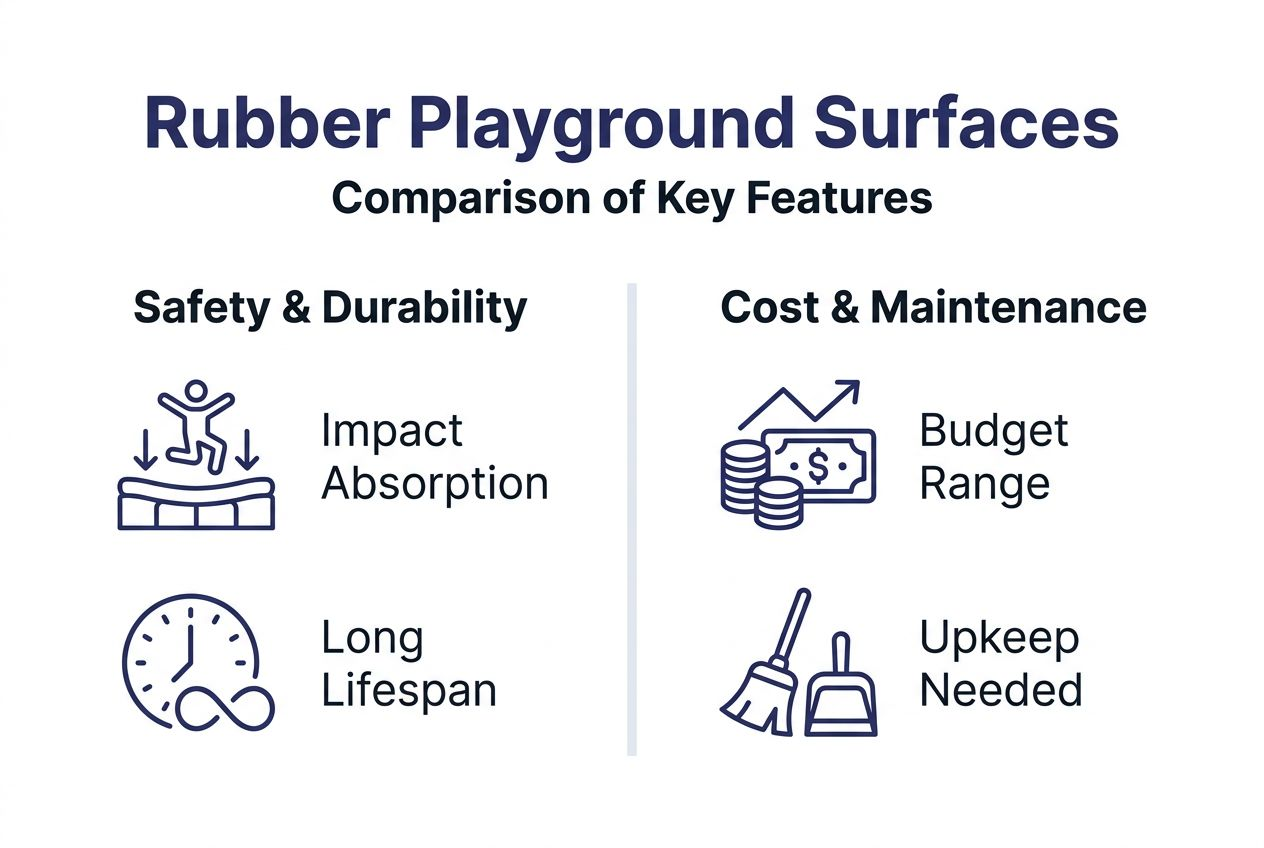
Safety standards provide non-negotiable baselines regardless of budget. Every surface must meet ASTM F1292 requirements for fall impact attenuation at designated heights. Cutting corners here exposes children to preventable injuries and organizations to legal liability that far exceeds any installation savings.
Smart budgeting strategies stretch limited funds without compromising protection. Consider phased installations that prioritize high-fall-risk zones like climbing equipment with premium PIP surfaces while using tiles or mulch in lower-risk perimeter areas. This targeted approach maximizes safety impact per dollar spent. For detailed cost analysis and planning tools, explore our comprehensive guide on rubber flooring installation cost that breaks down budget variables.
Accessibility extends beyond surface type to design integration. Ramps, transfer stations, and ground-level play components work synergistically with compliant surfacing to create inclusive environments. Budget planning should account for these accessibility features alongside surface selection. Review accessibility requirements in our ADA compliant floor mats resource for broader context on regulatory standards.
Explore premium rubber flooring solutions at Mats4U
Creating safer playgrounds starts with selecting materials that deliver durability, comfort, and compliance. At Mats4U, we offer commercial-grade rubber solutions designed for high-traffic environments where safety and longevity matter most. Our Cushion Complete mat provides anti-fatigue benefits ideal for playground entrance areas where staff and visitors transition between surfaces. For modular flexibility near play zones, explore our WaterHog modular tiles that combine moisture management with durable construction. Facility managers and school administrators seeking reliable flooring solutions can browse our full product range at Mats4U to find options that enhance safety while meeting budget requirements. Let us help you build play environments where children thrive and administrators rest easy.
Frequently asked questions
What is the best rubber playground surface for safety?
Poured-in-place rubber offers the highest safety performance with seamless coverage, superior impact absorption, and full ADA compliance. It eliminates tripping hazards from gaps while providing consistent fall protection across the entire play area. For facilities prioritizing maximum child safety and accessibility, PIP represents the gold standard despite higher upfront costs.
How long does poured-in-place rubber flooring typically last?
PIP rubber surfacing can last 10 to 15 years with proper care including regular inspections, prompt repairs, and appropriate cleaning methods. Environmental factors like UV exposure and temperature extremes affect longevity, but quality materials and certified installation maximize lifespan. Proper maintenance routines extend both safety performance and aesthetic appeal throughout the surface’s operational life.
Are rubber playground surfaces ADA compliant?
Yes, PIP rubber surfacing is fully ADA-compliant, providing smooth surfaces for mobility aids without gaps or obstacles. Rubber tiles also meet accessibility standards when properly installed with minimal seam gaps. These unitary surfaces enable wheelchair users and children with mobility devices to access play equipment independently. For comprehensive accessibility guidance, review our ADA compliant floor mats resource covering regulatory requirements.
How much does rubber playground surfacing cost per square foot?
Typical PIP rubber surfacing costs between $15 and $25 per square foot installed, varying based on material quality, project size, and site preparation requirements. Rubber tiles range from $8 to $15 per square foot, while loose-fill rubber mulch costs $3 to $8 per square foot. These prices reflect installation by certified professionals who ensure compliance with safety standards. For detailed cost breakdowns and budget planning tools, consult our rubber flooring installation cost guide.
What maintenance is required to keep rubber playground surfaces safe?
Proper maintenance includes regular inspections, cleaning with gentle methods, repairing cracks, and drainage upkeep to prevent hazards. Inspect high-traffic zones weekly for damage or material displacement. Clean surfaces monthly with mild, pH-neutral cleaners that preserve rubber integrity. Test impact attenuation annually to verify continued safety compliance. Address any drainage issues immediately to prevent water damage that accelerates deterioration. For effective cleaning techniques, see our cleaning rubber flooring resource with product-specific guidance.
Recommended
- Pool Rubber Flooring: Enhancing Safety and Durability – Mats4U USA
- The Ultimate Guide to Cleaning Rubber Flooring for Longevity and Safet – Mats4U USA
- A Practical Guide to Choosing Rubber Flooring for Classrooms – Mats4U USA
- Best rubber gym floor cleaner: safe and lasting floors – Mats4U USA
- Playground Mulch: Quality and Safety for Playgrounds - Mountain High Landscape and Hardscape Supply | Landscape Supply Yard | Marietta, GA


