


TL;DR:
- Slip and fall accidents in kitchens are common, and choosing the right non-slip rug significantly reduces this risk. The backing material, such as TPR or rubber, is crucial for grip, and low pile rugs are safer and easier to clean. Regularly testing, cleaning, and properly sizing rug pads enhance safety and prolong rug effectiveness.
Slip and fall accidents in the kitchen are more common than most homeowners realize, and the floor covering you choose directly affects your risk. When you search for non slip kitchen rugs on Amazon, you get thousands of results with varying claims about grip, backing, and durability. The challenge is not finding options. It is knowing which ones actually deliver. This guide cuts through the noise and gives you the criteria, the top picks, and the maintenance knowledge to make a smart, safe choice.
Table of Contents
- Key takeaways
- What to look for in non slip kitchen rugs on Amazon
- Top 10 non slip kitchen rugs on Amazon
- 1. COSY HOMEER Non-Slip Kitchen Rug Set
- 2. Ruggable Kitchen Rug with Rug Pad
- 3. Gorilla Grip Original Area Rug
- 4. KMAT Kitchen Mat Anti-Fatigue Floor Mat
- 5. Pauwer Kitchen Rugs Set (2 Piece)
- 6. SKL Home Non Slip Kitchen Runner
- 7. Maples Rugs Non Slip Kitchen Rug
- 8. Ottomanson Ottohome Kitchen Rug
- 9. DII Non-Slip Cotton Kitchen Rug
- 10. Talicor Chef Central Anti-Slip Kitchen Mat
- Quick comparison: top picks by specs
- How to test and maintain your kitchen rug’s non-slip performance
- My take on choosing kitchen rugs that actually stay put
- Upgrade your kitchen floor safety with Mats4u
- FAQ
Key takeaways
| Point | Details |
|---|---|
| Backing material matters most | TPR and rubber backing deliver the most reliable grip on hard kitchen floors. |
| Low pile is best for kitchens | Flat weave and low pile rugs clean easier and stay flatter for better safety. |
| Rug pads add real protection | A correctly sized rug pad significantly improves slip resistance beyond the rug alone. |
| Test grip before you trust it | Always perform a foot drag and corner tug test before relying on any rug’s slip claim. |
| Clean floors maximize grip | Greasy or damp floors reduce rug traction regardless of backing quality. |
What to look for in non slip kitchen rugs on Amazon
Choosing the right rug starts with understanding what actually creates slip resistance. These are the criteria that separate reliable options from marketing claims.
Backing material. The most critical factor is the backing. TPR and rubber backing provide the most consistent grip on tile, hardwood, and laminate floors. Latex is common too, but it can degrade faster with repeated washing. Check product descriptions specifically for backing material, not just the label “non-slip.”
Pile height. Low pile and flat weave rugs work best in kitchens. They lie flat naturally, do not catch feet as you move quickly through the space, and are far easier to wipe down or machine wash. Avoid thick shag rugs in active cooking zones.
Moisture performance. Kitchen floors get wet. A rug that grips well when dry can slide on damp floors. Look for products that specifically claim wet condition performance or have been tested in spill scenarios.
Washability and stain resistance. Kitchens get dirty fast. Machine washable rugs with stain-resistant fibers save time and extend product life. Check care labels before buying.
Anti-fatigue cushioning. If you stand for extended periods while cooking or doing dishes, look for rugs with foam or cushioned backing. Safety and comfort can coexist.
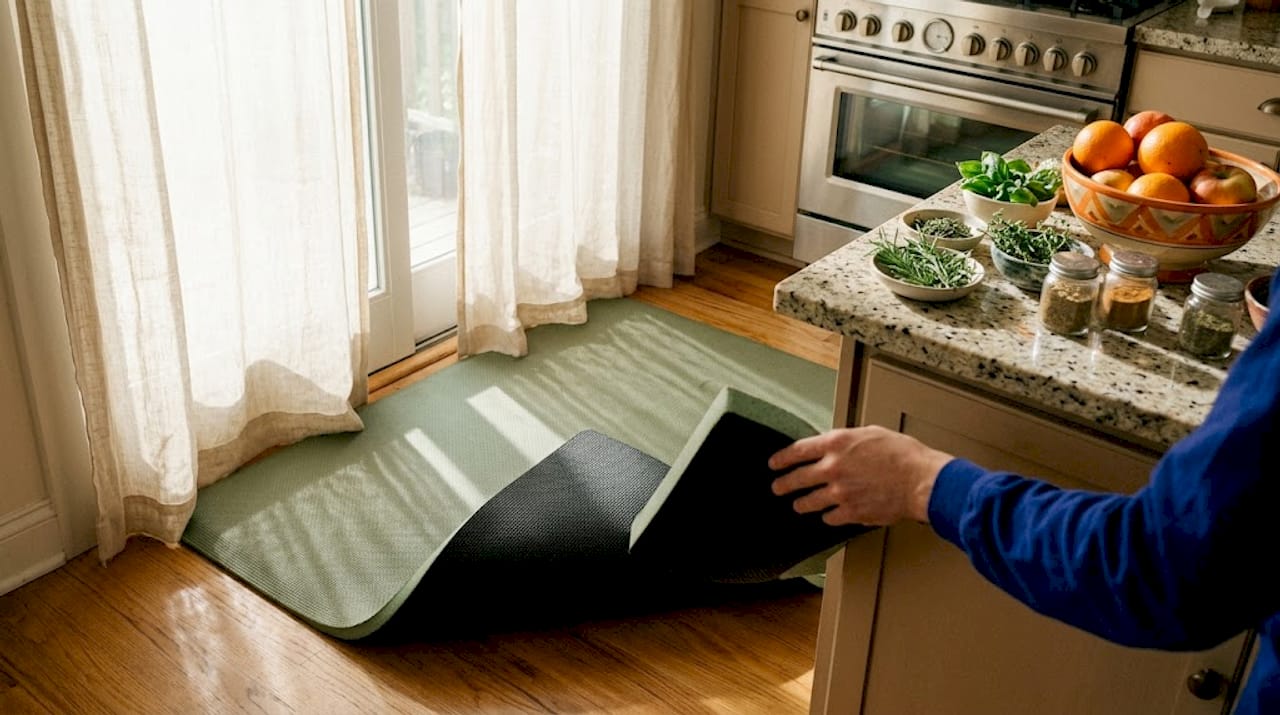
Size and placement. A rug that is too small shifts more easily underfoot. Size up for high-traffic zones like the area in front of the sink or stove, and confirm the dimensions match your floor space before ordering.
Pro Tip: Even the best kitchen rugs with grip perform better over a dedicated rug pad. Rug pads sized about 1 inch smaller on all sides prevent edge exposure and improve overall grip.
Top 10 non slip kitchen rugs on Amazon
Here are ten of the most consistently recommended non slip area rugs for kitchens available on Amazon, with details on what makes each worth considering.
1. COSY HOMEER Non-Slip Kitchen Rug Set
This two-piece set is a popular option for good reason. It features premium TPR non-skid backing and a quick-dry cushioned surface that works well in front of the sink and stove. The chevron pattern holds up visually after repeated washing. The cushioning provides light anti-fatigue support. Size options include a 17" x 29" plus 17" x 47" combo. The price typically runs under $40, making it one of the more affordable kitchen floor mats in this category.
2. Ruggable Kitchen Rug with Rug Pad
Ruggable’s two-piece system separates the decorative topper from a rubber-webbed non-slip base. The pad uses a hook-and-loop fastener to lock the topper in place. The topper itself is machine washable and available in dozens of patterns. Tested and reviewed by kitchen experts, this is one of the strongest options for renters who want style without sacrificing safety. The price runs higher, typically $80 to $120 depending on size, but the washability and grip performance justify it.
3. Gorilla Grip Original Area Rug
Gorilla Grip built its entire brand identity around one promise: staying put. The underside uses a thick, textured rubber grip surface that works on virtually every hard floor type. It is available in dozens of colors and sizes. Machine washable, budget-friendly at around $25 to $45, and consistently rated high for actual slip resistance by verified buyers. It is a go-to choice for renters who need affordable kitchen floor mats without sacrificing safety.
4. KMAT Kitchen Mat Anti-Fatigue Floor Mat
This mat stands out for its anti-fatigue focus. The thick PVC foam cushion reduces foot and joint fatigue during extended cooking sessions. The bottom uses a textured rubber pattern for grip. It is waterproof, easy to wipe clean, and comes in 18" x 30" and 18" x 47" sizes. Not machine washable, but the waterproof surface means a damp cloth handles most messes quickly. Price range is typically $25 to $40. A practical option for anyone who prioritizes standing comfort alongside slip resistance.
5. Pauwer Kitchen Rugs Set (2 Piece)
Pauwer offers a budget-conscious two-piece set with machine washable construction and rubber backing. The low pile surface resists staining and dries quickly. Available in a range of colors and geometric patterns, it is one of the better looking easy clean kitchen rugs at this price point, typically under $35 for the set. The rubber backing holds well on tile and vinyl but performs best on clean, dry floors.
Pro Tip: Before placing any rug on a newly mopped floor, wait until the surface is completely dry. A greasy or damp floor surface reduces grip performance for any backing type.
6. SKL Home Non Slip Kitchen Runner
Designed as a narrow runner, this option works well in galley kitchens or along countertop walls. It features a latex backing and low pile microfiber top that absorbs spills quickly. Machine washable and priced around $30 to $50 depending on length. The runner format is underutilized but highly practical for kitchens where you need coverage in one direction without blocking cabinet access.
7. Maples Rugs Non Slip Kitchen Rug
Made in the USA, the Maples rug uses a polypropylene fiber construction with slip-resistant backing. It is durable, colorfast after washing, and available in both runner and standard formats. The tight flat weave stays clean with minimal effort. Priced between $20 and $45, this is a reliable middle-ground option that covers durability and safety without overcomplicating the purchase.
8. Ottomanson Ottohome Kitchen Rug
This rug earns consistent praise for its low-profile design and rubber backing. The rubber base is thick enough to prevent movement on smooth floors and thin enough that it does not create a trip hazard at the rug edge. The printed surface comes in kitchen-specific patterns like faux wood and tile. Machine washable and priced under $30. A practical, no-fuss pick for renters who want something functional and discrete.
9. DII Non-Slip Cotton Kitchen Rug
For households that prefer natural fibers, DII’s cotton rug provides a softer feel underfoot with a latex non-slip backing. Cotton dries slower than synthetic options, so it is better suited for areas away from the direct sink zone. Machine washable on cold. Priced around $25 to $40. The woven texture gives it a more traditional kitchen aesthetic that suits farmhouse or transitional decor styles.
10. Talicor Chef Central Anti-Slip Kitchen Mat
This mat targets cooking enthusiasts with a food-themed design and functional non-slip features. The foam cushioning provides moderate anti-fatigue support. The surface is stain-resistant and easy to wipe down. Not machine washable, but the waterproof top layer handles most spills without soaking through. Priced around $30 to $50. A solid choice if you want something visually specific to the kitchen environment.
Quick comparison: top picks by specs
| Rug | Backing Type | Pile Height | Machine Washable | Cushioning | Price Range |
|---|---|---|---|---|---|
| COSY HOMEER Set | TPR rubber | Low | Yes | Light | Under $40 |
| Ruggable | Rubber webbed pad | Low | Yes (topper) | Minimal | $80-$120 |
| Gorilla Grip | Textured rubber | Low | Yes | None | $25-$45 |
| KMAT Anti-Fatigue | PVC foam/rubber | Flat | No (wipe clean) | High | $25-$40 |
| Pauwer Set | Rubber | Low | Yes | None | Under $35 |
| SKL Home Runner | Latex | Low micro | Yes | None | $30-$50 |
| Maples Rugs | Slip-resistant | Flat weave | Yes | None | $20-$45 |
| Ottomanson | Thick rubber | Flat | Yes | None | Under $30 |
| DII Cotton | Latex | Flat weave | Yes | None | $25-$40 |
| Talicor Chef | Foam/rubber | Flat | No (wipe clean) | Moderate | $30-$50 |
How to test and maintain your kitchen rug’s non-slip performance
Once you buy a rug, the work is not over. Grip performance changes over time if you do not maintain it correctly.
- Run a foot drag test. Place the rug on your clean, dry kitchen floor. Drag the heel of your foot backward across the center. If the rug moves more than an inch, the backing needs to be cleaned or a rug pad added.
- Try the corner tug test. Grab one corner and pull sharply. A rug with reliable grip will resist the pull. If it slides across the floor, do not rely on it for safety in high-traffic zones.
- Repeat both tests on a lightly damp surface. Testing on damp conditions reveals how the rug will perform after spills. Many rugs fail this test even when they pass the dry version.
- Clean the backing regularly. Dirt and grease embed into rubber backing over time, acting like small ball bearings that reduce friction. Clean the underside with a pH-neutral cleaner and avoid harsh chemicals that degrade rubber materials.
- Add or replace the rug pad. If your rug does not have integrated grip or is beginning to slip, add a properly sized rug pad cut about 1 inch smaller than the rug on all sides. This stops edge curling and keeps the full surface anchored.
- Know when to replace. When the backing cracks, peels, or no longer passes the tug test, retire the rug. A worn backing is worse than no rug at all because it provides false confidence while offering no real grip.
Pro Tip: If your kitchen floor cleaning routine uses oil-based products or wax, switch to a water-based or pH-neutral option under and around your rug. Oil residue on the floor surface reduces grip for any backing type.
My take on choosing kitchen rugs that actually stay put
I have seen a lot of kitchen rugs marketed as non-slip that move the moment someone pivots at the stove. The marketing copy says “anti-slip backing” but the product delivers about as much grip as a magazine on a tile floor.
What I have learned is that slip prevention depends primarily on backing quality and the condition of the floor beneath, not on the pattern or fiber type on top. I always test backing by pressing a finger into the surface. If it feels hard, smooth, or plastic-like rather than grippy, I skip it regardless of what the description claims.
My personal preference leans toward TPR-backed sets with machine-washable construction. Easy clean kitchen rugs save real time, and the machine wash cycle does not destroy the backing the way aggressive scrubbing can. I also keep a thin universal rug pad cut to size as a backup, because even quality-backed rugs benefit from the extra friction layer on polished tile.
The one mistake I see repeated constantly is placing a new rug on a floor that was just mopped. Even a few minutes of residual moisture significantly degrades grip at that contact point. Wait until the floor is completely dry. That one habit change alone prevents a lot of preventable slips.
— Werner
Upgrade your kitchen floor safety with Mats4u
If you want to go beyond standard consumer rugs, Mats4u offers commercial-grade floor mat solutions built for real-world performance. Their anti-fatigue cushion mat delivers thick, slip-resistant cushioning ideal for anyone who spends long stretches standing in the kitchen. For kitchens with high traffic or specific size requirements, Mats4u’s custom options provide a fit-to-purpose solution that off-the-shelf products cannot match. Free delivery on orders over $100, made in the USA, and backed by the kind of product depth you would expect from a commercial flooring specialist. Browse the full range at Mats4u and find the right mat for your kitchen floor setup.
FAQ
What backing material is best for non-slip kitchen rugs?
TPR and rubber backing provide the most reliable grip on hard floors like tile, hardwood, and laminate. Latex also works but degrades faster with repeated washing.
Do non-slip kitchen rugs work on all floor types?
Most non-slip area rugs for kitchens work on smooth hard floors. Performance drops on textured or uneven surfaces, and any floor that is greasy or damp will reduce grip regardless of backing type.
How often should I clean my rug’s backing?
Clean the backing every one to two months using a pH-neutral cleaner. Dirt and grease accumulate on rubber surfaces and reduce friction over time.
Should I use a rug pad with a non-slip kitchen rug?
Yes. Even rugs with built-in backing benefit from a correctly sized rug pad. Size it 1 inch smaller than the rug on all sides to prevent edge curling and maximize surface contact.
How do I know when to replace my kitchen rug?
Replace your rug when the backing cracks, peels, or fails the corner tug test. A rug with degraded backing provides no real slip protection and should not stay on the floor.


