


Slip and fall accidents cost American businesses more than 10 billion dollars each year, directly impacting liability and insurance fees. For facility managers in hospitality and retail, choosing the right non slip floor mats goes beyond appearance. Strong, reliable mats not only meet safety standards but also safeguard employees and guests in busy spaces. This guide breaks down what makes commercial non slip mats effective, so you can confidently protect your property while reducing costly risks.
Table of Contents
- What Are Commercial Non Slip Floor Mats?
- Common Types For Hospitality And Retail
- Essential Features And Performance Standards
- Legal Safety Requirements And Compliance
- Reducing Liability And Common Pitfalls
- Selection, Costs, And Maintenance Best Practices
Key Takeaways
| Point | Details |
|---|---|
| Non Slip Floor Mats Enhance Safety | Commercial non slip floor mats improve traction and help prevent slip and fall accidents in high-traffic areas. |
| Choose the Right Mat Type | Selecting the correct mat type based on the specific environment ensures safety and efficiency, particularly in hospitality and retail. |
| Compliance is Crucial | Adhering to legal safety requirements, including ADA and OSHA standards, is essential for reducing liability risks and ensuring workplace safety. |
| Regular Maintenance is Essential | Implementing a systematic maintenance schedule for mats helps sustain their effectiveness and prolong their lifespan while maintaining compliance. |
What Are Commercial Non Slip Floor Mats?
Commercial non slip floor mats are specialized safety solutions designed to prevent accidents and reduce liability risks in business environments. These engineered floor coverings create a secure walking surface by increasing traction and managing potential slip hazards. Floor surfaces in public spaces must meet specific safety standards to protect individuals from potential injuries.
Typically constructed from durable materials like rubber, vinyl, or specialized textured fabrics, commercial non slip floor mats serve multiple critical functions. They effectively manage moisture, trap dirt and debris, and provide a stable surface in high-traffic areas such as entryways, kitchens, hallways, and industrial workspaces. The mats work by significantly increasing the coefficient of friction between shoes and the floor surface, which dramatically reduces slip and fall risks.
Key characteristics of commercial non slip floor mats include:
- Enhanced surface texture for maximum grip
- Resistance to water, oil, and other liquid contaminants
- Durability under heavy foot traffic
- Compliance with safety regulations
- Available in multiple sizes and configurations
Pro tip: Always measure your specific workspace precisely before purchasing non slip mats to ensure complete coverage and maximum safety protection.
Common Types for Hospitality and Retail
Hospitality and retail environments require specialized non slip floor mats that address unique operational challenges. Commercial settings utilize diverse mat types tailored to specific environmental demands, ranging from moisture management to employee comfort and safety.
In hospitality settings like hotels, restaurants, and cafes, critical mat types include:
- Entrance Mats: Designed to capture dirt, moisture, and debris from incoming foot traffic
- Kitchen Mats: Engineered with enhanced slip resistance for wet and greasy environments
- Anti-Fatigue Mats: Providing cushioning and support for staff working long hours in standing positions
Retail environments similarly prioritize specific mat configurations. High-traffic retail spaces typically deploy:
- Heavy-Duty Entrance Mats: Robust options that withstand constant customer foot traffic
- Decorative Safety Mats: Combining aesthetic appeal with functional slip prevention
- Checkout Area Mats: Designed for employee comfort and reduced fatigue
These specialized mats not only enhance safety but also contribute to overall workplace efficiency and employee well-being by managing environmental risks and providing ergonomic support.
Pro tip: Select mat materials and textures specific to your workspace’s unique moisture, traffic, and safety requirements to maximize protection and longevity.
Here’s a practical comparison of non slip floor mat types for commercial settings:
| Mat Type | Primary Application | Key Benefit |
|---|---|---|
| Entrance Mat | Lobbies and front doors | Dirt and moisture control |
| Kitchen Mat | Food prep and dishwashing areas | Improved grip in wet conditions |
| Anti-Fatigue Mat | Service counters or registers | Reduces leg and back fatigue |
| Heavy-Duty Entrance Mat | High-foot-traffic retail entries | Superior durability |
| Decorative Safety Mat | Retail spaces and showrooms | Improved aesthetics and safety |
Essential Features and Performance Standards
Commercial non slip floor mats must meet rigorous performance standards that ensure workplace safety and compliance. Performance standards established by organizations like ASTM define critical requirements for mat design and functionality, focusing on key attributes that prevent accidents and protect both employees and customers.
Critical Performance Characteristics include:
- Coefficient of Friction: Minimum surface grip levels that prevent slipping
- Abrasion Resistance: Ability to maintain performance under constant foot traffic
- Durability: Sustained performance under various environmental conditions
- Chemical Resistance: Capacity to withstand cleaning agents and workplace substances
- Edge Stability: Prevention of curling or lifting that could create tripping hazards
Regulatory compliance is paramount, with standards mandated by agencies like the Americans with Disabilities Act (ADA). These regulations require mats to provide stable, firm surfaces with smooth transitions and secure placement. Professional-grade mats undergo extensive laboratory and field testing to validate their safety performance, measuring critical factors such as slip resistance, wear characteristics, and long-term structural integrity.
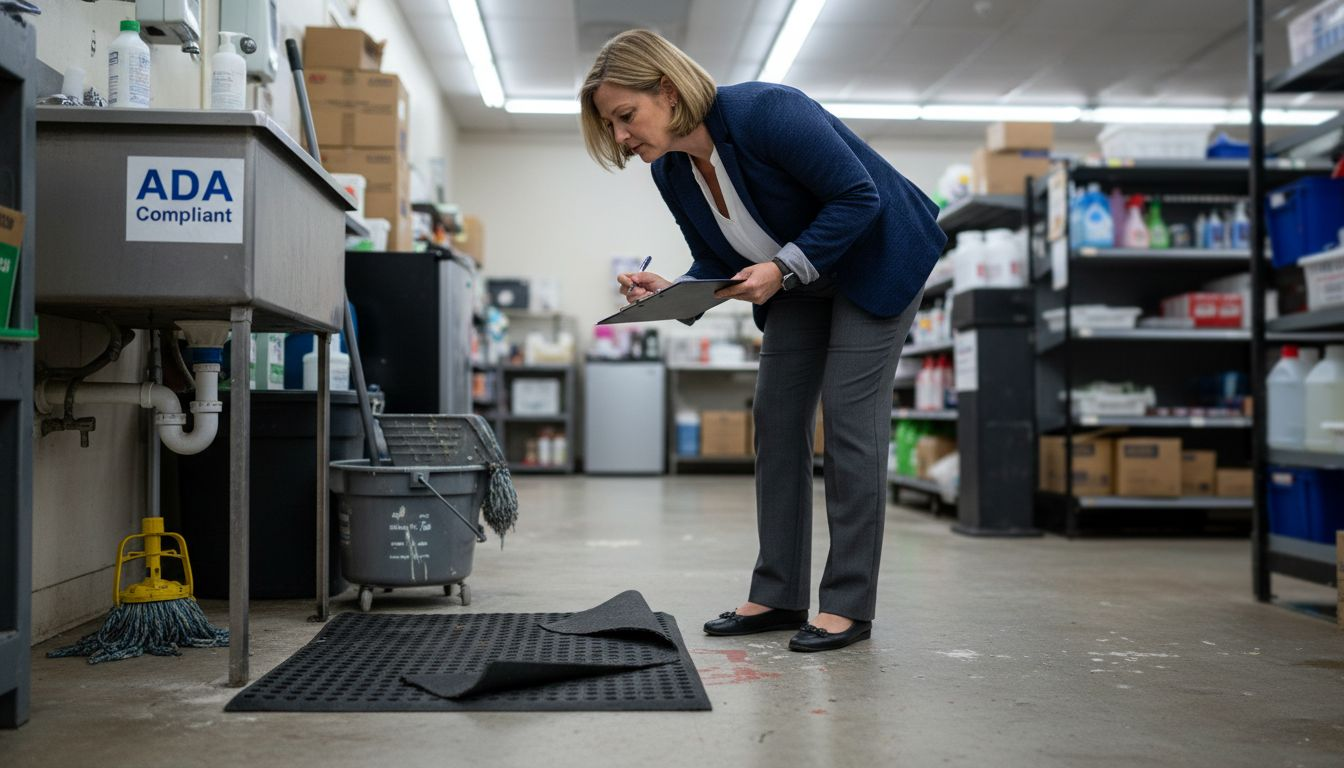
Manufacturers must demonstrate that their products can maintain consistent performance across diverse commercial environments, from restaurant kitchens to retail spaces. This involves comprehensive testing that simulates real-world conditions, including moisture exposure, chemical interactions, and sustained mechanical stress.
Pro tip: Request independent certification documentation when selecting commercial non slip mats to verify their compliance with national safety standards.
Legal Safety Requirements and Compliance
Legal safety requirements for commercial non slip floor mats represent a comprehensive framework designed to protect workplace environments and minimize potential liability risks. These regulations encompass multiple layers of protection, including federal, state, and local guidelines that mandate specific safety standards for flooring and pedestrian surfaces.
Key Regulatory Requirements include:
- Americans with Disabilities Act (ADA) accessibility standards
- Occupational Safety and Health Administration (OSHA) workplace safety regulations
- State-specific building and safety codes
- Insurance industry risk management guidelines
- Industry-specific performance standards
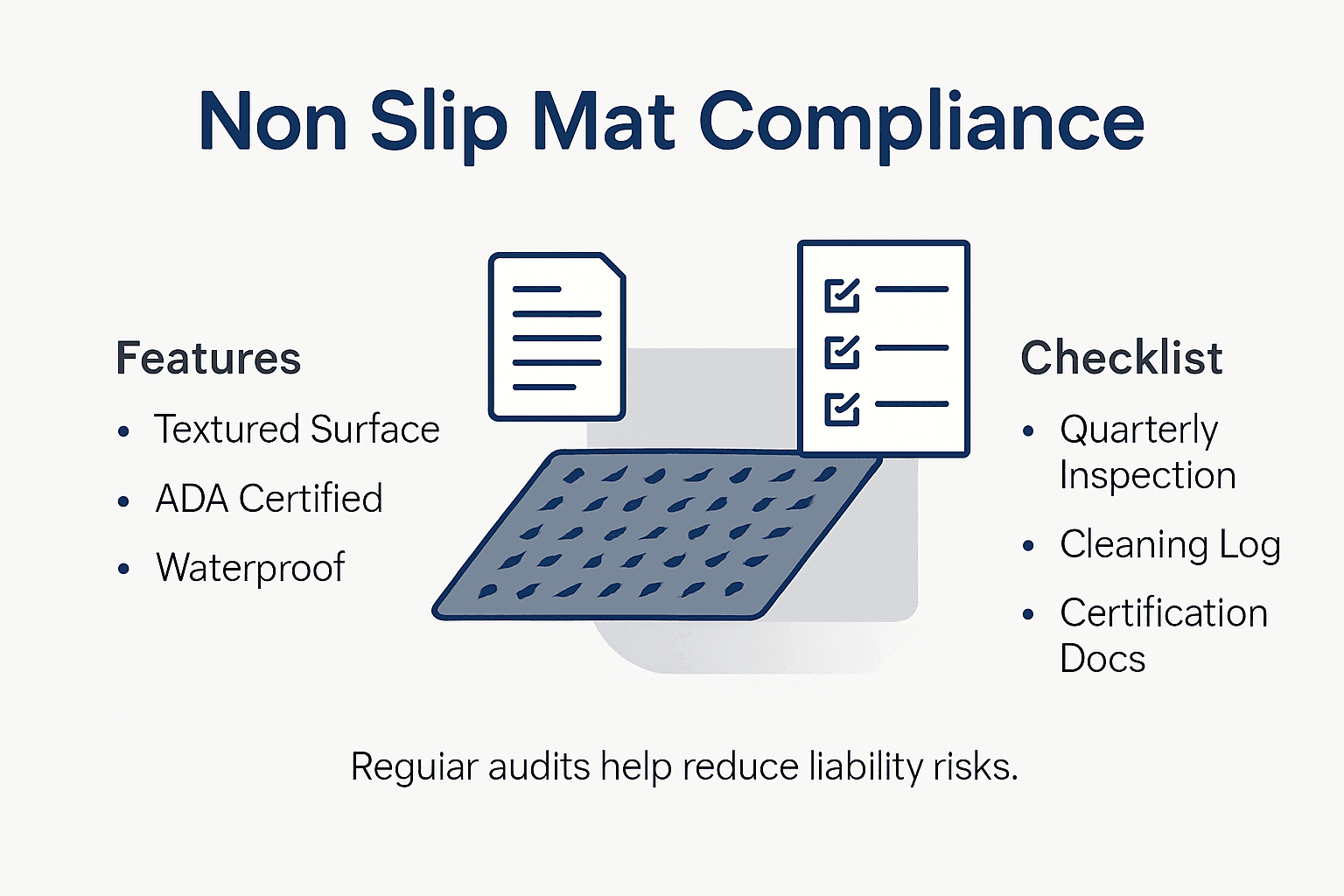
Comprehensive compliance involves more than simply purchasing approved mats. Businesses must demonstrate ongoing diligence by implementing regular inspection protocols, maintaining mat conditions, and ensuring proper installation that prevents tripping hazards. This includes checking for:
- Consistent surface grip
- Absence of curled or lifted edges
- Proper placement without obstructing accessible routes
- Regular cleaning and maintenance
- Replacement of worn or damaged mats
Furthermore, legal compliance extends beyond physical mat characteristics. Organizations must document their safety processes, maintain training records for staff, and be prepared to demonstrate proactive risk management in the event of potential workplace incidents. Failure to meet these standards can result in significant financial penalties, increased insurance costs, and potential legal liabilities.
Pro tip: Conduct quarterly safety audits of your non slip floor mats to ensure continuous compliance with current regulatory standards.
Reducing Liability and Common Pitfalls
Commercial businesses can significantly mitigate legal risks by understanding and proactively addressing common non slip mat liability challenges. Effective risk management involves recognizing potential hazards before they become costly legal disputes.
Critical Liability Pitfalls include:
- Inadequate Mat Coverage: Insufficient mat length leaving floor surfaces exposed
- Improper Installation: Mats that slide, curl, or create uneven transitions
- Poor Maintenance: Accumulated moisture, dirt, or visible wear that compromises safety
- Inconsistent Inspection: Lack of documented maintenance protocols
- Material Degradation: Using mats beyond their recommended service life
Effective liability reduction requires a systematic approach to mat management. Businesses must implement comprehensive documentation practices, including:
- Regular visual inspections
- Detailed maintenance logs
- Prompt replacement of worn or damaged mats
- Staff training on mat safety protocols
- Incident reporting and investigation procedures
Legal protection extends beyond physical mat conditions. Organizations must demonstrate proactive risk management by developing clear safety protocols, maintaining meticulous records, and showing consistent commitment to workplace safety. This approach not only reduces potential litigation risks but also creates a culture of safety that protects both employees and customers.
Pro tip: Develop a standardized inspection checklist with dated entries to create a defensible record of ongoing mat maintenance and safety efforts.
Selection, Costs, and Maintenance Best Practices
Commercial facilities must develop strategic approaches to selecting and maintaining non slip floor mats that balance safety requirements with cost-effectiveness. The selection process requires careful consideration of environmental conditions, foot traffic patterns, and specific workplace hazards.
Key Selection Criteria include:
- Traffic Volume: Match mat durability to expected foot traffic intensity
- Environmental Exposure: Consider moisture, temperature, and chemical interactions
- Surface Texture: Ensure appropriate slip resistance for specific work areas
- Material Composition: Select materials compatible with cleaning protocols
- Budget Constraints: Balance initial investment with long-term performance
Maintenance practices are critical for preserving mat effectiveness and extending service life. Organizations should implement comprehensive maintenance protocols that involve:
- Daily visual inspections
- Weekly deep cleaning procedures
- Monthly comprehensive assessments
- Quarterly replacement evaluations
- Annual performance audits
Financial considerations extend beyond initial purchase price. While higher-quality mats may represent a larger upfront investment, they typically provide superior long-term value by reducing replacement frequency, minimizing liability risks, and maintaining consistent safety performance. Smart facilities view mat selection as a strategic risk management investment rather than a simple purchasing decision.
The table below summarizes essential mat maintenance tasks and their impact on safety compliance:
| Task | Frequency | Purpose |
|---|---|---|
| Visual Inspection | Daily | Detects immediate hazards |
| Deep Cleaning | Weekly | Removes contaminants and buildup |
| Comprehensive Assessment | Monthly | Checks wear and performance issues |
| Replacement Evaluation | Quarterly | Ensures proactive mat renewal |
| Performance Audit | Annually | Confirms compliance and safety |
Pro tip: Develop a standardized mat maintenance tracking system that documents inspection dates, cleaning procedures, and replacement schedules to demonstrate proactive safety management.
Secure Your Workplace with Premium Commercial Non Slip Floor Mats
Slip and fall hazards pose serious liability risks that every business must address proactively. The article highlights the challenge of maintaining safe, slip-resistant flooring surfaces while complying with strict performance and legal standards. If you want to reduce accidents, protect employees and customers, and avoid costly legal pitfalls, investing in the right commercial mats is essential. Key solutions involve selecting mats with high coefficient of friction, durability, and compliance with accessibility requirements.
At Mats4U USA, we specialize in providing a wide range of reliable Commercial Mats engineered to tackle these exact challenges. Our selection includes premium non slip options designed for heavy traffic, moisture control, and anti-fatigue support. Every mat is built to meet or exceed safety standards so you can demonstrate proactive risk management and ongoing compliance with confidence. Act now to protect your business and workforce with trusted floor mat solutions. Explore our Indoor Mats collection and discover how you can enhance safety today at Mats4U.com.
Frequently Asked Questions
What are commercial non slip floor mats?
Commercial non slip floor mats are specialized coverings designed to prevent slip hazards by enhancing traction on walking surfaces in business environments. They are typically made from durable materials like rubber or vinyl and serve to manage moisture and dirt in high-traffic areas.
How do I choose the right non slip floor mat for my business?
When selecting a non slip floor mat, consider factors such as traffic volume, environmental exposure, surface texture for slip resistance, material composition for compatibility with cleaning protocols, and your budget constraints. Matching the mat’s durability to your specific work area is critical.
What maintenance practices should be implemented for non slip floor mats?
Essential maintenance practices include daily visual inspections to detect immediate hazards, weekly deep cleaning to remove dirt and contaminants, monthly comprehensive assessments for wear, quarterly evaluations for replacement, and annual performance audits to ensure safety compliance.
What legal requirements must commercial non slip floor mats meet?
Commercial non slip floor mats must comply with safety regulations like the Americans with Disabilities Act (ADA) and Occupational Safety and Health Administration (OSHA) standards. This includes ensuring mats provide stable surfaces, smooth transitions, and adequate grip to prevent slipping, along with regular inspection and maintenance protocols.
Recommended
- Understanding Non Slip Restaurant Mats for Safety – Mats4U USA
- Understanding Anti Slip Mats for Wet Areas: Safety Matters – Mats4U USA
- Understanding Non Slip Floor Mats for Wet Areas – Mats4U USA
- A Practical Guide to Anti Slip Floor Mats: Improving Safety and Grip i – Mats4U USA
- Cozee Bay - Complete Guide to Bamboo Product Applications in Commercial Spaces
- Schmutzfangmatten-Service: Warum WEGs oft zu viel zahlen


