


Every American workplace with long hours on hard floors faces a common challenge: fatigue and pain from standing can seriously impact employee health. Work-related discomfort leads to significant productivity loss each year, with studies finding nearly 30 percent of industrial workers experience chronic pain symptoms. Selecting the right industrial mats for standing is a crucial step toward reducing injuries, improving comfort, and supporting overall job performance.
Table of Contents
- What Are Industrial Mats for Standing?
- Major Types of Standing Mats Explained
- Essential Features for Ergonomics and Safety
- Key Industries and Workplace Applications
- Cost, Longevity, and Buying Pitfalls
Key Takeaways
| Point | Details |
|---|---|
| Comfort and Support | Industrial mats enhance worker comfort and reduce fatigue through cushioning and ergonomic design. |
| Safety Features | Mats must include anti-slip surfaces and beveled edges to mitigate tripping hazards and improve safety. |
| Environmental Suitability | Select mats based on specific workplace conditions, such as moisture exposure or static electricity, to ensure optimal effectiveness. |
| Cost vs. Longevity | Evaluate the total cost of ownership, including lifespan and replacement needs, rather than solely focusing on initial price. |
What Are Industrial Mats for Standing?
Industrial mats for standing are specialized floor coverings designed to provide comfort, safety, and ergonomic support for workers who spend extended periods standing in workplace environments. These mats are engineered to reduce physical strain, minimize fatigue, and protect employees from the potential health risks associated with prolonged standing on hard surfaces.
The Centers for Disease Control and Prevention recommends that industrial standing mats should meet specific technical requirements to ensure maximum effectiveness. Key specifications include a minimum thickness of 0.5 inches, optimal compressibility between 3% and 4%, beveled edges to prevent tripping, and sufficient coverage extending at least 8 inches under workstations to create an even standing surface.
Typical industrial standing mats are constructed from materials like rubber, vinyl, or specialized ergonomic compounds that provide cushioning and support. These mats feature strategic design elements such as textured surfaces to enhance grip, anti-slip backing to prevent movement, and varying density zones that encourage subtle muscle movement and improve circulation. Different workplace environments require specific mat characteristics - manufacturing floors might need heavy-duty mats with extreme durability, while healthcare settings could prioritize mats with antimicrobial properties.
Pro Worker Safety Tip: Select industrial standing mats that match your specific workplace environment, considering factors like surface texture, thickness, and material composition to maximize employee comfort and reduce long-term physical strain.
The following table summarizes how key mat features directly impact workplace outcomes:
| Mat Feature | Function in Workplace | Potential Business Impact |
|---|---|---|
| Thickness & Compression | Reduces fatigue, supports posture | Lowers injury rates, boosts productivity |
| Anti-Slip Surface | Prevents mat movement | Reduces slip-and-fall incidents |
| Material Durability | Withstands chemicals and traffic | Minimizes replacement costs |
| Beveled Edges | Reduces tripping hazard | Improves overall workplace safety |
Major Types of Standing Mats Explained
Industrial standing mats encompass several specialized categories designed to address unique workplace environments and safety requirements. Megatek offers comprehensive industrial floor mat solutions that demonstrate the diversity of standing mat technologies available to modern businesses.
Dry Area Floor Mats are engineered for standard workplace settings like assembly lines, packaging stations, and manufacturing floors. These mats typically feature high-density foam or rubber compositions that provide cushioning and support for workers standing on relatively clean, stable surfaces. They often include features like textured surfaces for enhanced grip and beveled edges to prevent tripping hazards.
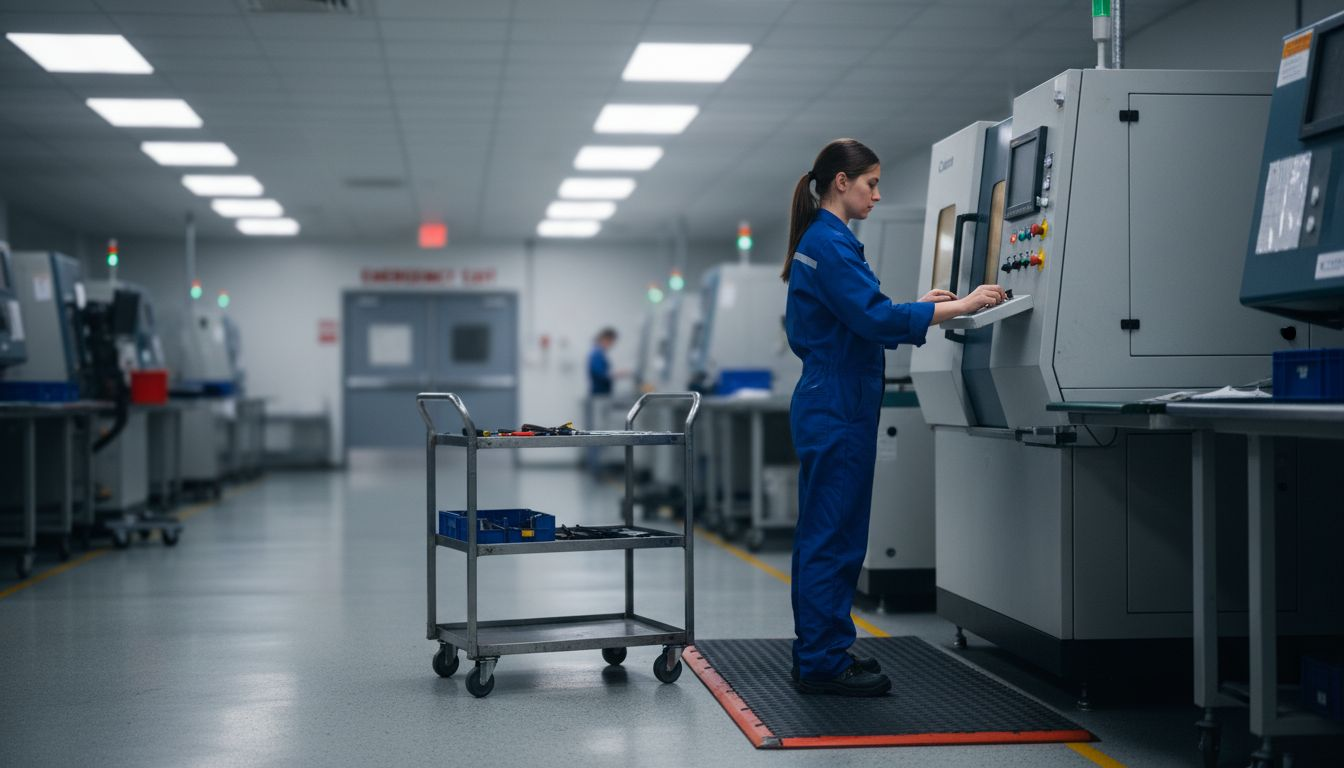
Wet Area Floor Mats represent a critical safety category designed for environments with potential liquid exposure, such as food processing facilities, commercial kitchens, and cleaning stations. These mats are constructed from water-resistant materials with specialized drainage channels and enhanced slip-resistant surfaces. They help prevent workplace accidents by providing stable footing and quickly channeling liquids away from the worker’s standing area.
Electrostatic Dissipative (ESD) Floor Mats are specialized mats used in electronics manufacturing, semiconductor production, and other environments where static electricity poses significant risks. These mats are engineered with conductive materials that safely ground and disperse static electrical charges, protecting sensitive electronic components and preventing potential workplace safety incidents.
Pro Equipment Selection Tip: Carefully assess your specific workplace environment before selecting industrial standing mats, considering factors like surface conditions, potential liquid exposure, and unique safety requirements to ensure optimal worker protection and comfort.
Here’s a quick comparison of popular mat types across different business sectors:
| Mat Type | Best For | Typical Environments |
|---|---|---|
| Dry Area Mat | Fatigue reduction, grip | Manufacturing, assembly lines |
| Wet Area Mat | Drainage, slip prevention | Kitchens, processing plants |
| ESD Mat | Static control, equipment safety | Labs, electronics assembly |
Essential Features for Ergonomics and Safety
Ergonomic standing mats are critical workplace safety tools designed to mitigate physical strain and reduce potential workplace injuries. Safety guidelines from the CDC emphasize specific design requirements for industrial floor mats that directly impact worker health and comfort.
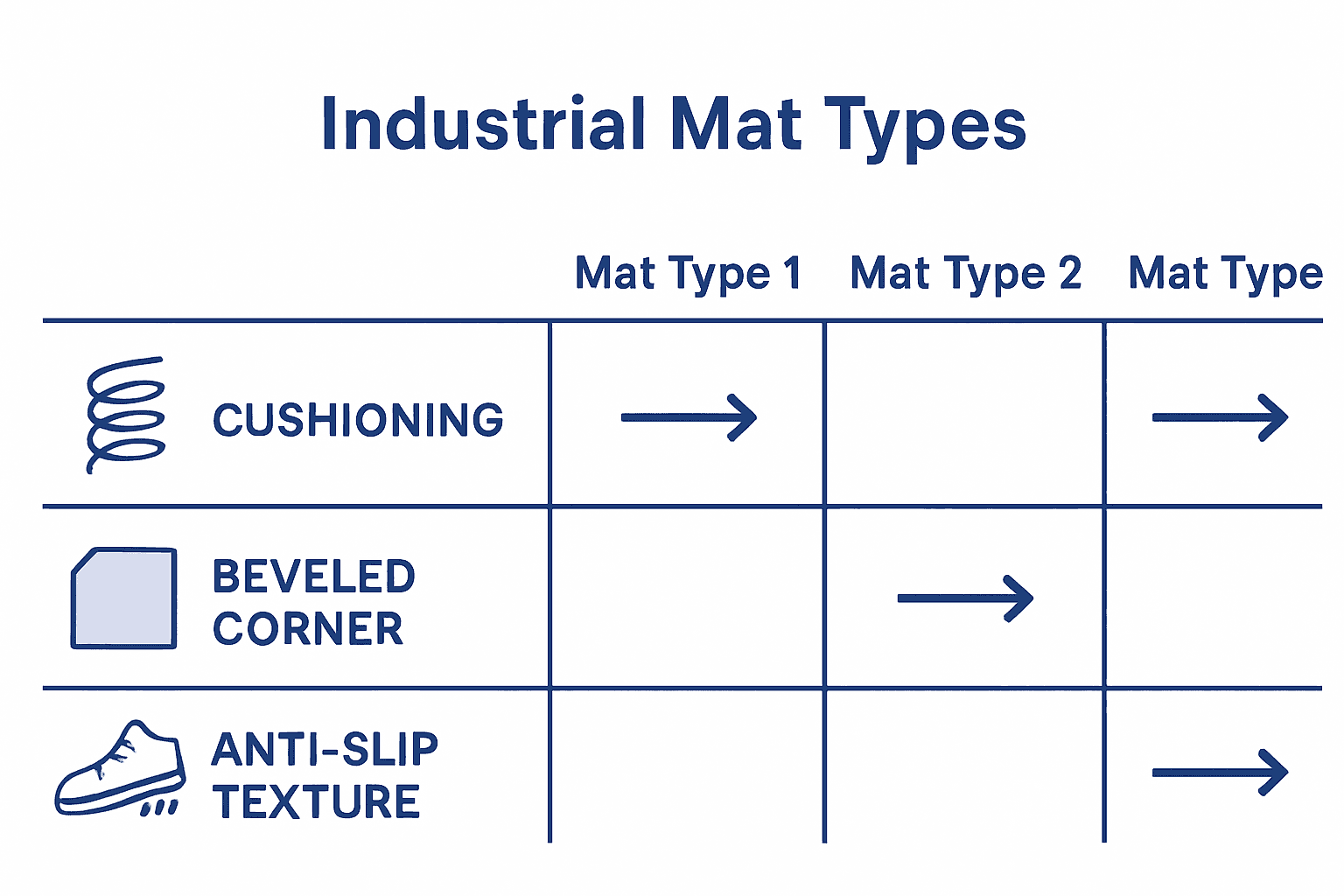
Cushioning and Compression represent the foundational ergonomic features of industrial standing mats. High-quality mats typically incorporate specialized materials with precise compression rates between 3% and 4%, allowing subtle muscle movement while providing consistent support. This dynamic surface encourages micro-movements that prevent muscle fatigue and improve blood circulation, reducing the physical stress associated with prolonged standing.
Safety Design Elements are crucial for preventing workplace accidents. Mats must feature beveled edges to minimize tripping hazards and provide seamless integration with existing floor surfaces. Recommended placement extends at least 8 inches under workstations, creating a uniform standing environment that reduces uneven surface risks. Additional safety features include slip-resistant textures, chemical-resistant materials, and high-visibility color options to enhance workplace awareness.
Material Durability and Performance play a significant role in mat effectiveness. Industrial-grade mats should withstand heavy foot traffic, resist punctures and tears, and maintain structural integrity under varying environmental conditions. Advanced materials like closed-cell foam, nitrile rubber, and specialized polymer blends offer superior resistance to oils, chemicals, and extreme temperatures, ensuring long-term performance and worker protection.
Pro Safety Implementation Tip: Conduct regular workplace assessments to ensure standing mats remain in optimal condition, checking for wear, surface integrity, and proper positioning to maintain maximum ergonomic protection and accident prevention.
Key Industries and Workplace Applications
Industrial standing mats play a crucial role across diverse workplace environments, addressing unique ergonomic and safety challenges specific to different sectors. Megatek’s industrial floor mat solutions demonstrate the versatility of specialized mat technologies designed to meet complex workplace requirements.
Manufacturing and Production Facilities represent a primary application for industrial standing mats. Assembly lines, machining centers, and production floors require mats that can withstand heavy machinery, resist oil and chemical exposure, and provide consistent ergonomic support for workers standing extended shifts. Anti-fatigue mats in these environments help reduce worker fatigue, minimize potential repetitive strain injuries, and improve overall productivity by supporting proper body mechanics during precision manufacturing tasks.
Healthcare and Laboratory Settings demand specialized mat solutions that combine hygiene, safety, and ergonomic performance. Laboratories and medical facilities utilize anti-static and electrostatic dissipative (ESD) mats to protect sensitive electronic equipment while providing comfortable standing surfaces for technicians and researchers. These mats must meet stringent cleanliness standards, resist chemical spills, and provide slip-resistant surfaces that support extended periods of standing during critical scientific and medical work.
Retail and Hospitality Environments require standing mats that balance aesthetic appeal with functional performance. Customer-facing spaces like retail checkout areas, restaurant kitchens, and service counters benefit from mats that provide comfort for employees while maintaining a professional appearance. These mats often incorporate decorative elements, easy-to-clean surfaces, and ergonomic support that helps reduce worker fatigue during long shifts with constant customer interaction.
Pro Industry Selection Tip: Carefully evaluate your specific workplace environment, considering factors like surface conditions, potential chemical exposure, and unique ergonomic requirements when selecting industrial standing mats to ensure optimal worker protection and comfort.
Cost, Longevity, and Buying Pitfalls
Industrial standing mats represent a significant investment for businesses seeking to improve workplace safety and employee comfort. Understanding the complex relationship between initial cost, long-term performance, and replacement strategies is crucial for making informed purchasing decisions. The CDC provides critical guidance on mat maintenance and replacement protocols that directly impact overall cost-effectiveness.
Price Range Considerations reveal significant variation in industrial standing mat pricing. Entry-level mats might cost between $30 to $100, while specialized industrial-grade options can range from $150 to $500 depending on material complexity, size, and specific workplace requirements. The most expensive mats are not always the best solution, with mid-range options often providing the most balanced combination of durability, ergonomic support, and long-term value. Factors like material composition, thickness, and specialized features like chemical resistance or static dissipation dramatically influence pricing.
Longevity and Replacement Factors play a critical role in total cost of ownership. High-quality industrial mats typically last between 1-3 years, depending on environmental conditions and usage intensity. Workplace environments with extreme temperatures, heavy machinery, or frequent chemical exposure can accelerate mat deterioration. Signs of wear like surface cracking, compression loss, or reduced slip resistance indicate the need for replacement. Proactive replacement prevents potential workplace safety incidents and maintains ergonomic performance.
Common Buying Pitfalls include selecting mats based solely on price, neglecting specific workplace requirements, and overlooking critical performance characteristics. Buyers often make mistakes by choosing mats that don’t match their specific environmental conditions, failing to consider factors like chemical resistance, static dissipation, or precise ergonomic requirements. Another significant error is purchasing mats without evaluating their compression rates, surface textures, and long-term durability.
Pro Purchasing Tip: Develop a comprehensive evaluation matrix that considers not just initial cost, but total lifecycle expenses, workplace-specific requirements, and potential productivity gains when selecting industrial standing mats.
Enhance Workplace Safety and Comfort with Quality Industrial Mats
Prolonged standing can lead to fatigue and increased risk of injury but selecting the right industrial mats can transform your workspace into a safer and more comfortable environment. This article highlights key concerns such as ergonomic support, slip resistance, and durability all vital for reducing worker strain and improving productivity. By addressing these challenges with mats designed for specific workplace conditions you create safer floors and healthier teams.
Discover the perfect solutions available at Mats4U | Anti-Fatigue Mats | Collection where you will find a variety of mats engineered to meet the demands of industrial settings. For broader options including mats suited for heavy traffic or particular environments explore our Commercial Mats – Mats4U USA. Don’t wait until workplace fatigue affects your operations visit https://mats4u.com now to select mats that offer lasting comfort and safety. Make the smart choice today and see immediate benefits in worker satisfaction and accident reduction.
Frequently Asked Questions
What are industrial mats for standing?
Industrial mats for standing are specialized floor coverings designed to provide comfort and support for workers who stand for long periods in various workplace environments. They help reduce fatigue and protect against health issues associated with prolonged standing on hard surfaces.
What features should I look for in an industrial standing mat?
Key features to consider include thickness of at least 0.5 inches, compressibility of 3% to 4%, anti-slip surfaces, beveled edges to prevent tripping, and appropriate materials to suit your environment, such as rubber or vinyl for durability and comfort.
How do industrial standing mats impact workplace safety and comfort?
Industrial standing mats help reduce fatigue and discomfort, which can lower injury rates and improve productivity in the workplace. Features like slip resistance and beveled edges enhance safety, while cushioning supports proper posture and encourages blood circulation during long shifts.
What are the different types of industrial mats available?
The main types of industrial mats include dry area mats for standard workplace settings, wet area mats for environments with liquid exposure, and electrostatic dissipative (ESD) mats designed for electronics manufacturing. Each type serves a specific purpose based on environmental conditions and safety requirements.


