


Slip and fall accidents account for nearly 20 percent of all emergency room visits in American commercial pools each year. For facility managers, preventing these incidents is more than just a safety checkbox. It is a crucial responsibility. Debunking the common misconceptions about anti slip pool mats can help you make smarter decisions, protect your guests, and maintain your reputation as a safe destination for every swimmer.
Table of Contents
- Defining Anti Slip Pool Mats And Misconceptions
- Types Of Anti Slip Pool Mats For Commercial Pools
- Essential Features And Performance Standards
- Compliance With U.S. Pool Safety Regulations
- Risks, Cost Considerations, And Alternative Solutions
Key Takeaways
| Point | Details |
|---|---|
| Importance of Anti Slip Mats | Anti slip pool mats are essential for preventing slip and fall accidents in commercial pool environments, utilizing advanced friction technologies for enhanced safety. |
| Types of Anti Slip Mats | Different types of anti slip mats are designed for specific areas, such as solid rubber for high-traffic zones and drainage mats for wet areas, ensuring optimal protection. |
| Regulatory Compliance | Compliance with U.S. Pool Safety Regulations, including meeting slip resistance standards, is crucial for ensuring safety and avoiding legal issues in commercial pools. |
| Comprehensive Risk Management | Facility managers should conduct thorough risk assessments and regularly audit safety measures to mitigate potential financial and liability risks associated with slip incidents. |
Defining Anti Slip Pool Mats and Misconceptions
Anti slip pool mats are specialized floor coverings engineered specifically to reduce slip and fall risks in wet commercial swimming environments. Unlike standard floor mats, these surfaces are designed with advanced friction technologies that dramatically improve traction for swimmers, staff, and guests moving across potentially dangerous pool deck areas. Understanding how anti-slip solutions work reveals the critical science behind preventing accidents.
Commercial pool environments face unique safety challenges that require targeted solutions. Most facility managers mistakenly believe that smooth surfaces are sufficient for pool decks, when in reality, specialized materials with enhanced grip properties are essential. Misconceptions about anti slip pool mats often include assumptions that these surfaces will be unattractive, uncomfortable, or significantly disruptive to existing design aesthetics. Modern anti slip technologies have evolved to provide seamless integration, offering safety without compromising visual appeal or user experience.
The fundamental purpose of anti slip pool mats extends beyond simple accident prevention. Advanced non-slip linings now balance safety, comfort, and design for commercial aquatic environments. These sophisticated materials incorporate multiple performance features:
- Enhanced surface texture for maximum friction
- Water drainage capabilities
- Resistance to chlorine and pool chemicals
- Quick drying properties
- Lightweight and easy installation
Pro Tip for Facility Safety: Conduct a comprehensive slip risk assessment before selecting anti slip pool mats, examining specific traffic patterns, water exposure levels, and surface transitions to ensure optimal protection for your commercial swimming environment.
Types of Anti Slip Pool Mats for Commercial Pools
Commercial pool environments demand specialized anti slip mat solutions that cater to unique safety requirements. Comprehensive B2B guides reveal multiple distinct categories of anti slip pool mats designed to address different operational needs and safety challenges. Understanding these variations helps facility managers select the most appropriate protection for their specific swimming environments.
Rubber Pool Mats represent a foundational category of anti slip solutions. These durable surfaces offer exceptional water resistance, chemical durability, and superior traction. They typically come in several specific configurations:
- Solid Rubber Mats: Continuous surface providing complete floor coverage
- Drainage Mats: Perforated designs allowing water to pass through
- Interlocking Tile Mats: Modular systems enabling flexible installation
- Anti-Fatigue Pool Mats: Designed with additional cushioning for staff working extended hours
Each mat type serves a distinct purpose within commercial pool settings. Solid rubber mats work best in high-traffic areas requiring maximum durability, while drainage mats excel in zones with significant water accumulation. Interlocking tile systems provide unparalleled customization, allowing facilities to adapt their anti slip solutions to unique architectural layouts.
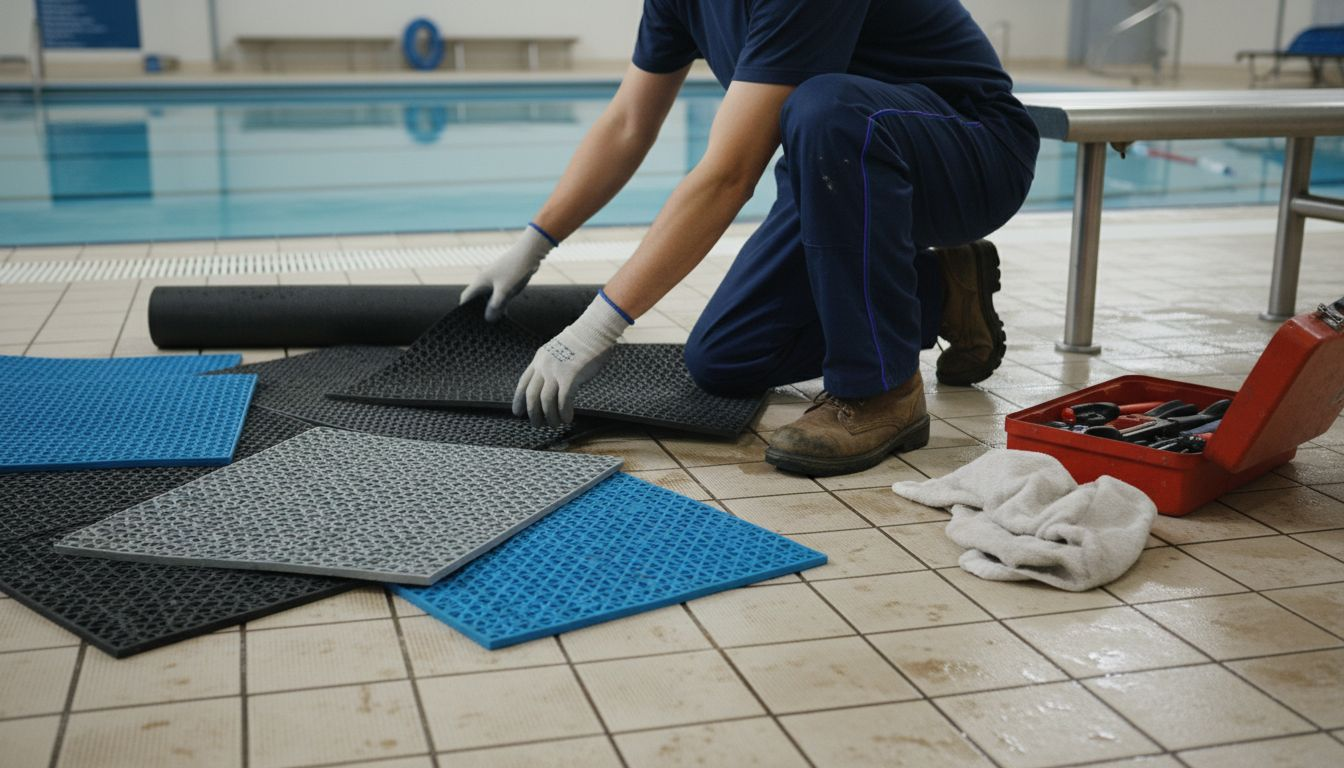
Here’s a quick overview of anti slip pool mat types and their most suitable commercial pool areas:
| Mat Type | Best Commercial Pool Area | Unique Advantage |
|---|---|---|
| Solid Rubber Mats | Entryways, high-traffic walkways | Maximum durability |
| Drainage Mats | Pool edges, shower zones | Superior water diversion |
| Interlocking Tile Mats | Custom-shaped zones | Flexible layout adaption |
| Anti-Fatigue Pool Mats | Lifeguard stations, work zones | Comfort for standing personnel |
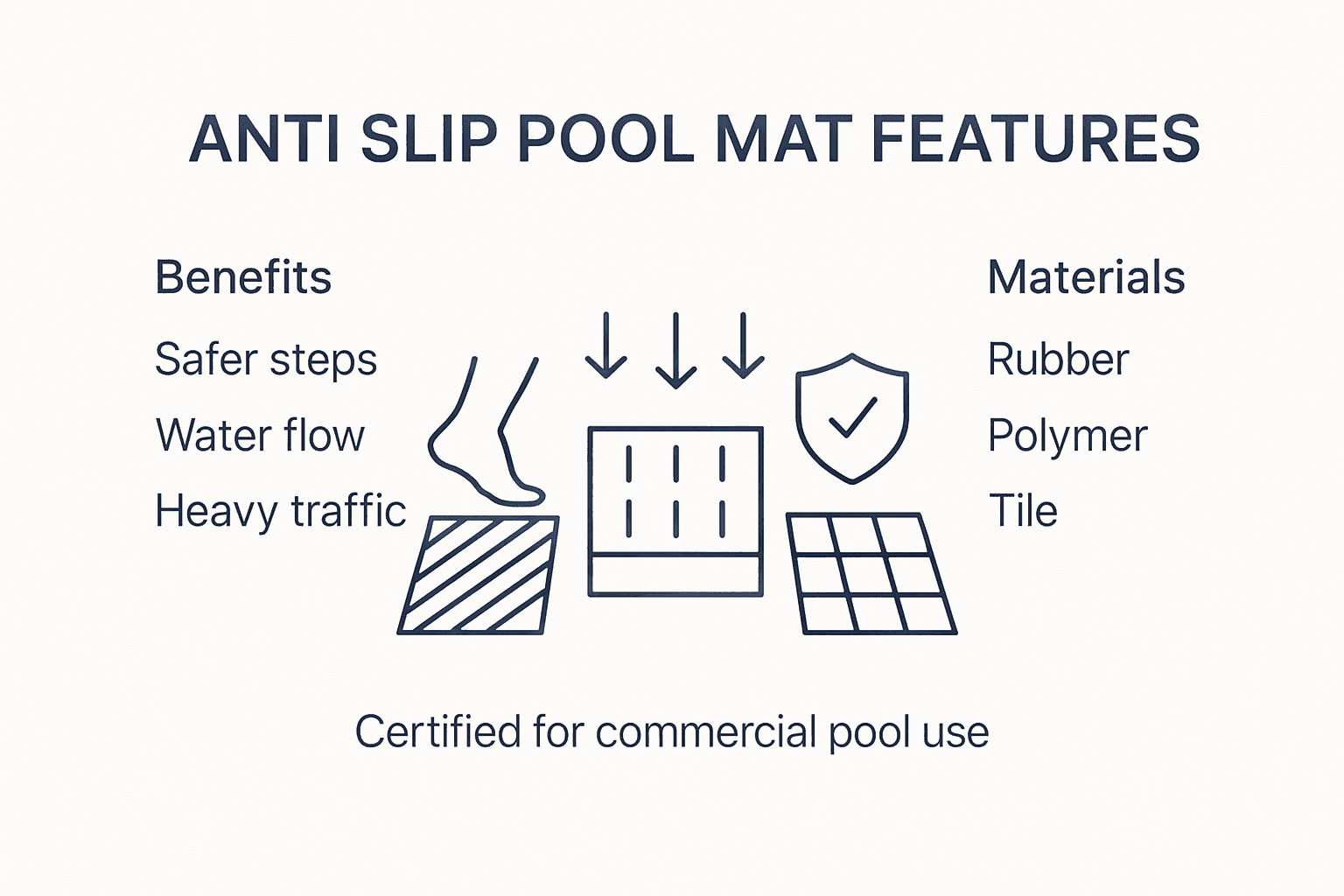
Beyond basic slip prevention, modern commercial pool mats incorporate advanced engineering principles. They must withstand constant moisture, resist chlorine and cleaning chemicals, maintain structural integrity under heavy foot traffic, and provide consistent traction across varying surface conditions. Material selection becomes critical, with high-performance synthetic rubbers and specialized polymers offering the most reliable long-term solutions.
Pro Tip for Mat Selection: Always measure precise pool deck dimensions and analyze traffic patterns before purchasing anti slip mats, ensuring a perfect fit that maximizes safety and minimizes installation complications.
Essential Features and Performance Standards
Commercial pool environments require anti slip mats that go far beyond basic traction. Performance standards for pool matting involve complex technical specifications that address multiple safety and durability challenges. These standards encompass rigorous testing protocols designed to ensure consistent protection under demanding aquatic conditions.
Performance Criteria for commercial pool mats typically include several critical dimensions of quality and functionality:
- Slip Resistance: Quantifiable measurement of surface grip under wet conditions
- Chemical Durability: Resistance to chlorine, cleaning agents, and pool chemicals
- Moisture Management: Effective water drainage and quick-drying capabilities
- Structural Integrity: Ability to maintain performance under constant foot traffic
Modern anti slip pool mats must demonstrate exceptional engineering across multiple performance domains. Unlike standard flooring solutions, these specialized surfaces undergo extensive testing to verify their capability to prevent accidents while maintaining long-term reliability. Technical assessments evaluate everything from UV resistance to antimicrobial properties, ensuring comprehensive protection for commercial swimming facilities.
The most advanced pool mats integrate multiple protective technologies. They incorporate specialized polymers designed to maintain flexibility in extreme temperatures, resist microbial growth, and provide consistent traction across varying moisture levels. Material science plays a crucial role, with high-performance synthetic compounds offering superior durability compared to traditional rubber or standard synthetic materials.
Pro Tip for Performance Verification: Request comprehensive performance certification documentation from manufacturers, ensuring independent third-party testing validates the mat’s safety and durability claims before final installation.
Compliance with U.S. Pool Safety Regulations
Comprehensive regulatory frameworks for commercial pool safety represent a complex network of federal, state, and local guidelines designed to protect public health and prevent accidents. The Model Aquatic Health Code (MAHC) serves as the primary national standard, establishing critical requirements for pool deck safety, including specific guidelines for anti slip surface technologies.
Regulatory Compliance for commercial pool mats involves multiple critical considerations:
- Adherence to NSF/ANSI/CAN 50 slip resistance standards
- Meeting minimum slip resistance value (SRV) requirements
- Passing independent third-party safety certifications
- Demonstrating consistent performance under wet conditions
Slip resistance testing protocols play a crucial role in determining regulatory compliance. The pendulum slip resistance test provides an objective measurement of surface traction, with specific minimum standards that commercial facilities must meet. These technical assessments go beyond simple visual inspection, using scientific methods to quantify the actual safety performance of pool deck surfaces.
State and local jurisdictions often implement additional requirements that build upon national guidelines. While the MAHC provides a comprehensive baseline, individual states may mandate more stringent safety protocols. Facility managers must navigate this complex regulatory landscape, ensuring their anti slip pool mats not only meet minimum federal standards but also comply with local safety regulations.
Pro Tip for Regulatory Navigation: Consult with local health department officials and request comprehensive compliance documentation from anti slip mat manufacturers to ensure full regulatory adherence.
Risks, Cost Considerations, and Alternative Solutions
Commercial pool safety solutions require comprehensive risk assessment that goes beyond simple product selection. Facility managers must evaluate potential financial and legal risks associated with inadequate slip prevention, understanding that the consequences of accidents can far exceed the initial investment in high-quality anti slip technologies.
Cost Considerations for commercial pool safety involve multiple critical financial dimensions:
- Initial material and installation expenses
- Long-term maintenance requirements
- Potential liability from slip and fall incidents
- Replacement frequency of safety surfaces
- Insurance premium implications
Alternative safety solutions provide nuanced approaches to managing pool deck risks. Beyond traditional anti slip mats, facility managers can explore options such as textured concrete treatments, epoxy coatings with embedded grip technologies, and modular drainage systems. Each alternative presents unique advantages and challenges, requiring careful evaluation of performance, durability, and total lifecycle costs.
Below is a summary comparing alternative pool deck safety solutions to traditional anti slip mats:
| Solution Type | Durability | Visual Impact | Maintenance Needs |
|---|---|---|---|
| Anti Slip Pool Mats | High | Seamless integration | Easy cleaning, periodic checks |
| Textured Concrete | Very High | Permanent alteration | Occasional resurfacing |
| Epoxy Grip Coatings | Medium | Subtle overlay | Reapplication after wear |
| Modular Drainage Sys. | High | Modular, visible | Debris removal, module checks |
The financial calculus of pool deck safety extends far beyond simple product pricing. Comprehensive risk management involves calculating potential litigation expenses, worker compensation claims, and reputation damage that could result from inadequate safety measures. Sophisticated facility managers recognize that investing in high-performance anti slip solutions represents a proactive strategy for mitigating substantial financial and legal risks.
Pro Tip for Risk Management: Conduct a comprehensive annual safety audit that includes detailed slip resistance testing, documenting all findings to demonstrate proactive safety commitment and potentially reduce insurance liability.
Enhance Pool Deck Safety with Proven Anti Slip Solutions
Commercial pool decks demand reliable anti slip protection to prevent costly accidents, maintain compliance with safety regulations, and provide peace of mind for facility managers. The challenges highlighted in this article underscore the importance of selecting durable mats that deliver superior traction, resist pool chemicals, and ensure comfort for staff and visitors alike. At Mats4U.com we specialize in Non Slip matting solutions engineered specifically for commercial environments where water and traffic risks are highest.
Discover mats designed to withstand wet conditions and heavy foot traffic without sacrificing ease of maintenance. Our product range offers options from anti-fatigue mats for lifeguard stations to rugged rubber mats ideal for pool edges and entryways. Take advantage of our competitive pricing and free delivery on orders over $100 to upgrade your pool deck safety today. Explore our comprehensive floor mat collection at Mats4U.com and ensure your commercial swimming facility stays accident-free and fully compliant.
Frequently Asked Questions
What are anti slip pool mats?
Anti slip pool mats are specialized floor coverings designed to reduce slip and fall risks in wet commercial swimming environments. They utilize advanced friction technologies to enhance traction for swimmers, staff, and guests.
What types of anti slip pool mats are available for commercial pools?
There are several types of anti slip pool mats, including solid rubber mats, drainage mats, interlocking tile mats, and anti-fatigue mats. Each type addresses specific needs, such as water drainage or durability in high-traffic areas.
How do I select the right anti slip pool mat for my facility?
To select the appropriate anti slip pool mat, conduct a slip risk assessment, measure precise pool deck dimensions, and analyze traffic patterns. This ensures optimal safety and a perfect fit for your commercial swimming environment.
What performance standards do anti slip pool mats need to meet?
Anti slip pool mats must meet several performance standards, including slip resistance, chemical durability, moisture management, and structural integrity. Compliance with regulations such as NSF/ANSI/CAN 50 ensures these mats are safe and effective in preventing accidents.


