


Busy American commercial facilities face non-stop foot traffic, constant deliveries, and tough environmental challenges every day. Without the right flooring solutions, even minor hazards or surface wear can lead to costly accidents and rising maintenance bills. Selecting heavy duty runner mats designed for demanding workplaces brings long-lasting protection, slip resistance, and dependable performance, letting facility managers focus on safety and cost savings instead of recurring repairs.
Table of Contents
- Defining Heavy Duty Runner Mats
- Types Of Heavy Duty Runner Mats Explained
- Essential Features And Performance Factors
- Cost, Maintenance, And Lifecycle Considerations
- Comparing Alternatives And Avoiding Common Pitfalls
Key Takeaways
| Point | Details |
|---|---|
| Heavy Duty Runner Mats Enhance Safety | These mats provide slip-resistant surfaces that reduce workplace accidents and injuries in high-traffic areas. |
| Material Selection Matters | Choose mats based on specific workplace conditions, focusing on durability and safety features for optimal performance. |
| Regular Maintenance Increases Lifespan | Implement routine inspections and maintenance to ensure mats function effectively and to prevent costly replacements. |
| Evaluate Total Cost of Ownership | Consider both initial costs and long-term maintenance expenses when selecting heavy duty runner mats for industrial applications. |
Defining Heavy Duty Runner Mats
In commercial and industrial environments, heavy duty runner mats represent specialized floor coverings engineered to withstand intense foot traffic and harsh operational conditions. These mats are distinctively designed to provide critical safety features while enduring significant wear and tear in high-stress workplace settings.
The primary characteristics of heavy duty runner mats include robust construction and specialized materials that enable them to function effectively in demanding environments. Unlike standard floor coverings, these mats are constructed to manage workplace safety requirements by providing stable, slip-resistant surfaces that minimize workplace accidents.
Key features of heavy duty runner mats typically encompass:
- Reinforced material composition (typically rubber or synthetic compounds)
- High tensile strength capable of supporting substantial weight
- Textured surface designs that enhance traction
- Resistance to chemicals, oils, and extreme temperatures
- Ability to withstand repeated compression and foot traffic
- Quick drainage and moisture management capabilities
Industrial applications for these mats span multiple sectors, including manufacturing facilities, warehouses, processing plants, and commercial kitchens. Their primary function extends beyond mere floor covering - they serve as critical safety infrastructure that helps prevent workplace injuries, reduce slip-and-fall incidents, and maintain clean, professional environments.
Pro tip: When selecting a heavy duty runner mat, always prioritize material durability and specific workplace requirements over initial cost considerations.
Types of Heavy Duty Runner Mats Explained
Heavy duty runner mats come in various compositions, each designed to address specific workplace safety and performance requirements. Different material types offer unique properties that make them suitable for diverse industrial environments, ensuring optimal functionality and protection.
The primary types of heavy duty runner mats include:
- Rubber Mats: Ideal for high-moisture environments, providing excellent slip resistance and shock absorption
- Synthetic Compound Mats: Engineered for chemical resistance and durability in harsh industrial settings
- Composite Mats: Designed with multi-layered materials to offer enhanced strength and specialized performance
- Metal Grid Mats: Providing maximum load-bearing capacity for extremely heavy traffic areas
- Modular Interlocking Mats: Offering flexibility in coverage and easy replacement of damaged sections
Each mat type has distinct advantages tailored to specific workplace conditions. Rubber mats excel in areas requiring cushioning and traction, while metal grid mats are perfect for environments with extremely heavy machinery and constant foot traffic.
Industrial sectors like manufacturing, warehousing, food processing, and automotive maintenance each require specialized mat solutions. The selection process involves carefully evaluating workplace conditions, potential hazards, and specific performance requirements to ensure optimal safety and functionality.
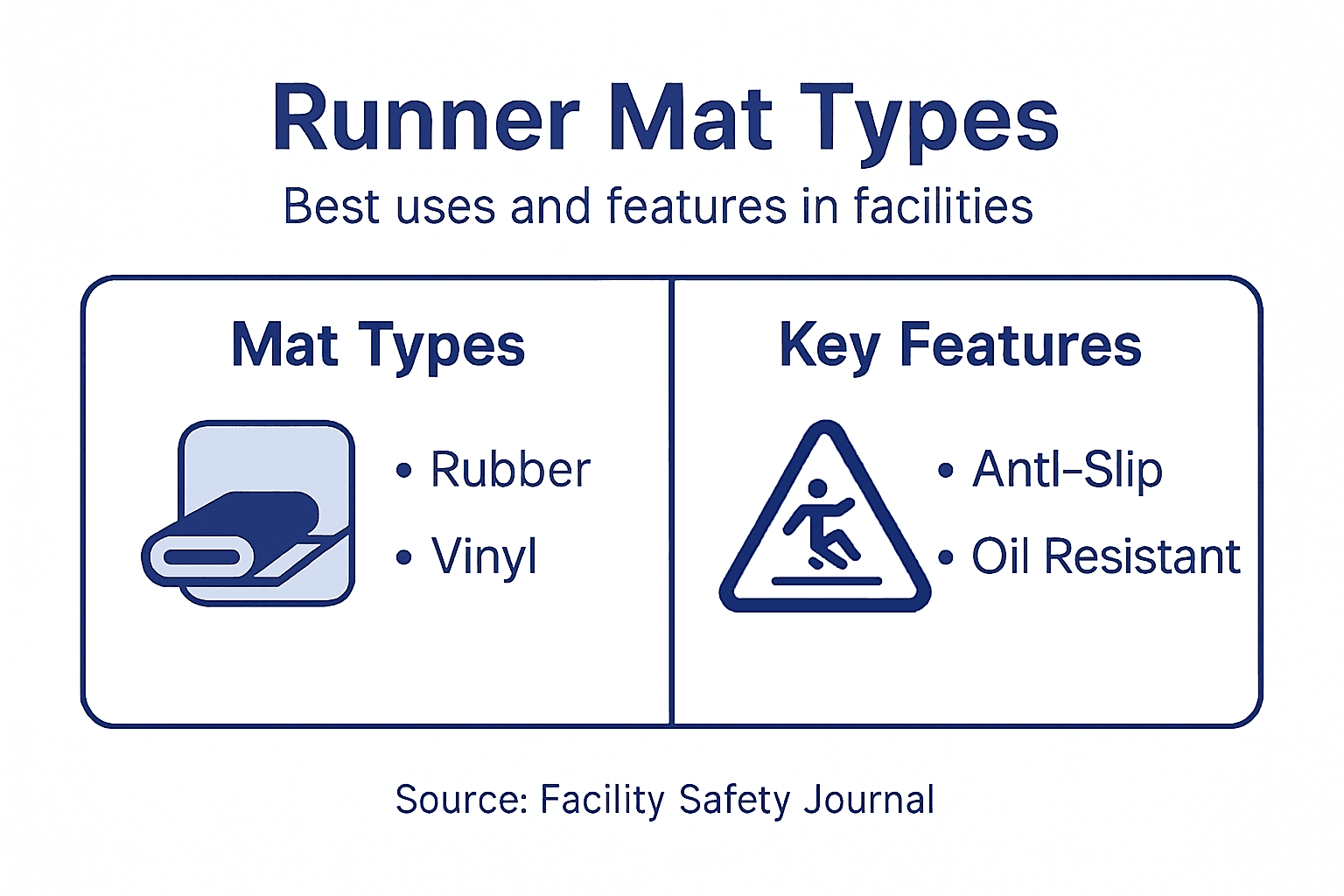
Here’s how different types of heavy duty runner mats compare across key workplace requirements:
| Mat Type | Best Use Environments | Primary Strength | Typical Limitation |
|---|---|---|---|
| Rubber | Wet or oily floors | Superior traction | May degrade in some chemicals |
| Synthetic Compound | Chemical processing areas | High chemical resistance | Less cushioning than rubber |
| Composite | Heavy machinery zones | Multi-layered durability | Higher acquisition cost |
| Metal Grid | Extreme load, rolling traffic | Max load-bearing capacity | Not ergonomic for standing |
| Modular Interlocking | Versatile, changing layouts | Easy maintenance & repair | May shift if not secured |
Pro tip: Always conduct a comprehensive workplace assessment before selecting a heavy duty runner mat to match precise environmental and safety needs.
Essential Features and Performance Factors
Heavy duty runner mats are engineered with critical performance parameters that determine their effectiveness in industrial environments. Structural integrity and load distribution are fundamental considerations that directly impact workplace safety and mat longevity.
Key performance factors for heavy duty runner mats include:
- Load Capacity: Ability to withstand substantial weight without deformation
- Surface Traction: Preventing slip-and-fall incidents through textured designs
- Chemical Resistance: Maintaining structural integrity when exposed to industrial substances
- Temperature Tolerance: Performing consistently across various environmental conditions
- Drainage Capabilities: Efficiently managing moisture and preventing surface accumulation
- Durability: Resisting wear and tear from continuous heavy traffic
The design of these mats goes beyond simple floor covering. Advanced engineering ensures that each mat can handle specific workplace challenges, from supporting heavy machinery to providing ergonomic support for workers standing for extended periods.
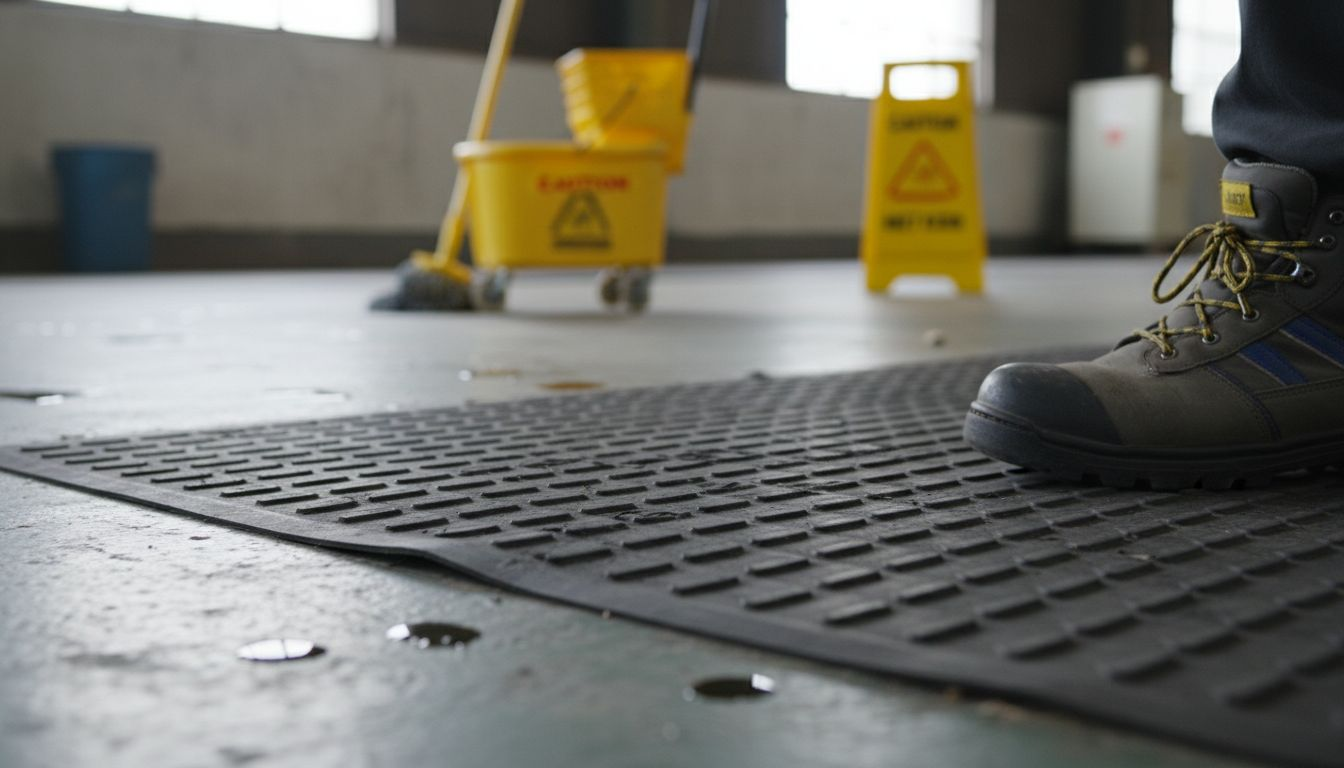
Materials and construction techniques play a crucial role in determining mat performance. Manufacturers utilize sophisticated design approaches that incorporate perforated surfaces, reinforced edges, and specialized compound mixtures to enhance overall mat functionality and lifespan.
Pro tip: Conduct periodic performance assessments of your heavy duty runner mats to identify potential wear points and ensure continued workplace safety.
Cost, Maintenance, and Lifecycle Considerations
Understanding the total cost of ownership for heavy duty runner mats goes far beyond their initial purchase price. Advanced maintenance approaches significantly impact long-term costs by reducing unexpected downtime and extending mat performance.
Critical cost and maintenance factors include:
- Initial Investment: Purchase price of mat materials and installation
- Routine Maintenance: Regular cleaning and inspection expenses
- Replacement Frequency: Expected lifespan before complete mat replacement
- Downtime Costs: Potential productivity losses during mat maintenance
- Performance Degradation: Impact of wear on workplace safety and operational efficiency
- Environmental Adaptation: Costs associated with mat performance in different workplace conditions
Facility managers must consider a comprehensive approach to mat lifecycle management. This involves developing strategic maintenance protocols that prevent premature wear, address potential damage early, and optimize the mat’s functional performance throughout its operational lifetime.
The economic calculus of heavy duty runner mats extends beyond direct monetary considerations. Investing in high-quality mats with robust maintenance strategies can significantly reduce long-term safety risks, minimize workplace accidents, and ultimately provide a more cost-effective solution compared to frequent replacements of lower-quality alternatives.
This table summarizes essential cost and maintenance considerations for heavy duty runner mats:
| Factor | Cost Implication | Best Management Practice |
|---|---|---|
| Initial Investment | Varies by material quality | Prioritize based on risk and usage |
| Routine Maintenance | Increases with mat size | Schedule regular inspections |
| Replacement Frequency | Reduces with high durability | Track wear and set replacement dates |
| Downtime Costs | Impacts productivity | Rotate mats to prevent business loss |
| Performance Degradation | Raises long-term risks | Monitor for early signs of wear |
Pro tip: Develop a proactive maintenance schedule that includes regular inspections, documented wear tracking, and predetermined replacement criteria to maximize mat lifecycle and workplace safety.
Comparing Alternatives and Avoiding Common Pitfalls
Selecting the right heavy duty runner mat requires careful evaluation of multiple alternatives beyond standard floor covering options. Comprehensive industrial design considerations are critical for avoiding costly implementation mistakes and ensuring workplace safety.
Common alternatives and potential pitfalls include:
- Standard Commercial Mats: Limited durability, inadequate load distribution
- DIY Solutions: Lack professional engineering, potential safety risks
- Generic Industrial Mats: Often not tailored to specific workplace requirements
- Improper Material Selection: Reduced performance in challenging environments
- Underspecified Load Capacity: Potential structural failure under stress
- Incorrect Installation: Compromised mat effectiveness and safety
Successful mat selection demands a holistic approach that considers workplace-specific conditions, potential stress factors, and long-term performance expectations. Facility managers must look beyond initial pricing and evaluate comprehensive lifecycle performance, material resilience, and safety implications.
Each industrial environment presents unique challenges that require carefully matched mat solutions. This means conducting thorough site assessments, understanding dynamic load requirements, and selecting mats with demonstrated performance in similar operational contexts.
Pro tip: Conduct a detailed workplace assessment and request manufacturer performance certifications before finalizing heavy duty runner mat selections.
Upgrade Your Facility Safety with Heavy Duty Runner Mats
When safety and durability matter most in your workplace heavy duty runner mats are essential. These mats combat risks like slips falls and wear in high-traffic industrial settings. By choosing the right Commercial Mats from Mats4U you invest in robust solutions engineered to withstand harsh conditions while providing slip resistance and ergonomic comfort.
Explore Mats4U for premium heavy duty runner mats that help maintain a safer cleaner work environment. Benefit from competitive pricing free delivery on orders over $100 and products proudly made in the USA. Visit Mats4U.com today to browse our selection and leverage expert product descriptions designed to help you pick mats meeting your exact workplace needs. Don’t wait let your facility stay one step ahead in safety by securing your heavy duty runner mats now.
Frequently Asked Questions
What are heavy duty runner mats?
Heavy duty runner mats are specialized floor coverings designed for commercial and industrial environments to withstand intense foot traffic and harsh operational conditions while providing safety features, such as slip resistance.
What materials are commonly used in heavy duty runner mats?
Heavy duty runner mats are typically made from robust materials like rubber, synthetic compounds, and composites, offering high tensile strength, slip resistance, and durability against chemicals and extreme temperatures.
How do I choose the right heavy duty runner mat for my facility?
To select the right mat, conduct a comprehensive workplace assessment to evaluate environmental conditions, potential hazards, and specific performance requirements, such as load capacity and slip resistance.
What maintenance is required for heavy duty runner mats?
Routine maintenance includes regular cleaning, inspections for wear and tear, and timely replacement of mats to ensure optimal performance and continued workplace safety.


