


Every busy store manager knows the challenge of keeping entrances both safe and inviting during peak hours. High-traffic entryways in American retail spaces face constant exposure to dirt, moisture, and heavy foot traffic that threaten not only cleanliness but also customer safety. Investing in durable entrance mats serves as the first line of defense, helping trap debris, prevent slip hazards, enhance appearance, and support compliance with ADA guidelines—all while lowering maintenance costs for retail environments.
Table of Contents
- What Are Retail Entrance Mats And Why They Matter
- Choosing The Right Type For Your Retail Space
- Ada Compliance And Safety Standards Explained
- How Entrance Mats Reduce Costs And Liabilities
- Maintenance Best Practices For High-Traffic Mats
Key Takeaways
| Point | Details |
|---|---|
| Functionality of Entrance Mats | Retail entrance mats play a crucial role in maintaining cleanliness, safety, and customer perception by preventing dirt and moisture from entering the store. |
| Choosing the Right Mat | Selecting the appropriate mat requires considering factors like moisture absorption, slip resistance, and durability to ensure safety and operational efficiency. |
| ADA Compliance Importance | Adhering to ADA standards is essential for creating inclusive retail spaces and avoiding potential legal and financial consequences. |
| Maintenance Best Practices | Regular maintenance and cleaning of entrance mats are vital for maximizing their effectiveness and prolonging their lifespan, thus enhancing safety and reducing costs. |
What Are Retail Entrance Mats and Why They Matter
Retail entrance mats are specialized floor coverings strategically positioned at commercial building entrances to serve multiple critical functions. These functional accessories go far beyond simple decorative elements, playing a significant role in facility management, safety, and customer experience. Retail spaces rely on entrance mats to create a professional, welcoming environment while addressing practical operational challenges.
At their core, entrance mats perform several essential tasks that directly impact business operations. These mats are engineered to trap dirt, moisture, and debris before they enter the main retail space, which helps maintain cleanliness and reduces potential slip hazards. By capturing approximately 80-90% of incoming soil and moisture, entrance mats protect expensive flooring investments and minimize maintenance costs. Their strategic placement creates a crucial first line of defense against environmental contaminants.
The importance of retail entrance mats extends beyond functional utility into customer perception and safety. Safety features are paramount, with these mats serving multiple protective purposes:
- Reducing slip and fall risks by absorbing moisture
- Minimizing dirt tracking throughout the store
- Creating a clean, professional first impression
- Protecting underlying flooring from wear and damage
- Supporting accessibility by providing stable walking surfaces
Modern retail entrance mats are designed with advanced materials and engineering principles to maximize performance. They incorporate specialized textures, moisture-wicking fabrics, and slip-resistant backings that enhance their effectiveness. Commercial spaces utilize sophisticated mat technologies to create safer, more inviting entry points that reflect positively on the business’s overall image and operational standards.
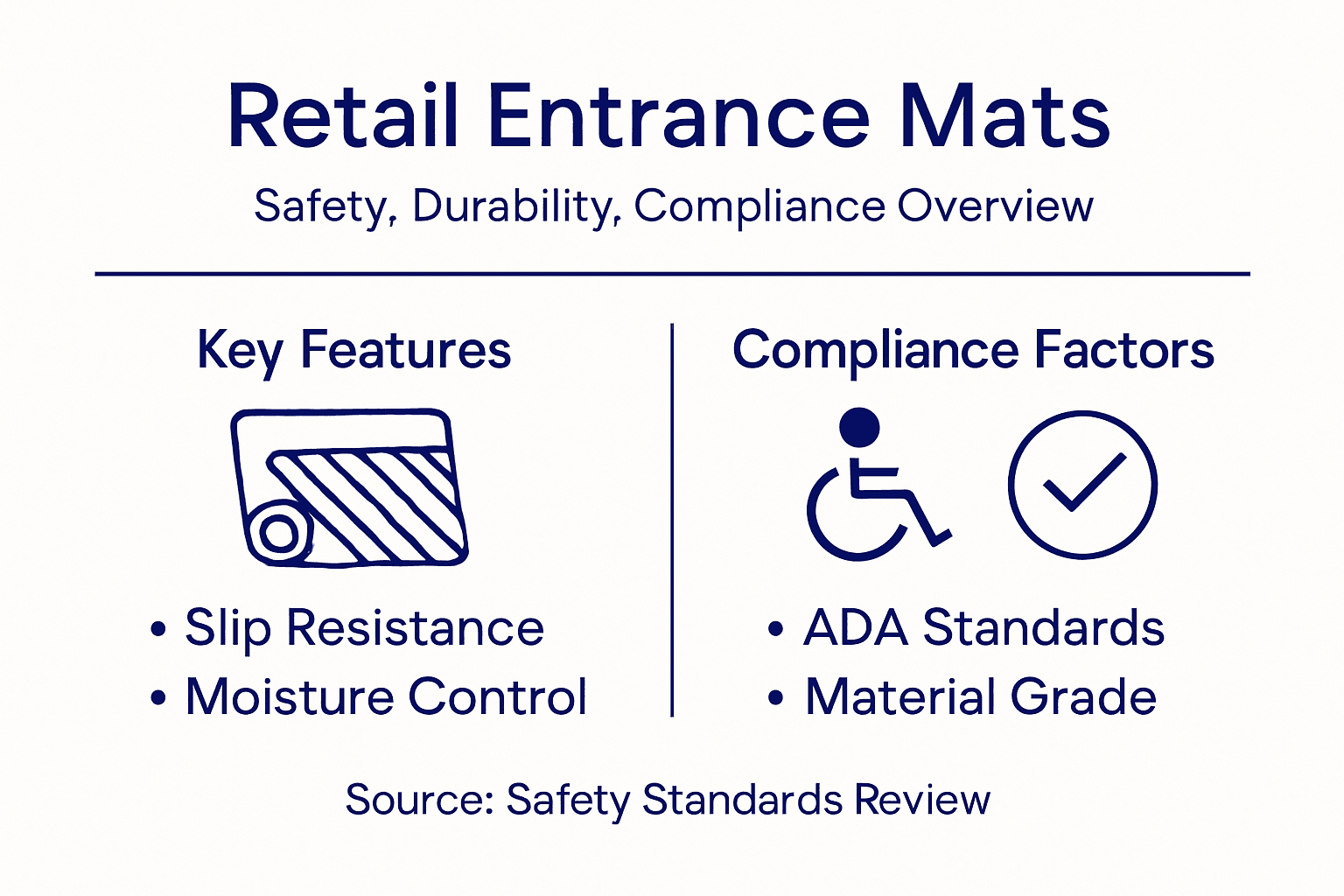
Pro tip: Rotate and clean entrance mats regularly to maintain their effectiveness and extend their functional lifespan.
Choosing the Right Type for Your Retail Space
Selecting the appropriate entrance mat for a retail environment requires careful consideration of multiple critical factors. Accessibility standards play a crucial role in determining the most suitable mat for your specific space, with key performance attributes extending far beyond simple aesthetic choices. The right entrance mat can significantly impact customer safety, store maintenance, and overall operational efficiency.
Retail spaces typically encounter different traffic patterns and environmental challenges, which means mat selection is not a one-size-fits-all proposition. Performance characteristics become paramount when evaluating potential entrance mat solutions. Facility managers must assess several essential criteria to make an informed decision:
- Moisture absorption capacity
- Durability under heavy foot traffic
- Slip resistance
- Low-profile design to prevent tripping
- Material compatibility with store flooring
- Ease of cleaning and maintenance
The material composition of entrance mats significantly influences their functional effectiveness. Synthetic fibers like nylon and polypropylene offer exceptional moisture-wicking properties, while rubber backing provides superior slip resistance. Commercial-grade mats engineered with advanced textile technologies can trap up to 90% of incoming dirt and moisture, protecting expensive floor surfaces and reducing long-term maintenance expenses.
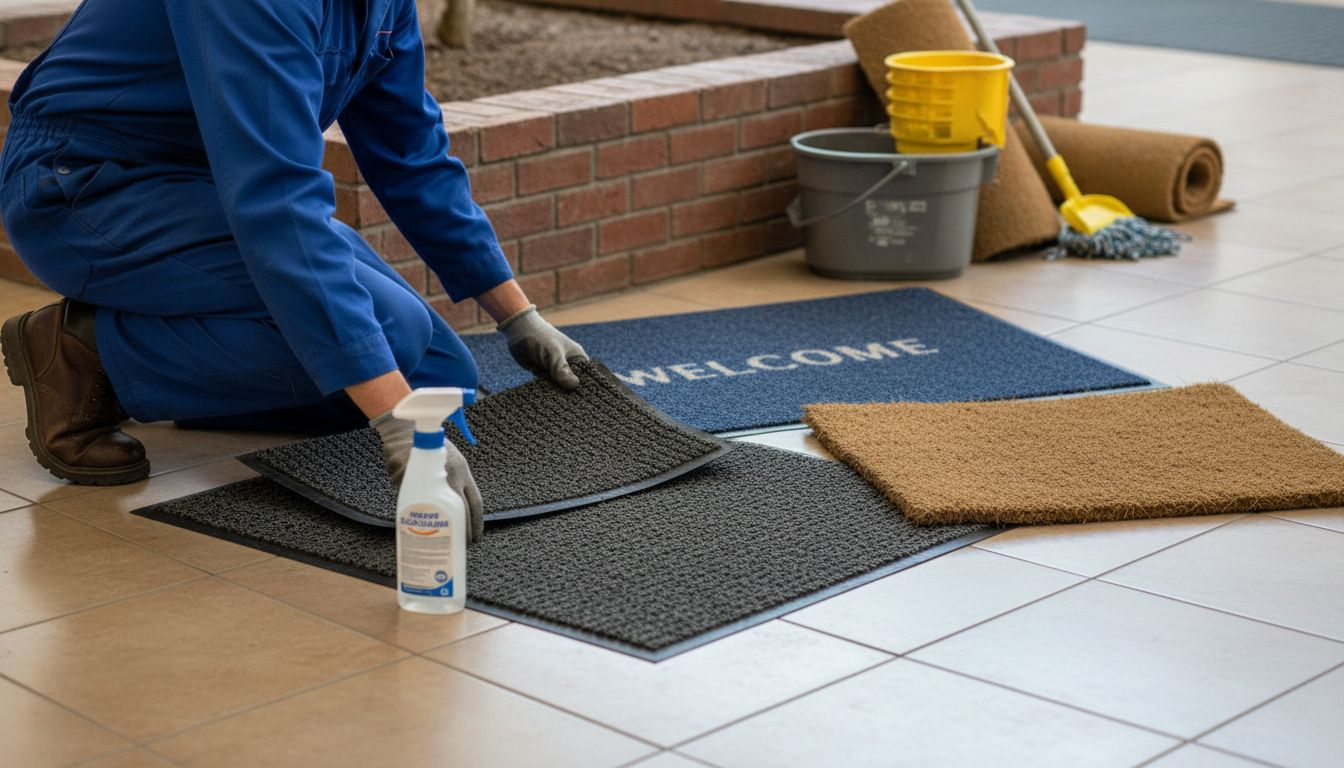
Here’s a quick reference comparing popular retail entrance mat materials and their performance:
| Material Type | Moisture Absorption | Slip Resistance | Durability |
|---|---|---|---|
| Nylon | High | Good | Excellent |
| Polypropylene | Excellent | Moderate | High |
| Rubber Backing | Minimal | Superior | Outstanding |
| Cotton Blends | Moderate | Fair | Moderate |
Proper entrance mat selection is not just about aesthetics—it’s a critical safety and operational investment for retail environments.
Different retail settings demand specialized mat solutions. High-traffic areas like shopping malls require more robust mats with enhanced durability, while boutique stores might prioritize aesthetic design alongside functional performance. Understanding your specific environmental conditions and foot traffic patterns will guide you toward the most appropriate entrance mat solution.
Pro tip: Measure your entrance area precisely and select mats with modular or custom sizing options to ensure complete floor coverage and maximum effectiveness.
ADA Compliance and Safety Standards Explained
Understanding Americans with Disabilities Act (ADA) requirements is crucial for retail spaces seeking to create inclusive and safe environments. Entrance design standards encompass critical accessibility guidelines that directly impact how businesses approach floor mat selection and placement. These regulations ensure that retail spaces provide safe, navigable routes for all customers, regardless of mobility challenges.
The ADA establishes specific technical requirements for entrance mats that go beyond simple aesthetic considerations. Key compliance criteria include:
- Maintaining a stable, firm surface
- Ensuring slip-resistant materials
- Preventing tripping hazards
- Keeping mat edges flush with surrounding flooring
- Maintaining minimal surface height variations
- Allowing easy wheelchair and mobility aid navigation
Retail managers must pay particular attention to mat thickness and edge design. Mats should have beveled or ramped edges that create smooth transitions, typically no more than 1/2 inch in height. This prevents potential tripping risks for customers using wheelchairs, walkers, or those with limited mobility. Accessibility design standards mandate that entrance surfaces must be predictable and safe for all users.
ADA compliance is not just a legal requirement—it’s a commitment to creating welcoming spaces for every customer.
Noncompliance with ADA standards can result in significant legal and financial consequences. Beyond potential lawsuits, businesses risk alienating customers and damaging their reputation. Thoughtful mat selection becomes a critical component of demonstrating a commitment to accessibility and customer care.
Pro tip: Consult with an ADA compliance specialist to conduct a comprehensive entrance mat assessment and ensure full regulatory adherence.
How Entrance Mats Reduce Costs and Liabilities
Retail businesses face significant financial risks related to flooring maintenance and customer safety, making entrance mats a critical strategic investment. Strategic asset protection reduces potential liabilities by preventing damage and minimizing accident risks before they occur. These seemingly simple floor coverings represent a sophisticated approach to risk management and cost control.
Cost reduction strategies through entrance mats include multiple layers of financial protection:
- Preventing floor surface damage from dirt and moisture
- Reducing cleaning and maintenance expenses
- Minimizing slip-and-fall accident risks
- Extending floor covering lifespan
- Lowering potential legal liability expenses
- Reducing frequency of floor replacement
Comprehensive entrance mat solutions trap approximately 80% of incoming dirt and moisture before it spreads throughout a retail space. This preventative approach can reduce cleaning costs by up to 65% and extend floor covering life by several years. The financial implications are substantial, with businesses potentially saving thousands of dollars in maintenance and replacement expenses.
Proactive risk management through entrance mats transforms a simple floor covering into a strategic financial investment.
Beyond direct financial savings, entrance mats provide critical liability protection. By reducing slip hazards and maintaining clean, dry surfaces, businesses minimize the potential for costly legal claims. Insurance providers often recognize these preventative measures, potentially offering reduced premiums for establishments demonstrating proactive safety strategies.
Pro tip: Conduct a quarterly assessment of entrance mat condition and replace them before they become ineffective to maintain maximum cost-saving and safety benefits.
Maintenance Best Practices for High-Traffic Mats
High-traffic retail environments demand rigorous and systematic entrance mat maintenance to preserve safety, functionality, and appearance. Routine maintenance protocols protect critical floor investments by preventing dirt accumulation, reducing slip hazards, and extending mat longevity. Effective maintenance goes beyond simple cleaning—it’s a comprehensive strategy for facility management.
Essential maintenance practices for high-traffic entrance mats include:
- Daily loose dirt removal through vacuuming
- Weekly deep cleaning depending on material type
- Monthly thorough inspection for wear and damage
- Immediate replacement of damaged or curled mat edges
- Rotating mats to ensure even wear distribution
- Professional deep cleaning every 3-6 months
Systematic maintenance approaches significantly impact mat performance and safety. Commercial-grade entrance mats experience substantial wear, with some high-traffic locations requiring cleaning multiple times per week. Proper maintenance not only preserves mat appearance but also maintains critical slip-resistance properties that protect customers and reduce liability risks.
Consistent maintenance transforms entrance mats from simple floor coverings into strategic safety investments.
Technical maintenance requires understanding specific mat materials. Synthetic fiber mats demand different cleaning techniques compared to natural fiber options, with each material requiring specialized care to maintain optimal performance. Facility managers must develop tailored maintenance protocols that account for traffic volume, environmental conditions, and specific mat construction.
This table summarizes maintenance best practices based on mat placement and traffic levels:
| Area Location | Recommended Cleaning Frequency | Inspection Interval | Replacement Timeline |
|---|---|---|---|
| Main Entrance | Daily | Monthly | Annually or sooner |
| Side Door | Twice weekly | Bi-monthly | Every 18 months |
| High-Traffic Zone | Multiple times daily | Bi-weekly | 6-12 months |
| Low-Traffic Area | Weekly | Quarterly | Every 2 years |
Pro tip: Develop a documented maintenance log to track cleaning frequency, mat condition, and replacement schedules for systematic and proactive mat management.
Enhance Safety and Compliance with the Right Retail Entrance Mats
Retail environments face the challenge of maintaining clean, safe, and ADA-compliant spaces while managing high foot traffic and protecting flooring investments. The article highlights critical issues like slip resistance, durability, and accessibility that directly affect customer safety and operational costs. If you are striving to reduce liability risks and ensure your entrance mats perform under pressure, choosing the right solution is essential.
At Mats4U.com, we understand these concerns and offer a wide selection of Commercial Mats designed to meet rigorous safety standards and deliver long-term durability. Our mats feature advanced materials with superior moisture absorption and slip-resistant backings to minimize accidents and keep your entryways clean. With options tailored for ADA compliance and high-traffic environments, you can enhance your retail space’s safety and professional appearance with confidence.
Take the next step toward safer retail entrances today. Browse our Indoor Mats collection to find the perfect mats that combine performance and compliance. Don’t wait to protect your customers and reduce maintenance costs—shop now at Mats4U.com and enjoy competitive pricing plus free delivery on orders over $100.
Frequently Asked Questions
What are the primary functions of retail entrance mats?
Retail entrance mats are designed to trap dirt, moisture, and debris before they enter the retail space. They help maintain cleanliness, reduce slip hazards, create a professional first impression, and protect flooring from wear and damage.
How do entrance mats contribute to safety in retail environments?
Entrance mats reduce slip and fall risks by absorbing moisture, minimizing dirt tracking, and providing stable walking surfaces. They are essential for creating a safe environment for all customers, including those with mobility challenges.
What should I consider when choosing an entrance mat for my retail space?
Key factors include moisture absorption capacity, durability, slip resistance, design height to prevent tripping, compatibility with flooring, and ease of maintenance. Assessing traffic patterns and environmental conditions is also crucial for selecting the right mat.
How often should entrance mats be maintained to ensure effectiveness?
Maintenance should include daily dirt removal via vacuuming, weekly deep cleaning, monthly inspections, and immediate replacement of damaged mats. Regular maintenance enhances mat performance and extends their lifespan.


