


Wet floors, food spills, and heavy foot traffic can quickly turn any hotel or restaurant in the United States into a dangerous environment. Facility managers face the ongoing challenge of keeping guests and staff safe from slip and fall accidents, especially in areas like lobbies, kitchens, and bathrooms. By focusing on commercial floor mats designed to meet rigorous safety standards, you can significantly reduce hazards and maintain a secure, welcoming space for everyone.
Table of Contents
- Step 1: Assess High-Risk Areas For Slippery Floors
- Step 2: Select Effective Commercial Floor Mats
- Step 3: Install Mats Strategically In Key Locations
- Step 4: Maintain And Clean Mats Routinely
- Step 5: Verify Slip Resistance And Safety Regularly
Quick Summary
| Key Insight | Explanation |
|---|---|
| 1. Identify high-risk areas | Regularly assess spaces like kitchens, entryways, and restrooms for slip hazards to enhance safety. |
| 2. Select suitable floor mats | Choose mats based on slip resistance, durability, and environment to prevent slip-related accidents. |
| 3. Install mats strategically | Place mats in critical zones like entrances and near water sources to maximize slip protection. |
| 4. Maintain mats routinely | Implement a consistent cleaning and inspection schedule to ensure mats remain effective and safe. |
| 5. Verify safety regularly | Conduct periodic slip resistance tests and document performance to address potential hazards proactively. |
Step 1: Assess high-risk areas for slippery floors
Identifying potential slip hazards is crucial for preventing workplace accidents and protecting people from potential injuries. Facility managers must systematically evaluate their spaces to recognize surfaces that could compromise safety.
To effectively assess high-risk areas, start by understanding the most common locations prone to slippery conditions. Workplace surfaces with slip risks typically include:
- Entryways and lobbies
- Kitchen and food preparation zones
- Bathrooms and restroom facilities
- Loading docks and warehouse spaces
- Areas near sinks, water fountains, or beverage stations
- Spaces with frequent cleaning or mopping activity
Detailed visual inspections are essential for identifying potential slip hazards. Look for surfaces that exhibit:
Here’s a summary of common workplace areas and their unique slip risks:
| Area Type | Main Slip Risk | Contributing Factor |
|---|---|---|
| Entryways & Lobbies | Rainwater accumulation | Heavy pedestrian traffic |
| Kitchens & Food Prep | Grease and liquid spills | Frequent cooking activity |
| Bathrooms & Restrooms | Water on surfaces | High moisture environment |
| Loading Docks & Warehouses | Oil and debris | Vehicle movement |
| Near Sinks/Fountains | Standing water | Continuous water use |
| Recently Cleaned Spaces | Detergent residue | Ongoing cleaning procedures |
- Visible moisture or liquid spills
- Uneven or damaged floor textures
- Recent cleaning residue
- Accumulated dust or debris
- Grease or oil patches
- Worn floor coverings
The National Safety Council highlights that commercial environments with heavy pedestrian traffic are particularly vulnerable to slip risks. Pay special attention to high-traffic zones where floor conditions can rapidly change.
Consistent monitoring and proactive assessment are key to maintaining a safe environment and preventing potential accidents.
Pro tip: Conduct weekly floor condition assessments and maintain a detailed log of potential slip hazards to track and address risks systematically.
Step 2: Select effective commercial floor mats
Selecting the right commercial floor mats is crucial for maintaining safety and preventing slip-related accidents in your facility. Your goal is to choose mats that not only look professional but also provide maximum protection for employees and visitors.
When evaluating commercial floor mats, focus on critical floor covering standards that ensure durability and performance. Key selection criteria include:
- Slip resistance rating
- Material durability
- Water absorption capacity
- Chemical and stain resistance
- Thickness and cushioning
- Overall wear resistance
Consider the specific environment where the mat will be used. Different areas require different mat characteristics:
- Entrance zones need high moisture absorption
- Kitchen areas demand grease resistance
- Manufacturing spaces require heavy-duty construction
- Office environments benefit from thinner, more aesthetic options
Professional floor mat selection balances safety, functionality, and aesthetic appeal.
The National Institute of Certified Floor Inspectors recommends consulting professionals who understand commercial mat specifications and can guide you toward the most appropriate solutions for your specific space.
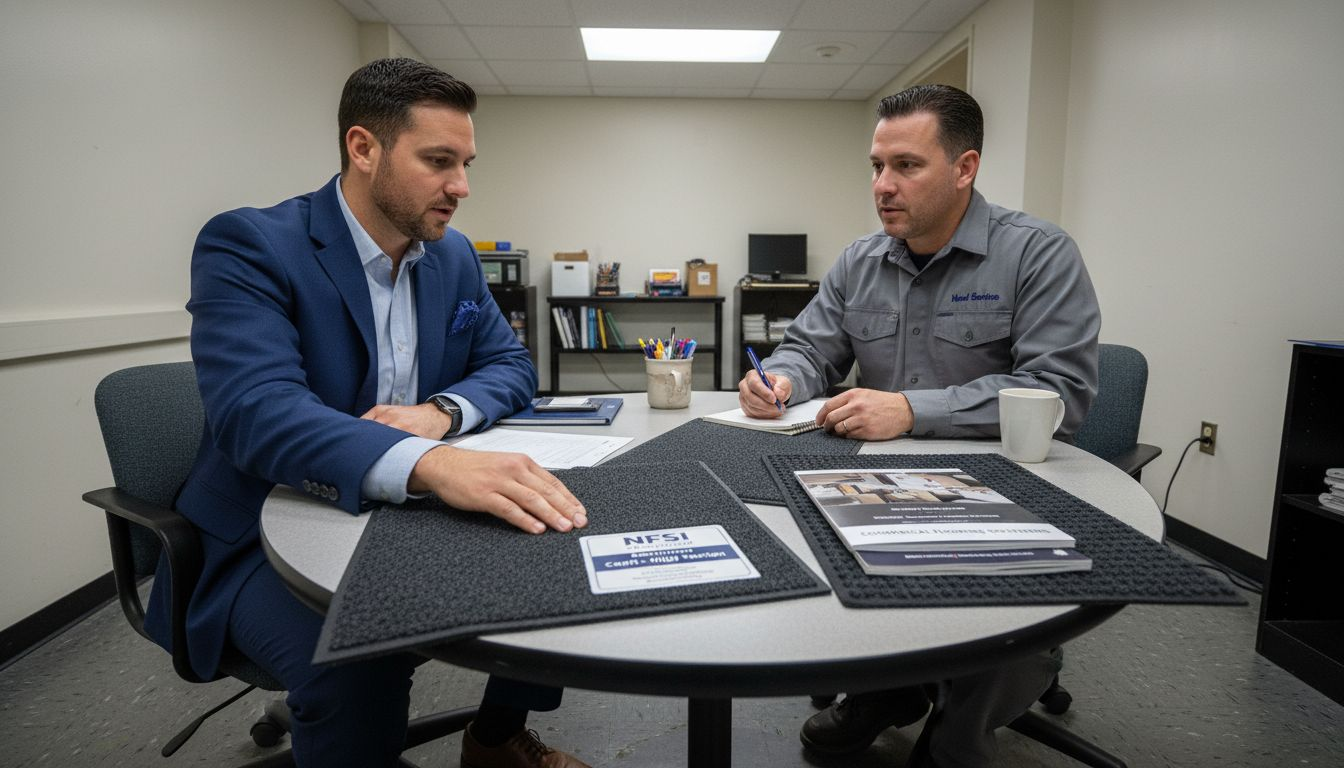
Pro tip: Always request product certifications and test samples before making a final mat selection to ensure they meet your specific safety and performance requirements.
Step 3: Install mats strategically in key locations
Successfully preventing slip hazards requires more than selecting the right mats - you must install them precisely where they can provide maximum protection. Your strategic placement will directly impact workplace safety and accident prevention.
Following workplace safety regulations, focus on installing mats in these critical zones:
- Entrance and lobby areas
- Near water fountains and sinks
- Kitchen and food preparation spaces
- Transitions between different floor types
- Areas prone to spills or moisture accumulation
- Walkways with high pedestrian traffic
When installing mats, pay close attention to critical installation requirements:
- Ensure mats lie completely flat
- Secure edges to prevent curling or buckling
- Match mat size to the specific area
- Avoid creating additional tripping hazards
- Maintain proper mat thickness relative to surrounding surfaces
Strategic mat placement is your first line of defense against workplace slip accidents.
Consider specialized mat types for different environments - rubber mats for wet areas, carpet mats for dry zones, and anti-fatigue mats for standing workstations. Regular inspection and maintenance will help preserve their effectiveness.
Below is a comparison of mat types and their best-fit environments:
| Mat Type | Ideal Location | Key Advantage |
|---|---|---|
| Rubber | Wet/high-moisture areas | Excellent slip prevention |
| Carpet | Reception/office areas | Enhances appearance |
| Grease-resistant | Kitchen/food prep zones | Resistant to oils |
| Anti-fatigue | Standing workstations | Reduces worker fatigue |
Pro tip: Replace mats immediately when they show signs of wear, curling, or reduced slip resistance to maintain optimal workplace safety.
Step 4: Maintain and clean mats routinely
Routine maintenance of floor mats is essential for preserving their slip-prevention capabilities and ensuring workplace safety. Your cleaning strategy will directly impact the effectiveness of your safety measures and the longevity of your investment.
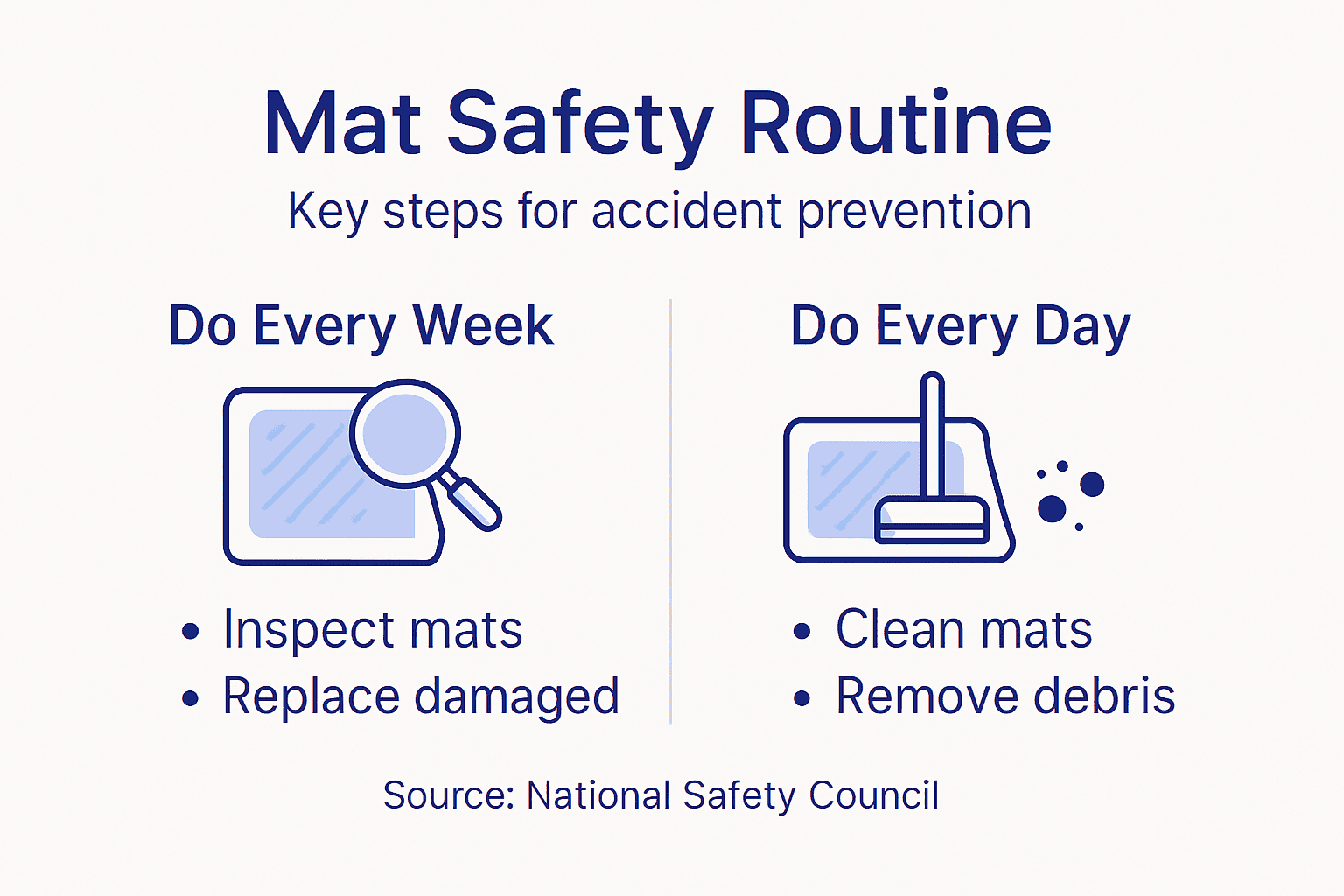
According to workplace safety regulations, implement a comprehensive mat maintenance routine that includes:
- Daily debris removal
- Weekly deep cleaning
- Monthly comprehensive inspection
- Immediate spot cleaning of spills
- Prompt replacement of damaged mats
- Rotation of mats to ensure even wear
Cleaning techniques vary depending on mat material and usage:
- Vacuum fabric mats thoroughly
- Use appropriate cleaning solutions for different surfaces
- Allow complete drying before reinstalling
- Check mat edges and surfaces for wear
- Sanitize mats in high-traffic or food-related areas
Consistent maintenance prevents mats from becoming slip hazards themselves.
Pay special attention to mats in high-moisture zones like entrances, kitchens, and bathrooms. These areas require more frequent and thorough cleaning to maintain optimal slip resistance and hygiene.
Pro tip: Develop a standardized cleaning checklist and train staff on proper mat maintenance to ensure consistent safety protocols.
Step 5: Verify slip resistance and safety regularly
Ensuring the ongoing safety of your floor mats requires systematic and periodic verification of their slip resistance capabilities. Your proactive approach will help prevent potential accidents and maintain a secure workplace environment.
Floor slip resistance testing provides critical insights into mat performance under various conditions. Implement a comprehensive verification process that includes:
- Monthly visual inspection
- Quarterly friction coefficient measurements
- Annual comprehensive safety assessments
- Documentation of test results
- Tracking wear and performance changes
- Immediate replacement of underperforming mats
Key verification techniques involve:
- Use professional friction testing equipment
- Test mats in both dry and wet conditions
- Compare results against industry safety standards
- Evaluate mat surface texture and integrity
- Check for potential degradation factors
Regular safety verification is your most effective defense against potential slip hazards.
The National Safety Council emphasizes consistent monitoring to ensure surfaces maintain required slip resistance thresholds. Pay special attention to high-traffic areas and zones with frequent moisture exposure.
Pro tip: Create a digital tracking system to log mat performance tests, enabling quick identification of potential safety risks and facilitating timely replacements.
Prevent Slippery Floor Accidents with the Right Mats From Mats4U
Slippery floors pose a serious risk to safety in any commercial or industrial environment. This article highlighted the challenges of identifying high-risk areas, selecting mats with proper slip resistance, and ensuring strategic placement and routine maintenance. Every step plays a vital role in avoiding dangerous slip-and-fall accidents that could impact your employees and visitors.
Take control of your facility’s safety by choosing from our premium collection of Outdoor Mats, designed for wet or high-moisture zones. For workstations that require comfort and support, explore our durable Anti-Fatigue Mats that help reduce fatigue while protecting against slips. You can also browse essential Accessories to secure your mats and enhance safety.
Don’t wait until an accident happens. Visit Mats4U.com now to find the perfect mats that meet industry standards and your unique safety needs. Order today and benefit from competitive pricing plus free delivery on orders over $100 to keep your workplace both safe and productive.
Frequently Asked Questions
How can I identify high-risk areas for slippery floor accidents?
To identify high-risk areas, conduct a thorough inspection of your facility, focusing on entryways, kitchens, bathrooms, and other zones prone to moisture. Look for visible spills, uneven surfaces, or signs of wear that could contribute to slip hazards.
What features should I look for when selecting commercial floor mats?
When selecting commercial floor mats, prioritize slip resistance, material durability, water absorption capacity, and ease of cleaning. Choose mats that match the specific needs of each area, such as grease-resistant mats for kitchens or moisture-absorbent mats for entryways.
Where should I install mats to maximize safety in my workplace?
Install mats in areas with the highest risk of slips, such as entrance zones, near water sources, and in kitchens. Ensure mats are placed at transition points between different floor types and in high-traffic walkways to effectively reduce slip risks.
How often should I maintain and clean floor mats?
You should maintain and clean floor mats routinely by removing debris daily, deep cleaning weekly, and inspecting them monthly. Consistent maintenance helps keep slip resistance intact and extends the lifespan of your mats, reducing safety concerns over time.
How can I verify the slip resistance of my floor mats?
To verify the slip resistance of your floor mats, conduct monthly visual inspections and quarterly friction coefficient measurements. Regular testing will help you track changes in performance and ensure mats meet safety standards, addressing potential risks promptly.


