


Designing high-traffic commercial spaces demands strategic planning to balance flow, safety, and durability. Facility managers face the challenge of creating environments that handle constant use while maintaining operational efficiency and user comfort. Poor layout choices can lead to congestion, safety hazards, and premature wear of materials. This article delivers practical, evidence-backed design tips for 2026, covering efficient layout optimization, zoning strategies, traffic management, durable flooring selection, and maintenance best practices. You’ll learn how to transform high-traffic areas into streamlined, safe, and cost-effective spaces that support your facility’s success.
Table of Contents
- 1. Efficient Layout Design: Optimizing Flow Patterns
- 2. Zoning and Visual Communication: Using Color-Coded Markings and Signage
- 3. Managing Traffic Flow: One-Way Paths, Signage, and Smart Technologies
- 4. Durable Flooring Options and Safety Considerations
- 5. Maintenance Best Practices for High-Traffic Areas
Key takeaways
| Point | Details |
|---|---|
| Efficient layouts optimize flow | U-flow, I-flow, and L-flow patterns reduce travel time and congestion in warehouses and commercial facilities. |
| Color-coded zoning enhances safety | Visual markings clarify zones, reduce accidents, and improve communication across high-traffic areas. |
| Smart traffic management reduces congestion | One-way paths, clear signage, and IoT sensors monitor and streamline movement in busy environments. |
| Durable flooring balances longevity and comfort | Epoxy, polished concrete, and rubber flooring offer varying lifespans and slip resistance for different needs. |
| Preventive maintenance sustains performance | Regular zone observation and focused upkeep on high-touch areas preserve safety and appearance. |
1. Efficient layout design: optimizing flow patterns
Choosing the right flow pattern transforms how efficiently your facility operates. U-flow, I-flow, and L-flow patterns minimize unnecessary movement in warehouses and commercial spaces, directly impacting productivity and safety. U-flow works best for linear processes where materials enter and exit from the same side, creating a smooth loop. I-flow suits facilities with separate entry and exit points, ideal for straightforward in-and-out workflows. L-flow maximizes corner spaces and works well when your building layout constrains traditional patterns.
The benefits extend beyond simple movement reduction. Proper flow design lowers congestion during peak hours, improves worker safety by reducing crossing paths, and cuts operational costs through reduced travel time. Warehouses using optimized flow patterns report fewer bottlenecks and faster order fulfillment.
Consider these applications for each pattern:
- U-flow: Manufacturing lines, assembly operations, and facilities with single-side loading docks
- I-flow: Distribution centers with high throughput, cross-docking operations, and linear processing needs
- L-flow: Retail backrooms, corner warehouse spaces, and facilities with irregular building shapes
Pro Tip: Observe actual movement patterns in your facility for one week before finalizing your flow design. Real-world data reveals bottlenecks and inefficiencies that aren’t obvious on paper, allowing you to customize the pattern to your specific needs. Pairing optimized layouts with industrial anti fatigue mats in standing work zones further enhances worker comfort and productivity.
2. Zoning and visual communication: using color-coded markings and signage
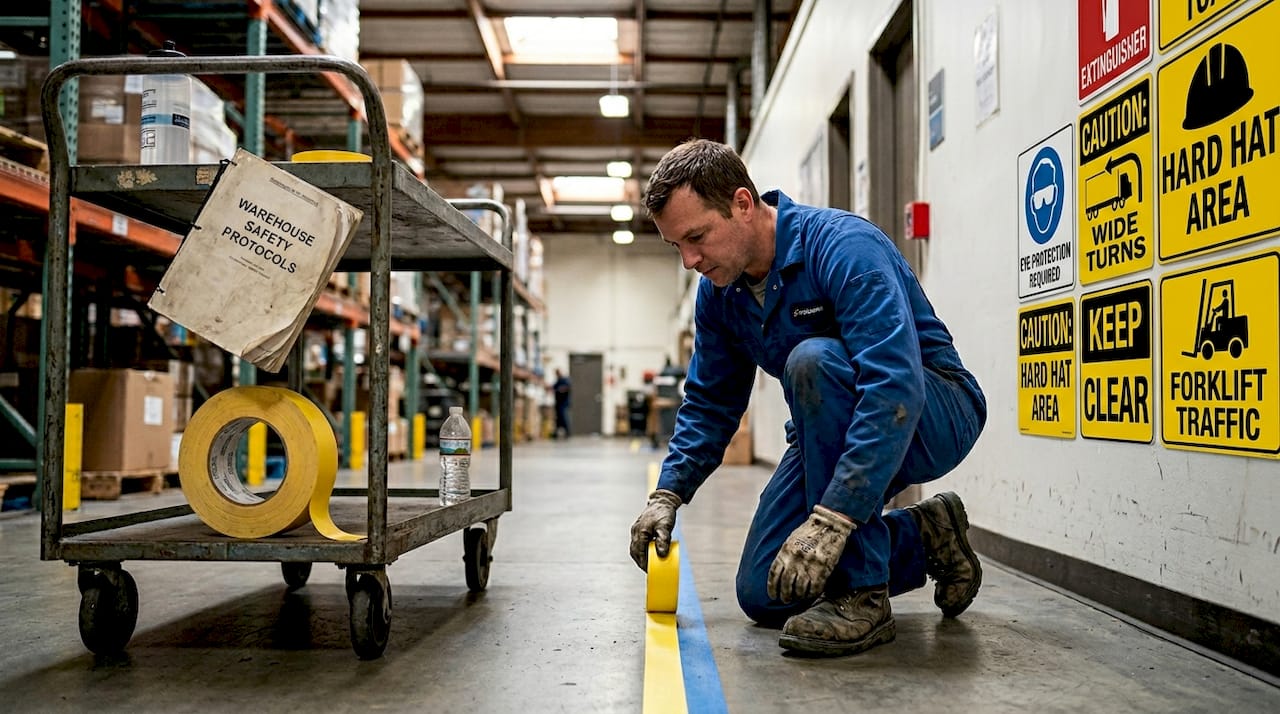
Clear zoning transforms chaotic spaces into organized, safe environments. Color-coded floor markings enhance safety and visual communication, with standardized colors conveying specific meanings instantly. This system reduces accidents by making hazards and requirements immediately recognizable to staff and visitors alike.
| Color | Meaning | Common Applications |
|---|---|---|
| Blue | Mandatory actions | Personal protective equipment zones, required procedures |
| Red | Prohibition or fire safety | Fire equipment locations, restricted areas, emergency exits |
| Yellow | Caution or hazard | Forklift paths, wet floors, temporary obstacles |
| Green | Safe conditions | First aid stations, emergency assembly points, safe walkways |
Beyond color coding, zoning by activity intensity reduces conflicts between different user groups. In gyms, separating high-intensity cardio zones from strength training areas prevents overcrowding and improves user experience. Warehouses benefit from distinct pedestrian walkways separated from forklift traffic. Buffer spaces between zones accommodate peak usage without spilling into adjacent areas.
Key benefits include:
- Instant hazard recognition reduces response time during emergencies
- Consistent visual language works across language barriers
- Clear boundaries prevent unauthorized access to restricted zones
- Reduced training time for new staff and contractors
Pro Tip: Design modular zoning that adapts to changing needs. Use removable floor tape or modular flooring sections for zones that may shift with seasonal demands or operational changes. This flexibility prevents costly renovations when your facility evolves. Complement zoning strategies with anti fatigue mat uses for facilities in standing work areas to support worker wellness within each zone.
3. Managing traffic flow: one-way paths, signage, and smart technologies
Strategic traffic management prevents the chaos that plagues busy commercial environments. Implementing one-way traffic flows, signage, and IoT sensors provides real-time monitoring to reduce congestion before it impacts operations. One-way paths eliminate head-on collisions and decision paralysis at intersections, particularly valuable in warehouse aisles and parking areas.
One-way loops and traffic separation reduce collisions between pedestrians, forklifts, and delivery vehicles. Separate entry and exit points prevent backups during peak delivery windows. This separation proves especially critical in facilities handling both customer traffic and supply chain operations simultaneously.
Clear, consistent signage reinforces traffic rules without requiring constant supervision. Overhead signs work better than floor markings in areas with visual clutter. Digital displays can show real-time capacity updates, directing traffic to less congested zones during peak periods.
Smart technology integration offers unprecedented control:
- IoT sensors track congestion hotspots and trigger alerts when thresholds are exceeded
- Automated counting systems measure peak usage times for staffing optimization
- Heat mapping reveals unexpected traffic patterns for layout refinement
- Mobile apps guide visitors along optimal routes based on current conditions
Facility managers can implement these steps immediately. Start by mapping current traffic patterns using simple observation or temporary cameras. Identify conflict points where different traffic types intersect. Install one-way signage at these intersections first, then expand to full loops. Add sensors gradually, beginning with your highest-traffic chokepoints. Evaluate anti-fatigue mats for facility managers at standing checkpoints or security stations to support staff monitoring these systems.
4. Durable flooring options and safety considerations
Flooring selection directly impacts both operational costs and safety outcomes in high-traffic areas. Different materials offer distinct trade-offs between longevity, initial investment, slip resistance, and user comfort.
| Flooring Type | Lifespan | Cost Range | Slip Resistance | Best Applications |
|---|---|---|---|---|
| Epoxy | 10-20+ years | Moderate | Good when textured | Warehouses, industrial facilities |
| Polished Concrete | 25-30 years | Low to moderate | Variable, needs treatment | Distribution centers, manufacturing |
| Terrazzo | 40+ years | High | Excellent | High-end retail, lobbies |
| Rubber | 10-15 years | Moderate to high | Excellent | Gyms, healthcare, food service |
| LVT | 10-20 years | Low to moderate | Good | Offices, retail, hospitality |
Epoxy flooring lasts 10-20+ years, polished concrete 25-30 years, making them cost-effective for industrial applications despite higher installation costs. Rubber offers superior slip resistance in wet environments but may show wear faster under heavy equipment. LVT provides aesthetic flexibility for customer-facing spaces while maintaining reasonable durability.
Key considerations for each type:
- Epoxy: Chemical resistant, seamless, but can be slippery when wet without texture additives
- Polished concrete: Extremely durable and low maintenance, but hard surface causes fatigue
- Terrazzo: Premium appearance with exceptional longevity, justified in high-visibility areas
- Rubber: Cushioned comfort reduces fatigue, ideal for standing work zones
- LVT: Easy replacement of damaged sections, wide design options
Hard surfaces excel in durability but may lack slip resistance, requiring careful surface treatment or strategic mat placement. Anti-fatigue mats bridge this gap, providing comfort and safety on concrete or epoxy floors without compromising the base material’s durability. Place top anti-fatigue mats for warehouses at packing stations, checkout counters, and assembly lines where workers stand for extended periods. Understanding benefits of anti fatigue mats helps justify the investment through reduced worker fatigue and injury claims.
5. Maintenance best practices for high-traffic areas
Even the best design fails without proper maintenance. Preventive maintenance checklists and zone observation help maintain high-traffic commercial spaces effectively, catching small issues before they become costly repairs.
Follow this preventive maintenance sequence:
- Inspect flooring daily for cracks, chips, or wear patterns that indicate design flaws
- Clean high-traffic paths twice as frequently as low-traffic areas to prevent buildup
- Test slip resistance monthly in wet-prone zones, treating surfaces as needed
- Evaluate signage visibility weekly, replacing faded or damaged markers immediately
- Review traffic flow quarterly using observation or sensor data to identify new bottlenecks
- Schedule deep cleaning during off-peak hours to minimize operational disruption
Focus your efforts on critical zones that experience the most wear. Entrances accumulate dirt and moisture, requiring robust matting systems and frequent cleaning. Seating areas in lobbies show wear from constant use and need regular inspection. High-touch surfaces like door handles and railings demand frequent sanitization in post-pandemic environments.
Regular zone observation reveals patterns invisible in daily operations. Walk your facility at different times, noting where people naturally congregate or deviate from intended paths. These insights inform both immediate fixes and long-term redesign decisions.
Pro Tip: Integrate your maintenance schedule with traffic flow data from IoT sensors. Clean and inspect zones immediately after peak usage periods when wear is fresh but before it sets. This timing maximizes efficiency and catches damage early. Strategic placement of anti-fatigue mats for facility managers at maintenance checkpoints supports staff performing regular inspections.
Optimize your high-traffic spaces with Mats4U solutions
Implementing these design strategies becomes easier with the right products supporting your vision. Mats4U offers durable solutions that complement high-traffic facility designs while enhancing safety and comfort. Our premium custom floor mats reinforce your brand at entrances while trapping dirt and moisture before it reaches your main floors. These mats integrate seamlessly into color-coded zoning systems, providing both functional and visual benefits.
For facilities using hard flooring like epoxy or polished concrete, our anti-fatigue mats for comfort reduce worker fatigue at standing workstations, packing areas, and assembly lines. The ergonomic design supports the circulation and joint health principles discussed in our flooring section. When you need adaptable entrance solutions that match your modular zoning approach, consider our modular entryway floor tiles. These tiles reconfigure easily as your traffic patterns evolve, supporting the flexible design philosophy throughout this guide. All products ship free on orders over $100 and are Made in the USA, ensuring quality that matches your facility’s demands.
FAQ
What layout pattern best suits high-traffic warehouses?
U-flow, I-flow, and L-flow patterns each minimize unnecessary movement in different warehouse configurations. U-flow suits linear processes where materials enter and exit from the same side, creating efficient loops. I-flow works best for facilities with separate entry and exit points, supporting straightforward in-and-out workflows. L-flow maximizes corner spaces when building layout constrains traditional patterns. Select based on your facility size, workflow complexity, and physical constraints for optimal results.
How can color-coded zoning improve safety?
Color-coded floor markings enhance safety through immediate visual communication, with blue indicating mandatory actions, red showing fire safety or prohibitions, yellow marking hazards, and green designating safe conditions. This system reduces accidents by clarifying zones and hazards without requiring text or language comprehension. Staff and visitors recognize dangers instantly, improving response times during emergencies. The consistent visual language facilitates quick compliance and reduces training time for new employees and contractors.
What flooring options balance durability and comfort?
Hard surfaces like epoxy and terrazzo excel in durability but create fatigue on standing workers, while rubber flooring provides natural cushioning. The optimal approach combines durable base flooring with strategically placed anti-fatigue mats at workstations, checkout counters, and assembly lines. This hybrid strategy delivers the longevity and easy maintenance of hard surfaces while protecting worker health through targeted comfort zones. Consider top anti-fatigue mats for warehouses to enhance safety and reduce injury claims without compromising your floor’s durability.
How often should maintenance be performed in high-traffic areas?
Preventive maintenance with regular zone observation maintains high-traffic areas effectively when performed weekly or monthly depending on traffic volume. High-touch zones like entrances, seating areas, and touchpoints require more frequent inspection, often daily or every other day. Lower-traffic areas can follow monthly schedules. Focus cleaning efforts immediately after peak usage periods when wear is fresh but before damage sets in. This timing catches small issues early, preventing costly repairs and extending your flooring lifespan significantly.
Recommended
- Best High Traffic Area Flooring Solutions for Businesses – Mats4U USA
- High Traffic Floor Tiles: Reducing Costs and Risks – Mats4U USA
- Ultimate Commercial Building Maintenance Checklist 2025 – Mats4U USA
- Best high traffic flooring for commercial spaces 2026 – Mats4U USA
- Types of restaurant refrigeration for efficient food storage in 2026


