


Selecting the right flooring for high-traffic commercial spaces is one of the most critical decisions facility managers and property owners face. The wrong choice can lead to premature wear, safety hazards, and costly replacements that disrupt operations. With countless options available, each claiming superior performance, how do you identify the flooring that truly balances durability, safety, maintenance demands, and budget constraints? This article provides an expert framework to evaluate high traffic flooring solutions and reviews the top options suited for retail and industrial environments in 2026, helping you make an informed investment that protects your bottom line.
Table of Contents
- How To Evaluate High-Traffic Flooring For Commercial Spaces
- Top Durable Flooring Options For High-Traffic Commercial Areas
- Comparing High-Traffic Flooring Options: Performance And Cost
- Choosing The Best Flooring For Your Commercial Environment
- Enhance Your Commercial Floors With Quality Mats From Mats4U
Key takeaways
| Point | Details |
|---|---|
| Evaluation criteria matter | Durability, safety, maintenance, and cost are essential factors when selecting commercial flooring for high-traffic areas. |
| Resinous systems excel | High-performance resinous and epoxy floors offer superior chemical resistance and longevity for industrial settings. |
| Polished concrete saves money | Polished concrete delivers the lowest long-term maintenance cost and LEED-friendly environmental benefits. |
| Match flooring to function | Terrazzo suits large aesthetic spaces, quarry tile excels in kitchens, and rubber flooring provides slip resistance for gyms. |
| Proper prep prevents failure | Professional substrate preparation is crucial to avoid premature flooring failures and maximize lifespan. |
How to evaluate high-traffic flooring for commercial spaces
Choosing the right flooring starts with understanding the functional requirements of your specific space. Every commercial environment presents unique challenges, from chemical spills in manufacturing facilities to constant foot traffic in retail stores. The first step is identifying your primary performance needs across four critical dimensions.
Durability stands as the foundation of any high-traffic flooring decision. You need to assess three resistance types: abrasion from foot traffic and equipment, chemical resistance for spills and cleaning agents, and impact resistance from dropped items or heavy loads. The compressive strength rating determines a floor’s ability to handle daily foot traffic, carts, equipment, and furniture without cracking or degrading. Look for flooring with compressive strength ratings appropriate to your traffic volume and load requirements.
Safety considerations extend beyond slip resistance, though that remains paramount in wet environments like commercial kitchens or entryways. Antimicrobial properties matter in food processing facilities and healthcare settings where bacteria growth poses risks. Fire resistance ratings become critical in certain industrial applications. Choosing the right commercial flooring involves considering durability, safety, maintenance, and budget together rather than optimizing for just one factor.
Maintenance requirements directly impact your total cost of ownership. Some flooring types demand daily specialized cleaning, periodic resealing, or professional refinishing. Others require minimal intervention beyond regular sweeping and mopping. Calculate the labor hours and material costs for routine maintenance over a five-year period to compare true lifecycle expenses.
Pro Tip: Balance upfront installation costs against lifecycle savings by calculating maintenance expenses, expected lifespan, and replacement frequency. A flooring option that costs 30% more initially but lasts twice as long with half the maintenance often delivers superior value.
Industry-specific demands require matching flooring properties to operational realities. Auto repair shops need oil-resistant surfaces, food processing plants require antimicrobial and easy-to-sanitize materials, and retail showrooms demand aesthetic appeal alongside durability. Proper substrate preparation prevents most premature flooring failures, so invest in professional assessment of your concrete slab’s moisture content, levelness, and structural integrity before installation.
Top durable flooring options for high-traffic commercial areas
High-performance resinous flooring systems offer superior durability and resistance to various stressors in commercial and industrial environments. These multi-layer coating systems bond directly to concrete substrates, creating a seamless surface customizable to specific industry needs. Resinous floors excel in chemical plants, laboratories, and manufacturing facilities where exposure to corrosive substances occurs regularly.
Key advantages include exceptional chemical resistance, customizable slip resistance through aggregate additions, and the ability to incorporate antimicrobial properties. Installation requires professional expertise and proper environmental controls, with costs ranging from $3 to $12 per square foot depending on system complexity. The main drawback is the 3 to 7 day curing period that may disrupt operations.
Epoxy flooring provides a seamless, chemical-resistant surface ideal for high-traffic industrial environments lasting 10 to 20+ years. This versatile option allows for color customization, decorative flake additions, and various finish textures from high-gloss to slip-resistant. Epoxy bonds molecularly to concrete, creating an impact-resistant surface that withstands heavy equipment and constant foot traffic.
Benefits include low maintenance requirements, excellent moisture resistance, and the ability to repair damaged sections without full replacement. Costs typically range from $3 to $7 per square foot for standard systems. The primary limitation is sensitivity to UV exposure in outdoor applications, where yellowing can occur over time.
Polished concrete delivers exceptional longevity with minimal maintenance, making it ideal for warehouses, retail spaces, and distribution centers. The mechanical polishing process densifies the concrete surface, increasing abrasion resistance while creating an attractive, light-reflective finish. With proper care, polished concrete floors can last 25 to 30 years.
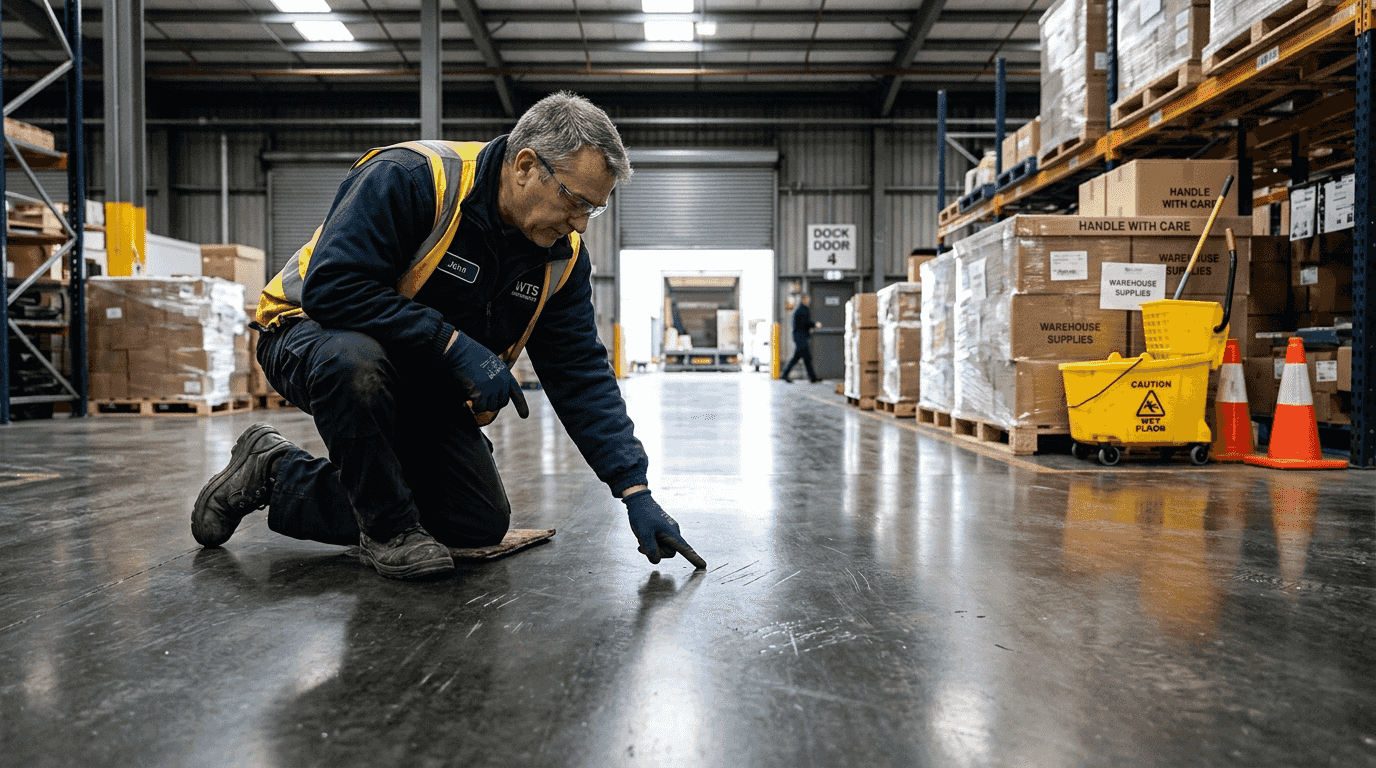
Advantages include LEED certification eligibility, elimination of floor coatings that require replacement, and improved lighting efficiency through light reflection. Installation costs run $3 to $8 per square foot. The main consideration is limited customization for colors and the need for periodic re-polishing every 5 to 10 years depending on traffic levels.
Terrazzo combines marble chips with cement or epoxy binders to create a durable, aesthetically striking surface perfect for lobbies, airports, and large retail spaces. This composite material offers unlimited design possibilities through color and aggregate selection. Terrazzo becomes increasingly cost-effective at installations exceeding 2,500 square feet.
Strengths include extreme durability lasting 40+ years, low maintenance beyond periodic sealing, and timeless aesthetic appeal. Costs range from $15 to $30 per square foot installed. The higher upfront investment and specialized installation requirements represent the primary barriers.
Quarry tile consists of hard-fired clay tiles that resist grease, moisture, and thermal shock, making them the go-to choice for commercial kitchens and food service areas. These unglazed tiles provide natural slip resistance even when wet. Properly installed quarry tile can last 20 to 30 years in demanding kitchen environments.
Benefits include excellent slip resistance, resistance to harsh cleaning chemicals, and cost-effectiveness at $8 to $15 per square foot. Grout lines require periodic cleaning and sealing to prevent staining and bacterial growth.
Rubber flooring is highly durable and slip-resistant, making it suitable for gyms, fitness centers, and high-safety entryways. Available in tiles or rolls, rubber flooring absorbs impact, reduces noise, and provides cushioning that reduces fatigue. Quality rubber flooring lasts 10 to 20 years with proper maintenance.
Advantages include superior slip resistance even when wet, sound dampening properties, and comfort underfoot. Costs range from $4 to $12 per square foot. The material can show scuff marks from black-soled shoes and may emit odor initially after installation.
Comparing high-traffic flooring options: performance and cost
| Flooring Type | Durability | Maintenance | Lifespan | Cost per sq ft | Best For |
|---|---|---|---|---|---|
| Epoxy | Chemical, impact, abrasion resistant | Low, periodic cleaning | 10 to 20+ years | $3 to $7 | Factories, garages, labs |
| Polished Concrete | Extreme abrasion resistance | Very low, re-polish every 5 to 10 years | 25 to 30 years | $3 to $8 | Warehouses, retail, showrooms |
| Resinous Systems | Superior chemical and thermal resistance | Low to moderate | 15 to 25 years | $3 to $12 | Chemical plants, food processing |
| Terrazzo | Exceptional durability, stain resistant | Low, periodic sealing | 40+ years | $15 to $30 | Lobbies, airports, high-end retail |
| Quarry Tile | Grease and moisture resistant | Moderate, grout maintenance | 20 to 30 years | $8 to $15 | Commercial kitchens, food service |
| Rubber | Impact and slip resistant | Moderate, regular cleaning | 10 to 20 years | $4 to $12 | Gyms, entryways, fitness centers |
Polished concrete flooring offers the lowest long-term maintenance cost compared to other hard flooring systems, making it an economically smart choice for budget-conscious facility managers. The elimination of waxing, stripping, and coating replacement saves thousands of dollars annually in large facilities. Additionally, the LEED certification eligibility provides value for organizations pursuing green building standards.
Epoxy floors provide a smooth, chemical-resistant surface suitable for high-traffic areas, excelling in factories, garages, and laboratories where chemical exposure is common. The versatility in color and finish options allows you to create designated zones, safety markings, or branded environments without additional materials. Epoxy’s seamless nature eliminates grout lines where dirt and bacteria accumulate, simplifying sanitation protocols.
Pro Tip: Evaluate installation time against business disruption costs when comparing options. A flooring system that cures in 24 hours may justify a higher material cost if it minimizes revenue loss from facility closures compared to options requiring week-long curing periods.
The tradeoff between upfront cost and longevity becomes clear when examining lifecycle economics. Terrazzo’s $15 to $30 per square foot initial investment seems steep until you factor in its 40+ year lifespan and minimal maintenance. Over four decades, terrazzo costs roughly $0.50 per square foot annually, while cheaper options requiring replacement every 10 years may cost $0.80 to $1.20 annually when accounting for removal, disposal, and reinstallation.
Consider total cost of ownership by adding installation, maintenance, repairs, and eventual replacement costs. A comprehensive analysis often reveals that mid-range options like polished concrete or epoxy deliver optimal value for most commercial applications, while specialized environments justify premium choices like resinous systems or terrazzo.
Choosing the best flooring for your commercial environment
Different industries require specific flooring characteristics tailored to operational challenges. Matching your flooring selection to your facility’s unique demands ensures optimal performance and maximizes your investment return.
For industrial facilities and manufacturing plants with heavy machinery and chemical exposure, epoxy or resinous flooring systems provide the necessary chemical resistance and structural strength. These seamless surfaces withstand hydraulic fluid spills, battery acid, and aggressive cleaning agents while supporting forklift traffic and heavy equipment loads. The ability to customize slip resistance and incorporate safety markings makes these systems ideal for factories and warehouses.
Large retail spaces, showrooms, and airport terminals benefit from terrazzo or polished concrete that combines durability with aesthetic appeal. These options handle constant foot traffic while maintaining visual appeal that reflects positively on your brand. The light-reflective properties of polished concrete reduce lighting costs, while terrazzo’s design flexibility allows you to create distinctive spaces that enhance customer experience.
Commercial kitchens and food service areas demand quarry tile’s unique combination of grease resistance, thermal shock tolerance, and slip resistance. The hard-fired clay withstands the temperature fluctuations from cooking equipment and walk-in coolers while providing traction even when wet with spills or cleaning solutions. Proper concrete assessment and preparation are crucial to prevent premature flooring failure, especially in food service environments where moisture exposure is constant.
Gyms, fitness centers, and safety-critical entryways require rubber flooring’s superior slip resistance and impact absorption properties. The cushioning effect reduces fatigue for employees standing long hours and protects against injury from slips and falls. Consider rubber flooring anywhere that safety, comfort, and noise reduction take priority over aesthetic considerations.
Scenario-based recommendations:
- Auto repair shops: Epoxy flooring with oil-resistant formulation and slip-resistant aggregate
- Grocery stores: Polished concrete in dry areas, quarry tile in produce and deli sections
- Distribution centers: Polished concrete for main warehouse, epoxy in loading docks
- Hotel lobbies: Terrazzo for high-end properties, polished concrete for mid-range facilities
- Medical facilities: Resinous flooring with antimicrobial properties in patient care areas
- Fitness centers: Rubber flooring in workout zones, polished concrete in lobbies
Professional substrate preparation cannot be overstated. Even the highest-quality flooring will fail prematurely if installed over concrete with moisture issues, inadequate curing, or structural defects. Invest in moisture testing, proper surface profiling, and crack repair before installation to ensure your flooring investment delivers its full expected lifespan.
Enhance your commercial floors with quality mats from Mats4U
Once you’ve invested in durable flooring for your commercial space, protecting that investment with quality entrance and specialty mats extends its lifespan while enhancing safety and cleanliness. Mats4U offers premium custom floor mats designed specifically for high-traffic commercial environments, helping you trap dirt and moisture before they reach your flooring surface.
Our anti-fatigue mats provide ergonomic support in areas where employees stand for extended periods, reducing fatigue and improving productivity while protecting your floor from concentrated wear patterns. For entryways and lobbies, our durable entryway mats capture up to 90% of tracked-in dirt and moisture, significantly reducing cleaning costs and preventing premature wear on your flooring investment. Explore our selection to find the perfect matting solutions that complement your flooring choice.
FAQ
What is the most durable flooring for heavy foot traffic?
Polished concrete and epoxy flooring rank as the most durable options for heavy foot traffic in commercial spaces. Polished concrete can last 25 to 30 years with minimal maintenance, while epoxy systems deliver 10 to 20+ years of service. Both resist abrasion exceptionally well and handle constant traffic without showing significant wear patterns.
How long does epoxy flooring last in commercial spaces?
Epoxy flooring typically lasts 10 to 20+ years in commercial environments when properly installed and maintained. The actual lifespan depends on traffic volume, exposure to chemicals, and substrate preparation quality. High-traffic industrial facilities may see 10 to 15 years, while moderate-traffic retail spaces can achieve 20+ years with proper care.
Which flooring is best for commercial kitchens?
Quarry tile is the optimal choice for commercial kitchens due to its grease resistance, slip resistance when wet, and ability to withstand thermal shock from cooking equipment. This hard-fired clay material resists harsh cleaning chemicals and provides natural traction even during spills. Properly installed quarry tile lasts 20 to 30 years in demanding kitchen environments.
What maintenance is required for polished concrete floors?
Polished concrete requires minimal maintenance compared to other commercial flooring options. Regular dust mopping and periodic wet cleaning with pH-neutral cleaners keep the surface clean. Re-polishing every 5 to 10 years restores the shine and maintains the densified surface, extending the floor’s lifespan up to 25 to 30 years with proper care.
Recommended
- The Actionable Guide to the Best Flooring for High Traffic Areas – Mats4U USA
- Best High Traffic Area Flooring Solutions for Businesses – Mats4U USA
- 7 Best High Traffic Mats for Businesses in 2025 – Mats4U USA
- 8 Best Mats for High Traffic: Keep Your Business Safe – Mats4U USA
- Commercial Fencing Explained: Types, Features, Costs – Jumalu Fencing


