


TL;DR:
- TPR-backed rugs offer the highest slip resistance and durability in commercial kitchens.
- Proper backing material selection is crucial to prevent mold, edge curling, and floor damage.
- Always verify verified traction test data before purchasing to ensure safety and cost-effectiveness.
Slip-and-fall incidents cost U.S. businesses billions in workers’ compensation claims each year, and commercial kitchens rank among the highest-risk environments. Selecting the right non-slip kitchen runner rug is not as simple as grabbing the first mat labeled “non-slip” off a vendor’s website. Backing material, pile height, edge treatment, and floor compatibility all affect real-world performance. This guide breaks down exactly what features matter, which runner types hold up in high-traffic conditions, and how to make a purchasing decision that protects your staff and meets commercial safety standards.
Table of Contents
- What makes a great non-slip kitchen runner rug?
- Top non-slip runner rugs for commercial kitchens
- Comparing the top non-slip runner materials and features
- Choosing the right rug for your commercial kitchen
- Why durability and slip testing matter more than the marketing claims
- Find the perfect non-slip rug solution for your facility
- Frequently asked questions
Key Takeaways
| Point | Details |
|---|---|
| Choose TPR or rubber | Thermoplastic rubber and rubber-backed runners deliver the best durability and slip resistance for commercial kitchens. |
| Low pile, easy cleaning | Low-pile and machine-washable runners are essential for hygiene and maintenance in busy environments. |
| Verify real traction data | Rely on certified slip-resistance tests and not just marketing labels to ensure worker safety. |
| Custom sizing matters | Cut-to-size and edge-bound rugs help eliminate trip hazards and fit commercial kitchens precisely. |
What makes a great non-slip kitchen runner rug?
Before listing top rug options, it is essential to know exactly what features truly matter in a demanding kitchen. Not all runners marketed as “non-slip” perform equally under grease, moisture, and constant foot traffic. Facility managers who focus on these core criteria will avoid costly replacements and liability exposure.
Traction and backing type are the most critical factors. Commercial kitchen runners use backings such as TPR (thermoplastic rubber), rubber, or latex to grip hard floors and prevent slips even in wet or greasy conditions. TPR is engineered specifically for high-moisture, high-traffic zones and outperforms latex in sustained grip. Understanding your slip resistance strategies before purchasing saves time and money.
Material quality also determines how long a runner holds up. Polypropylene and nylon face fibers resist staining, dry quickly, and tolerate industrial cleaning chemicals without breaking down. Natural fiber alternatives look appealing but absorb grease and moisture, creating hygiene risks in commercial settings.
Key features to evaluate before buying:
- Pile height: Low-pile or flat-weave surfaces are easiest to sanitize and resist debris buildup
- Machine-washable construction: Critical for maintaining hygiene compliance in food service environments
- Pre-bound or serged edges: Prevent curling, fraying, and trip hazards over time
- Cut-to-size availability: Allows precise fit around equipment and tight corridors
- Floor compatibility: Confirm the backing will not mark, stain, or void warranties on your specific floor surface
For detailed kitchen mat safety insights, look beyond the product description and request the manufacturer’s traction test data.
Pro Tip: Ask vendors for ASTM F1679 or ASTM F2913 traction coefficient data sheets before ordering. A label saying “non-slip” is not a substitute for verified performance numbers.
Top non-slip runner rugs for commercial kitchens
Now that you understand what to look for, here are the top non-slip commercial runner rug types to consider. Each has specific strengths suited to different kitchen environments.
TPR-backed runners are the top choice for most commercial kitchens. TPR offers very high slip resistance and high durability for high-traffic zones, outperforming both rubber and latex on longevity. TPR does not degrade with heat, moisture, or frequent cleaning cycles. It also resists cracking and does not mark hard flooring surfaces.
Rubber-backed rugs provide high slip resistance and work particularly well in wet environments like dishwashing stations or prep sinks. Rubber backing offers high slip resistance with medium durability, making it a practical option for moderately trafficked zones where replacement cycles are built into the budget.
Latex-backed rugs are the most cost-accessible option at the point of purchase. However, latex carries significant trade-offs. It is medium in slip resistance and degrades over time, especially when exposed to heat and cleaning agents. Latex is better suited to low-traffic supplementary zones, not primary kitchen corridors.
Commercial kitchen runners are designed with low-pile construction, pre-bound edges, and are often stain-resistant and machine-washable, making daily maintenance faster for kitchen staff.
Quick feature comparison by runner type:
- TPR-backed: Best for primary traffic lanes, wet zones, and anywhere grease or heat is present
- Rubber-backed: Ideal for wet station areas, moderate traffic, and budget-conscious facilities
- Latex-backed: Acceptable for low-traffic supplementary areas only, not recommended for primary kitchen corridors
For facilities covering long kitchen layouts, review large runner rug options to find appropriately sized solutions. Staff who stand for extended shifts may also benefit from pairing runners with anti-fatigue standing mats at fixed workstations.
Pro Tip: Order a sample before committing to a bulk purchase. Test it on your actual floor surface under wet and greasy conditions to verify grip before full deployment.
Comparing the top non-slip runner materials and features
With the leading options outlined, it is time to compare them directly on the features that matter for busy workplaces. The table below gives you a direct side-by-side view across the criteria facility managers prioritize most.
| Feature | TPR-backed | Rubber-backed | Latex-backed |
|---|---|---|---|
| Slip resistance | Very high | High | Medium |
| Durability | High | Medium | Low/degrades |
| Cleaning ease | Easy | Easy | Moderate |
| Moisture resistance | Excellent | Excellent | Poor |
| Floor marking risk | None | Low | High |
| Mold risk | Low | Low | High |
| Price point | Moderate | Moderate | Low |
| Lifespan (commercial use) | Long | Medium | Short |
Latex backing degrades over time, can stain hard flooring, and traps moisture that leads to mold growth underneath. TPR and rubber are the preferred choices for longevity and moisture resistance in commercial settings.
“In high-traffic commercial kitchens, choosing a runner based on upfront price alone almost always results in higher total cost over time. TPR and rubber backing pay for themselves through extended service life and reduced incident risk.”
Edge curling is a common problem with latex-backed runners, especially after repeated washing. Curled edges create direct trip hazards and signal backing deterioration. TPR and rubber-backed runners hold their shape through more wash cycles. For guidance on ongoing maintenance for kitchen rugs, follow a scheduled cleaning and inspection routine to catch early signs of wear.
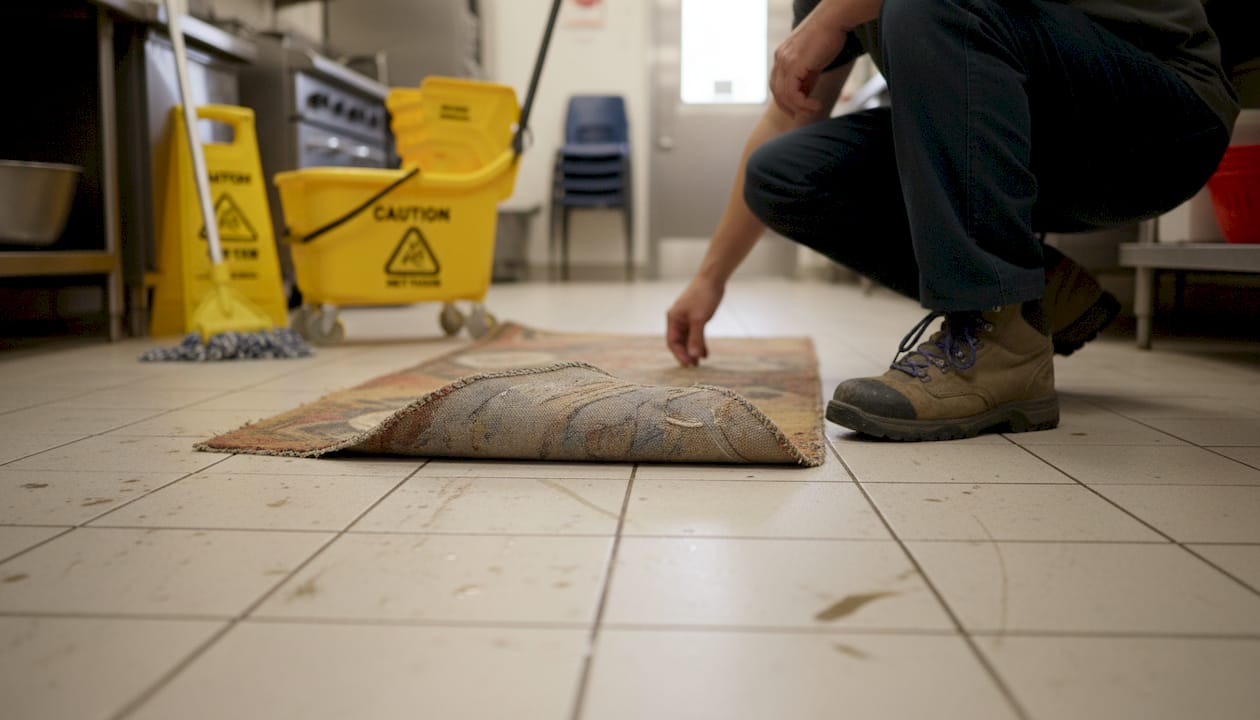
Mold is another underrated concern. Kitchens generate steam and moisture continuously. A latex-backed runner that is not dried thoroughly after cleaning will develop mold on the underside within weeks. TPR and rubber repel moisture rather than absorb it, dramatically reducing that risk. If you need further guidance on selecting waterproof runner recommendations, Mats4U provides detailed breakdowns by use case.
Choosing the right rug for your commercial kitchen
Direct comparisons done, let’s map how to choose the best runner for specific settings and needs. The right selection process avoids guesswork and matches your facility’s real conditions.
Step-by-step selection process:
- Identify your primary hazard zones. Map areas where grease, water, or heavy foot traffic concentrate. These zones require TPR or rubber backing without exception.
- Measure accurately. Include the full length of corridors and clearance around equipment. Gaps or overlapping edges both create hazards.
- Check floor type compatibility. Confirm the runner backing will not void flooring warranties or cause discoloration on tile, vinyl, or hardwood.
- Request traction test data. Always verify vendor traction test data beyond “non-slip” marketing claims before placing an order.
- Confirm cleaning method compatibility. Ensure the runner can withstand your facility’s cleaning chemicals and washing equipment.
- Set a replacement schedule. Build replacement timelines into your maintenance budget based on the backing type selected.
For proper setup, follow best practices for installing non-skid mats to maximize grip and longevity from day one.
Use-case decision table:
| Kitchen zone | Recommended backing | Reason |
|---|---|---|
| Main traffic corridor | TPR | Highest durability and grip |
| Dishwashing/wet station | TPR or rubber | Moisture and slip resistance |
| Prep area (dry) | Rubber | Solid grip, cost-effective |
| Storage/low-traffic zone | Latex (budget) | Lower risk, cost savings |
| Near cooking equipment | TPR | Heat and grease resistance |
For full safety compliance tips specific to food service environments, verify that your selected runners meet any applicable OSHA or local health department flooring requirements.
Why durability and slip testing matter more than the marketing claims
Many articles stop at listing specs, but here is what most commercial managers overlook in practice. “Non-slip” is a marketing term, not a performance standard. There is no universal regulation requiring a product to meet a specific traction coefficient before it can carry that label. Any manufacturer can print it on the packaging.
We see this pattern consistently. A facility purchases budget latex-backed runners to save money upfront. Within 18 months, edges curl, backing degrades, and mold appears on the underside. The runners then need full replacement, which costs more than TPR options would have from the start. Meanwhile, the safety risk during that degraded period is real.
TPR offers the best long-term value in high-traffic, wet commercial settings, and backing type is the single most important specification to verify before purchase. Do not accept a vendor’s word on grip performance. Ask for documented traction test results, ideally using ASTM or ISO test methods. A vendor who cannot supply that data is a vendor worth reconsidering.
Facilities that manage restaurant mat recommendations at scale know that total cost of ownership, not purchase price, is the metric that matters. Certified performance data protects your staff and your budget simultaneously.
Find the perfect non-slip rug solution for your facility
If you are ready to upgrade your facility’s safety and appearance, Mats4U carries commercial-grade solutions built for exactly these demands. Browse anti-fatigue kitchen mats for stations where staff stand for long shifts, or explore the cushion complete mats for added comfort and traction in high-use zones. Need branded flooring? Mats4U offers custom floor mats in custom sizes with logo options for facilities that want both safety and professional appearance. Free delivery applies on orders over $100, and all products are Made in the USA.
Frequently asked questions
What is the most durable non-slip kitchen runner rug material for busy kitchens?
TPR-backed rugs provide very high slip resistance and the longest service life for high-traffic commercial kitchens, making them the top material choice for facility managers.
How do you prevent commercial kitchen runner rugs from molding?
Select runners with TPR or rubber backing, as these materials resist moisture penetration and mold growth better than latex, particularly in steam-heavy kitchen environments.
Are latex-backed runner rugs safe for hardwood floors in commercial kitchens?
No. Latex backing degrades, cracks, and can stain hardwood over time. TPR resists heat and moisture and does not mark floors, making it the safer alternative for hardwood surfaces.
How often should non-slip runner rugs be replaced in a high-traffic kitchen?
Latex backing degrades within 5 to 10 years; TPR and rubber-backed runners last significantly longer with proper maintenance and scheduled inspections.


