


Over 60 percent of American warehouse injuries are linked to slips, trips, and falls. This staggering statistic reveals just how vital the right floor protection is in demanding industrial spaces. Choosing quality warehouse rubber mats goes far beyond keeping floors clean. The right mat can safeguard workers, prevent accidents, and even save on long-term costs, making it a smart investment for any American facility focused on safety and productivity.
Table of Contents
- What Are Warehouse Rubber Mats?
- Comparing Types of Warehouse Rubber Mats
- Key Safety and Ergonomic Features
- Common Applications in Warehouse Environments
- Cost Factors and Long-Term Value
- Avoiding Common Mistakes in Mat Selection
Key Takeaways
| Point | Details |
|---|---|
| Importance of Warehouse Rubber Mats | Warehouse rubber mats enhance safety, reduce worker fatigue, and protect flooring in industrial environments. |
| Types of Rubber Mats | Different configurations like corrugated, ribbed, and drainage mats address specific workplace challenges and safety requirements. |
| Safety and Ergonomic Features | Key features include slip resistance, liquid drainage, impact absorption, and chemical resistance, crucial for preventing workplace injuries. |
| Cost Considerations | Investing in high-quality mats provides long-term savings through reduced accidents, maintenance, and enhanced workplace efficiency. |
What Are Warehouse Rubber Mats?
Warehouse rubber mats are specialized industrial floor coverings designed to enhance workplace safety, reduce worker fatigue, and protect flooring surfaces in high-traffic commercial environments. These robust mats are engineered to withstand extreme conditions while providing critical functional benefits for industrial settings like warehouses, manufacturing facilities, and distribution centers.
Rubber mats come in diverse configurations tailored to specific workplace needs. Rubber mats are widely used to provide slip resistance, electrical isolation, and protection against water, making them essential safety equipment for industrial environments. Their specialized designs include:
- Corrugated patterns for enhanced grip
- Ribbed surfaces to channel liquids
- Perforated styles for improved drainage
- Thick profile mats for superior shock absorption
The technical complexity of these mats goes beyond simple floor covering. A Mat Worker specializing in their production understands the intricate balance of material science, ergonomics, and safety protocols required to create effective industrial floor solutions. Modern warehouse rubber mats are not just protective barriers but sophisticated engineering solutions designed to optimize workplace performance and worker safety.
Comparing Types of Warehouse Rubber Mats
Warehouse rubber mats are not a one-size-fits-all solution. Different industrial environments require specialized mat designs that address unique workplace challenges. Rubber mats come in various patterns and thicknesses, including corrugated, ribbed, perforated, and basket weave designs, each catering to specific traffic directions and functional needs.
Some of the most common warehouse rubber mat types include:
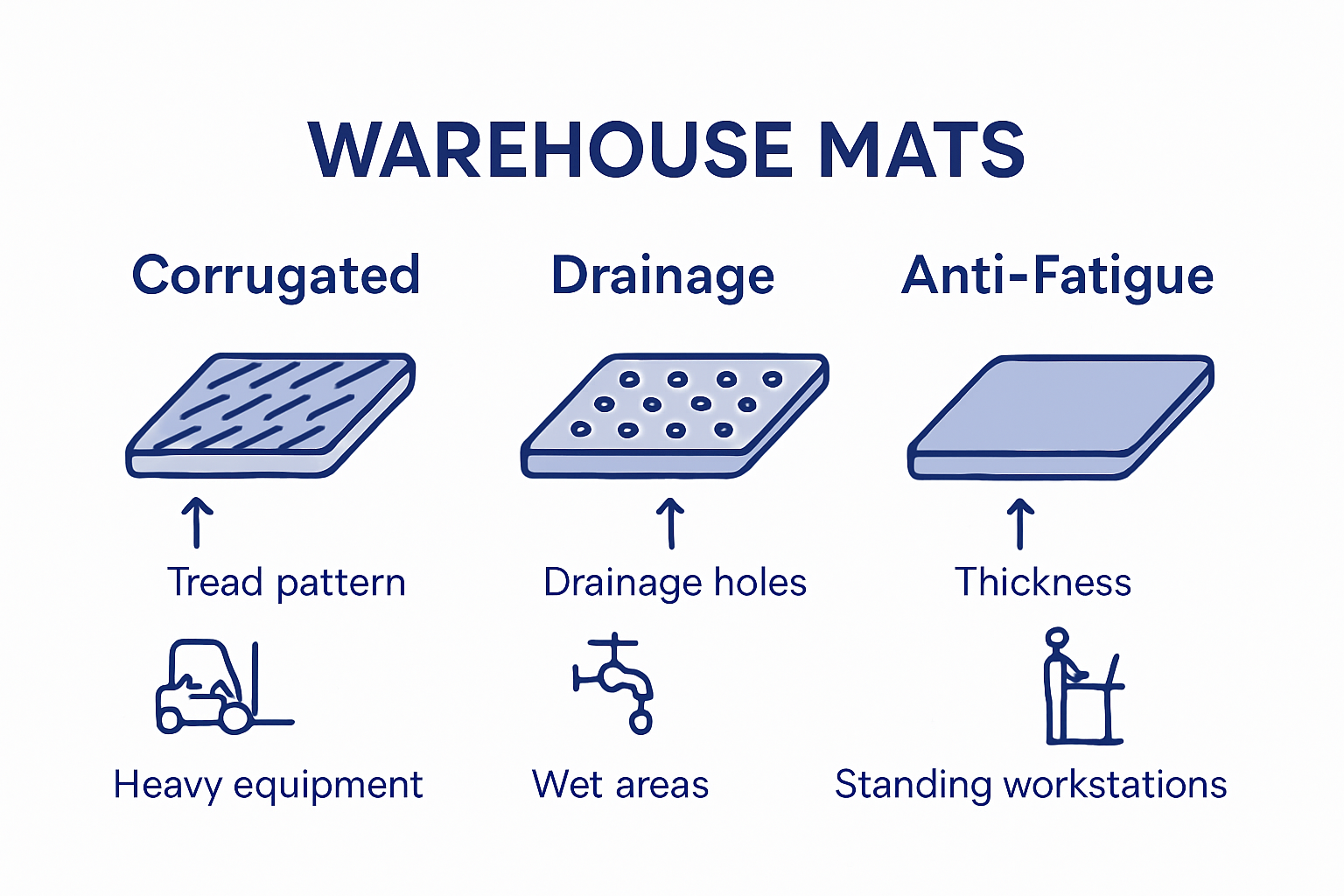
- Corrugated Mats: Excellent for high-traffic areas with directional movement
- Ribbed Mats: Designed to channel liquids and provide superior grip
- Drainage Mats: Specialized industrial non-slip mats featuring drain holes and raised studs to manage liquid spillage
- Anti-Fatigue Mats: Engineered to reduce worker strain during long shifts
Each mat type serves a distinct purpose. Corrugated mats work best in areas with heavy equipment traffic, while drainage mats excel in environments prone to liquid spills. Ribbed designs offer superior traction, making them ideal for zones requiring maximum slip resistance. Anti-fatigue mats focus on worker comfort, providing cushioning that reduces physical stress during extended standing periods.
The selection process involves careful consideration of workplace conditions. Factors like chemical exposure, moisture levels, traffic intensity, and specific safety requirements all influence the optimal mat choice. High-quality nitrile rubber mats, for instance, offer exceptional resistance to industrial oils and chemicals, making them a preferred option for manufacturing and processing facilities.
Key Safety and Ergonomic Features
Safety features are the cornerstone of effective warehouse rubber mats, transforming workplace environments from potential hazard zones to protected workspaces. Industrial non-slip mats are specifically designed to enhance safety by providing superior slip resistance and facilitating liquid drainage through specialized perforations, addressing critical workplace protection needs.
The key safety and ergonomic features of warehouse rubber mats include:
- Slip Resistance: Textured surfaces that prevent accidental sliding
- Liquid Drainage: Perforated designs that quickly channel away potential hazards
- Impact Absorption: Cushioned materials that reduce strain from heavy equipment
- Chemical Resistance: Protective surfaces that withstand industrial substances
Rubber mats offer comprehensive safety solutions, including electrical isolation and comfort features that reduce worker fatigue during extended standing periods. The ergonomic benefits extend beyond immediate physical protection, contributing to long-term worker health and productivity. By distributing weight evenly and providing a supportive surface, these mats help prevent musculoskeletal disorders associated with prolonged standing.
Ergonomic design goes hand in hand with safety. Mats with varying thickness and resilience can significantly reduce the physical stress experienced by workers in high-traffic industrial environments. The strategic placement of these mats creates protective zones that not only prevent slips and falls but also minimize the cumulative physical strain that can lead to chronic workplace injuries.

Common Applications in Warehouse Environments
Warehouse environments demand specialized floor protection strategies that address multiple operational challenges. Rubber mats are strategically utilized in warehouses to provide critical slip resistance, protect flooring, and offer electrical isolation, creating safer and more efficient workspaces.
Key application areas for warehouse rubber mats include:
- Machinery Zones: Protecting floors around heavy equipment
- Workstation Areas: Reducing worker fatigue during extended shifts
- Entrance and Passageways: Managing moisture and preventing slip hazards
- Chemical Storage Regions: Providing non-slip surfaces in areas prone to liquid spillage
Specialized mats serve unique functional purposes in different warehouse sections. Near machinery, thick rubber mats absorb impact and vibration, protecting both equipment and flooring. In high-traffic passageways, textured mats prevent accidental sliding while managing moisture and debris. Chemical storage areas require mats with exceptional drainage capabilities to quickly channel away potentially hazardous liquids.
The strategic placement of rubber mats transforms warehouse environments from potential risk zones into optimized, safety-conscious workspaces. By addressing specific operational challenges, these mats contribute to reduced workplace accidents, improved worker comfort, and enhanced overall facility maintenance.
Cost Factors and Long-Term Value
Cost considerations for warehouse rubber mats extend far beyond their initial purchase price. Investing in high-quality rubber mats can lead to substantial long-term savings by reducing workplace accidents and associated costs, making them a strategic financial decision for businesses.
Key cost factors to evaluate include:
- Initial Investment: Upfront purchasing costs
- Durability: Resistance to wear and damage
- Maintenance Expenses: Cleaning and replacement frequency
- Accident Prevention: Potential savings from reduced workplace incidents
Industrial non-slip mats made from high-quality nitrile rubber demonstrate exceptional resistance to industrial oils and chemicals, significantly extending their operational lifespan. This durability translates directly into reduced replacement costs and minimal maintenance requirements. Companies can expect to see tangible financial benefits through decreased worker compensation claims, lower equipment damage rates, and improved overall workplace efficiency.
The true value of warehouse rubber mats lies in their comprehensive risk mitigation strategy. By protecting floors, reducing worker fatigue, and preventing potential accidents, these mats represent an investment in both workplace safety and operational productivity. Smart businesses recognize that the slightly higher upfront cost of premium rubber mats is quickly offset by their long-term performance and protective capabilities.
Avoiding Common Mistakes in Mat Selection
Mat selection is a critical process that demands careful consideration of multiple factors. Selecting the appropriate rubber mat requires understanding specific environmental conditions, traffic patterns, and potential substance exposures, ensuring optimal performance and safety in warehouse settings.
Common mistakes to avoid during mat selection include:
- Ignoring Environment Specifics: Choosing generic mats instead of specialized solutions
- Overlooking Traffic Patterns: Selecting mats that cannot withstand expected usage intensity
- Disregarding Chemical Exposure: Picking materials incompatible with workplace substances
- Neglecting Thickness Requirements: Using mats without proper cushioning or load-bearing capacity
Professional mat workers understand that appropriate material selection aligns precisely with the unique needs of each workplace environment, preventing potential safety and performance issues. Successful mat selection involves a comprehensive evaluation of operational requirements, including anticipated foot traffic, equipment movement, potential liquid exposures, and specific safety regulations.
Thorough research and consultation with flooring experts can help prevent costly mistakes. Warehouse managers should conduct detailed assessments of their specific workspace characteristics, test mat samples under realistic conditions, and prioritize long-term performance over initial cost savings. By adopting a strategic approach to mat selection, businesses can ensure workplace safety, minimize replacement frequencies, and optimize operational efficiency.
Optimize Your Warehouse Safety and Durability with the Right Rubber Mats
Managing warehouse safety and protecting your floors requires more than just any floor covering. This article highlights the critical need for specialized mats that offer slip resistance, chemical resistance, and ergonomic support to reduce worker fatigue. If you face challenges like liquid spills, heavy equipment traffic, or prolonged standing shifts, choosing the right mat is vital to prevent accidents and lower long-term costs.
Explore our extensive selection of Commercial Mats designed to meet demanding industrial needs. These mats combine durability with safety features tailored for warehouses and manufacturing environments. For areas prone to moisture or spills, consider our options from the Waterhog Roll Goods collection that specialize in effective liquid drainage and slip resistance.
Get the peace of mind that comes with premium quality mats made in the USA and benefit from competitive pricing plus free delivery on orders over $100. Visit Mats4U.com today to find the perfect rubber mats that match your warehouse safety and durability goals. Act now to protect your workers and lower your maintenance costs with trusted flooring solutions.
Frequently Asked Questions
What are warehouse rubber mats used for?
Warehouse rubber mats are designed to enhance workplace safety, reduce worker fatigue, and protect flooring surfaces in high-traffic industrial environments. They provide slip resistance, electrical isolation, and protection against water, making them essential for warehouses and manufacturing facilities.
How do I choose the right type of rubber mat for my warehouse?
When choosing a rubber mat, consider factors such as traffic intensity, moisture levels, and potential chemical exposure. Specialized mats like corrugated, ribbed, and drainage designs cater to different needs. Be sure to match the mat’s design to the specific challenges of your environment.
What safety features do warehouse rubber mats typically offer?
Warehouse rubber mats typically include features such as slip resistance through textured surfaces, liquid drainage capabilities via perforated designs, impact absorption to reduce strain, and chemical resistance to withstand industrial substances.
How can rubber mats contribute to cost savings in a warehouse?
Investing in high-quality rubber mats can lead to significant long-term savings by preventing workplace accidents and reducing associated costs. Their durability reduces replacement frequency, and they help lower worker compensation claims, ultimately contributing to improved operational efficiency.
Recommended
- Benefits of Rubber Floor Mats: Complete Guide – Mats4U USA
- A Guide to Floor Safety Mats for Workplaces – Mats4U USA
- Heavy Duty Rubber Floor Mats Buyer’s Guide – Mats4U USA
- A Practical Guide to Rubber Mats with Drainage for Your Business – Mats4U USA
- What Is Workwear? A 2025 Guide for Hardworking Professionals - WorkWear Comfort


