


Selecting the right non-slip kitchen mat for your commercial facility is more than a purchasing decision—it’s a critical safety investment. Facility managers face a complex challenge: balancing OSHA compliance, durability demands, hygiene standards, and staff comfort across diverse kitchen environments. With slip-resistant mats certified by NFSI reducing workplace slips and falls by over 50%, the stakes are high. This guide walks you through essential selection criteria, compares leading mat types from rubber to anti-fatigue options, and provides clear recommendations to help you make confident, informed purchasing decisions that protect your team and your bottom line.
Table of Contents
- Selection Criteria For Non-Slip Kitchen Mats
- Rubber And Nitrile Rubber Mats: Durability And Chemical Resistance
- Comfort And Specialized Mats: Anti-Fatigue, Berber, And Waterhog
- Safety Enhancements, Pricing, And Custom Branding Options
- Summary Comparison And Situational Recommendations
- Enhance Safety And Branding With Mats4U Solutions
- Frequently Asked Questions
Key Takeaways
| Point | Details |
|---|---|
| Slip resistance certifications | OSHA requires COF ≥ 0.50 for wet environments to ensure workplace safety and compliance. |
| Rubber and nitrile mats | Deliver superior durability and chemical resistance, lasting 5-7 years in high-traffic commercial kitchens. |
| Anti-fatigue benefits | Reduce staff leg and back fatigue by up to 25%, improving comfort during prolonged standing shifts. |
| Specialized mat types | Waterhog mats control water and debris while Berber mats trap soil in dry zones. |
| Custom branding options | Combine safety features with corporate branding to enhance visibility and marketing value. |
Selection Criteria for Non-Slip Kitchen Mats
Before evaluating specific mat types, you need a framework for what makes a mat truly effective in commercial kitchens. Five core criteria guide smart purchasing decisions.
First, slip resistance is non-negotiable. OSHA requires workplace floor mats to have slip resistance measured by a coefficient of friction (COF) minimum of 0.50 for wet environments. Greasy spills and wet floors are daily realities in commercial kitchens, making certified non slip mats safety compliance essential to protect staff and reduce liability.
Material durability determines long-term value. Your mats face constant abuse from heavy foot traffic, dropped utensils, chemical cleaners, and grease exposure. Materials must resist degradation while maintaining slip resistance over years of use. Cheap mats that deteriorate quickly become safety hazards and cost more through frequent replacement.
Hygiene and antimicrobial properties matter deeply in food service environments. Mats that harbor bacteria or absorb odors create contamination risks and fail health inspections. Look for materials that resist moisture absorption and feature antimicrobial treatments. Easy cleaning protocols save labor hours and maintain sanitary conditions.
Ergonomic support directly impacts your team’s health and productivity. Staff standing for eight-hour shifts experience leg strain, back pain, and fatigue that increase injury risk and reduce efficiency. Anti-fatigue features cushion joints and improve circulation, translating to fewer workers’ compensation claims and higher morale.
Finally, cost efficiency extends beyond sticker price. A $150 mat lasting seven years costs less per year than a $50 mat replaced annually. Factor in reduced accident costs, lower replacement frequency, and maintenance requirements when evaluating best non-slip kitchen mats for your budget.
Pro Tip: Request COF test results and material certifications from suppliers before purchasing. Verify OSHA slip resistance standards compliance rather than relying on marketing claims alone. Legitimate manufacturers provide documentation, while vague promises signal inferior products that compromise kitchen floor mats safety.
Rubber and Nitrile Rubber Mats: Durability and Chemical Resistance
Rubber mats dominate commercial kitchen floors for good reason. They deliver unmatched performance where safety and longevity matter most.
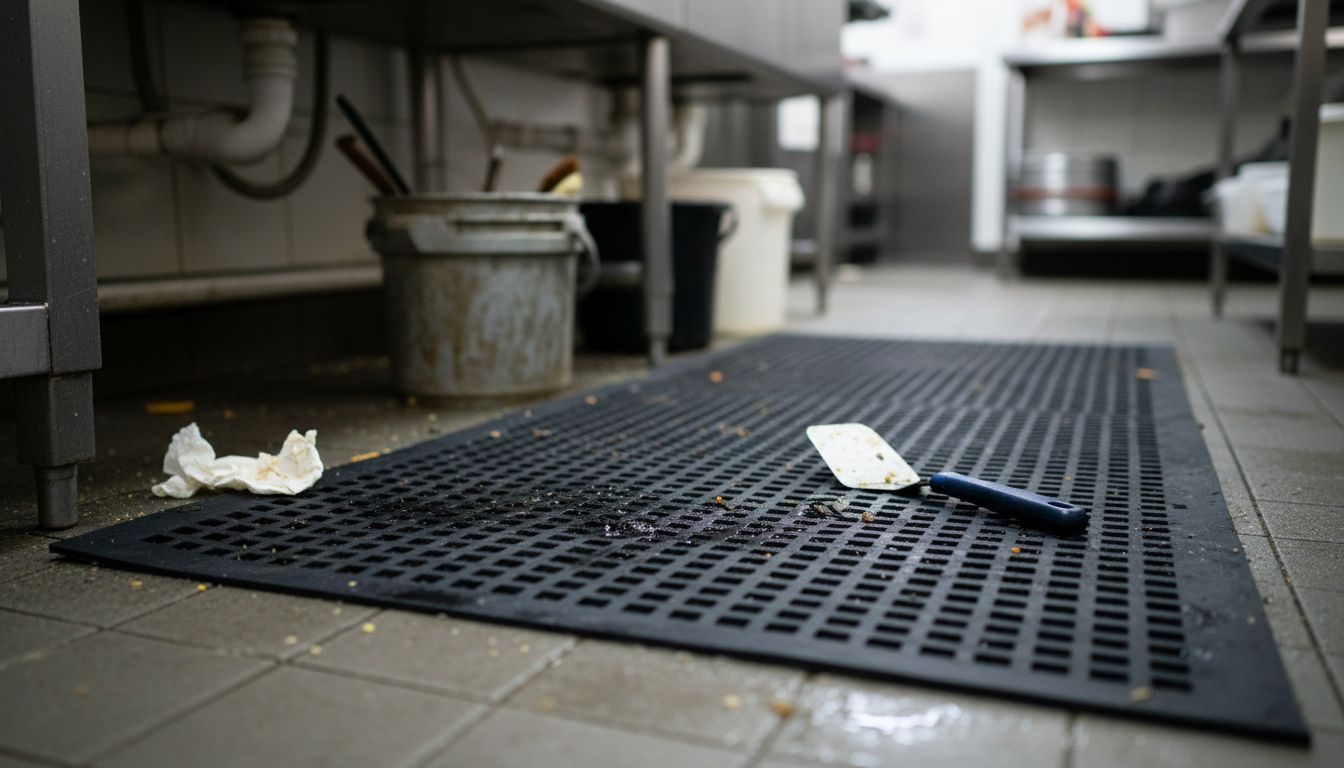
Standard rubber mats provide superior grip even under challenging conditions. Rubber mats offer highest slip resistance with COF >0.60 and last 5-7 years under heavy use, significantly exceeding minimum safety requirements. The material’s natural tackiness maintains traction when wet or contaminated with grease, making it ideal for cooking lines, dishwashing areas, and prep stations. Dense rubber construction withstands constant foot traffic without compressing or deteriorating.
Nitrile rubber elevates performance further for harsh chemical environments. This synthetic variant enhances oil and solvent resistance while maintaining exceptional slip resistance. Kitchens using aggressive degreasers or dealing with frequent oil spills benefit from nitrile’s ability to resist degradation that shortens standard rubber lifespan. The material maintains structural integrity and surface texture longer, extending replacement cycles and protecting your investment.
Durability translates directly to cost savings. While heavy duty rubber mats carry higher upfront costs than vinyl or carpet alternatives, their multi-year service life reduces total ownership expenses. Consider this comparison:
| Mat Type | Initial Cost | Expected Lifespan | Annual Cost | Slip Resistance |
|---|---|---|---|---|
| Standard Rubber | $80-$120 | 5-7 years | $14-$24 | COF 0.60+ |
| Nitrile Rubber | $100-$150 | 6-8 years | $13-$25 | COF 0.65+ |
| Vinyl Foam | $40-$70 | 2-3 years | $13-$35 | COF 0.45-0.55 |
| Carpet Mat | $30-$60 | 1-2 years | $15-$60 | COF 0.40-0.50 |
The numbers reveal that premium rubber options often cost less annually than cheaper alternatives while providing superior safety margins. Factor in accident prevention and reduced workers’ compensation claims, and the value proposition becomes overwhelming.
Maintenance simplicity adds another advantage. Cleaning rubber floor mats requires only basic procedures: sweep debris, mop with standard cleaners, and air dry. The non-porous surface prevents bacterial growth and odor absorption that plague fabric mats. No special treatments or costly cleaning services needed.
Pro Tip: Position nitrile rubber mats specifically near fryers, grills, and areas where oil splatter is heaviest. Use standard rubber in general traffic zones where chemical exposure is lighter. This targeted approach optimizes your budget while placing premium protection exactly where conditions demand it.
Comfort and Specialized Mats: Anti-Fatigue, Berber, and Waterhog
Not every kitchen zone requires the same mat solution. Specialized options address specific needs from ergonomic support to water control.
Anti-fatigue mats prioritize staff wellness in stationary work areas. Anti-fatigue mats can reduce leg and back fatigue by up to 25%, enhancing staff well-being during long shifts at prep tables, assembly lines, or plating stations. The cushioned construction encourages subtle muscle movements that improve circulation and reduce joint stress. This translates to fewer injury claims, better focus, and improved job satisfaction.
These mats combine comfort with safety through specialized surface patterns. Raised textures or perforations maintain slip resistance while providing cushioning. Beveled edges prevent tripping hazards. Thickness typically ranges from 3/8 to 3/4 inch, balancing support with stability. Staff notice the difference immediately, and your workers’ compensation insurance premiums may reflect reduced injury rates.
Berber mats serve a different niche focused on soil control in dry areas. The looped carpet construction traps dirt particles effectively, preventing them from spreading throughout the facility. However, Berber’s slip resistance typically measures around COF 0.45, below OSHA wet surface requirements. Reserve these mats for dry zones like storage areas, offices, or break rooms where moisture exposure is minimal but soil tracking is an issue.
Waterhog mats excel at moisture and debris management in transition zones. These specialized products trap up to 500 ml of liquid per square foot through absorbent fabric construction backed by slip-resistant rubber. Position them at kitchen entrances, walk-in cooler exits, or anywhere water and debris enter from outside or adjacent areas. The mats act as barriers preventing contamination spread while maintaining safe footing.
Each specialized type serves distinct operational needs:
- Anti-fatigue mats reduce physical strain in stationary work zones
- Berber mats control soil migration in dry, high-traffic corridors
- Waterhog mats manage water and debris at entry and transition points
- Selection depends on specific zone conditions rather than one-size-fits-all thinking
Balancing different mat types across your facility creates a comprehensive safety and maintenance system. Anti-fatigue mats for kitchen prep areas keep staff comfortable. Rubber mats protect wet cooking zones. Waterhog mats guard entrances. This layered approach addresses multiple hazards while optimizing performance and budget allocation.
Pro Tip: Map your kitchen by zone type before ordering mats. Identify wet zones, stationary work areas, soil entry points, and dry traffic corridors. Match best commercial kitchen mats to specific conditions rather than buying uniform products. This strategic approach maximizes safety while controlling costs through targeted investment in non-slip kitchen rugs suited to each environment.
Safety Enhancements, Pricing, and Custom Branding Options
Beyond material selection, design features and customization options enhance safety and deliver additional value.
Beveled edges represent a critical safety upgrade. These tapered transitions reduce trip hazards by approximately 40% compared to square-edged mats that create catch points for feet and equipment wheels. The slight ramp allows smooth passage while keeping mats securely positioned. This seemingly minor detail prevents a significant injury category, making beveled construction essential for high-traffic commercial environments.
High-visibility colors improve hazard awareness in busy kitchens. Bright yellow borders or red surfaces draw attention to designated walkways, wet zones, or equipment areas. Staff develop visual cues that enhance spatial awareness and reduce accidents caused by inattention during rushed periods. Color coding different kitchen zones creates intuitive navigation that helps new employees learn layouts faster.
Pricing varies significantly based on material, size, and features. Expect these general ranges for commercial-grade mats:
- Basic rubber mats: $50-$80 for 3x5 foot sections
- Premium nitrile or anti-fatigue options: $100-$150 for comparable sizes
- Specialized Waterhog or modular systems: $80-$130 depending on configuration
- Custom branded mats: Premium pricing plus setup fees, typically $150-$250
These investments deliver returns through accident reduction and extended service life. A single slip and fall claim easily exceeds the cost of outfitting an entire kitchen with quality mats. View mat purchases as risk management rather than operational expenses.
Custom branding transforms functional safety equipment into marketing assets. Logo mats placed at entrances or visible service areas reinforce corporate identity while maintaining all safety features of standard products. This dual purpose appeals particularly to corporate cafeterias, branded food service operations, or facilities where client visibility matters. The growing trend reflects recognition that safety equipment need not sacrifice aesthetic appeal or brand consistency.
Custom floor mats guide helps you understand design options and ordering processes. Modern printing technology produces vibrant, durable graphics that withstand commercial use. Choose from full-color logos, safety messages, or directional markers that complement your branding guidelines. Premium custom mats maintain slip resistance and durability standards while showcasing your corporate image.
The branding benefits of custom mats extend beyond mere aesthetics. They signal professionalism to inspectors, clients, and staff. They demonstrate commitment to both safety and quality. They create memorable impressions in public-facing areas. For facilities where corporate image matters, custom options justify their premium through multiple value streams.
Summary Comparison and Situational Recommendations
Synthesizing all factors into actionable guidance helps you match mat types to your specific operational needs.
| Mat Type | Best Use Case | Key Strength | Limitation | Price Range |
|---|---|---|---|---|
| Rubber | Greasy cooking zones | Highest slip resistance (COF 0.60+) | Weight, less cushioning | $80-$120 |
| Nitrile Rubber | Chemical-heavy areas | Superior oil/chemical resistance | Higher cost | $100-$150 |
| Anti-Fatigue | Stationary work stations | Reduces worker fatigue 25% | Requires dry conditions | $90-$140 |
| Berber | Dry corridors | Excellent soil trapping | Low slip resistance for wet | $40-$70 |
| Waterhog | Entrances, wet transitions | Traps 500ml liquid/sq ft | Requires regular cleaning | $80-$130 |
| Custom Branded | Client-facing areas | Marketing + safety combined | Premium pricing | $150-$250 |
Situational recommendations guide smart purchasing:
For cooking lines, dishwashing areas, and other wet zones with grease exposure, choose rubber mats. Their superior grip and durability justify the investment in your highest-risk areas. The COF above 0.60 provides comfortable safety margins even under challenging conditions.
In environments with heavy chemical cleaner use or frequent oil spills, upgrade to nitrile rubber. The enhanced chemical resistance extends mat life and maintains slip resistance longer than standard rubber. This proves particularly valuable near fryers, grills, and cleaning stations.
At prep tables, assembly lines, and other stationary work areas, install anti-fatigue mats. The ergonomic benefits reduce injury risk while improving staff comfort and productivity. Your team will notice the difference immediately, and reduced fatigue complaints validate the investment.
For dry storage areas, offices, and break rooms with heavy foot traffic, Berber mats offer cost-effective soil control. Their lower slip resistance is acceptable in dry conditions where they trap dirt before it spreads to food service areas.
Position Waterhog mats at all entrances and transitions between wet and dry zones. They capture moisture and debris before contamination spreads, reducing cleaning requirements throughout your facility while maintaining safe passage.
When corporate image matters or client visibility is high, best commercial kitchen mats overview includes custom branded options. These combine full safety features with professional appearance that reinforces quality standards.
Enhance Safety and Branding with Mats4U Solutions
Ready to upgrade your kitchen safety with mats engineered for commercial demands? Mats4U offers an extensive selection of slip-resistant options designed specifically for food service environments. Our premium custom floor mats combine OSHA-compliant safety features with professional branding that elevates your corporate image. Whether you need heavy-duty rubber for cooking lines, ergonomic solutions for prep areas, or specialized moisture control, our team provides expert guidance tailored to your facility’s unique conditions. Explore our anti-fatigue mats guide or discover how Waterhog mats deliver superior water management. Benefit from competitive pricing, free delivery on orders over $100, and products made in the USA that meet the highest durability and safety standards.
Frequently Asked Questions
What certifications ensure a mat is safe for commercial kitchen use?
Look for mats meeting OSHA’s minimum COF of 0.50 for wet surfaces, with independent NFSI certification providing additional assurance. Verify the manufacturer provides test documentation rather than vague marketing claims. Premium mats often exceed minimums with COF ratings of 0.60 or higher for extra safety margins.
How often should commercial kitchen mats be replaced for safety?
Rubber and nitrile mats typically last 5-7 years under heavy commercial use before slip resistance degrades below safe levels. Inspect mats quarterly for surface wear, edge damage, or visible deterioration. Replace immediately if slip resistance feels compromised or structural integrity is questionable, as worn mats become liability risks.
Can custom mats withstand heavy kitchen conditions like rubber mats?
Yes, quality custom mats use the same rubber base materials and safety features as standard commercial products. The printing process adds branding without compromising slip resistance, durability, or chemical resistance. Verify your supplier uses commercial-grade construction rather than promotional mats designed for light-duty retail use.
Are anti-fatigue mats suitable for all kitchen staff areas?
Anti-fatigue mats work best in stationary work zones like prep tables and assembly lines where staff stand in place for extended periods. They are less suitable for high-traffic corridors or wet cooking zones where standard rubber provides better durability and slip resistance. Match mat type to specific activity patterns in each area.
How do Waterhog mats compare in maintenance requirements?
Waterhog mats require more frequent cleaning than solid rubber options due to their absorbent fabric construction. Plan to vacuum or shake out debris daily and deep clean weekly to prevent bacterial growth in trapped moisture. This extra maintenance is worthwhile in entrance zones where their superior liquid and soil capture prevents contamination spread throughout your facility.
Recommended
- Anti Slip Kitchen Mats: Enhancing Safety and Efficiency – Mats4U USA
- Non Slip Kitchen Floor Mats: Safer Workspaces, Lower Risks – Mats4U USA
- Slip Resistant Mats Kitchen: Reducing Injuries and Costs – Mats4U USA
- 12 Best Non Slip Restaurant Mats for a Safer Kitchen in 2025 – Mats4U USA
- Choose Office Chairs in 2026: Cut Absenteeism by 18%
- Reducing Workplace Injuries: Essential Steps for 2025 – WorkWearComfort


