


Facility managers know the frustration: improper cleaning destroys expensive rubber floor mats, creating safety hazards and forcing premature replacement. Neutral pH cleaners preserve mat safety and durability when used correctly. This guide delivers the essential tools, step by step instructions, common pitfalls to avoid, and maintenance tips that extend mat lifespan while protecting your investment.
Table of Contents
- Prerequisites: Tools And Knowledge You Need Before Cleaning
- Step-By-Step Cleaning Process For Rubber Floor Mats
- Common Mistakes And Warnings To Avoid When Cleaning Rubber Mats
- Maintenance Schedule And Extending The Lifespan Of Rubber Mats
- Safety Considerations And Environmental Precautions
- Alternative Cleaning And Maintenance Approaches With Tradeoffs
- Expected Results And Success Metrics For Cleaning Rubber Floor Mats
- Enhance Your Facility’s Cleanliness With Premium Rubber Floor Mats
- Frequently Asked Questions About Cleaning Rubber Floor Mats
Key Takeaways
| Point | Details |
|---|---|
| Use proper cleaning agents | Neutral pH cleaners and soft bristle brushes protect rubber from damage. |
| Follow correct procedure | Vacuum debris, scrub gently, rinse completely, and air dry thoroughly. |
| Avoid damaging practices | Never use bleach, hot water above 140°F, or abrasive tools. |
| Maintain regular schedule | Clean weekly to biweekly and rotate mats to distribute wear evenly. |
| Prioritize safety | Wear gloves, use eco-friendly products, and dispose of solutions responsibly. |
Prerequisites: Tools and Knowledge You Need Before Cleaning
Preparing properly before cleaning saves time and prevents mat damage. Removing loose debris first increases cleaning effectiveness and reduces the risk of grinding particles into rubber surfaces during scrubbing.
Gather these essential supplies:
- Commercial vacuum or stiff broom for debris removal
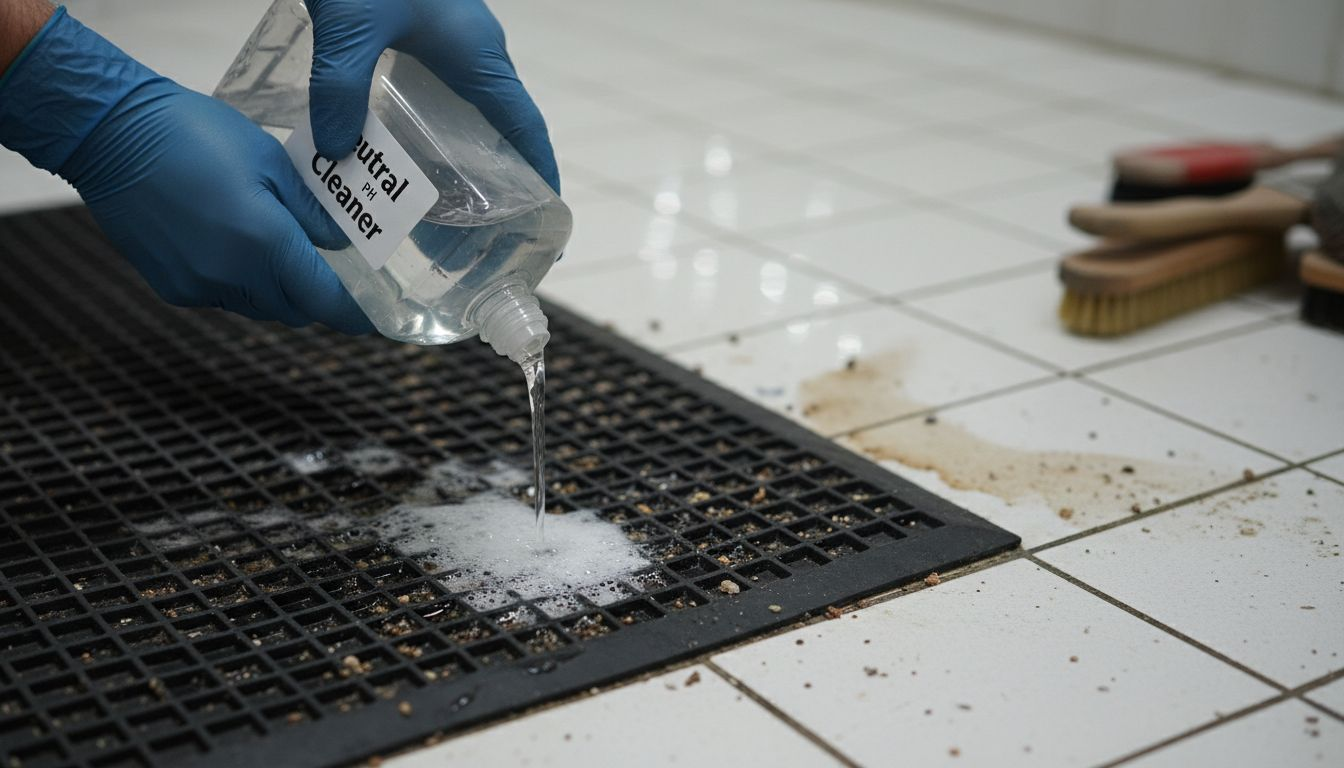
- Neutral pH cleaner formulated for rubber materials
- Soft bristle brush or mop with gentle scrubbing surface
- Two buckets for clean solution and rinse water
- Warm water below 140°F to prevent heat damage
- Protective gloves for skin safety
- Ventilated drying area with good air circulation
Pro Tip: Test any new cleaner on a small, inconspicuous mat section first. Wait 24 hours to check for discoloration, texture changes, or surface degradation before treating the entire mat.
Choosing the right cleaner makes the difference between preservation and destruction. A neutral pH cleaner maintains rubber integrity without causing the brittleness or surface breakdown that harsh chemicals trigger. Check product labels to verify compatibility with rubber materials specifically.
| Tool Category | Recommended Options | Purpose |
|---|---|---|
| Debris Removal | Commercial vacuum, stiff broom | Clear loose dirt before wet cleaning |
| Cleaning Agent | Neutral pH rubber cleaner, mild dish soap | Lift embedded dirt safely |
| Scrubbing Tools | Soft bristle brush, microfiber mop | Remove grime without scratching |
| Drying Setup | Ventilated area, mat racks | Prevent moisture retention |
Explore recommendations for best rubber mat cleaners to identify products that balance cleaning power with material safety. For detailed product comparisons, review guides on choosing the right cleaner that match your facility’s specific needs.
The Rust-Oleum cleaning guide offers manufacturer backed advice on protecting rubber surfaces during routine maintenance. Following these preparation steps establishes a foundation for effective cleaning that protects your investment.
Step-by-Step Cleaning Process for Rubber Floor Mats
This systematic approach delivers thorough cleaning without compromising mat integrity. Routine cleaning with neutral pH cleaners maintains slip resistance, reduces premature wear, and extends mat lifespan significantly.
Follow this proven sequence:
-
Remove surface debris: Vacuum or sweep the mat thoroughly to eliminate loose dirt, dust, and particles. This prevents grinding abrasive materials into rubber during wet cleaning.
-
Prepare cleaning solution: Mix neutral pH cleaner with warm water below 140°F in a bucket according to product instructions. Hot water damages rubber by breaking down its molecular structure.
-
Apply and scrub gently: Dip your soft bristle brush or mop into the solution and work in circular motions across the mat surface. Scrubbing with a soft bristle brush combined with warm water effectively removes dirt without harming material.
-
Focus on high soil areas: Spend extra time on heavily trafficked zones where dirt accumulates. Apply moderate pressure but avoid aggressive scrubbing that can wear down the rubber surface.
-
Rinse thoroughly: Use clean water to rinse the mat completely until water runs clear. Removing all detergent residues is critical because buildup reduces slip resistance and attracts dirt faster.
-
Air dry completely: Position mats in a ventilated area with good airflow. Never return damp mats to service as moisture creates slip hazards and promotes microbial growth.
Pro Tip: For mats with deep textures or drainage holes, use a pressure washer on low setting (under 1200 PSI) to flush embedded debris. Keep the nozzle at least 12 inches from the surface to prevent damage.
Cleaning frequency depends on your facility’s traffic patterns. High traffic areas benefit from more frequent attention to maintain both appearance and safety standards. Implementing step-by-step cleaning routines consistently yields better results than sporadic deep cleaning.
Establish floor mat cleaning routines that align with your facility’s operational schedule. For large scale operations, consider machine-assisted cleaning equipment that reduces labor while maintaining quality standards.
Understanding neutral pH cleaner benefits helps you appreciate why this specific chemistry protects rubber better than alternatives. The balanced pH prevents chemical reactions that degrade rubber polymers over time.
Common Mistakes and Warnings to Avoid When Cleaning Rubber Mats
Even experienced maintenance teams make errors that shorten mat lifespan. Understanding these pitfalls helps you protect your investment and maintain workplace safety.
Critical mistakes to avoid:
-
Using harsh chemicals: Bleach, alcohol, and ammonia-based cleaners accelerate rubber degradation by breaking down polymer chains. These chemicals cause brittleness, cracking, and loss of slip resistance.
-
Excessive water temperature: Water above 140°F softens rubber excessively, leading to warping and dimensional changes. Always verify temperature before applying to mats.
-
Abrasive scrubbing tools: Wire brushes, steel wool, and stiff synthetic bristles scratch rubber surfaces. These scratches trap dirt and create rough spots that wear faster.
-
Incomplete rinsing: Soap residue left on mats creates a slippery film and attracts dirt like a magnet. This defeats the purpose of cleaning and creates safety hazards.
-
Inadequate drying time: Returning wet mats to service risks slip and fall incidents. Moisture also encourages mold and mildew growth in textured surfaces.
-
Pressure washing errors: Excessive pressure or holding the nozzle too close blasts away rubber material. Keep pressure under 1200 PSI and maintain proper distance.
-
Ignoring manufacturer guidance: Different rubber compounds require specific care. Always consult product specifications before applying any cleaning method.
“The most expensive mat is one that fails prematurely due to improper maintenance. Investing time in correct cleaning procedures pays dividends in extended service life and maintained safety performance.”
Pro Tip: Document your cleaning procedures and results. Tracking which methods work best for your specific mats helps train new staff and refine your approach over time.
Recognize cleaning mistakes to avoid by learning from common facility management challenges. Prevention costs far less than replacement.
Review harsh chemical warnings to understand exactly why certain products damage rubber materials. This knowledge helps you make informed purchasing decisions for cleaning supplies.
Maintenance Schedule and Extending the Lifespan of Rubber Mats
Consistent maintenance delivers better results than occasional intensive cleaning. Cleaning frequency depends on traffic and soil levels but commercial rubber mats commonly require weekly to biweekly attention for optimum hygiene and longevity.
Establish this maintenance rhythm:
- Daily: Quick sweep or vacuum to remove loose debris in high traffic areas
- Weekly: Full wet cleaning with neutral pH cleaner for moderate traffic zones
- Biweekly: Deep cleaning for lower traffic areas or lighter soil accumulation
- Monthly: Detailed inspection for damage, wear patterns, and structural issues
- Quarterly: Evaluate mat rotation needs and replacement timing
Rotating mats in high traffic areas balances wear and maximizes lifespan before replacement becomes necessary. This simple strategy can double the effective service life of your mat inventory.
| Traffic Level | Cleaning Frequency | Rotation Schedule | Expected Lifespan |
|---|---|---|---|
| High (entrances, lobbies) | 2-3 times weekly | Every 3 months | 2-3 years |
| Moderate (hallways, offices) | Weekly | Every 6 months | 3-5 years |
| Low (storage, back areas) | Biweekly | Annually | 5-7 years |
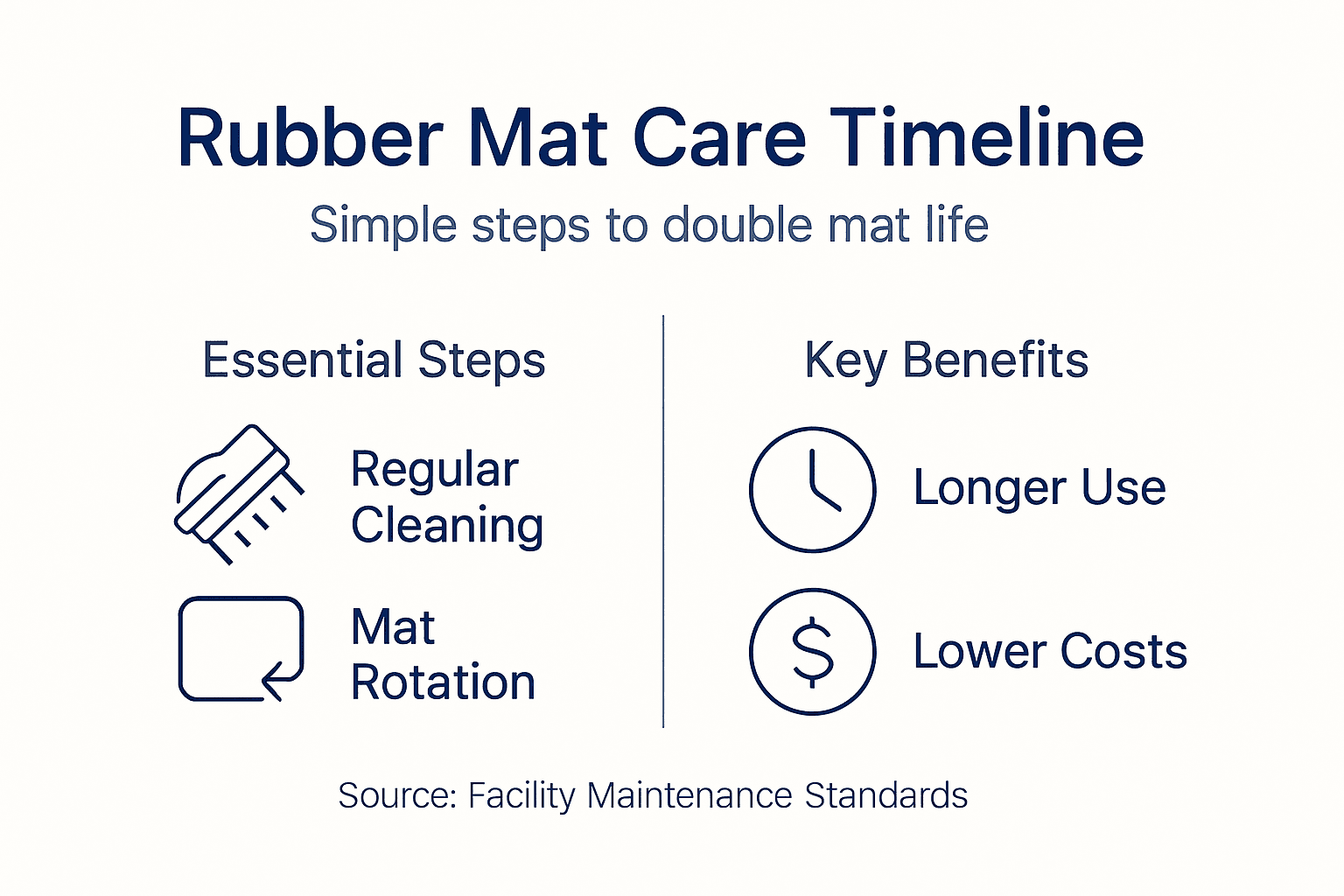
Inspecting mats regularly for curling, cracking, or damage ensures mats maintain safe performance and signals when replacement is necessary. Catching problems early prevents accidents and allows for planned budget allocation.
Warning signs requiring immediate attention:
- Curling edges that create trip hazards
- Surface cracks exposing underlying layers
- Loss of slip resistant texture
- Permanent staining that resists cleaning
- Thinning areas from excessive wear
- Persistent odors despite thorough cleaning
Pro Tip: Keep detailed records of purchase dates, cleaning schedules, and rotation patterns for each mat. This data helps predict replacement timing and justify budget requests with concrete usage metrics.
Implementing structured maintenance schedules transforms mat care from reactive to proactive. The payoff appears in reduced replacement costs and consistent safety performance.
Consult mat lifespan extension tips for additional strategies that complement regular cleaning routines. Small adjustments in daily practices compound into significant lifespan improvements.
Safety Considerations and Environmental Precautions
Protecting your cleaning staff and minimizing environmental impact should guide product selection and disposal practices. Wearing gloves prevents detergent irritation while using eco-friendly, non-toxic cleaners reduces environmental harm.
Personal protection essentials:
- Chemical resistant gloves for all wet cleaning tasks
- Eye protection when mixing concentrated cleaners
- Non-slip footwear to prevent falls on wet surfaces
- Adequate ventilation to avoid inhaling cleaning fumes
- Proper training on chemical safety and first aid
Environmental responsibility practices:
- Select biodegradable, non-toxic cleaning agents whenever possible
- Avoid pouring chemical solutions into storm drains or landscaping
- Use recommended dilution ratios to minimize chemical waste
- Recycle worn rubber mats through specialized programs
- Choose concentrated cleaners that reduce packaging waste
“Sustainable cleaning practices protect both your workforce and the environment. The minor cost premium for eco-friendly products pays dividends in reduced health risks and regulatory compliance.”
Pro Tip: Create a safety data sheet (SDS) binder for all cleaning chemicals used in your facility. Train all maintenance staff on proper handling, storage, and emergency response procedures.
Some facilities face regulations regarding wastewater discharge and chemical usage. Verify local requirements before implementing new cleaning protocols. Non-compliance can result in fines and legal liability.
Implement safe cleaning practices that prioritize worker wellbeing alongside cleaning effectiveness. A safe workforce is a productive workforce.
Explore eco-friendly cleaning tips that reduce your facility’s environmental footprint without sacrificing cleaning performance. Many green products now match or exceed traditional chemical cleaners in effectiveness.
Alternative Cleaning and Maintenance Approaches with Tradeoffs
Beyond routine cleaning, specialized techniques address specific rubber mat problems. These methods require careful application and understanding of associated risks.
Gentle heat application can restore rubber flexibility but requires caution to avoid overheating damage. Controlled heating around 200°F for short durations may soften hardened rubber, but excessive heat causes permanent degradation.
Heat softening process:
Apply low heat using a heat gun on the lowest setting. Keep the tool moving constantly at least 6 inches from the surface. Test a small area first and never exceed 200°F. This technique works best for mats showing early signs of hardening rather than advanced deterioration.
Chemical softening considerations:
Specialized rubber rejuvenation products exist but require compatibility verification. These chemicals penetrate rubber to restore plasticizer levels. Always test on a hidden section and follow manufacturer directions precisely. Improper application can accelerate breakdown rather than reverse it.
| Method | Benefits | Risks | Best Use Case |
|---|---|---|---|
| Heat Application | Restores flexibility quickly | Can cause warping or melting | Early stage hardening |
| Chemical Softeners | Penetrates deeply | May react poorly with some rubbers | Specialized applications |
| Petroleum Products | Readily available | Fire hazard, environmental concerns | Emergency temporary fix only |
Critical warning about brake fluid: Some sources suggest brake fluid softens rubber, but this creates severe safety risks. Brake fluid is highly flammable, toxic, and can cause rapid rubber swelling followed by degradation. Never use automotive fluids on floor mats.
These alternative approaches supplement rather than replace regular cleaning. Most facility managers achieve excellent results using standard cleaning protocols without exotic treatments.
Pro Tip: If mats require softening treatments, this often signals end of service life approaching. Budget for replacement rather than investing heavily in restoration attempts.
Learn proper heat softening methods from authoritative sources before attempting these techniques. Improper execution causes more harm than benefit.
Expected Results and Success Metrics for Cleaning Rubber Floor Mats
Defining clear success criteria helps evaluate cleaning program effectiveness. Measurable outcomes guide continuous improvement and justify resource allocation.
Visual cleanliness standards:
Mats should appear uniformly clean without embedded dirt, stains, or discoloration. Textured surfaces should show clear definition rather than being clogged with debris. Colors should remain vibrant without fading or dullness.
Performance benchmarks:
- Slip resistance maintained at original specifications when tested
- No visible surface damage, cracking, or degradation
- Absence of odors indicating bacterial or mold growth
- Proper drainage function in perforated or channeled designs
- Dimensional stability with no warping or curling
Lifespan indicators:
Properly maintained rubber mats in moderate traffic areas should deliver 3 to 5 years of service. High traffic zones may see 2 to 3 years, while low traffic applications can exceed 5 years. Track actual performance against these benchmarks.
Cost effectiveness measures:
Calculate cost per year of service by dividing total mat investment plus cleaning costs by years in service. Compare this against replacement frequency before implementing proper maintenance. Well maintained mats deliver 50 to 100 percent longer service life.
Safety performance:
Track slip and fall incidents in areas with rubber mats. Properly maintained mats should show zero incidents related to mat condition. Any safety events trigger immediate inspection and corrective action.
Pro Tip: Photograph mats quarterly from consistent angles and lighting. This visual record documents condition changes over time and helps identify when cleaning methods need adjustment.
Establish baseline measurements when mats are new, then track changes over time. This data driven approach to success in rubber mat cleaning removes guesswork and enables objective evaluation.
Enhance Your Facility’s Cleanliness with Premium Rubber Floor Mats
Maintaining mats properly maximizes your investment, but starting with quality products delivers even better results. Mats4U specializes in commercial grade rubber floor mats engineered for demanding environments.
Explore custom rubber floor mats that combine durability with professional branding. These premium options withstand intensive cleaning while maintaining appearance and performance.
Discover custom floor mat options tailored to your facility’s specific needs. Professional guidance ensures you select products that balance cost, performance, and maintenance requirements.
Consider anti-fatigue rubber mats for work areas where employees stand for extended periods. These specialized designs boost comfort while delivering the same cleaning ease covered in this guide.
Frequently Asked Questions About Cleaning Rubber Floor Mats
How often should rubber floor mats be cleaned in a high traffic commercial setting?
High traffic areas require cleaning two to three times weekly to maintain hygiene and appearance. Adjust frequency based on visible soil accumulation and facility usage patterns. Regular cleaning prevents dirt from becoming embedded, making each cleaning session faster and more effective.
Can I use bleach or other harsh chemicals if mats look heavily soiled?
Never use bleach, ammonia, or alcohol-based cleaners on rubber mats regardless of soil level. These chemicals permanently damage rubber by breaking down its molecular structure, causing brittleness and safety failures. Neutral pH cleaners remove even heavy soil safely when combined with proper scrubbing technique.
What should I do if my rubber mats start to harden or crack despite cleaning?
Inspect hardened mats for safety risks like curling edges or surface cracks. Controlled heat application around 200°F may restore flexibility in early stage hardening, but significant cracking signals replacement time. Replace structurally compromised mats immediately to prevent accidents and maintain safety standards.
How can I ensure safety for cleaning staff when handling rubber mat cleaning?
Require chemical resistant gloves and ensure adequate ventilation during all cleaning activities. Provide training on proper chemical handling, dilution ratios, and emergency response procedures. Choose non-toxic, biodegradable cleaners whenever possible to minimize exposure risks while achieving effective cleaning results.
Recommended
- Best Cleaner for Rubber Mats: Achieve Spotless Floors – Mats4U USA
- Cleaning Rubber Floor Mats: Achieve Spotless Results Easily – Mats4U USA
- Best Rubber Mat Cleaner for Commercial Spaces – Mats4U USA
- The Ultimate Guide to Cleaning Rubber Flooring for Longevity and Safet – Mats4U USA
- How to Clean Patent Leather Bag: A Luxury‑Care Guide – MaraFormigone
- Spring Cleaning for Tabletop Gamers: Refresh Your Game Space! – 1985 Games


