


Facility managers know the frustration: rubber car mats in high-traffic areas wear out faster than expected, not from use but from improper cleaning. Harsh chemicals, skipped steps, and drying mistakes accelerate degradation, costing facilities thousands in premature replacements. This guide walks you through specialized cleaning techniques that preserve rubber integrity, prevent mold, and extend mat lifespan by up to 20%. You’ll learn the exact tools, products, and schedules professional cleaners use to keep commercial mats looking new while avoiding the mistakes that cause brittle, cracked rubber.
Table of Contents
- Prerequisites And Cleaning Product Selection
- Step-By-Step Cleaning Process
- Common Mistakes And Troubleshooting
- Safety Considerations And Warnings
- Alternative Approaches And Tradeoffs
- Maintenance Frequency And Expected Outcomes
- Cost And Time Considerations
- Discover Premium Custom Floor Mats For Your Facility
- Frequently Asked Questions About Rubber Car Mat Cleaning
Key Takeaways
| Point | Details |
|---|---|
| Use pH-neutral cleaners | Non-abrasive, rubber-safe formulas prevent micro-cracks and brittleness that shorten mat life. |
| Follow structured cleaning steps | Pre-rinse, apply cleaner, agitate, rinse warm, and dry completely to maximize effectiveness. |
| Avoid bleach and incomplete drying | These mistakes cause up to 35% of premature rubber damage and mold growth in 25% of cases. |
| Clean biweekly for best results | Regular maintenance extends rubber mat lifespan by an estimated 15-20% in commercial settings. |
| Balance cost with cleaning method | In-house cleaning saves 25-40% annually compared to professional services costing $50-$150 per mat. |
Prerequisites and Cleaning Product Selection
Before touching a single mat, you need the right arsenal. Commercial rubber mats handle thousands of footsteps daily, accumulating road salt, mud, oil, and grime that standard household cleaners can’t tackle safely.
Start with a commercial-grade pH-neutral cleaner specifically formulated for rubber surfaces. These cleaners lift dirt without the corrosive effects of acidic or alkaline solutions. Selecting the best rubber mat cleaner options requires checking compatibility with pressure washing equipment and verifying the formula contains no bleach, ammonia, or harsh solvents that cause brittleness.
Essential Tools and Equipment:
- Pressure washer with adjustable PSI (800-1200 range ideal for rubber)
- Soft-bristled brushes with synthetic fibers
- Chemical-resistant gloves rated for cleaning solutions
- Protective eyewear
- Well-ventilated cleaning area or outdoor space
- Drying racks or elevated surfaces
- Spray bottles for cleaner application
Eco-friendly biodegradable cleaners have gained traction, reducing aquatic toxicity by approximately 40% compared to traditional formulas. Plant-based surfactants match the cleaning power of synthetic options while minimizing environmental impact. However, verify these products work effectively in your water temperature range and don’t require extended dwell times that slow operations.
Cleaner Selection Criteria Table:
| Criteria | Requirement | Why It Matters |
|---|---|---|
| pH Level | 6.5-8.5 (neutral) | Prevents rubber degradation and color fading |
| Abrasiveness | Non-abrasive formula | Protects surface texture and anti-slip properties |
| Solvent Content | Zero harsh solvents | Avoids micro-cracks that reduce mat lifespan |
| Biodegradability | 80%+ within 28 days | Meets environmental compliance standards |
| Pressure Wash Safe | Explicitly labeled | Ensures compatibility with efficient cleaning methods |
Pro Tip: Test any new cleaner on a small, inconspicuous mat section first. Apply the product, wait 10 minutes, and check for discoloration, texture changes, or surface softening before proceeding with full-scale cleaning.
Avoid automotive degreasers unless specifically labeled rubber-safe. Many contain petroleum distillates that penetrate rubber pores, causing long-term structural weakness. Similarly, skip anything marketed as “heavy-duty” or “industrial strength” without verifying rubber compatibility, as these often rely on aggressive solvents.
Step-by-Step Cleaning Process
With your tools assembled and cleaner selected, follow this proven sequence that professional cleaning services use to maintain rubber mats in airports, office buildings, and retail spaces.
-
Remove and Position Mats: Take mats outside or to a designated cleaning area with proper drainage. Shake vigorously to dislodge loose debris, dirt, and surface particles before any water contact.
-
Pre-Rinse with Low Pressure: Using your pressure washer at 800-1000 PSI, rinse both sides of each mat with cool to lukewarm water. This step removes approximately 60% of loose contaminants and prepares the rubber surface for cleaner penetration.
-
Apply pH-Neutral Cleaner: Spray or pour the cleaning solution evenly across the mat surface, ensuring complete coverage. Allow a 3-5 minute dwell time for the surfactants to break down oils and embedded grime. Don’t let the cleaner dry on the surface.
-
Agitate with Soft Brushes: Work the cleaner into the rubber using circular motions with your soft-bristled brush. Pay special attention to textured areas, grooves, and high-traffic zones where road salt and grime concentrate. Effective floor mat cleaning steps emphasize this mechanical action, which removes 30% more contaminants than chemical action alone.
-
Rinse with Warm Water: Increase your water temperature to approximately 120°F and rinse thoroughly at medium pressure (1000-1200 PSI). Professional rubber mat cleaning techniques show warm water enhances dirt removal by breaking down oil-based residues more effectively than cold water.
-
Inspect and Repeat if Necessary: Check for remaining stains, salt deposits, or discoloration. Heavily soiled mats may require a second application focused on problem areas.
-
Air Dry Completely: Position mats on elevated racks or hang vertically to allow air circulation on all surfaces. Never stack wet mats or return them to service damp, as this creates the perfect environment for mold growth documented in 25% of improperly dried mats.
Pro Tip: Clean mats in batches based on soil level rather than location. Process the dirtiest mats first while your water and energy are fresh, then move to lightly soiled ones. This prevents cross-contamination and optimizes your cleaning solution effectiveness.
Timing matters too. Each mat typically requires 10-20 minutes for the complete process, depending on size and soil level. Schedule cleaning during low-traffic periods to avoid disrupting facility operations and ensure adequate drying time before mats return to service.
Common Mistakes and Troubleshooting
Even experienced facility managers fall into cleaning traps that damage mats or create safety hazards. Understanding these pitfalls helps you avoid costly errors.
Critical Mistakes to Avoid:
- Using bleach or chlorine-based cleaners causes brittleness and micro-cracks in approximately 35% of cases, significantly reducing mat lifespan
- Skipping the pre-rinse step leaves debris that scratches rubber during agitation and reduces cleaner effectiveness
- Incomplete drying leads to mold and mildew growth seen in 25% of neglected mats, creating health hazards and odor problems
- Ignoring road salt removal accelerates rubber degradation by an estimated 20%, particularly in winter climates
- Using excessive pressure (above 1500 PSI) can tear or damage rubber surface texture and anti-slip properties
When mats develop persistent odors despite cleaning, the issue typically stems from bacterial growth in microscopic cracks or incomplete drying. Address this by extending dwell time with an enzyme-based cleaner that breaks down organic matter, then ensure 24-hour drying in a well-ventilated space.
Stubborn stains from oil, grease, or tire marks require targeted treatment. Apply a small amount of undiluted cleaner directly to the stain, let sit for 10 minutes, then agitate with a stiff (but not wire) brush before your standard cleaning process. Avoiding common rubber mat cleaning mistakes involves matching cleaning intensity to soil type rather than using a one-size-fits-all approach.
If mats show white residue after cleaning, you’re likely dealing with mineral deposits from hard water or soap residue from insufficient rinsing. Increase rinse time and consider using a final rinse with distilled water for the last pass. Troubleshooting cleaning errors systematically helps identify whether the issue stems from water quality, cleaner concentration, or technique problems.
Discoloration or fading indicates chemical damage. If you notice color changes after introducing a new cleaning product, discontinue use immediately and return to a proven pH-neutral formula. Unfortunately, chemical damage to rubber is typically permanent and requires mat replacement.
Safety Considerations and Warnings
Cleaning commercial rubber mats involves chemical exposure, slip hazards, and physical strain that require proper safety protocols. OSHA regulations mandate specific protections when workers handle cleaning chemicals in commercial settings.
Always wear chemical-resistant gloves rated for the specific cleaning products you use. Nitrile gloves offer excellent protection against most commercial cleaners while maintaining dexterity. Eye protection prevents splashback during pressure washing, especially when working at angles or in confined spaces.
Ventilation is non-negotiable. Even pH-neutral cleaners release vapors that can cause respiratory irritation in enclosed spaces. Outdoor cleaning eliminates this concern, but indoor operations require mechanical ventilation with air changes meeting local safety codes. Safety precautions for floor mat cleaning include monitoring air quality in enclosed cleaning areas.
“Never mix cleaning products under any circumstances. Combining different chemicals can create toxic fumes or dangerous reactions. Follow manufacturer instructions precisely and use products as directed without modifications or improvisation.”
Wet rubber mats become extremely slippery during and immediately after cleaning. Cordon off the cleaning area with visible barriers and signage. Workers should wear slip-resistant footwear with good tread, and cleaning should occur during periods when foot traffic is minimal.
Proper waste disposal matters too. Many jurisdictions classify used cleaning solutions as industrial wastewater requiring specific disposal methods. Never pour cleaning runoff directly into storm drains, as this violates most environmental regulations. Collect wastewater and dispose through approved channels or use drainage systems connected to sanitary sewers designed to handle commercial cleaning discharge.
Store cleaning products in their original containers with labels intact, away from heat sources and incompatible materials. Maintain safety data sheets (SDS) for all chemicals on-site and ensure cleaning staff receive training on emergency response procedures for chemical spills or exposure incidents.
Alternative Approaches and Tradeoffs
No single cleaning method fits every facility’s needs. Understanding different approaches helps you choose the strategy that balances effectiveness, cost, and environmental impact for your specific situation.
Traditional chemical cleaners remain the most cost-effective option for high-volume cleaning operations. These synthetic formulas typically cost $15-$30 per gallon, clean quickly, and require minimal dwell time. However, they carry higher environmental impact and potential health risks from prolonged exposure.
Eco-friendly biodegradable alternatives offer approximately 40% less aquatic toxicity while delivering comparable cleaning performance. Plant-based surfactants and natural solvents break down rapidly in wastewater treatment systems. The tradeoff: these products often cost 20-40% more than conventional cleaners and may require longer dwell times or additional agitation.
Professional cleaning services charge $50-$150 per mat depending on size, condition, and volume. This option eliminates labor costs, equipment investment, and disposal concerns while ensuring consistent results from trained technicians. Facilities with fewer than 20 mats or limited storage space for equipment often find professional services more economical than in-house operations.
Cleaning Method Comparison:
| Method | Cost per Mat | Labor Required | Environmental Impact | Best For |
|---|---|---|---|---|
| In-house chemical | $2-$5 | High | Moderate to High | Large facilities, 50+ mats |
| In-house eco-friendly | $3-$7 | High | Low | Sustainability-focused operations |
| Professional service | $50-$150 | Minimal | Varies by provider | Small facilities, irregular cleaning |
| Hot water extraction | $5-$10 | Moderate | Low | Heavily soiled mats, quarterly deep clean |
Hot water extraction cleaning uses heated water (140-160°F) with minimal chemical additives, enhancing dirt removal by approximately 30% compared to cold water methods. This approach works exceptionally well for quarterly deep cleaning but requires specialized equipment and careful temperature control to avoid warping thinner rubber mats.
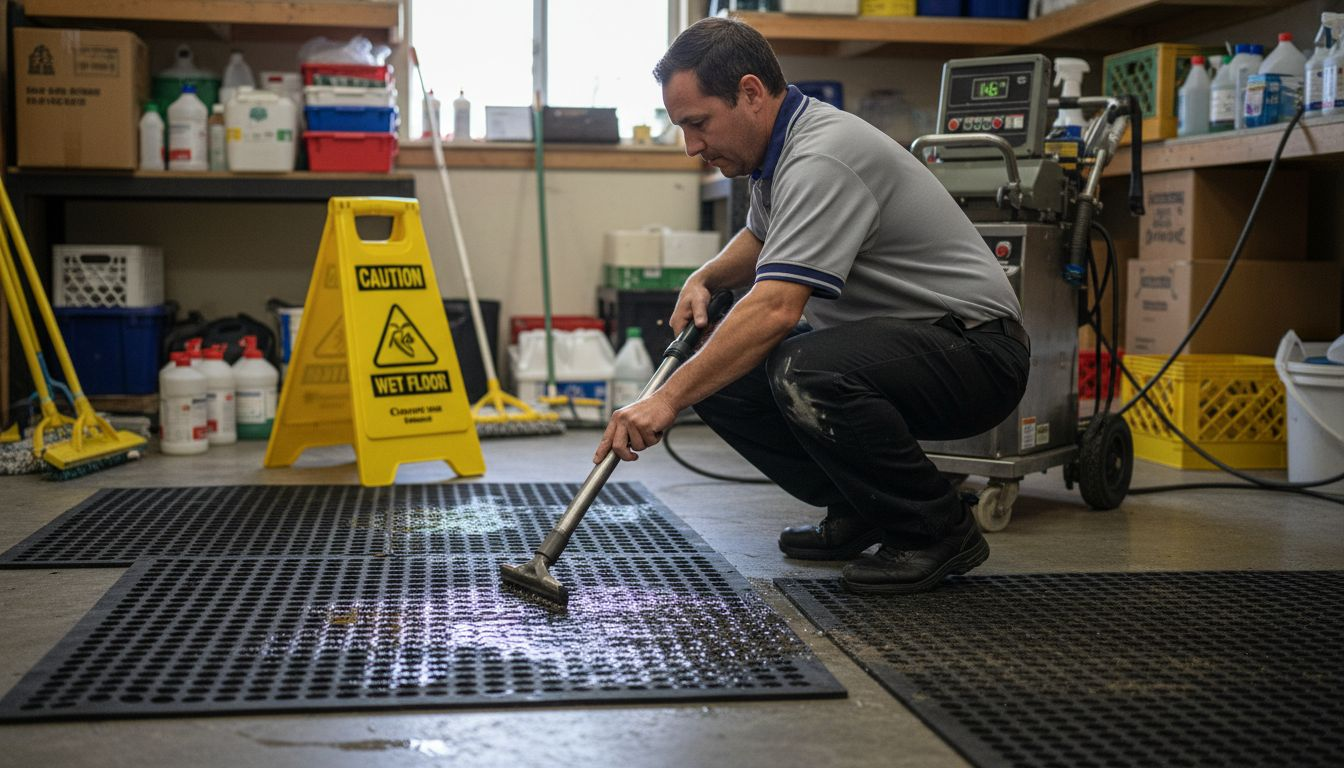
Some facilities implement a hybrid approach: professional deep cleaning quarterly combined with in-house maintenance cleaning biweekly. This strategy reduces annual cleaning costs by 25-40% compared to exclusive use of professional services while maintaining mat appearance and extending lifespan.
Key Tradeoff Considerations:
- Chemical effectiveness versus environmental responsibility
- Upfront equipment investment versus ongoing service costs
- Labor allocation versus outsourcing convenience
- Cleaning frequency versus mat replacement costs
- Immediate results versus long-term sustainability goals
Your choice should align with facility priorities, budget constraints, and available resources. A manufacturing facility with dedicated maintenance staff and high mat volume benefits from in-house systems, while a small office building may find quarterly professional service more practical.
Maintenance Frequency and Expected Outcomes
Establishing the right cleaning schedule directly impacts mat longevity, facility appearance, and safety performance. Research on commercial floor mat maintenance shows that consistent cleaning delivers measurable benefits beyond aesthetics.
For high-traffic commercial environments, cleaning rubber car mats biweekly prevents the buildup of damaging residues that accelerate wear. Road salt, in particular, draws moisture into rubber pores, creating expansion and contraction cycles that cause cracking. Regular removal of these contaminants reduces rubber wear by approximately 30% compared to monthly or as-needed cleaning schedules.
Complete drying between uses is equally important as cleaning frequency. Mold growth occurs in approximately 25% of mats that return to service before fully drying, creating health concerns and persistent odors that cleaning alone cannot eliminate. Allow a minimum 8-hour drying period in well-ventilated conditions, extending to 24 hours for thicker or textured mats.
Maintenance Schedule and Benefits:
- Biweekly cleaning reduces slip hazards by maintaining rubber grip texture and removing slippery residues
- Quarterly deep cleaning with hot water extraction removes embedded contaminants standard cleaning misses
- Monthly inspection for damage, wear patterns, and early deterioration signs enables proactive replacement
- Immediate spot cleaning of spills and heavy soiling prevents permanent staining and localized damage
- Annual professional assessment evaluates overall mat condition and replacement needs
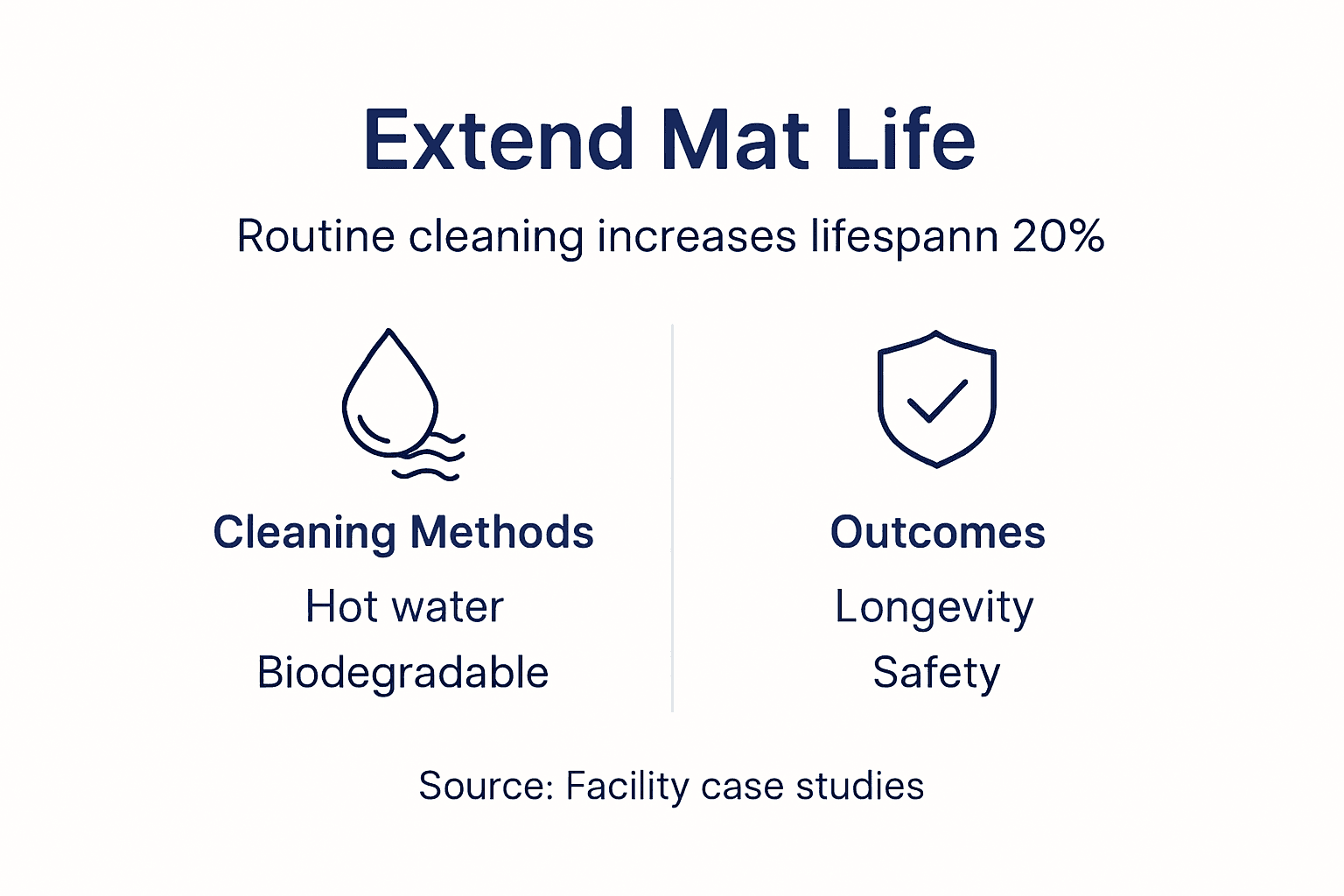
Consistent maintenance extends mat lifespan by an estimated 15-20% in commercial settings. For a facility using 50 rubber mats costing $80 each, this translates to delaying a $4,000 replacement expense by 18-24 months through proper cleaning alone.
Beyond longevity, regular cleaning maintains the anti-slip properties that prevent workplace injuries. Dirty mats lose surface traction, increasing fall risks during wet conditions. Clean, well-maintained mats preserve the texture that provides grip, supporting your facility’s safety program.
Road salt removal deserves special attention in winter climates. Salt residue not only degrades rubber but also creates white staining that diminishes professional appearance. Facilities in snow-prone regions should increase cleaning frequency to weekly during winter months, focusing specifically on thorough rinsing to eliminate salt deposits.
Expected outcomes from proper maintenance include consistently clean appearance, maintained anti-slip properties, extended replacement cycles, reduced slip and fall incidents, and lower total cost of ownership. Track these metrics to justify your maintenance program investment and demonstrate value to facility stakeholders.
Cost and Time Considerations
Budgeting for rubber mat cleaning requires understanding both direct expenses and hidden costs that impact your facility’s bottom line. Realistic estimates help you allocate resources effectively and choose between in-house and outsourced approaches.
Professional cleaning services charge $50-$150 per mat, with pricing influenced by mat size, soil level, pickup/delivery requirements, and service volume. Facilities cleaning 20 mats biweekly through professional services spend approximately $2,000-$6,000 annually. For smaller operations with fewer mats or lower traffic, this remains the most cost-effective option when factoring in labor and equipment costs.
In-house cleaning requires initial investment but generates substantial savings for larger facilities. A commercial-grade pressure washer costs $300-$800, while cleaning solutions run $20-$40 per month for a 50-mat facility. Labor represents the largest ongoing expense, with each mat requiring 10-20 minutes for complete cleaning, inspection, and drying setup.
Cost Analysis Table:
| Expense Category | Professional Service (Annual) | In-House Operation (Annual) | Savings Potential |
|---|---|---|---|
| Cleaning labor | Included in service fee | $3,600-$7,200 (150 hours at $24-$48/hour) | N/A |
| Equipment | $0 | $300-$800 (one-time) | N/A |
| Cleaning products | $0 | $240-$480 | N/A |
| Total for 50 mats (biweekly) | $5,200-$15,600 | $4,140-$8,480 | $1,060-$7,120 (20-45%) |
Time investment matters too. Pressure washing and cleaning takes 10-20 minutes per mat depending on size and soil level. Add 5 minutes for setup and breakdown per cleaning session. A facility cleaning 50 mats biweekly dedicates approximately 150 hours annually to mat maintenance when handling the work in-house.
Hidden costs include water usage (approximately 15-25 gallons per mat), waste disposal fees for cleaning solution runoff, and equipment maintenance. These typically add 10-15% to your direct cleaning costs but remain substantially lower than professional service fees for high-volume operations.
Pro Tip: Calculate your break-even point by dividing equipment and setup costs by the per-mat savings versus professional services. Most facilities with 30+ mats reach payback within 6-9 months when switching to in-house cleaning, then realize 25-40% annual savings thereafter.
Regular maintenance prevents the largest hidden cost: premature mat replacement. Commercial rubber mats averaging $60-$120 each represent significant capital investment. Extending their lifespan by even 6-12 months through proper cleaning saves more than the entire annual maintenance budget for most facilities.
Balance frequency, thoroughness, and cost by adapting your schedule to actual soil levels rather than rigid timelines. High-traffic entrance mats may need weekly attention, while interior mats in moderate-traffic areas perform well with monthly cleaning. This targeted approach optimizes labor allocation and maximizes your cleaning program ROI.
Discover Premium Custom Floor Mats for Your Facility
Maintaining rubber mats properly starts with investing in quality products designed for commercial durability. When your current mats reach end of life despite excellent maintenance, upgrading to premium custom floor mats engineered for high-traffic environments delivers better long-term value.
Mats4U specializes in commercial-grade rubber mats that withstand the demanding conditions facility managers face daily. Our products combine superior materials with customization options, including custom logo mats that reinforce your brand while protecting floors and reducing maintenance costs. With free delivery on orders over $100 and products made in the USA, we support facility operations with reliable solutions backed by expert guidance. Explore our complete range at Mats4U to find the perfect mats for your specific requirements.
Frequently Asked Questions About Rubber Car Mat Cleaning
What is the best frequency for cleaning rubber car mats in commercial settings?
Clean high-traffic rubber mats biweekly to prevent buildup of damaging road salt, oils, and grime that reduce lifespan by up to 30%. Increase to weekly during winter months in areas with heavy salt use. Monthly cleaning works for lower-traffic interior mats, but never extend beyond 30 days between cleanings.
Can eco-friendly rubber mat cleaners match traditional chemical performance?
Yes, modern biodegradable plant-based cleaners deliver comparable cleaning power while reducing aquatic toxicity by approximately 40%. They may require slightly longer dwell times (5-7 minutes versus 3-5 minutes) and cost 20-40% more, but they meet environmental compliance standards without sacrificing effectiveness on commercial rubber mats.
How do I prevent mold growth on rubber mats after cleaning?
Ensure complete drying by positioning mats vertically or on elevated racks with air circulation on all surfaces for at least 8 hours, extending to 24 hours for thick textured mats. Never stack wet mats or return them to service damp, as mold develops in approximately 25% of improperly dried mats, creating health hazards and persistent odors.
Are professional cleaning services worth the additional cost?
For facilities with fewer than 20-30 mats or limited equipment storage, professional services at $50-$150 per mat provide better value than in-house operations. Larger facilities save 25-40% annually by investing in pressure washing equipment and handling cleaning internally, reaching payback within 6-9 months. Calculate your break-even point based on mat volume and labor costs.
What safety precautions are essential during mat cleaning?
Always wear chemical-resistant gloves and eye protection, ensure adequate ventilation to prevent vapor inhalation, and never mix different cleaning products. Cordon off cleaning areas due to slip hazards from wet rubber, and dispose of wastewater through approved channels rather than storm drains. Maintain safety data sheets on-site and train staff on emergency response for chemical exposure incidents.
Recommended
- Best Cleaner for Rubber Floor Mats: 5 Steps to 2X Life – Mats4U USA
- Rubber Mat Cleaning Machine Guide for Spotless Results – Mats4U USA
- Best Cleaner for Rubber Mats: Achieve Spotless Floors – Mats4U USA
- The Ultimate Guide to Cleaning Rubber Flooring for Longevity and Safet – Mats4U USA
- Luxury Handbag Care Workflow for Pristine Condition - BVPRIVE
- 7 bästa tips för batterihantering för längre livslängd


