


Many facility managers struggle with slippery, stained rubber gym floors despite regular cleaning efforts. The problem often isn’t the frequency of cleaning but the wrong products causing damage, discoloration, and safety hazards. This guide helps you select and use the best rubber gym floor cleaners to maintain safety, extend floor life, and keep your facility hygiene standards high.
Table of Contents
- Understanding Rubber Gym Flooring And Cleaning Requirements
- Prerequisites: What You Need Before Cleaning Rubber Gym Floors
- Step-By-Step Cleaning Process For Rubber Gym Floors
- Common Cleaning Mistakes And How To Fix Them
- Recommended Cleaners And Products For Rubber Gym Floors
- Expected Outcomes And Benefits From Proper Cleaning
- Explore Premium Floor Mats And Cleaning Solutions For Your Facility
- Frequently Asked Questions
Key takeaways
| Point | Details |
|---|---|
| Use pH-neutral cleaners | pH-neutral cleaners (pH 6.25 to 8.25) prevent rubber degradation and maintain floor integrity. |
| Prepare proper tools | Microfiber mops, soft brushes, and EPA-approved disinfectants ensure effective, damage-free cleaning. |
| Follow systematic routine | Dry debris removal, damp mopping, spot cleaning, and proper drying extend floor lifespan. |
| Avoid common mistakes | Never over-wet floors or use abrasive tools; these create slip hazards and surface damage. |
| Expect measurable benefits | Proper cleaning reduces slip incidents, extends floor life, and improves facility hygiene significantly. |
Understanding rubber gym flooring and cleaning requirements
Rubber gym flooring comes in three main types: rolled sheets covering large areas, interlocking tiles for flexible layouts, and loose matting for targeted protection. Each type shares a critical vulnerability to chemical damage.
Rubber surfaces degrade quickly when exposed to acidic or alkaline cleaners. Using harsh acidic or alkaline cleaners damages rubber floors, causing discoloration, stickiness, and wear visible within weeks. This damage isn’t just cosmetic. It compromises traction and creates safety risks for gym users.
Rubber gym flooring requires pH-neutral cleaners (around pH 7) to maintain its integrity and grip properties. These specialized formulations clean effectively without breaking down the rubber compound. Wrong cleaners accelerate wear patterns, forcing expensive premature replacement.
The right cleaning approach matters for your budget too. Cleaning rubber flooring for longevity reduces long-term costs significantly. Here’s why pH matters:
- pH-neutral products (6.25 to 8.25) preserve rubber’s molecular structure
- Acidic cleaners cause surface brittleness and cracking over time
- Alkaline cleaners create sticky residue attracting more dirt
- Proper pH balance maintains the floor’s slip-resistant texture
Pro Tip: Test any new cleaner on a small, hidden floor section first. Wait 24 hours and check for discoloration, stickiness, or texture changes before full application.
Prerequisites: what you need before cleaning rubber gym floors
Successful rubber floor cleaning starts with the right tools and products. Gather everything before you begin to avoid interruptions and ensure thorough cleaning.
Your essential supplies include a pH-neutral rubber floor cleaner approved for commercial gym use. Pair this with a microfiber mop for damp cleaning and a dust mop or vacuum for dry debris removal. Add a soft brush for targeted spot cleaning on stubborn grime areas.
Safety and hygiene require an EPA-registered disinfectant compatible with rubber floors. This ensures proper germ elimination and odor control without damaging the surface. Always check compatibility labels before purchasing.
Familiarize yourself with both your floor manufacturer’s guidelines and your cleaner’s instructions. This prevents costly mistakes and warranty issues. Best rubber floor cleaning tools make the job faster and more effective.
| Tool/Product | Purpose | Key Feature |
|---|---|---|
| pH-neutral cleaner | Main cleaning solution | pH 6.25 to 8.25 range |
| Microfiber mop | Damp mopping | Low moisture retention |
| Dust mop/vacuum | Debris removal | Prevents abrasive damage |
| Soft brush | Spot cleaning | Non-abrasive bristles |
| EPA-registered disinfectant | Germ elimination | Rubber-safe formula |
Pro Tip: Keep separate cleaning tools for gym floors and other facility areas. This prevents cross-contamination and extends tool life by avoiding exposure to incompatible chemicals.
Step-by-step cleaning process for rubber gym floors
A systematic approach delivers consistent results while protecting your flooring investment. Follow these steps daily for light cleaning and weekly for deeper maintenance.
Step 1: Remove loose dirt with a dust mop or vacuum. This prevents abrasive particles from scratching the rubber during wet cleaning. Focus on high-traffic entry areas where debris accumulates most.
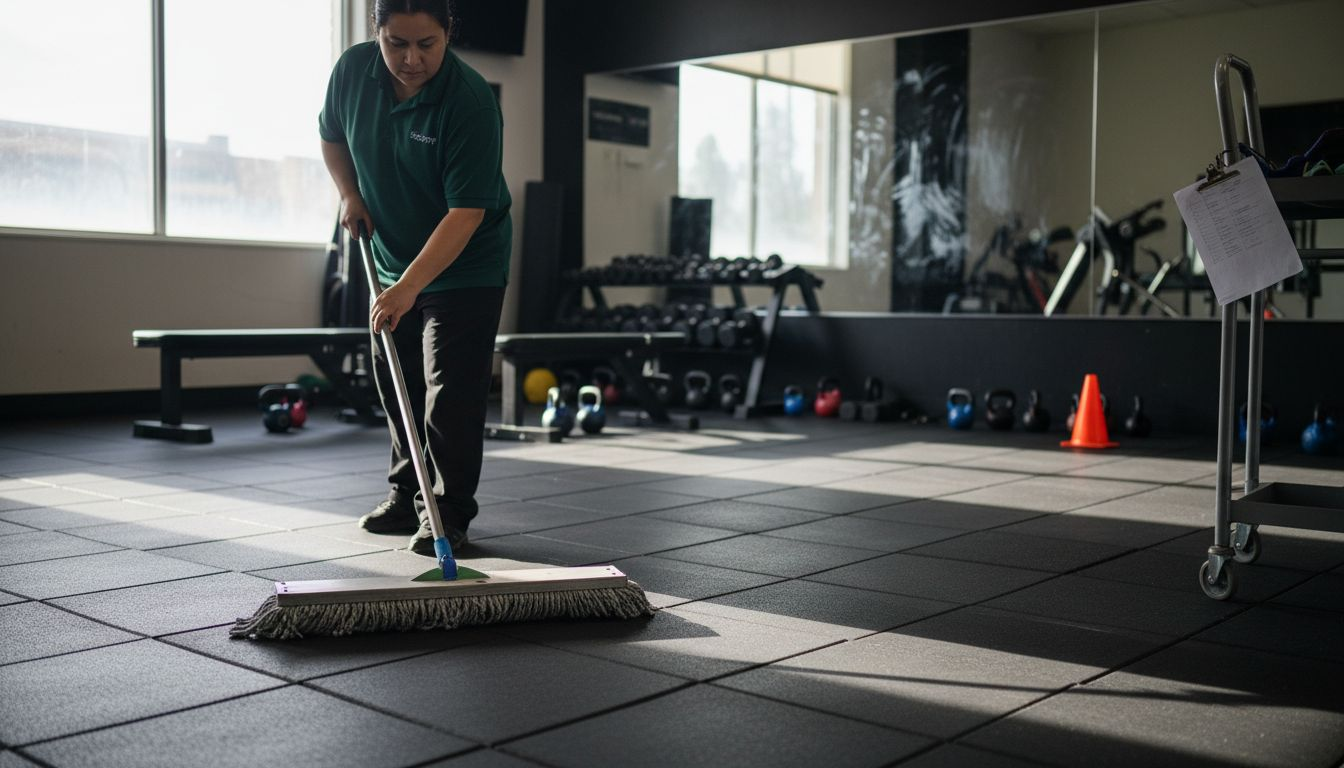
Step 2: Damp mop with dilute, pH-neutral cleaner (typically 3 oz per gallon) to remove sweat and oils effectively. Wring your mop thoroughly. The floor should look damp, not wet. Excess water seeps into seams and causes problems.
Step 3: Spot clean stubborn stains with your soft brush and undiluted cleaner. Work in small circular motions without applying excessive pressure. Rinse the brush frequently to avoid spreading grime.
Step 4: Apply your EPA-registered disinfectant safe for rubber surfaces following the manufacturer’s dwell time. This contact period ensures effective germ elimination. Don’t rush this critical hygiene step.
Step 5: Rinse if your cleaner requires it and allow natural air drying. Avoid heat sources or fans that can cause uneven drying and residue buildup. Most pH-neutral cleaners dry quickly without rinsing.
Your rubber gym floor cleaning routine should become second nature. Consistency matters more than intensity. Light daily cleaning beats occasional deep scrubbing for floor longevity.
Pro Tip: Schedule cleaning during low-traffic hours. This gives floors adequate drying time and prevents slip hazards from damp surfaces during peak gym use.
Common cleaning mistakes and how to fix them
Even experienced facility managers make errors that compromise floor safety and lifespan. Recognizing these mistakes helps you avoid expensive damage.
The worst mistake is using acidic or alkaline cleaners that cause rubber floor damage including discoloration and stickiness within weeks. Some managers grab whatever’s available without checking pH levels. This shortcuts saves time initially but costs thousands in premature floor replacement.
Never soak rubber floors. Excess water and abrasive scrubbing lead to mold growth, surface scratches, and increased slip hazards. Water trapped under rubber creates perfect conditions for mold and mildew. It also weakens adhesive bonds in glued installations.
Abrasive scrubbers or stiff-bristled brushes scratch rubber surfaces. These scratches collect dirt and bacteria, making floors harder to clean over time. They also reduce traction by smoothing the textured surface.
Using incompatible disinfectants creates chemical reactions that damage rubber. Always verify your disinfectant is explicitly safe for rubber flooring. Generic all-purpose cleaners often contain harsh chemicals.
Here’s how to fix these mistakes:
- Switch immediately to pH-neutral cleaners and dispose of harsh products safely
- Control moisture by wringing mops thoroughly and improving ventilation
- Replace abrasive tools with soft microfiber mops and gentle brushes
- Invest in rubber-specific disinfectants for safe, effective sanitization
Common mistakes in rubber mat cleaning extend to common rubber floor cleaning mistakes across all rubber surfaces. The solutions remain consistent: gentle products, controlled moisture, and proper tools.
Pro Tip: Create a cleaning checklist posted in your maintenance area. Include product names, dilution ratios, and tool specifications. This prevents staff from using wrong products when you’re unavailable.
Recommended cleaners and products for rubber gym floors
Selecting the right commercial cleaner saves time and protects your flooring investment. Two products consistently earn top ratings from facility managers.
Tac-Tite pH Neutral Gym Floor Cleaner improves traction and safety, removes oils with quick drying (10 to 15 mins) and is non-toxic. This makes it ideal for busy facilities that can’t afford long downtime. The formula restores grip without leaving residue.
Zogics Rubber Flooring Cleaner and Degreaser is biodegradable, non-toxic, and effective on grease and chalk buildup in heavy-use gyms. It tackles the toughest grime from powerlifting areas and CrossFit zones. The concentrated formula offers excellent cost per gallon.
Follow manufacturer dilution ratios precisely. Too concentrated wastes product and may leave residue. Too diluted reduces cleaning effectiveness. Most pH-neutral cleaners work best at 2 to 4 ounces per gallon for routine cleaning.
| Product | Best For | Key Benefits | Typical Dilution |
|---|---|---|---|
| Tac-Tite | Daily maintenance | Quick drying, traction restoration | 3 oz/gallon |
| Zogics | Heavy-duty deep cleaning | Degreasing, biodegradable | 2 to 4 oz/gallon |
Safety profiles matter for facility compliance and staff health. Choose cleaners with minimal volatile organic compounds and no harsh fumes. Environmental impact considerations also affect your facility’s sustainability credentials.
Base your selection on gym traffic levels, typical dirt and grime types, and cleaning frequency. High-traffic facilities benefit from daily-use formulas like Tac-Tite. Areas with heavy chalk or equipment grease need Zogics-level degreasing power weekly.
Explore top rubber gym floor cleaners to compare additional options. Professional products outperform household cleaners significantly in commercial settings.
Pro Tip: Buy concentrated formulas in bulk. They offer better value and reduce packaging waste. Store concentrates properly to maintain effectiveness throughout their shelf life.
Expected outcomes and benefits from proper cleaning
Investing time in correct cleaning techniques delivers measurable returns across multiple facility management metrics. You’ll see improvements within weeks.
Consistent cleaning and correct product use can extend rubber floor life by several years. This delays costly repairs or full replacement. Rubber flooring represents a significant capital expense, so maximizing its lifespan directly impacts your bottom line.
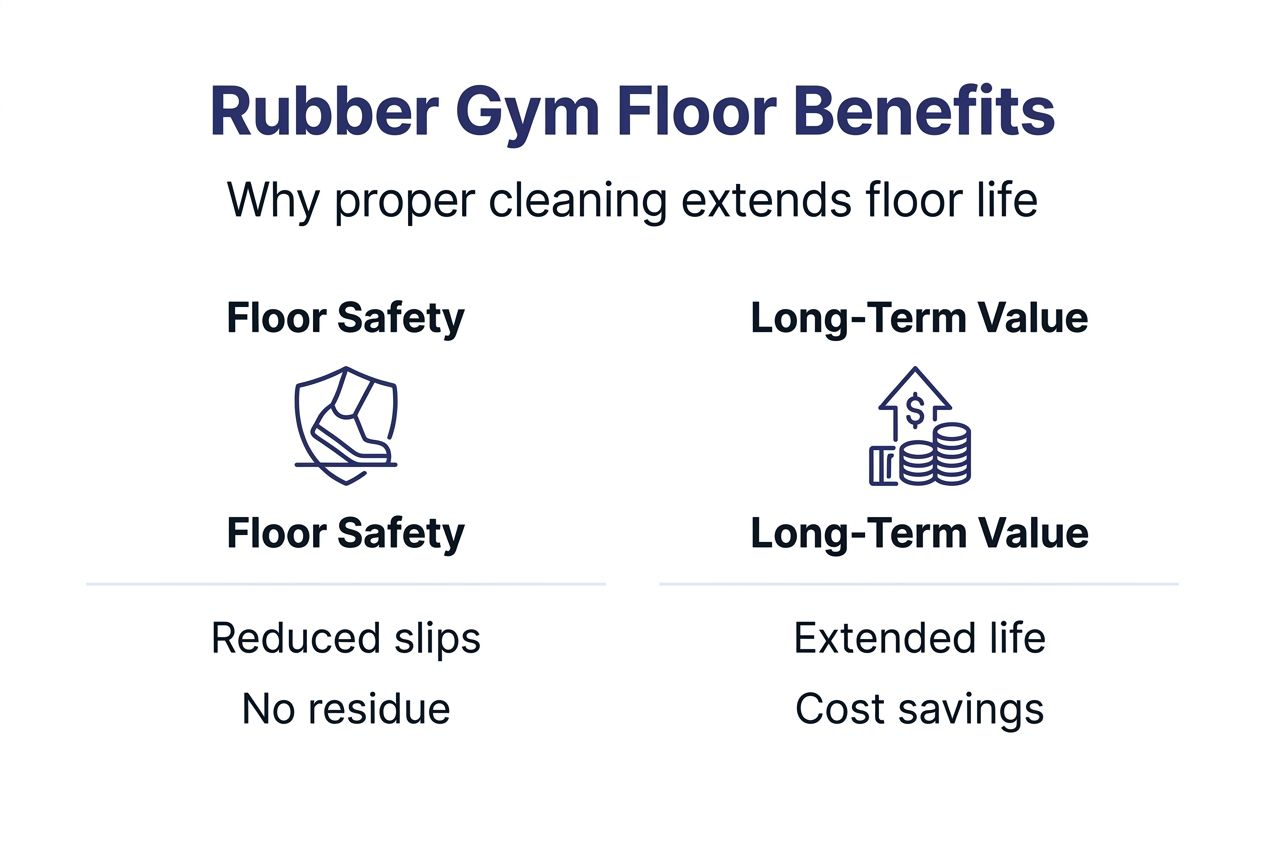
Maintained traction reduces slip-and-fall accidents significantly. Proper cleaning removes the oil and sweat buildup that creates slippery surfaces. It can improve safety by reducing slip incidents and associated liability risks.
Improved hygiene and odor control reduce health risks and enhance the gym experience. Clean floors smell better and look more professional. This directly affects member retention and satisfaction scores.
Quick-drying effective cleaners require less downtime. Facilities can clean between peak hours without closing entire areas. This maintains revenue flow while ensuring cleanliness.
Your facility’s reputation benefits enormously from consistently clean, safe floors. Members notice and appreciate well-maintained environments. Online reviews often mention cleanliness as a deciding factor.
Additional benefits include:
- Lower long-term maintenance costs from prevented damage
- Reduced staff time spent on problem spots and deep cleaning
- Better compliance with health and safety regulations
- Enhanced professional appearance attracting new members
The benefits of proper rubber floor cleaning extend beyond the visible surface. You’re protecting a valuable asset while creating a safer, more attractive facility.
Pro Tip: Track slip-and-fall incidents and member complaints before and after implementing proper cleaning protocols. Document improvements to justify your cleaning budget and demonstrate return on investment.
Explore premium floor mats and cleaning solutions for your facility
Applying the knowledge you’ve gained becomes easier with professional-grade products designed for commercial gyms. Mats4U offers solutions that complement your floor care program.
Our premium custom floor mats protect high-traffic entry areas while enhancing your brand. These mats trap dirt before it reaches your rubber flooring, reducing cleaning frequency and extending floor life.
Explore our carefully selected top rubber mat cleaners tailored specifically for commercial gym environments. We’ve tested these products extensively to ensure they meet the pH-neutral standards your floors require.
Our products help you maintain cleaner, safer gym floors easily and professionally. Visit Mats4U to discover the complete range of floor protection and maintenance solutions designed for facilities like yours.
Frequently asked questions
What is the best pH level for rubber gym floor cleaners?
The optimal pH range is 6.25 to 8.25, with pH 7 being ideal. This neutral range cleans effectively without breaking down rubber compounds or leaving harmful residue.
How often should I clean rubber gym floors?
Daily dry mopping or vacuuming plus damp mopping with pH-neutral cleaner works best for high-traffic gyms. Weekly deep cleaning with spot treatment maintains floors between daily sessions. Adjust frequency based on your facility’s traffic volume.
Can I use bleach on rubber gym floors?
No, bleach is too alkaline and damages rubber surfaces. It causes discoloration, brittleness, and accelerated wear. Use EPA-registered disinfectants specifically labeled safe for rubber instead.
How do I remove stubborn stains from rubber gym floors?
Apply undiluted pH-neutral cleaner directly to the stain and let it sit for 2 to 3 minutes. Scrub gently with a soft brush in circular motions. For protein-based stains like blood, use an enzyme cleaner safe for rubber. More tips at our rubber mat cleaner FAQ.
What causes rubber gym floors to become slippery?
Oil, sweat, and product buildup from wrong cleaners create slippery surfaces. Regular cleaning with proper pH-neutral products removes these substances and restores traction. Excess water during cleaning also contributes to temporary slipperiness.
Do rubber gym floors need to be sealed or waxed?
No, rubber flooring should never be sealed or waxed. These products trap moisture underneath, promote mold growth, and can make surfaces dangerously slippery. Rubber’s natural properties provide adequate protection when properly cleaned.
Recommended
- The Ultimate Guide to Cleaning Rubber Flooring for Longevity and Safet – Mats4U USA
- Best Cleaner for Rubber Mats: Achieve Spotless Floors – Mats4U USA
- How to Clean Rubber Gym Mats Effectively in 2025 – Mats4U USA
- Best Cleaner for Rubber Floor Mats: 5 Steps to 2X Life – Mats4U USA
- întreținere - 10 Sfaturi pentru Echipamentele Fitness 2026
- How to Clean Tough Stains Naturally on Workwear Fast – WorkWearComfort


