


Every American business knows the mess that all weather floor mats can track in during a busy season. With nearly 80 percent of dirt entering buildings on footwear, the right approach to mat care protects both cleanliness and your investment. This step by step guide walks you through proven methods for maintaining all weather floor mats, helping you keep your workplace spotless and your mats lasting longer.
Table of Contents
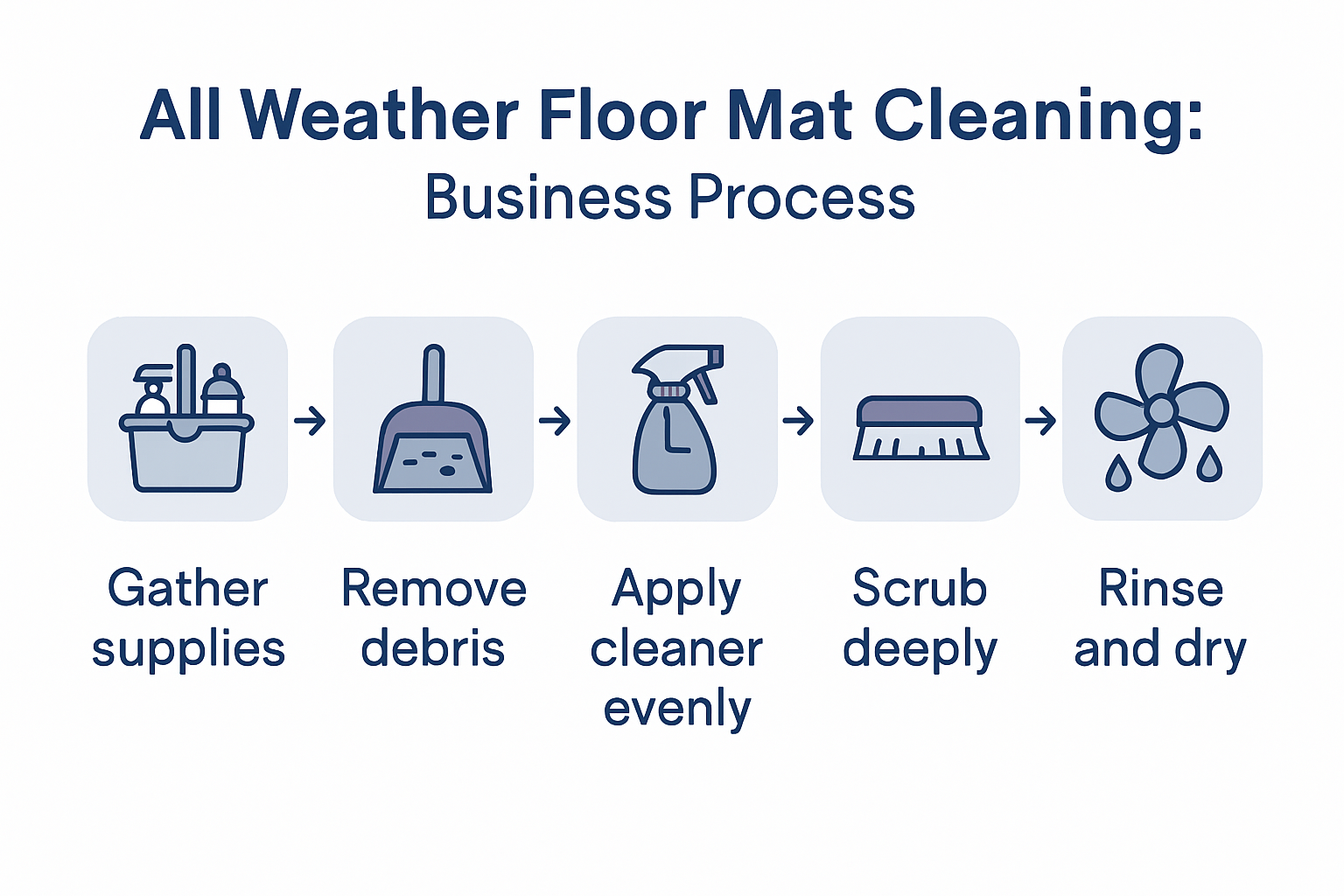
- Step 1: Gather Necessary Cleaning Supplies and Equipment
- Step 2: Remove Loose Debris from All Weather Floor Mats
- Step 3: Apply All Weather Floor Mat Cleaner Evenly
- Step 4: Scrub Mats for Deep Cleaning Results
- Step 5: Rinse, Dry, and Inspect for Cleanliness
Quick Summary
| Important Insight | Explanation |
|---|---|
| 1. Assemble Essential Cleaning Supplies | Gather a neutral cleaner, microfiber cloths, a vacuum with HEPA filters, and personal protective equipment before starting the cleaning process. |
| 2. Remove Loose Debris Daily | Regularly shake, sweep, or vacuum mats to dislodge and capture dirt, preventing it from embedding in the fibers. |
| 3. Apply Cleaner Evenly | Use a diluted neutral cleaner and a microfiber mop to apply in smooth, overlapping strokes for consistent cleaning coverage. |
| 4. Scrub for Deep Cleaning | Use a specialized carpet brush to scrub the mats in sections, applying moderate pressure to effectively lift embedded dirt. |
| 5. Rinse, Dry, and Inspect | Thoroughly rinse with clean water, dry completely, and inspect for remaining stains to ensure mats are restored and clean. |
Step 1: Gather Necessary Cleaning Supplies and Equipment
Preparing the right cleaning supplies is essential for effectively maintaining all weather floor mats in a professional setting. Before you start the cleaning process, you will need to assemble a comprehensive toolkit that ensures thorough and efficient mat maintenance.
Begin by collecting critical cleaning equipment recommended by professional facility management guidelines. Your essential toolkit should include a neutral floor cleaner specifically designed for commercial mats, multiple microfiber cleaning cloths, a sturdy broom with soft bristles, a dustpan, a floor scraper for removing stubborn debris, and multiple safety caution signs to mark your cleaning area. Professional grade cleaning requires additional equipment such as a vacuum cleaner with HEPA filters, a carpet cleaning brush, and potentially a carpet extractor or pressure washer for deep cleaning.
Personal protective equipment is equally important when handling cleaning chemicals. Invest in durable rubber gloves, safety glasses, and protective footwear to prevent potential chemical exposure. When selecting cleaning solutions, follow recommended practices that emphasize using concentrated chemicals appropriately and maintaining clean mopping solutions. Pro tip: Always read manufacturer instructions for your specific mat type and test cleaning solutions on a small, inconspicuous area first to ensure compatibility and prevent potential damage.
With your supplies gathered and organized, you are now ready to move forward with the detailed cleaning process for your all weather floor mats.
Step 2: Remove Loose Debris from All Weather Floor Mats
Removing loose debris is a critical first step in maintaining the cleanliness and longevity of all weather floor mats in business environments. This process prepares the mat for deeper cleaning and prevents dirt from becoming deeply embedded in the mat fibers.
Facility management guidelines recommend a systematic approach to debris removal. Start by carefully lifting the mat and shaking it vigorously to dislodge loose dirt particles. If your mat has a backing, use a vacuum cleaner with strong suction and HEPA filtration to thoroughly clean the surface. For mats without backing, you can use a soft bristled broom to sweep away surface dirt effectively.
Business settings require consistent daily maintenance, especially during high traffic or inclement weather conditions. Commercial cleaning practices emphasize the importance of routine sweeping or vacuuming to prevent dirt accumulation. Pro tip: Always sweep or vacuum in multiple directions to ensure you capture debris from all angles. Pay special attention to mat edges and corners where dirt tends to collect. By spending just a few minutes each day removing loose debris, you can significantly extend the life of your all weather floor mats and maintain a clean professional environment.
With loose debris successfully removed, you are now prepared to move on to the next stage of comprehensive mat cleaning.
Step 3: Apply All Weather Floor Mat Cleaner Evenly
Applying floor mat cleaner evenly is crucial for achieving a thorough and professional cleaning result. This step requires precision and careful technique to ensure every inch of the mat receives proper treatment and maintains its optimal condition.
Professional facility management guidelines recommend using a neutral cleaner and a clean microfiber mop for consistent application. Begin by preparing your cleaning solution according to manufacturer instructions make certain you dilute the cleaner to the correct concentration. Start at one edge of the mat and work methodically across the surface using smooth parallel strokes that overlap slightly to guarantee complete coverage. This technique prevents missed spots and ensures an even distribution of cleaning solution.
When applying the cleaner, commercial cleaning practices emphasize the importance of using the appropriate amount of cleaning chemical. Avoid oversaturating the mat which can damage its fibers or backing. Your mop or applicator should be damp not soaking wet. Pro tip: Test the cleaning solution on a small inconspicuous area first to confirm it does not cause discoloration or damage. Work systematically and maintain a consistent pressure to achieve uniform cleaning across the entire mat surface.
With the cleaner applied evenly, you are now prepared to move forward to the next stage of the mat cleaning process.
Step 4: Scrub Mats for Deep Cleaning Results
Deep cleaning your all weather floor mats requires strategic scrubbing to remove embedded dirt and restore their original appearance. This critical step goes beyond surface cleaning to eliminate stubborn grime and maintain the mat’s performance and longevity.
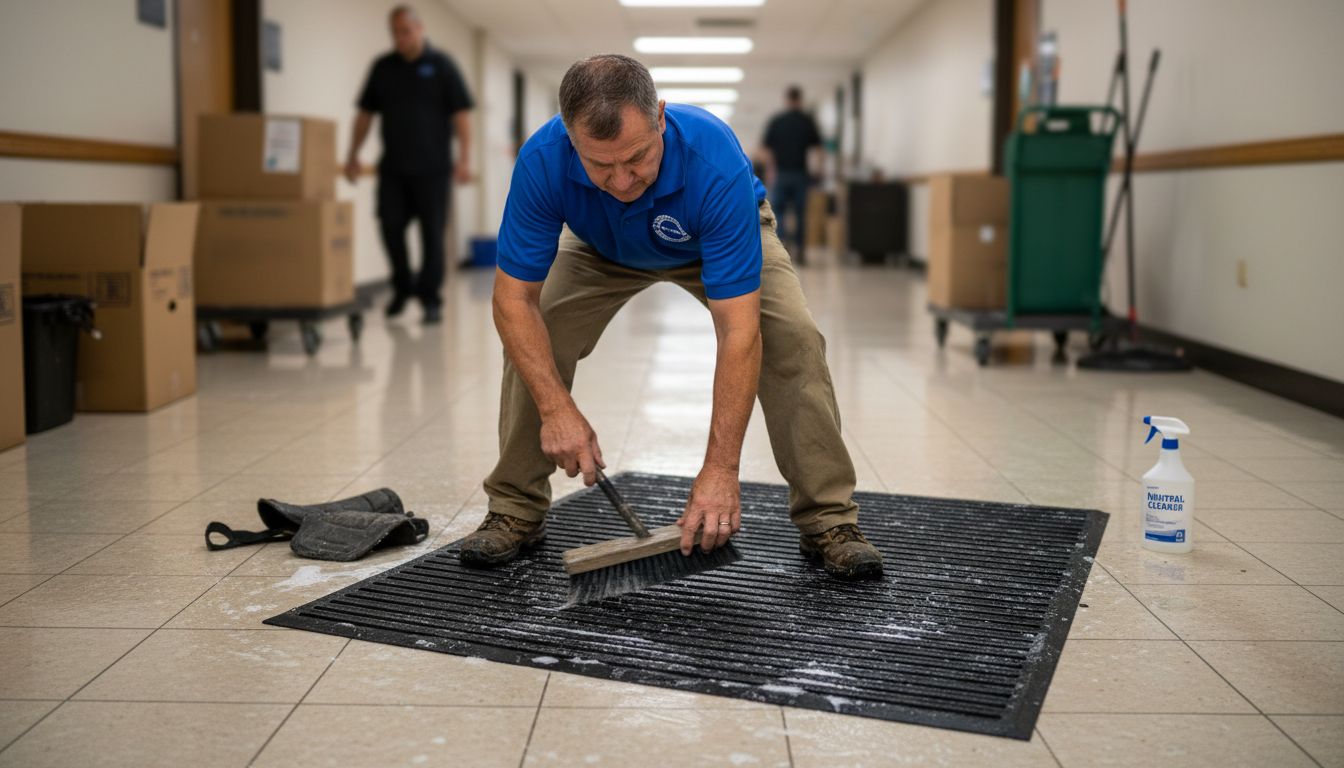
Facility management guidelines recommend using a specialized carpet cleaning brush with firm but gentle bristles to agitate dirt without damaging mat fibers. Begin by selecting a brush appropriate for your mat material working in systematic sections to ensure thorough coverage. Apply moderate pressure using circular or back and forth motions that lift dirt from deep within the mat’s texture. For particularly challenging areas consider using a carpet extractor or pressure washer to provide intense cleaning power.
Commercial cleaning protocols emphasize the importance of comprehensive cleaning techniques. Vacuum the mat in multiple directions before and after scrubbing to maximize dirt removal. Pro tip: Always test your cleaning method on a small inconspicuous area first to confirm the brush and cleaning technique will not damage the mat’s surface or backing. Work methodically from one end to the other maintaining consistent pressure and overlapping your scrubbing paths to prevent missed spots.
With the mat thoroughly scrubbed and cleaned, you are now prepared for the final stages of the mat cleaning process.
Step 5: Rinse, Dry, and Inspect for Cleanliness
The final stage of floor mat cleaning is crucial for ensuring your all weather mats are truly clean and ready to perform their essential function in your business environment. This step transforms your cleaning efforts from basic maintenance to professional grade restoration.
Facility management best practices recommend a thorough rinsing process to remove any remaining cleaning solution from the mat. Use clean water and rinse systematically from one end to the other ensuring all cleaning chemicals are completely eliminated. After rinsing, allow the mat to lay completely flat in a well ventilated area that promotes even air circulation. This prevents moisture buildup and potential mildew formation which can compromise the mat’s integrity and appearance.
Commercial cleaning guidelines emphasize the importance of comprehensive drying and final inspection. Pro tip: Use clean white towels or a wet vacuum to remove excess moisture and speed up the drying process. Carefully inspect the mat for any remaining stains or areas that might require additional attention. Check both the top surface and underneath to ensure complete cleanliness. Confirm the mat is entirely dry and free of dirt before returning it to its original location. This final step ensures your all weather floor mat is not just clean but completely restored and ready to perform its critical function in trapping dirt and maintaining a professional environment.
With your mat now thoroughly cleaned and inspected you have successfully completed the comprehensive floor mat cleaning process.
Maintain Business Cleanliness with the Right All Weather Mats
Keeping your business floors spotless and safe demands durable, easy-to-clean mats designed for high-traffic environments. This article highlights the challenges of properly cleaning all weather floor mats using specialized cleaners and techniques to remove deep-set dirt and extend mat lifespan. If you aim to protect your facility from dirt buildup, slip hazards, and costly mat replacements, investing in premium commercial mats is a smart solution.
Explore our wide selection of Commercial Mats engineered for heavy use and simple maintenance. With options ranging from Waterhog to Rubber mats, all designed for professional settings, you can find the perfect floor protection that withstands daily cleaning efforts. Start enhancing your workspace today with reliable mats from Mats4U.com. Visit our Indoor Mats collection for styles optimized for indoor environments. Don’t wait until dirt becomes a costly problem. Order now to benefit from competitive pricing and free delivery on orders over $100.
Frequently Asked Questions
How do I gather the necessary supplies for cleaning all weather floor mats?
Start by collecting a neutral floor cleaner, microfiber cleaning cloths, a broom, a dustpan, a floor scraper, and safety equipment like gloves and glasses. Organize your supplies for easy access during the cleaning process to ensure thorough maintenance.
What is the best way to remove loose debris from floor mats?
Lift the mat and shake it to dislodge dirt particles, then use a vacuum cleaner or soft broom to effectively remove surface debris. Ensure to sweep or vacuum daily to prevent dirt accumulation, especially in high-traffic areas.
How should I apply the all weather floor mat cleaner?
Apply the cleaner evenly using a clean microfiber mop, starting at one edge and working systematically across the mat. Ensure the mop is damp, not soaking wet, to prevent damaging the mat fibers, and apply in smooth, overlapping strokes for complete coverage.
What are the proper scrubbing techniques for deep cleaning?
Use a carpet cleaning brush with firm bristles to scrub the mat, working in sections with consistent pressure. This helps lift embedded dirt; for stubborn spots, consider using a carpet extractor or pressure washer to enhance cleaning effectiveness.
How do I rinse and dry the floor mats after cleaning?
Rinse the mat thoroughly with clean water, ensuring all cleaning solutions are removed, and lay it flat in a well-ventilated area to dry. To expedite drying, use clean towels or a wet vacuum to absorb excess moisture, and inspect for cleanliness before placing the mat back in its location.
How often should I clean all weather floor mats in a business setting?
Clean all weather floor mats regularly, ideally every 1-2 weeks, to maintain cleanliness and extend their lifespan. Consider increasing frequency during inclement weather or high traffic periods to keep your business environment professional and tidy.
Recommended
- Commercial Floor Mat Cleaning Service: Step-by-Step Guide – Mats4U USA
- How to Clean Floor Mats for Businesses: Fast Results – Mats4U USA
- Understanding Floor Mats Cleaner: Importance and Functionality – Mats4U USA
- Mastering Floor Mat Cleaning for Your Business – Mats4U USA
- 7 Essential Restaurant Cleanliness Tips for 2025 - Probe IT
- Eco Friendly Cleaning Tips For Busy European Mums – The Zoofamily
- Car Interior Cleaning Checklist for Professionals 2025 – AEONCUT PPF Pre-cut Cutting software


