


Most American facility managers underestimate how much the right anti-fatigue mat impacts worker comfort and efficiency. Over 50 percent of employees report less pain and fatigue when proper mat materials are used on the job. For those managing mid-sized commercial spaces, understanding the differences between materials like polyurethane and rubber goes far beyond surface details. Clear knowledge empowers you to invest wisely in solutions that truly support both employee wellness and your business bottom line.
Table of Contents
- Defining Anti Fatigue Mats And Common Misconceptions
- Primary Materials Used In Anti Fatigue Mats
- How Material Affects Comfort, Durability, And Safety
- Comparing Rubber, Pvc, And Polyurethane Options
- Common Mistakes When Selecting Mat Materials
Key Takeaways
| Point | Details |
|---|---|
| Understanding Anti-Fatigue Mats | These mats are essential ergonomic tools designed to reduce discomfort for workers who stand for long periods, not just simple cushioned mats. |
| Material Selection Matters | Choosing the right material—like Polyurethane for comfort or Rubber for durability—is crucial based on specific workplace conditions. |
| Avoid Common Mistakes | Proper assessment of work environments and worker needs is vital to prevent premature mat wear and ensure safety. |
| Focus on Worker Wellness | Investing in quality anti-fatigue mats significantly enhances employee comfort and productivity, contributing to overall workplace health. |
Defining Anti Fatigue Mats and Common Misconceptions
Anti-fatigue mats are specialized workplace floor coverings designed to reduce physical stress and discomfort for workers who stand for extended periods. Unlike standard floor mats, these ergonomic solutions are engineered to provide strategic cushioning and support that minimizes physical strain.
At their core, anti-fatigue mats represent a critical intervention in workplace ergonomics. They work by encouraging subtle muscle movements that improve blood circulation and reduce the negative health impacts of prolonged standing. Contrary to common misconceptions, these mats are not simply cushioned floor coverings but sophisticated ergonomic tools that actively support worker health and productivity.
Most facility managers misunderstand anti-fatigue mats as optional workplace accessories. In reality, they are essential investments in employee wellness and workplace safety. Research indicates that these mats can significantly reduce subjective pain levels, particularly in low back areas for workers who spend hours standing. While muscle activation patterns might not dramatically change, worker comfort and perceived support are markedly improved.
Pro tip: When selecting an anti-fatigue mat, prioritize thickness, material resilience, and specific workplace conditions over purely aesthetic considerations.
Primary Materials Used in Anti Fatigue Mats
Anti-fatigue mats are crafted from various polymeric materials, each selected for specific performance characteristics. Polymeric foams like polyurethane represent the primary materials used in these ergonomic floor coverings, offering unique combinations of flexibility, cushioning, and durability for workplace environments.
The most common materials include polyurethane, polystyrene, and polyvinyl chloride (PVC), each with distinct advantages. Polyurethane foam stands out for its exceptional cushioning properties and resilience, making it ideal for industrial settings requiring prolonged standing. PVC foams provide a more economical solution, particularly suited for light commercial applications where cost-effectiveness is a primary consideration.
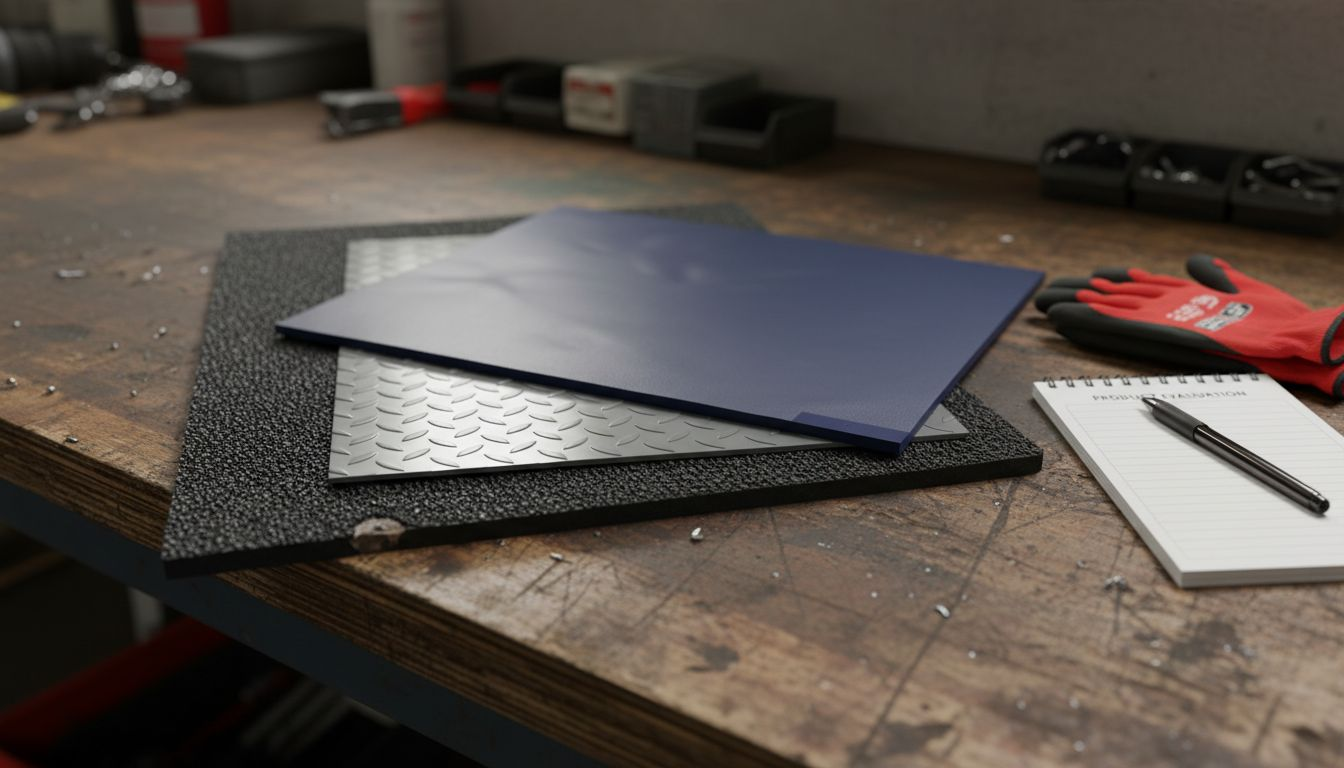
Advanced material technologies focus on engineering synthetic polymers to balance critical factors like comfort, safety, and mechanical performance. Biomaterial innovations aim to create mats that not only reduce physical strain but also support proper weight distribution and joint protection. This approach transforms anti-fatigue mats from simple floor coverings into sophisticated ergonomic solutions that actively contribute to worker wellness.
Pro tip: When evaluating anti-fatigue mat materials, consider the specific workplace environment, expected foot traffic, and potential exposure to chemicals or moisture to ensure optimal material selection.
How Material Affects Comfort, Durability, and Safety
Material selection plays a critical role in determining the performance of anti-fatigue mats across three key dimensions: comfort, durability, and workplace safety. Materials resistant to fatigue damage maintain essential cushioning properties and structural integrity over extended periods of use, making them fundamental to effective workplace ergonomics.
Different materials offer unique advantages in industrial environments. Rubber-based mats excel in providing slip resistance and shock absorption, making them ideal for high-traffic areas with potential exposure to liquids or oils. Polyurethane materials, by contrast, deliver superior comfort through enhanced elasticity and cushioning, which helps reduce physical strain during prolonged standing.
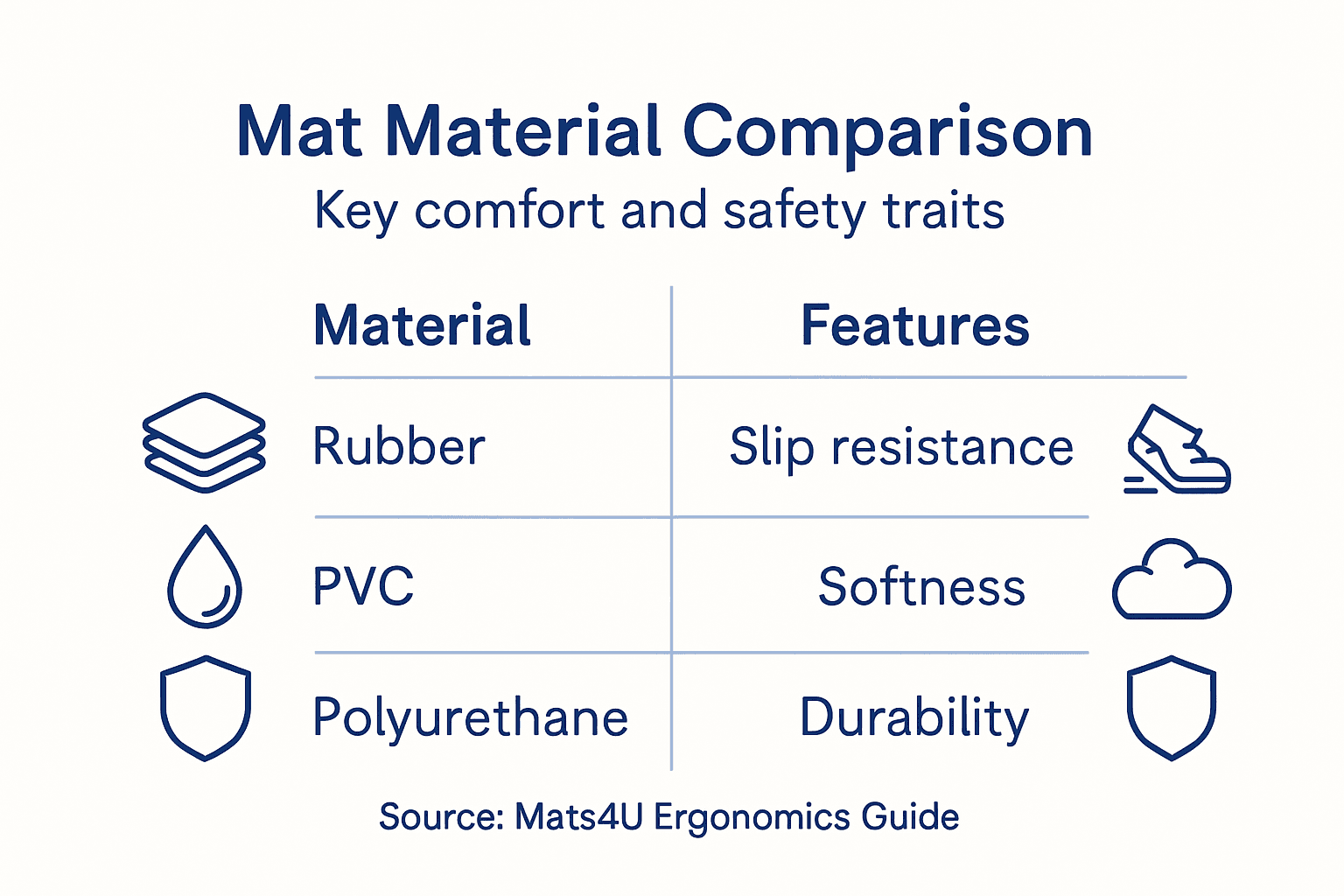
The intricate relationship between material composition and performance extends beyond immediate tactile experience. Durability depends on a material’s ability to withstand cyclic loading without structural degradation, while safety hinges on surface characteristics that prevent workplace accidents. High-performance anti-fatigue mats must balance these complex requirements, creating a sophisticated solution that protects worker health and maintains operational efficiency.
Pro tip: Conduct periodic material inspections to assess wear patterns and potential degradation, ensuring your anti-fatigue mats continue to provide optimal comfort and safety protection.
Comparing Rubber, PVC, and Polyurethane Options
Each anti-fatigue mat material brings unique characteristics that make it suitable for specific workplace environments. Polyurethane foam offers superior comfort with its exceptional elasticity and shock absorption capabilities, making it an ideal choice for office and retail settings where worker comfort is paramount.
Rubber mats, particularly those made from nitrile rubber, excel in industrial environments that demand durability and chemical resistance. They provide outstanding slip protection and can withstand harsh conditions, including exposure to oils and liquids. In contrast, PVC mats represent a more economical option, offering lightweight construction and easy maintenance for light commercial applications where extreme durability is not the primary concern.
The selection process requires careful consideration of workplace specific requirements. Polyurethane provides maximum comfort but may degrade faster in wet environments, while rubber offers unmatched resilience in challenging conditions. PVC serves as a middle ground, delivering basic protection at a lower cost. Understanding these material nuances allows facility managers to make informed decisions that balance worker comfort, safety, and budgetary constraints.
Here’s how key anti-fatigue mat materials compare in workplace performance:
| Material Type | Comfort Level | Best Environment | Safety Features |
|---|---|---|---|
| Polyurethane Foam | Very high | Offices, retail spaces | Supports joints, reduces pain |
| Rubber (Nitrile) | Moderate to high | Industrial, wet areas | Slip resistance, shock absorb |
| PVC Foam | Moderate | Light commercial areas | Lightweight, easy to clean |
Pro tip: Evaluate your specific workplace conditions, including temperature, moisture levels, and chemical exposure, before selecting the most appropriate anti-fatigue mat material.
Common Mistakes When Selecting Mat Materials
Many facility managers fall into critical errors when selecting anti-fatigue mats, often prioritizing cost over performance. Choosing materials without assessing work environment can lead to premature mat failure, reduced worker safety, and increased long-term expenses.
One significant mistake is overlooking the specific requirements of different workplace conditions. For instance, selecting a soft polyurethane mat for a harsh industrial setting with chemical exposure or heavy machinery can result in rapid deterioration. Similarly, using a rigid rubber mat in an office environment might compromise worker comfort and potentially increase fatigue-related strain.
Another common pitfall involves neglecting comprehensive worker needs and ergonomic considerations. Facility managers frequently select mats based on superficial criteria like price or aesthetic appearance, instead of conducting a thorough analysis of workplace dynamics. Factors such as standing duration, floor surface, potential liquid exposure, and specific job requirements must be carefully evaluated to ensure optimal mat performance and worker protection.
Summary of common selection mistakes and potential business impact:
| Mistake | Impact on Workplace | Long-Term Consequence |
|---|---|---|
| Prioritizing cost over quality | Reduced employee comfort | Higher replacement costs |
| Ignoring work environment | Increased safety risks | Premature mat wear |
| Overlooking ergonomic needs | Lower worker productivity | Higher rates of fatigue |
Pro tip: Conduct a comprehensive workplace assessment that includes measuring standing hours, identifying potential hazards, and documenting environmental conditions before selecting an anti-fatigue mat.
Discover the Best Materials for Your Workplace Comfort and Safety
Understanding the key materials that make up anti-fatigue mats is crucial for selecting the right solution that supports employee wellness and reduces physical strain. If you want to avoid common mistakes like prioritizing cost over durability or ignoring environmental factors, exploring the right mat materials is the first step. Mats made from polyurethane, rubber, or PVC each offer unique benefits tailored to specific workplace needs.
Explore our comprehensive Mats4U | Anti-Fatigue Mats | Collection to find mats engineered for comfort, durability, and safety. Shop mats designed with advanced materials to keep your workforce comfortable and productive. Don’t wait until fatigue and discomfort impact your team. Visit Mats4U.com now and take advantage of our free delivery on orders over $100. For enhanced comfort options, check out our Comfort Range and for added safety features explore Non Slip. Make the smart choice today and upgrade your flooring for a healthier work environment.
Frequently Asked Questions
What materials are commonly used in anti-fatigue mats?
Anti-fatigue mats are typically made from several polymeric materials, including polyurethane, polystyrene, and polyvinyl chloride (PVC). Each material offers different advantages in terms of comfort, durability, and cost.
How does the choice of material affect the performance of anti-fatigue mats?
The material of an anti-fatigue mat influences comfort, durability, and safety. For example, polyurethane offers excellent cushioning and elasticity for comfort, while rubber provides slip resistance and durability in industrial settings.
Why is it important to consider workplace conditions when selecting mat materials?
Considering workplace conditions is crucial because specific environments may require different material properties. For instance, a soft mat might degrade quickly in a wet industrial space, while a rigid material may hinder comfort in an office setting.
What are common mistakes to avoid when choosing anti-fatigue mats?
Common mistakes include prioritizing cost over quality, selecting mats without understanding workplace conditions, and ignoring ergonomic needs. These errors can lead to reduced comfort, increased safety risks, and higher long-term replacement costs.
Recommended
- Understanding the Benefits of Anti Fatigue Mats – Mats4U USA
- What Does Anti Fatigue Mat Do? Understanding Its Benefits – Mats4U USA
- Understanding the Benefits of Brown Anti Fatigue Mats – Mats4U USA
- Understanding Anti Fatigue Floor Mats for Kitchen Use – Mats4U USA
- Les pantoufles made in France : un choix éco-responsable - Aerobatix
- Milieuvriendelijke Kozijnen: Keuze Voor Duurzaam Wonen


