


Maintaining rubber gym floors in high-traffic facilities presents unique challenges that many gym owners and facility managers struggle with daily. The wrong mop can scratch surfaces, leave streaks, or fail to remove sweat and bacteria effectively, ultimately shortening your floor’s lifespan and creating safety hazards. This guide walks you through selecting the best mop materials, cleaning techniques, and modern equipment to protect your investment while keeping your facility spotless. You’ll discover which mop types deliver superior results, how to avoid common cleaning mistakes, and which advanced systems can transform your maintenance routine.
Table of Contents
- Why Mop Choice Matters For Rubber Gym Floors
- Choosing The Best Mop Materials And Designs
- Cleaning Techniques And Solutions For Rubber Gym Floors
- Enhancing Cleaning Efficiency: Advanced Mopping Systems And Floor Scrubbers
- Explore Mats4u Premium Mats And Cleaning Solutions
- Frequently Asked Questions
Key takeaways
| Point | Details |
|---|---|
| Microfiber mops protect floors | Non-abrasive materials prevent surface damage on rubber floors while removing up to 99% of bacteria. |
| pH-neutral cleaners essential | Harsh chemicals cause drying and discoloration, while neutral solutions preserve rubber elasticity. |
| Loop-end designs minimize wear | Cotton or microfiber loop-end mops reduce linting and protect floor finishes during daily cleaning. |
| Avoid sponge and string mops | These materials leave residue, create streaks, and accelerate surface degradation. |
| Advanced systems boost efficiency | Floor scrubbers and wide-path systems clean faster and more thoroughly than traditional mopping. |
Why mop choice matters for rubber gym floors
Selecting the right mop isn’t just about cleaning efficiency. It directly impacts your floor’s appearance, durability, and safety performance. Inappropriate mop materials like sponge or string create streaks that trap dirt and bacteria, making your facility look poorly maintained despite regular cleaning efforts. These materials also apply uneven pressure that can scratch or dull rubber surfaces over time.
Microfiber and loop-end cotton mops prevent scratches due to their soft structure and gentle contact with flooring. The fine fibers in microfiber pads create millions of tiny hooks that lift and trap dirt particles rather than pushing them around. This removes more bacteria and dirt compared to traditional cotton, making your cleaning sessions genuinely effective instead of just redistributing grime.
Heavy mops or abrasive heads accelerate wear patterns in high-traffic zones near equipment and entrances. Every pass with the wrong mop grinds particles into the rubber surface, creating microscopic damage that accumulates into visible deterioration. Lightweight mops reduce this pressure while still delivering thorough cleaning, extending your floor’s service life by years.
Choosing the right mop is crucial for protecting the integrity of rubber flooring and maintaining a professional appearance that attracts and retains members.
Mop durability affects your operational costs beyond the initial purchase price. Cheap mops require frequent replacement, disrupting your cleaning schedule and increasing long-term expenses. Quality microfiber systems withstand hundreds of wash cycles, delivering consistent performance that justifies their higher upfront investment.
Consider how your mop choice impacts your staff’s efficiency and your facility’s reputation. A mop that cleans thoroughly in one pass saves labor hours and reduces the time your gym floor stays wet and unusable. For guidance on comprehensive floor care, explore our resources on how to clean rubber gym mats and review our rubber gym floor cleaner guide for compatible cleaning solutions.
- Soft materials prevent surface scratching and maintain floor finish
- Fine microfiber structures trap bacteria instead of spreading it
- Lightweight designs reduce wear in high-traffic areas
- Durable construction lowers replacement frequency and costs
Choosing the best mop materials and designs
Microfiber stands as the most effective material for lifting dirt, dust, and microorganisms from rubber gym floors. The synthetic fibers are split during manufacturing, creating wedge-shaped strands that penetrate surface pores and capture particles at a microscopic level. This technology allows microfiber mops to remove up to 99% of bacteria, far outperforming cotton alternatives that primarily push contaminants around.
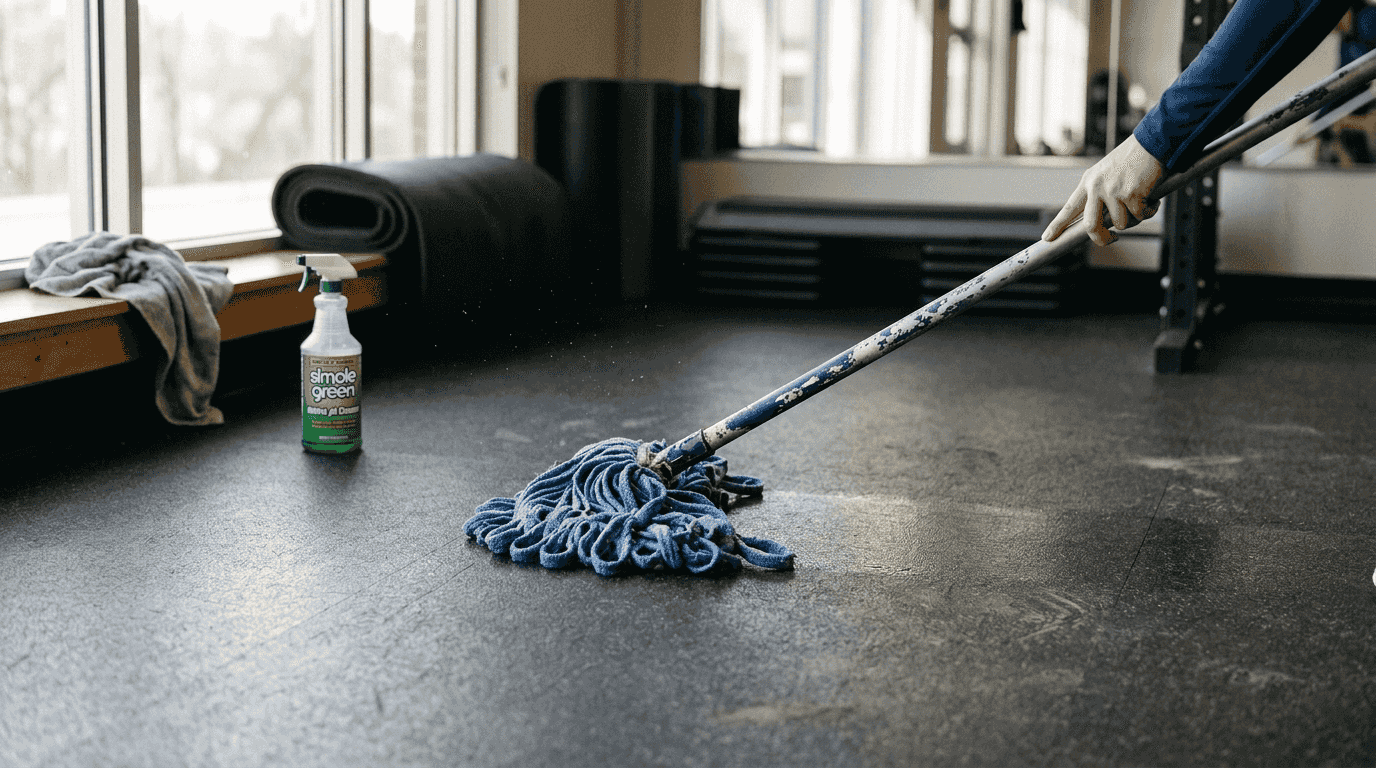
Looped-end microfiber minimizes linting and protects your floor finish better than cut-end designs. The continuous loops prevent fraying and shedding, keeping your floors free from fiber debris that creates a dingy appearance. These loops also distribute cleaning solution more evenly, eliminating the streaks that plague sponge mops and creating a uniform clean across your entire facility.
Cotton loop-end mops offer high absorbency that works well for spill cleanup and wet mopping routines. They soak up sweat and moisture effectively, making them useful for quick cleanups between classes. However, cotton delivers lower durability than microfiber, requiring more frequent replacement and offering less effective dirt removal. The natural fibers also harbor bacteria more readily, creating hygiene concerns in high-use environments.
Sponge and string mops tend to leave residue and streaks, making them poor choices for rubber gym floors. Sponge mops compress dirt into surface pores rather than lifting it away, while string mops create uneven coverage that leaves cleaning solution pooled in low spots. Both designs degrade quickly under daily use, shedding particles that contaminate your floors.
| Mop Material | Bacteria Removal | Durability | Best Use Case |
|---|---|---|---|
| Microfiber | Up to 99% | 500+ washes | Daily maintenance and deep cleaning |
| Cotton loop-end | 60-70% | 100-150 washes | Spill cleanup and light mopping |
| Sponge | 30-40% | 20-30 uses | Not recommended for rubber floors |
| String | 40-50% | 30-50 uses | Not recommended for rubber floors |
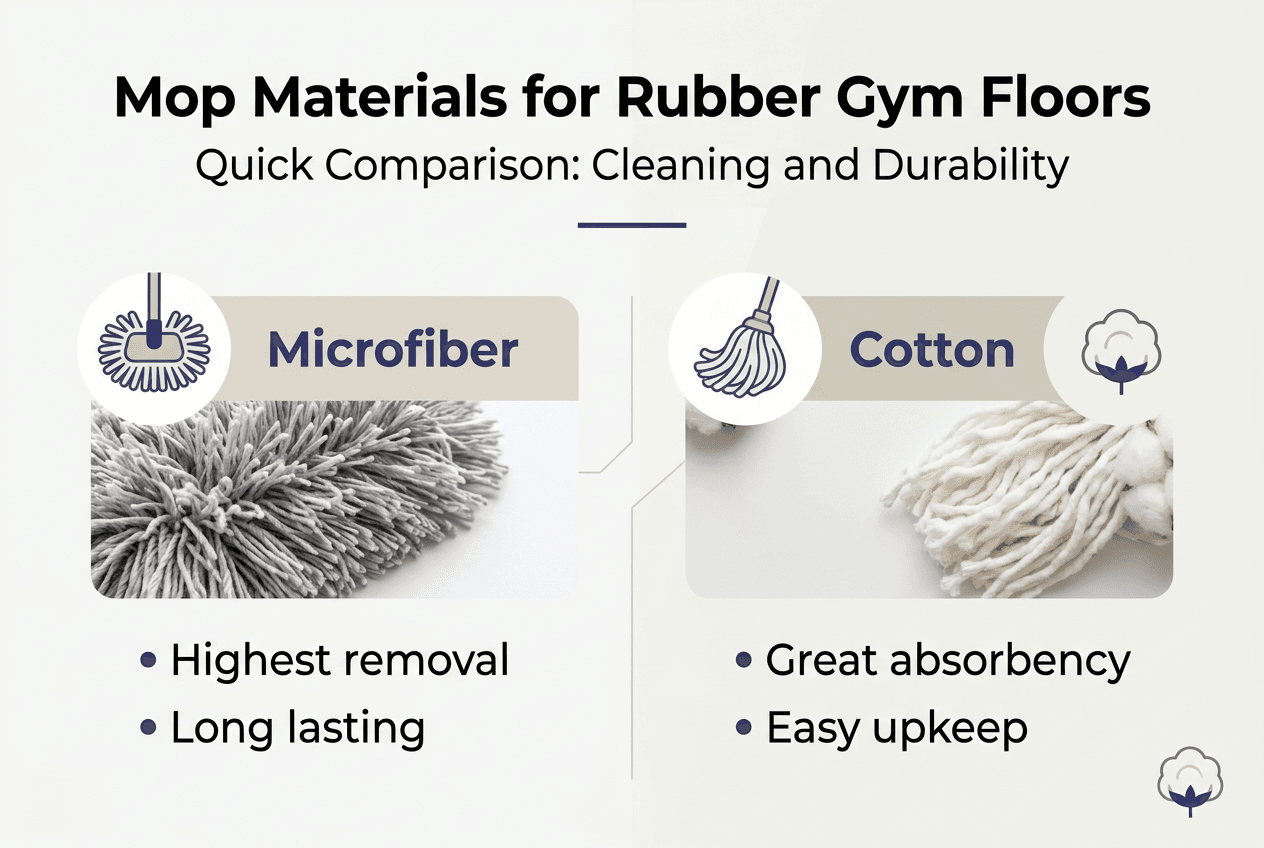
Microfiber offers long-term cost advantages despite higher upfront prices. A quality microfiber mop head costs $15 to $30 but lasts through hundreds of cleaning cycles. Compare this to cotton mops at $8 to $12 that need replacement every few months, and the economics favor microfiber clearly. Microfiber mop pads withstand many washes while maintaining their cleaning effectiveness, delivering superior value over their service life.
Pro Tip: Choose mop heads sized and colored for your gym’s cleaning zones to optimize workflows. Use blue microfiber pads for general floor areas, green for locker rooms, and red for restrooms. This color coding prevents cross-contamination and helps staff quickly grab the right tool for each task, reducing errors and improving cleaning quality.
The mop handle design matters as much as the head material. Telescoping handles adjust to different staff heights, reducing back strain during extended cleaning sessions. Quick-release mechanisms let you swap dirty pads for fresh ones without touching contaminated surfaces, maintaining hygiene standards throughout your facility. For additional floor care insights, review our guide on cleaning rubber flooring and explore detailed information about mop pad materials durability.
- Microfiber splits create wedge-shaped strands for superior dirt capture
- Loop-end designs prevent fraying and maintain consistent performance
- Color-coded systems reduce cross-contamination between facility zones
- Telescoping handles adjust to user height for ergonomic cleaning
Cleaning techniques and solutions for rubber gym floors
Using neutral to mildly alkaline, non-foaming cleaners designed specifically for rubber floors protects your investment while delivering effective cleaning. These formulas maintain the rubber’s elasticity and appearance without causing the chemical degradation that harsh products trigger. Neutral pH compatibility is essential to ensure your mop and cleaning solution work together without damaging floor surfaces or reducing mop pad lifespan.
Avoid ammonia, bleach, and harsh degreasers that degrade rubber compounds over time. These chemicals strip protective coatings, dry out the rubber matrix, and create surface cracks that trap dirt and bacteria. Harsh alkaline and solvent cleaners cause drying and discoloration of rubber floors, leading to premature replacement costs that far exceed any perceived cleaning benefits. Stick with pH-neutral formulas specifically labeled as rubber-safe to preserve your flooring investment.
Proper mopping technique starts before the mop touches your floor. Remove dry debris first using a dust mop or vacuum to prevent scratching during wet mopping. Particles trapped under your mop act like sandpaper, grinding into the rubber surface and creating permanent damage. This preparatory step takes minutes but prevents hours of corrective work later.
- Sweep or vacuum the entire floor area to remove loose dirt and debris
- Mix your pH-neutral cleaner according to manufacturer specifications in clean water
- Dip your microfiber mop into the solution and wring out excess liquid until damp
- Mop in overlapping figure-eight patterns to ensure complete coverage
- Change cleaning solution when it becomes visibly dirty to avoid redistributing grime
- Allow floors to air dry completely before reopening the area to foot traffic
Allow floors to fully dry before reopening areas to prevent slips and falls. Wet rubber becomes extremely slippery, creating liability risks that outweigh any time savings from rushing the process. Use fans or open doors to improve air circulation and reduce drying time from 30 minutes to 15 minutes in most conditions.
Rinse mop heads thoroughly after each use to avoid grime buildup that reduces cleaning effectiveness. Dirty mop pads spread bacteria instead of removing it, defeating the purpose of your cleaning routine. Wash microfiber pads in hot water without fabric softener, which coats the fibers and eliminates their dirt-trapping ability. Air dry or tumble dry on low heat to maintain pad structure and performance.
Daily, weekly, and monthly layered cleaning maximizes floor life while controlling labor costs. Light daily mopping removes sweat and surface dirt before it bonds to the rubber. Weekly deeper cleaning with agitation tackles embedded grime in high-traffic zones. Monthly sanitization eliminates bacteria buildup in pores and seams, maintaining a hygienic environment that protects member health.
Pro Tip: Mark your cleaning solution bottles with mixing ratios and use measuring cups to ensure consistency. Too much cleaner leaves sticky residue that attracts dirt, while too little fails to break down oils and sweat effectively. Proper dilution delivers optimal cleaning performance and extends your cleaning solution supply.
For comprehensive cleaning product recommendations, consult our rubber mat cleaner guide to identify solutions that work effectively with your mopping routine.
Enhancing cleaning efficiency: advanced mopping systems and floor scrubbers
MopSmart systems offer wider cleaning paths that dramatically reduce the time required to maintain large gym floors. These professional-grade tools feature 8-foot wide cleaning paths that clean a basketball court faster than standard 6-foot mops, cutting labor time by up to 40% per cleaning session. The system allows simultaneous dust and damp mopping, eliminating the need for separate passes and further streamlining your maintenance routine.
Floor scrubbers outperform traditional mopping by combining cleaning, extraction, and drying in a single pass. These machines apply cleaning solution, agitate with rotating brushes, and vacuum up dirty water simultaneously. Floor scrubbers clean, extract, and dry rubber floors while removing tough contaminants that manual mopping leaves behind, including ground-in chalk, dried sweat, and rubber residue from athletic shoes.
| Cleaning Method | Coverage Rate | Labor Time | Cleaning Depth | Drying Time |
|---|---|---|---|---|
| Standard mop | 1,500 sq ft/hour | High | Surface only | 20-30 minutes |
| MopSmart system | 3,000 sq ft/hour | Medium | Surface only | 15-20 minutes |
| Walk-behind scrubber | 5,000 sq ft/hour | Low | Deep clean | 5-10 minutes |
| Ride-on scrubber | 15,000 sq ft/hour | Very low | Deep clean | Immediate |
Renting scrubbers suits seasonal deep cleaning needs when your facility undergoes periodic intensive maintenance. Most equipment rental companies offer daily or weekly rates that make sense for quarterly sanitization projects. Buying scrubbers benefits busy gyms with constant cleaning demands, where the equipment pays for itself within 12 to 18 months through labor savings and improved cleaning outcomes.
Using advanced tools reduces labor costs while improving athlete safety through more thorough cleaning. A walk-behind scrubber operated by one person accomplishes what previously required three staff members with mops, freeing your team for other facility maintenance tasks. The superior cleaning removes the microscopic grime layer that makes floors slippery, reducing slip and fall incidents that create liability exposure.
Regular use of proper equipment prevents the sticky or dull appearance that develops when cleaning methods fail to remove all contaminants. Rubber floors in gyms accumulate a complex mixture of sweat, skin oils, chalk dust, and rubber particles that bond together into a film. This layer dulls your floor’s appearance and creates slip hazards that traditional mopping cannot address effectively.
- Wide-path systems cut cleaning time nearly in half for large facilities
- Scrubbers remove embedded contaminants that mopping leaves behind
- Rental options provide deep cleaning capability without capital investment
- Improved traction reduces slip and fall liability risks
- Labor savings offset equipment costs within 12 to 18 months
For detailed maintenance procedures that complement advanced cleaning equipment, review our rubber floor mats cleaning steps guide.
Explore Mats4U premium mats and cleaning solutions
Maintaining pristine rubber gym floors requires the right cleaning approach, but protecting high-traffic entry areas demands equally thoughtful solutions. Mats4U offers premium custom floor mats that capture dirt and moisture before they reach your gym floor, reducing your cleaning workload while showcasing your facility’s brand. These durable mats withstand the heavy foot traffic typical of busy fitness centers.
Our traditional mats provide reliable performance in locker rooms, equipment areas, and transition zones where moisture control matters most. For areas requiring additional cushioning and fatigue relief, consider our cushion select mat options that combine comfort with effective dirt trapping. Quality entrance matting systems work alongside your mopping routine to keep floors cleaner longer, extending the time between deep cleaning sessions and protecting your flooring investment.
Frequently asked questions
What mop materials are safest for rubber gym floors?
Microfiber and loop-end cotton are the safest choices, with microfiber delivering superior bacteria removal and durability. These soft materials prevent scratches while effectively lifting dirt from surface pores. Avoid sponge or string mops that leave residue, create streaks, and accelerate surface degradation through abrasive contact.
How often should rubber gym floors be cleaned with a mop?
Daily light mopping removes sweat and surface dust in high-traffic areas, preventing buildup that damages rubber over time. Weekly deeper cleaning with agitation tackles embedded grime in equipment zones and walkways. Monthly sanitization with specialized cleaners eliminates bacteria in pores and seams, maintaining hygiene standards that protect member health.
Why is using a neutral pH cleaner important for rubber floors?
Neutral pH cleaners prevent chemical damage that causes rubber to lose elasticity and develop surface cracks. Harsh alkaline or acidic products strip protective coatings and dry out rubber compounds, leading to premature wear. These gentle formulas clean effectively while preserving your floor’s appearance and structural integrity for years longer than harsh alternatives.
Are floor scrubbers better than mopping for rubber gym floors?
Floor scrubbers clean, extract, and dry floors faster and more thoroughly than manual mopping, making them ideal for facilities with extensive rubber flooring. They remove embedded contaminants that mopping leaves behind while reducing labor costs by 60% or more. For high-traffic gyms, scrubbers deliver superior results and pay for themselves through efficiency gains, while smaller facilities may find rental options perfect for seasonal deep cleaning needs.


