


Slip-related accidents on kitchen counters represent a serious risk in commercial food service operations. Introducing NSF-certified non-slip mats reduces slip accidents by over one-third in busy kitchens within just six months. This guide walks you through material options, safety standards, and maintenance practices to help you select counter mats that genuinely protect your team while meeting hygiene requirements.
Table of Contents
- Introduction To Non-Slip Mats For Kitchen Counters
- Understanding Slip Resistance And Safety Standards
- Material Choices And Their Benefits For Kitchen Counter Mats
- Common Misconceptions About Non-Slip Mats
- Installation And Maintenance Best Practices
- Case Studies And Real-World Safety Impact
- Explore Top-Quality Non-Slip Mats For Your Kitchen Counters
Key takeaways
| Point | Details |
|---|---|
| High friction matters most | Mats with COF ≥ 0.6 provide effective slip resistance on commercial kitchen counters. |
| Rubber and silicone lead | These materials offer superior durability, hygiene compliance, and consistent slip resistance. |
| Installation and cleaning are critical | Proper placement and daily cleaning protocols maintain mat effectiveness and extend lifespan. |
| Thickness myths mislead buyers | Surface texture and friction coefficient determine safety, not mat thickness alone. |
| Real kitchens see 37% fewer accidents | Quality NSF-certified counter mats deliver measurable safety improvements in high-traffic environments. |
Introduction to non-slip mats for kitchen counters
Commercial kitchen counters face constant exposure to water, grease, and food residues that create hazardous surfaces. Slip accidents frequently occur on kitchen counters when these contaminants reduce friction and cause items or hands to slide unexpectedly. Non-slip mats designed specifically for counter surfaces create stable work zones that prevent equipment from shifting and reduce staff injury risks.
Counter mats differ fundamentally from floor mats in construction and purpose. They feature thinner profiles suited for elevated surfaces, specialized materials that withstand knife contact and high temperatures, and dimensions tailored to fit standard prep areas. These design differences ensure mats stay in place without creating tripping hazards while providing the grip needed for safe food handling.
Implementing non slip counter mat safety solutions helps commercial kitchens comply with OSHA workplace safety guidelines. Key benefits include:
- Prevention of equipment and container slippage during busy service periods
- Reduced hand and wrist injuries from unexpected surface movement
- Enhanced staff confidence when working with sharp tools and hot items
- Easier cleanup compared to treating counter surfaces with chemical grip enhancers
- Long-term cost savings by preventing accident-related downtime and workers’ compensation claims
Understanding what makes a mat safe guides us into comparing material options that deliver these standards effectively.
Understanding slip resistance and safety standards
The coefficient of friction (COF) quantifies how much grip a surface provides. This number ranges from 0 to 1, with higher values indicating greater resistance to slipping. Commercial kitchen mats require a COF of at least 0.6 to meet OSHA safety thresholds and provide reliable protection in wet or greasy conditions.
Surface contaminants drastically impact slip resistance performance. Water alone can reduce friction by 20 to 30%, while cooking oils create even more dangerous conditions. Surface contaminants increase slip risks by over 30% when mats aren’t maintained properly, which is why regular cleaning protocols matter as much as initial material selection.
COF values and their safety implications:
| COF Range | Safety Level | Appropriate Use |
|---|---|---|
| Below 0.4 | Dangerous | Unacceptable for commercial kitchens |
| 0.4 to 0.59 | Moderate risk | Only for dry, low-traffic areas |
| 0.6 to 0.79 | Safe | Meets minimum commercial kitchen standards |
| 0.8 and above | Very safe | Ideal for high-risk prep and washing stations |
Pro Tip: Request COF test results from mat suppliers before purchasing. Reputable manufacturers provide third-party laboratory documentation showing performance under both dry and wet conditions, giving you confidence the mat meets actual kitchen demands.
Factors affecting slip resistance on kitchen counter mats:
- Material composition and surface texture patterns
- Presence of drainage channels or perforations
- Mat thickness and flexibility under pressure
- Age and wear level of the mat surface
- Type and amount of contaminants present
Regular cleaning restores mat friction capabilities by removing accumulated oils and food particles. Even the best non slip kitchen mats lose effectiveness when grease builds up, so daily wiping or weekly deep cleaning keeps COF values within safe ranges. Check OSHA slip and fall prevention guidelines for comprehensive workplace safety standards.
Now that materials are compared, let’s clear up common misconceptions to help you avoid costly mistakes.
Material choices and their benefits for kitchen counter mats
Selecting the right mat material determines both immediate safety performance and long-term durability in commercial kitchen environments. Each option offers distinct advantages and limitations based on your specific operational needs.
Rubber mats deliver exceptional durability and consistently high slip resistance with COF values typically exceeding 0.7. Rubber and silicone mats provide superior slip resistance and FDA/NSF hygiene certifications compared to cheaper alternatives. Natural rubber withstands repeated contact with hot pans and sharp utensils while maintaining its grip properties through thousands of cleaning cycles. FDA and NSF certifications confirm these mats meet food contact safety standards, making them ideal for direct prep surface use.
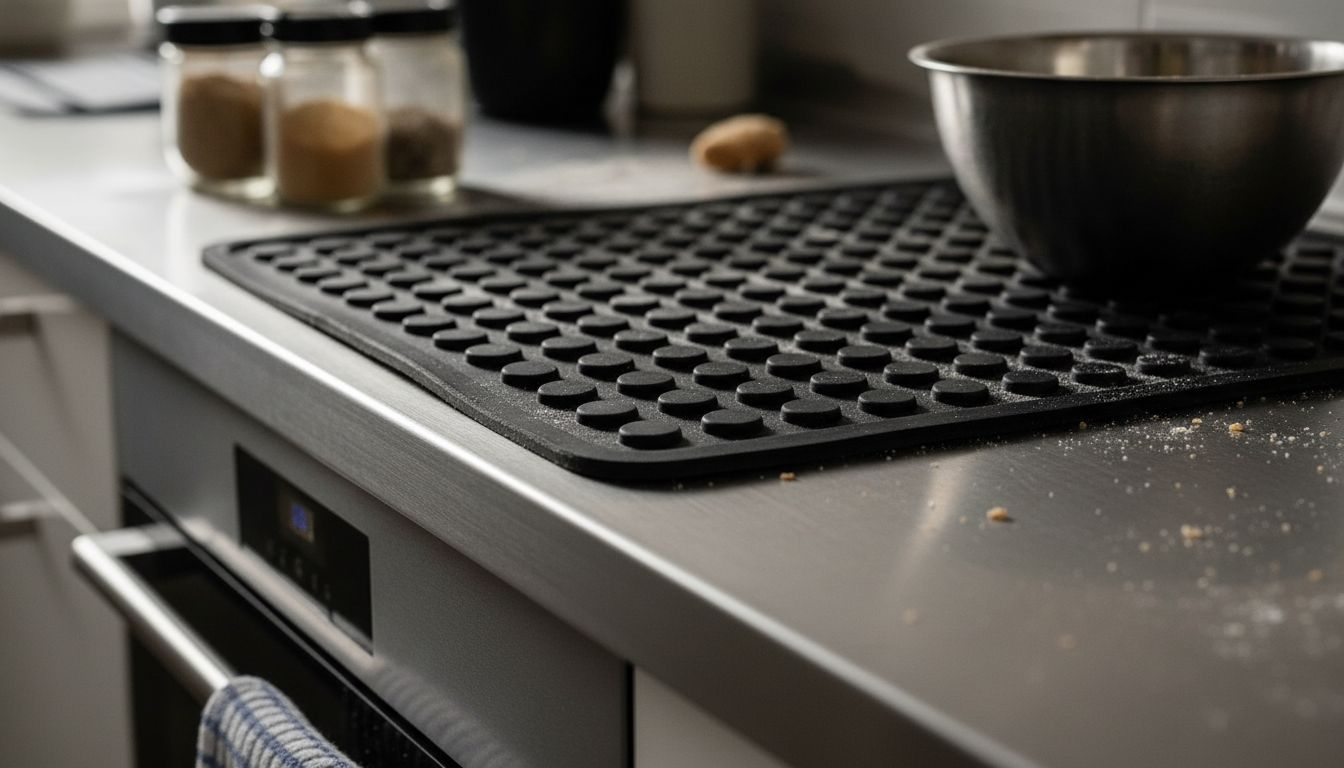
Silicone mats excel in hygiene compliance and chemical resistance. Their non-porous surface prevents bacterial growth and resists staining from acidic foods or harsh cleaning agents. Silicone offers good slip resistance (COF 0.6 to 0.7) and remains flexible across extreme temperature ranges. The main limitation involves durability under sharp object impacts, as silicone tears more easily than rubber when subjected to aggressive knife work.
Material comparison for commercial kitchen counters:
| Material | Slip Resistance (COF) | Durability Rating | Hygiene Compliance | Cost Level |
|---|---|---|---|---|
| Rubber | 0.7 to 0.9 | Excellent | FDA/NSF certified | Moderate to high |
| Silicone | 0.6 to 0.7 | Good | FDA approved | High |
| PVC | 0.5 to 0.6 | Moderate | Limited certification | Low |
| EVA Foam | 0.4 to 0.5 | Poor | Not food-safe | Very low |
PVC mats attract buyers with lower upfront costs but compromise on performance. Their slip resistance barely meets minimum thresholds (COF around 0.5 to 0.6), and most PVC options lack proper food contact certifications. These mats degrade faster under commercial kitchen conditions, requiring more frequent replacement that negates initial savings.
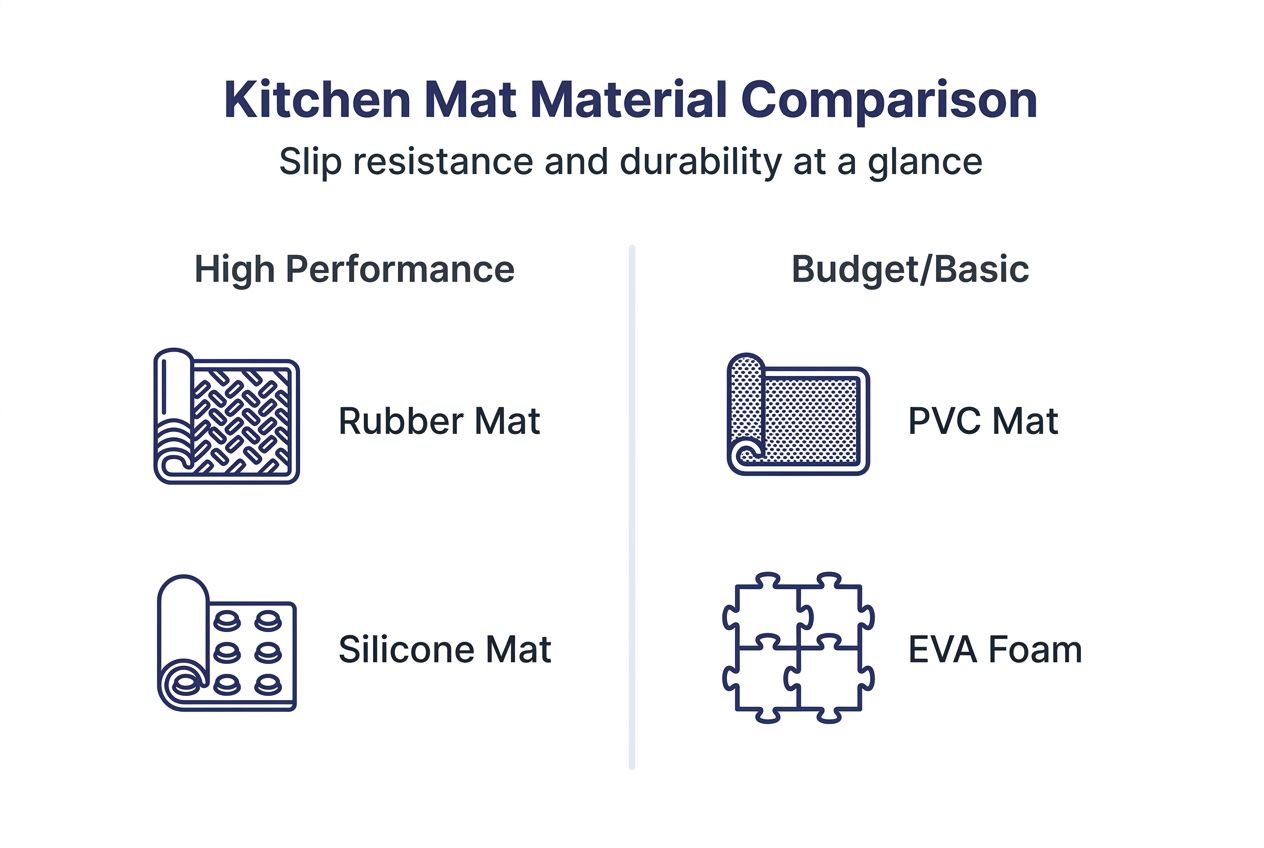
EVA foam mats provide cushioning comfort but fail safety requirements for counter surfaces. Their soft composition and low COF values (typically 0.4 to 0.5) make them unsuitable for commercial prep areas where reliable grip matters most. Reserve foam materials for anti-fatigue floor applications rather than counter protection.
Pro Tip: Match mat material to your specific counter tasks. Use rubber for high-impact prep stations with heavy cutting and hot pan contact, silicone for baking areas requiring precise temperature control, and reserve budget PVC only for low-risk dry storage organizing.
Key selection criteria when choosing the best commercial kitchen mats:
- Verify third-party certification documents for food safety compliance
- Request samples to test grip under wet and oily conditions
- Calculate total cost of ownership including expected replacement frequency
- Consider special needs like extreme temperature exposure or chemical contact
- Evaluate thickness based on counter clearance and equipment stability needs
Having debunked myths, practical installation and maintenance are next to ensure ongoing mat effectiveness.
Common misconceptions about non-slip mats
Kitchen managers frequently make purchasing decisions based on misleading product claims or incomplete information. Understanding these myths prevents wasted investment and safety gaps.
Myth 1: Thicker mats automatically prevent slipping better than thin ones. Reality shows that thickness alone does not guarantee slip resistance, as surface texture and friction coefficient matter far more. A thin rubber mat with aggressive tread patterns outperforms a thick smooth PVC mat in actual slip prevention. Excessive thickness can even create instability when items rock on soft surfaces, increasing rather than decreasing accident risk.
Myth 2: Antimicrobial-treated mats eliminate the need for regular cleaning. Antimicrobial additives slow bacterial growth but don’t prevent grease accumulation or remove existing contaminants. Even treated mats require daily cleaning to maintain their slip resistance properties. Marketing claims about “self-cleaning” or “maintenance-free” mats mislead buyers into neglecting essential hygiene protocols that keep both the mat and food preparation areas safe.
Myth 3: All mats claiming commercial-grade durability perform well under heavy kitchen use. Many products use vague durability claims without backing them with specific performance data or certifications. Genuine commercial-grade mats provide documented COF values, material composition details, and certification numbers from recognized bodies like NSF or FDA. Generic durability promises without supporting evidence usually indicate consumer-grade products unsuitable for professional kitchen demands.
- Always request specific COF test results rather than accepting general “non-slip” marketing language.
- Verify certification authenticity by checking registration numbers on official NSF or FDA databases.
- Compare warranty terms, as reputable manufacturers back superior products with longer coverage periods.
- Read independent reviews from other commercial kitchen operators rather than relying solely on supplier testimonials.
- Test samples in your actual working conditions before committing to large purchases.
“We initially bought thicker mats thinking they’d be safer, but they actually created more problems. Staff complained about unstable cutting surfaces, and we saw no reduction in accidents. Switching to certified rubber mats with proper COF ratings made the real difference.” – Commercial kitchen manager
Additional misconceptions worth addressing include beliefs that color affects slip resistance (it doesn’t, beyond visibility), that all rubber smells bad (high-quality vulcanized rubber has minimal odor), and that mats require special adhesives (properly sized mats stay in place through friction and weight alone). Get practical guidance in our tips for choosing non slip kitchen mats resource.
With installation and maintenance covered, we conclude with evidence of real-world effectiveness from case studies.
Installation and maintenance best practices
Proper installation and consistent care determine whether non-slip mats deliver their full safety potential throughout their service life. Even premium materials fail when incorrectly placed or poorly maintained.
Installation fundamentals start with surface preparation. Clean and dry the counter completely before placing the mat, as moisture or debris underneath prevents proper adhesion and creates air pockets that reduce stability. Position mats to cover high-risk zones where spills occur most frequently, typically around sinks and primary prep areas. Ensure edges lay completely flat without curling, as raised corners create tripping hazards and allow liquids to flow underneath.
Proper mat installation and regular cleaning schedules significantly extend mat life while maintaining high slip resistance. Follow these implementation steps:
- Measure counter dimensions accurately and order mats sized to fit without overhanging edges
- Allow new rubber mats to acclimate to room temperature for 24 hours before installation
- Place mats during low-traffic periods to ensure proper settling before heavy use begins
- Test stability by applying pressure at multiple points and checking for movement or gaps
- Mark mat positions if they require removal for deep counter cleaning
Cleaning protocols vary by material but share common principles. Daily maintenance involves wiping mats with hot water and approved food-safe detergent to remove surface grease and food particles. Weekly deep cleaning should include removal, thorough scrubbing of both mat and counter surfaces, and complete drying before reinstallation. Avoid harsh chemicals that degrade rubber or leave slippery residues.
Pro Tip: Create a visible cleaning log near each mat location. Staff members initial after daily wipes, helping maintain accountability and ensuring no mat goes uncleaned during busy periods when shortcuts tempt workers.
Inspection schedules catch wear before it compromises safety. Check mats weekly for these warning signs:
- Surface smoothing or texture loss in high-use areas
- Tears, cuts, or punctures that collect debris
- Edge curling or warping that creates trip hazards
- Discoloration indicating material degradation
- Persistent grease buildup that cleaning doesn’t remove
Replace mats showing significant wear rather than waiting for complete failure. The cost of a new mat is trivial compared to injury expenses and lost productivity from preventable accidents.
Implementation support matters for optimal results. Review our kitchen slip mat installation safety guide for detailed setup instructions, or consult our technical team for custom solutions. Learn specific techniques to install a non slip mat for kitchen worktop configurations in your facility.
Staff training completes the safety picture. Teach workers to recognize when mats need immediate attention, report damage promptly, and understand that mat effectiveness depends on their daily care habits. Include mat maintenance in standard operating procedures and new employee orientation.
After seeing the proven benefits, discover recommended commercial solutions in our promo section.
Case studies and real-world safety impact
Measurable results from commercial kitchens demonstrate how quality non-slip counter mats translate theory into practical safety improvements.
A regional restaurant chain implemented NSF-certified rubber counter mats across 12 locations in 2025. Use of NSF-certified mats reduced slip accidents by 37% within the first six months compared to the previous year. The operations manager reported that prep station incidents dropped from an average of 2.3 per month per location to just 1.4, saving an estimated $47,000 in workers’ compensation costs and lost productivity.
The compliance benefits proved equally valuable. Health inspections consistently noted improved hygiene practices, as the easy-to-clean mat surfaces helped staff maintain sanitation standards more reliably. Two locations that previously received minor violations for counter cleanliness achieved perfect scores after mat installation.
Key success factors identified:
- Investment in FDA and NSF approved materials that met food contact safety requirements
- Mandatory daily cleaning protocols enforced through supervisor checklists
- Quarterly mat inspections with prompt replacement when wear appeared
- Staff training emphasizing the connection between mat care and personal safety
A university dining facility achieved similar outcomes with silicone mats in baking production areas. The heat resistance allowed mats to remain in place during high-temperature operations, while the non-porous surface simplified cleanup after flour and sugar spills. Kitchen staff reported increased confidence when handling hot sheet pans, as the consistent grip eliminated unexpected sliding that had previously caused minor burns.
“Our injury rate dropped noticeably after we switched to certified non-slip mats. More importantly, staff morale improved because team members felt we took their safety seriously. That investment in proper equipment paid for itself in reduced turnover alone.” – Food service director
Cost analysis from these implementations shows total expenses including purchase, installation, and maintenance running approximately $15 to $25 per linear foot annually. Compare this to average slip and fall injury costs exceeding $20,000 per incident, and the return on investment becomes clear. Even a single prevented accident justifies years of proper mat deployment.
Hospitality operations see additional benefits through enhanced kitchen efficiency. When prep staff trust their work surfaces, they move faster and focus better on food quality rather than constantly worrying about slipping hazards. Service delays decreased at facilities implementing comprehensive mat programs, contributing to improved customer satisfaction scores.
These real-world examples confirm that selecting appropriate best non slip restaurant mats creates measurable value across safety, compliance, operational efficiency, and financial performance metrics. The evidence supports treating counter mats as essential safety equipment rather than optional accessories.
Now, solidify your knowledge with quick answers to common questions in the FAQ section.
Explore top-quality non-slip mats for your kitchen counters
Mats4U offers commercial-grade non-slip counter mats engineered to meet the safety standards and hygiene requirements discussed throughout this guide. Our Comfort Premier™ mat combines durable rubber construction with certified slip resistance exceeding COF 0.7, while the Comfort Flow™ anti-fatigue mat provides drainage capabilities for wet prep areas. Both products carry FDA and NSF certifications for food contact safety.
Our technical team helps you select appropriate materials and sizes for your specific counter configurations. We provide installation guidance and maintenance protocols that extend mat lifespan while preserving safety performance. Free delivery on orders over $100 makes equipping your entire facility affordable and convenient.
Explore our complete selection at Mats4U commercial mats to find solutions tailored to your kitchen’s unique demands. Whether you need heat-resistant options for cooking lines or chemical-resistant mats for cleaning stations, our inventory covers every commercial kitchen application.
What is the coefficient of friction (COF) and why is it important?
COF measures the amount of friction between two surfaces, with higher numbers indicating greater resistance to sliding. In commercial kitchens, a COF of 0.6 or above ensures mats provide adequate grip even when wet or contaminated with cooking oils. This threshold represents the minimum safety standard recommended by OSHA for preventing slip accidents in food service environments.
How often should non-slip kitchen counter mats be cleaned?
Clean mats daily in high-traffic prep areas using hot water and food-safe detergent to remove grease buildup. Weekly deep cleaning should include complete mat removal, thorough scrubbing of both surfaces, and inspection for wear or damage. Following these protocols maintains optimal slip resistance and extends mat service life as detailed in our kitchen slip mat installation safety guide.
Are thicker mats better for preventing slips on kitchen counters?
Slip resistance depends primarily on surface texture and material properties rather than thickness. Thickness alone does not guarantee slip resistance because friction coefficient and tread patterns matter more. Focus on certified COF values above 0.6 when selecting mats, as excessive thickness can actually create instability for cutting tasks and equipment placement.
What standards should a non-slip kitchen counter mat meet for commercial use?
Commercial kitchen mats require FDA approval for food contact safety and NSF certification for sanitary design compliance. FDA and NSF certifications ensure mats are safe for food contact and meet hygiene standards required by health inspectors. Additionally, mats should demonstrate COF values of 0.6 or higher according to OSHA slip resistance guidelines for workplace safety.


