


A single unclean rubber mat can compromise hygiene in even the busiest American commercial spaces. Facility managers know that high foot traffic means constant exposure to dirt, spills, and germs, making regular deep cleaning vital. With over eighty percent of facility-related complaints linked to visible dirt and odor, choosing the right cleaning method for rubber mats can directly impact reputation. This guide delivers practical steps for maintaining a spotless appearance while meeting stringent health standards.
Table of Contents
- Step 1: Gather Cleaning Supplies and Prepare the Area
- Step 2: Remove Loose Debris from Rubber Mats
- Step 3: Apply the Best Rubber Mat Cleaner Evenly
- Step 4: Scrub and Rinse Mats Thoroughly
- Step 5: Inspect Mats for Cleanliness and Let Dry
Quick Summary
| Key Point | Explanation |
|---|---|
| 1. Gather specific tools | Assemble microfiber cloths, scrub brushes, rubber mat cleaner, and gloves to ensure effective cleaning. |
| 2. Remove loose debris first | Sweep or vacuum to eliminate dirt and particles before applying cleaning solutions for better results. |
| 3. Apply cleaner evenly | Use a spray bottle or mop for uniform distribution of cleaner, avoiding oversaturation on the mat. |
| 4. Scrub and rinse thoroughly | Use soft brushes to eliminate dirt and rinse with clean water to avoid residue and slip hazards. |
| 5. Inspect and air dry mats | Check for cleanliness, and let mats dry completely in a ventilated area to prevent mildew formation. |
Step 1: Gather Cleaning Supplies and Prepare the Area
Successfully cleaning commercial rubber mats starts with strategic preparation. In this stage, you will collect all necessary cleaning tools and set up your workspace for maximum efficiency.
Start by assembling your cleaning arsenal. You will need specific supplies tailored for rubber mat maintenance. Proper supply selection involves gathering microfiber cloths, soft-bristled scrub brushes, commercial rubber mat cleaner, a bucket, warm water, protective gloves, and disposable towels. Check that your cleaning solutions are compatible with rubber surfaces to prevent material damage.
Next, prepare your work area by removing any furniture or obstacles around the rubber mats. Clear a staging area where you can place your cleaning supplies within easy reach. Inspect the mat thoroughly for any significant debris, large dirt patches, or areas requiring special attention. Routine cleaning preparation involves pulling trash and ensuring your workspace is organized before beginning the actual cleaning process.
Here is a quick comparison of essential rubber mat cleaning tools:
| Tool | Typical Use | Key Advantage |
|---|---|---|
| Microfiber Cloth | Wiping surfaces | Reduces streaks and lint |
| Scrub Brush | Lifting embedded dirt | Reaches textured grooves |
| Rubber Mat Cleaner | Removing stains/disinfecting | Protects mat material |
| Protective Gloves | Hand safety | Prevents chemical exposure |
| Disposable Towels | Drying mat and spills | Promotes hygienic cleanup |
Pro Tip: Always keep a clean, dry towel nearby to immediately wipe up any excess moisture and prevent potential slip hazards during the mat cleaning process.
Step 2: Remove Loose Debris from Rubber Mats
Before applying any cleaning solution, you must effectively remove loose debris from your commercial rubber mats. This crucial first step ensures a more thorough and efficient cleaning process.
Effective debris removal begins with a systematic approach. Start by using a soft bristled broom or commercial rubber mat brush to sweep away loose dirt, dust, sand, and small particulates. Work methodically across the entire mat surface using gentle sweeping motions that move debris toward a central collection point. For larger debris like paper scraps or small objects, manually pick these up and dispose of them properly.
If your rubber mat is in a high traffic area, consider using a commercial vacuum with a soft brush attachment to collect fine particles without damaging the mat surface. Ensure the vacuum setting is appropriate for rubber surfaces to prevent scratching or unnecessary wear. Surface debris techniques emphasize the importance of removing loose contaminants before applying any liquid cleaning treatments.
Pro Tip: Invest in a microfiber dust mop for quick daily debris removal to prevent dirt buildup and extend the life of your commercial rubber mats.
Step 3: Apply the Best Rubber Mat Cleaner Evenly
Applying rubber mat cleaner requires precision and care to ensure a thorough and effective cleaning process. Your goal is to distribute the cleaning solution uniformly across the entire mat surface without oversaturating or causing potential damage.
Specialized cleaning techniques recommend starting with a high quality rubber mat cleaner specifically designed for commercial environments. Pour a small amount of cleaner into a clean bucket or spray bottle. If using a spray bottle, select a wide spray pattern to ensure even distribution. Hold the bottle approximately 12 inches from the mat surface and apply using smooth horizontal and vertical sweeping motions that overlap slightly to prevent missed areas.
For larger commercial mats, consider using a microfiber mop or soft applicator pad to spread the cleaning solution. Advanced rubber cleaning processes emphasize the importance of working in small sections to maintain control and ensure complete coverage. Apply gentle pressure while moving the applicator to work the cleaning solution into the mat’s textured surface without causing unnecessary wear.
Pro Tip: Always test your cleaning solution on a small inconspicuous area first to ensure compatibility and prevent potential discoloration or damage to your commercial rubber mat.
Step 4: Scrub and Rinse Mats Thoroughly
Thoroughly scrubbing and rinsing your commercial rubber mats is critical to removing embedded dirt and ensuring a completely clean surface. This step requires careful technique and attention to detail to achieve optimal cleaning results.
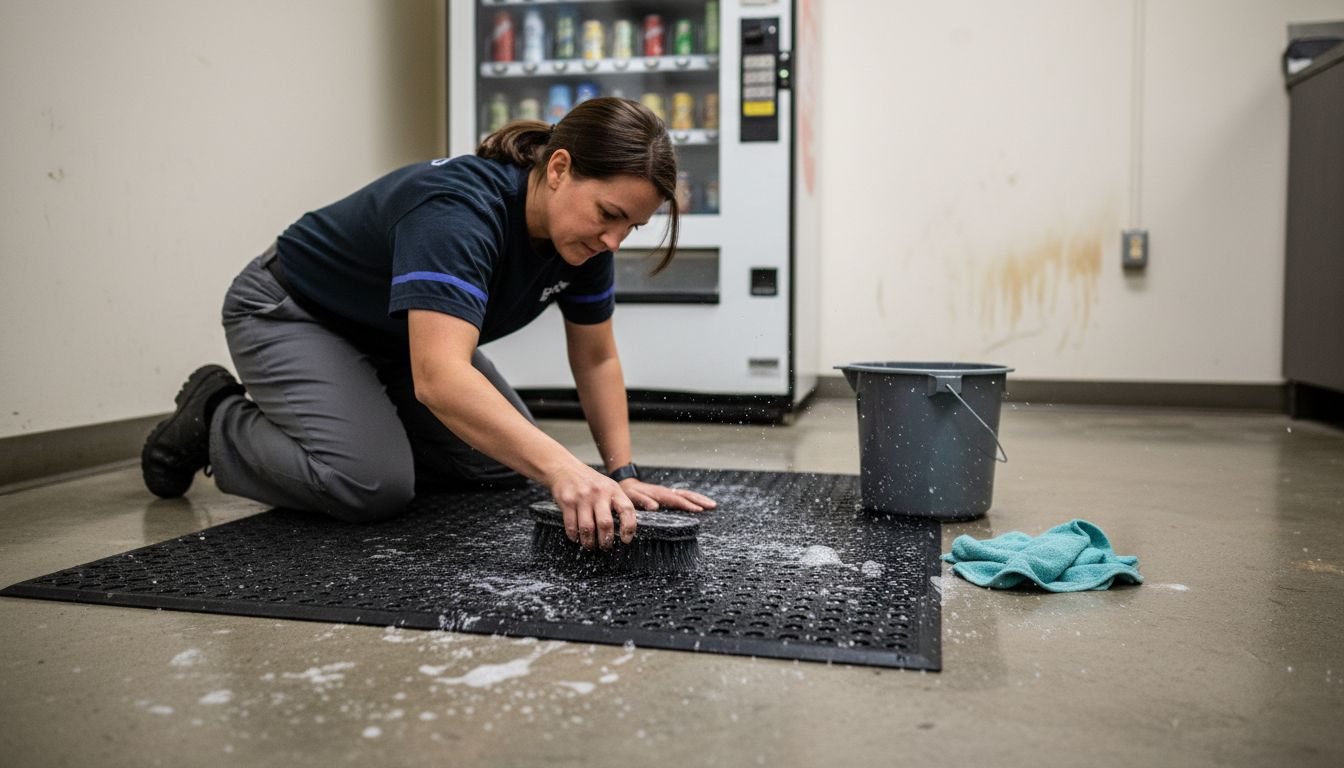
Thorough cleaning procedures recommend using a soft bristled scrub brush with firm but controlled circular motions. Work systematically across the mat surface applying moderate pressure to agitate and lift dirt from the rubber’s textured areas. Focus on high traffic zones and any visible stained sections where grime tends to accumulate most heavily.
After scrubbing, rinse the mat completely using clean water. Surface cleaning techniques emphasize using potable water to eliminate all cleaning solution residue. Use a clean mop or soft cloth to remove cleaning agents thoroughly. Ensure water runs clear and no soapy film remains on the mat surface to prevent potential slip hazards and maintain the mat’s integrity.
Pro Tip: Allow rubber mats to air dry completely in a well ventilated area to prevent moisture buildup and potential mildew formation.
Step 5: Inspect Mats for Cleanliness and Let Dry
The final stage of rubber mat cleaning involves a careful visual inspection and proper drying to ensure complete cleanliness and prevent potential microbial growth. Your goal is to confirm that all dirt has been removed and the mat is ready for immediate use.
Surface inspection protocols recommend conducting a thorough visual assessment under good lighting conditions. Examine the entire mat surface closely looking for any remaining dirt patches, soap residue, or areas that might require additional cleaning. Check high traffic zones and textured sections where grime can hide more easily. Run your hand gently across the surface to feel for any sticky or unclean areas that might have been missed during initial cleaning.
Cleaning and drying standards emphasize the importance of complete air drying. Position the mat in a well ventilated area with good air circulation. If possible, place the mat vertically or at an angle to allow maximum water drainage and faster drying. Avoid direct sunlight which can potentially degrade rubber materials and ensure the mat is completely dry before returning it to its original location.
Below is a summary of drying methods for commercial rubber mats:
| Method | Effectiveness | Potential Risks |
|---|---|---|
| Air Drying | Thorough moisture removal | Slow process |
| Vertical Position | Faster drainage | Possible shape warping |
| Direct Sunlight | Very fast drying | Rubber degradation |
Pro Tip: Use a clean white towel to do a final wipe test after cleaning to quickly identify any remaining dirt or cleaning residue.
Protect Your Investment with the Right Commercial Rubber Mats
Cleaning commercial rubber mats effectively is essential to maintain safety and appearance in busy work environments. As the article highlights, proper debris removal, the right rubber mat cleaner, and careful drying all contribute to mat longevity and cleanliness. However, if mats are worn out, damaged, or not designed for heavy traffic, even the best cleaning methods will fall short.
At Mats4U, we understand the challenges businesses face in keeping their floors safe and hygienic. Explore our wide selection of Commercial Mats that are crafted to withstand demanding conditions while providing comfort and durability. Complement your cleaning routine with quality Accessories such as mat cleaners and replacement parts designed specifically for rubber surfaces. Start protecting your floors today by visiting Mats4U.com where you will find reliable solutions made in the USA, backed by competitive pricing and free delivery on orders over $100.
Don’t wait until your mats show wear and compromise safety. Choose the best commercial mats now to enhance your cleaning efforts and maintain a professional, safe space for employees and visitors alike.
Frequently Asked Questions
What type of cleaner is best for commercial rubber mats?
The best cleaner for commercial rubber mats is a specialized rubber mat cleaner that is pH-balanced and designed for use on rubber surfaces. To ensure effective cleaning, always select a cleaner that protects the mat’s integrity and prevents damage.
How do I effectively remove loose debris from rubber mats?
Begin by using a soft-bristled broom or a commercial rubber mat brush to sweep away dirt and dust. Make sure to work methodically across the mat to gather all debris in a central location for easy disposal.
What steps should I follow to apply a rubber mat cleaner?
Pour a small amount of rubber mat cleaner into a bucket or spray bottle and apply it evenly across the mat surface. Use a microfiber mop or soft applicator pad to distribute the cleaner in overlapping sweeping motions for complete coverage.
How can I tell if my rubber mats are thoroughly clean?
Perform a visual inspection under good lighting to check for any remaining dirt or soap residue. Run your hand across the surface to feel for any sticky areas, ensuring that the mats are completely clean before use.
What drying methods are recommended after cleaning rubber mats?
Air drying in a well-ventilated area is the best method to ensure thorough moisture removal. For faster drying, position the mats vertically to eliminate water and prevent mildew formation altogether.
Recommended
- The Ultimate Guide to Cleaning Rubber Flooring for Longevity and Safet – Mats4U USA
- A Practical Guide to Cleaning Rubber Floor Surfaces – Mats4U USA
- How to Clean Rubber Floors: A Practical Step-by-Step Guide – Mats4U USA
- Commercial Mat Cleaning Guide for Business Floors – Mats4U USA
- Cleaning Materials Melbourne | Onyx Removals


