


Slip-and-fall accidents cause 30% of restaurant worker injuries, making them the leading cause of workplace incidents in commercial kitchens. These preventable accidents cost businesses thousands in medical claims, lost productivity, and potential lawsuits. The right rubber mats dramatically reduce these risks while improving worker comfort and kitchen hygiene. This guide helps you identify essential features, maintenance practices, and installation strategies to select mats that protect your team and enhance operational efficiency in high-traffic kitchen environments.
Table of Contents
- Why Rubber Mats Are Essential For Restaurant Kitchens
- Key Features To Look For In Rubber Mats For Restaurant Kitchens
- How To Maintain And Care For Rubber Mats To Maximize Safety And Lifespan
- Choosing And Installing Rubber Mats For Optimal Kitchen Safety And Comfort
- Enhance Your Kitchen Safety With Premium Rubber Mats From Mats4U
- What Are The Best Types Of Rubber Mats For Commercial Kitchens?
- How Often Should Rubber Mats Be Cleaned In Restaurant Kitchens?
- Can Rubber Mats Help Reduce Employee Fatigue In Commercial Kitchens?
- What Factors Affect The Lifespan Of Rubber Mats In Restaurant Kitchens?
Key takeaways
| Point | Details |
|---|---|
| Accident reduction | Rubber mats reduce slip-and-fall incidents by up to 50% in commercial kitchens. |
| Maintenance impact | Proper cleaning and care extend mat lifespan while maintaining hygiene standards. |
| Selection criteria | Balance slip resistance, comfort, drainage, and durability for your specific kitchen needs. |
| Multiple mat types | Different rubber mats serve prep areas, cooking stations, and dishwashing zones. |
| Safety investment | Quality mats improve worker safety, reduce fatigue, and boost operational efficiency. |
Why rubber mats are essential for restaurant kitchens
Restaurant kitchens present unique safety challenges that demand specialized flooring solutions. Grease splatters, water spills, food debris, and constant foot traffic create hazardous conditions throughout every shift. Workers navigate these risks while carrying hot pans, sharp knives, and heavy equipment, making stable footing critical for preventing injuries.
Rubber mats reduce slip-and-fall accidents by 30 to 50% according to research from the National Center for Biotechnology Information. This dramatic reduction stems from mats’ textured surfaces that maintain traction even when wet or greasy. The cushioned construction also absorbs impact, reducing injury severity when falls do occur.
Beyond safety, rubber mats address multiple operational concerns:
- Anti-fatigue properties reduce leg and back strain during 8 to 12 hour shifts
- Drainage holes prevent liquid pooling that breeds bacteria and creates slip hazards
- Easy-to-clean surfaces maintain hygiene standards required by health inspectors
- Durable construction withstands constant foot traffic and equipment movement
- Insulation properties reduce cold transfer from concrete floors
Common kitchen hazards that rubber mats effectively mitigate include cooking oil accumulation near fryers, water runoff from dishwashing stations, condensation around refrigeration units, and food particle buildup in prep areas. Each zone requires specific mat characteristics to address its unique challenges. For comprehensive guidance on selecting appropriate mats for different kitchen zones, explore our kitchen slip mat installation safety guide.
Industry experts emphasize that quality mats represent essential safety infrastructure rather than optional accessories. One restaurant safety consultant stated:
Investing in proper rubber mats is non-negotiable for any serious kitchen operation. The cost of quality mats pales compared to a single worker’s compensation claim or the operational disruption from a serious injury.
The financial case for rubber mats extends beyond accident prevention. Workers standing on cushioned surfaces report less fatigue, leading to improved focus and productivity throughout their shifts. Reduced discomfort also contributes to better employee retention in an industry struggling with high turnover rates. For detailed information on how slip resistant mats improve kitchen safety and worker wellbeing, review our specialized safety resources.
Key features to look for in rubber mats for restaurant kitchens
Selecting effective rubber mats requires understanding which physical and performance characteristics deliver real-world benefits in demanding commercial environments. Not all mats provide equal protection, and choosing based solely on price often leads to premature replacement and continued safety risks.
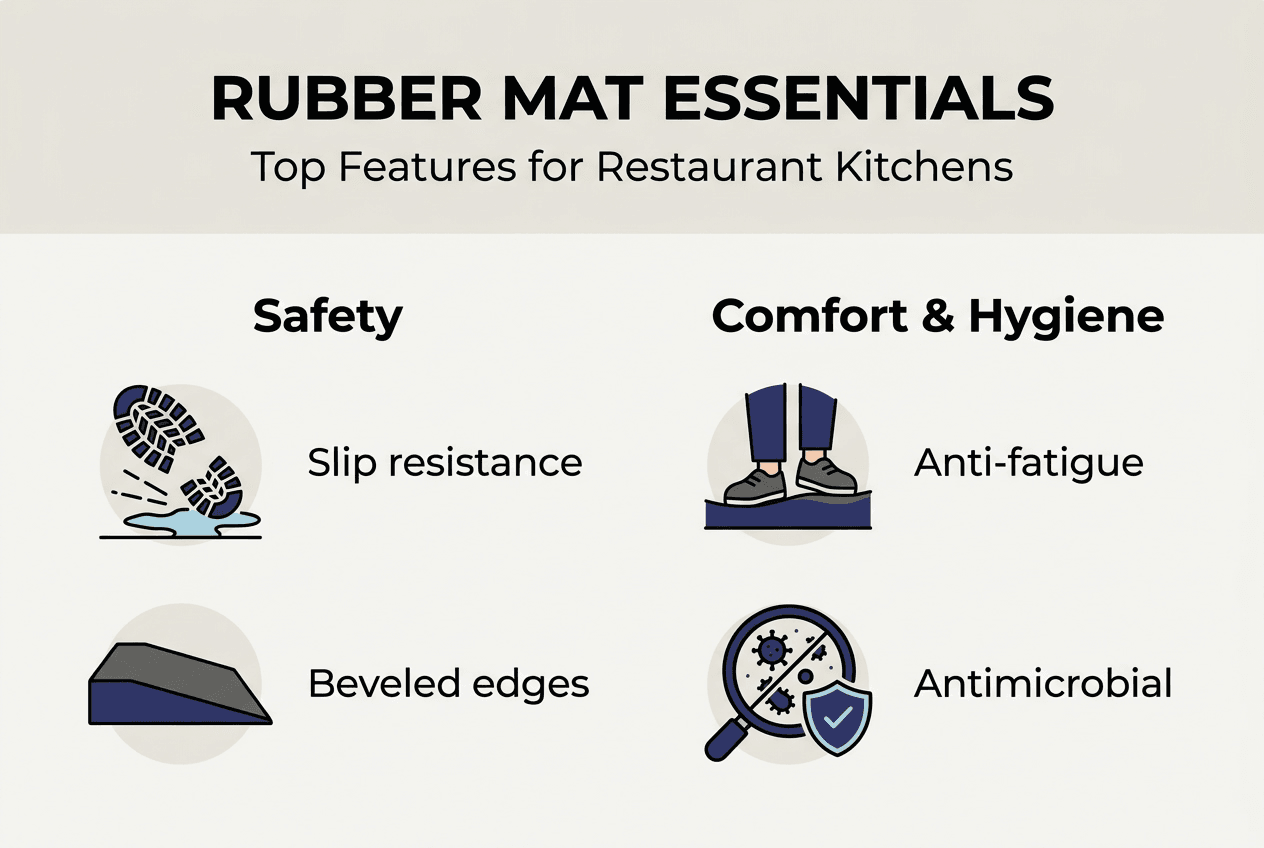
Slip resistance stands as the most critical safety feature. Look for mats with textured surfaces or raised patterns that maintain grip when wet or contaminated with grease. The coefficient of friction should meet or exceed 0.5 for dry conditions and 0.4 for wet surfaces, ensuring adequate traction during typical kitchen operations. Testing certifications from organizations like the National Floor Safety Institute provide independent verification of slip resistance claims.
Anti-fatigue cushioning significantly impacts worker comfort during extended standing periods. Quality mats feature 0.5 to 0.75 inch thickness with resilient rubber compounds that compress under foot pressure then quickly recover. This dynamic support reduces stress on joints and muscles compared to standing directly on hard flooring. Workers experience less leg pain, back discomfort, and overall fatigue when proper anti-fatigue mats support them throughout their shifts.
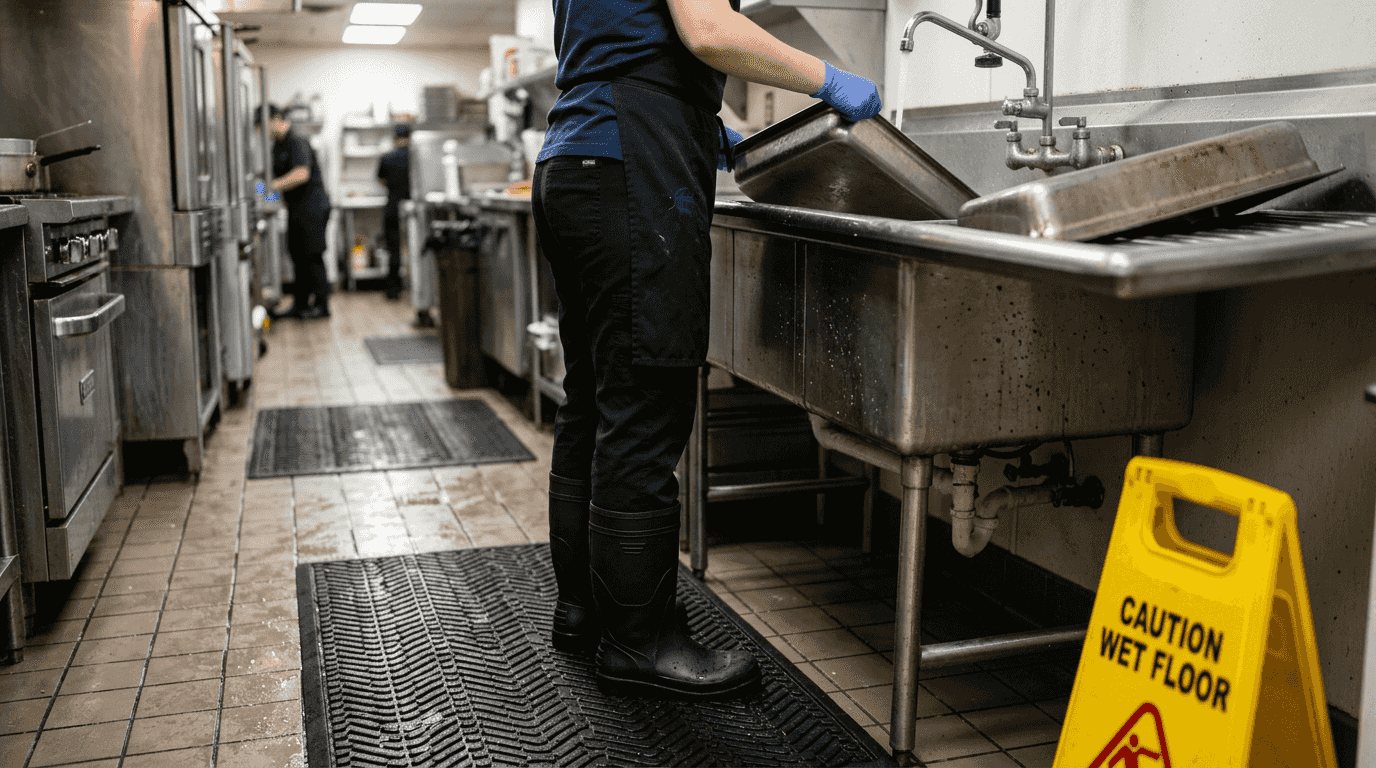
Durability and cleaning ease determine long-term value and hygiene maintenance. Commercial-grade rubber resists degradation from cleaning chemicals, oils, and temperature fluctuations common in kitchen environments. Smooth or lightly textured surfaces clean more easily than deeply grooved patterns that trap debris. Proper mat maintenance extends lifespan and maintains hygiene standards according to National Restaurant Association research.
Drainage capabilities prevent liquid accumulation that creates both slip hazards and bacterial breeding grounds. Perforated or grid-style mats allow water, oils, and other liquids to flow through rather than pooling on the surface. This design keeps the walking surface drier while facilitating easier cleaning underneath the mat. For comprehensive advice on choosing the best commercial kitchen mats for your specific needs, consult our detailed selection guide.
Antimicrobial properties provide additional hygiene protection in food preparation environments. Some rubber compounds include additives that inhibit bacterial and fungal growth, reducing odors and contamination risks. While not a replacement for regular cleaning, antimicrobial treatment adds an extra layer of sanitary protection.
| Feature | Benefit | Ideal Application |
|---|---|---|
| Slip resistance | Prevents falls on wet/greasy surfaces | All kitchen areas |
| Anti-fatigue cushioning | Reduces worker strain and discomfort | Prep stations, cooking lines |
| Drainage holes | Eliminates liquid pooling | Dishwashing, beverage areas |
| Chemical resistance | Withstands cleaning agents | High-sanitation zones |
| Beveled edges | Prevents tripping hazards | High-traffic pathways |
Pro Tip: Test mat samples in your actual kitchen environment before purchasing large quantities. Place samples in your highest-risk areas for one week to evaluate slip resistance, comfort, and cleaning requirements under real working conditions.
Edge design affects both safety and durability. Beveled or ramped edges reduce tripping hazards where mats meet floor surfaces. Reinforced borders resist curling and cracking that occurs with repeated foot traffic and equipment movement. For specialized guidance on anti slip kitchen mat selection and placement, review our expert recommendations.
How to maintain and care for rubber mats to maximize safety and lifespan
Establishing consistent cleaning and maintenance routines preserves mat performance while ensuring ongoing safety and hygiene compliance. Neglected mats accumulate grease, food particles, and bacteria that compromise both traction and sanitation standards.
Daily cleaning procedures should include:
- Remove loose debris by lifting mats and sweeping underneath
- Rinse mat surfaces with hot water to remove fresh spills and food particles
- Apply pH-neutral detergent designed for rubber materials
- Scrub textured surfaces with a stiff brush to dislodge trapped contaminants
- Rinse thoroughly with clean water to remove all detergent residue
- Allow mats to air dry completely before returning to service positions
- Inspect for damage, excessive wear, or reduced slip resistance
This routine takes 10 to 15 minutes per mat but dramatically extends usable life while maintaining sanitary conditions. Skipping daily cleaning allows buildup that becomes progressively harder to remove and creates health code violations.
Periodic deep cleaning removes stubborn residues and odors that daily maintenance misses. Monthly or quarterly deep cleaning should involve:
- Remove mats from kitchen and transport to cleaning area
- Pre-treat heavily soiled sections with degreasing solution
- Pressure wash both sides using appropriate PSI settings for rubber (1200 to 1500 PSI maximum)
- Apply enzymatic cleaner to eliminate organic matter and odors
- Rinse completely and allow extended drying time before reinstallation
Inspection schedules identify wear patterns and safety concerns before they cause problems. Weekly visual checks should note surface damage, edge deterioration, loss of slip resistance, and any areas where the mat no longer lies flat. Proper mat maintenance extends lifespan and maintains hygiene standards, making regular inspections a worthwhile investment.
Replacement becomes necessary when mats show these warning signs:
- Smooth, worn areas where texture has disappeared
- Cracks, tears, or holes in the rubber material
- Permanent curling or warping that creates tripping hazards
- Persistent odors that cleaning cannot eliminate
- Visible mold or mildew growth within mat structure
Most quality rubber mats last 2 to 5 years in commercial kitchens depending on traffic levels and maintenance quality. High-traffic areas like cooking lines may require more frequent replacement than lower-use prep stations.
Pro Tip: Maintain a mat rotation system where you swap mats between high-traffic and lower-traffic areas every 3 to 6 months. This practice distributes wear more evenly across your mat inventory and extends overall lifespan.
Cleaning product selection directly impacts mat longevity and performance. Avoid harsh chemicals like bleach, ammonia, or petroleum-based solvents that degrade rubber compounds. Instead, choose pH-neutral detergents specifically formulated for rubber materials. For detailed maintenance protocols, consult our kitchen slip mat installation safety guide and restaurant rubber mats safety resources.
Choosing and installing rubber mats for optimal kitchen safety and comfort
Strategic selection and proper installation maximize the safety and operational benefits rubber mats provide. A systematic approach ensures you match mat characteristics to specific kitchen zones while avoiding common mistakes that compromise performance.
Begin by mapping your kitchen layout and identifying high-risk areas requiring mat coverage. Priority zones typically include cooking lines where grease accumulates, dishwashing stations with constant water exposure, prep areas with extended standing requirements, and pathways between workstations. Measure each area carefully, accounting for equipment placement and door swing clearances.
Compare rubber mat types based on your specific needs:
| Mat Type | Thickness | Surface Pattern | Best For | Key Advantage |
|---|---|---|---|---|
| Solid anti-fatigue | 0.5-0.75 inch | Textured | Prep stations | Maximum comfort |
| Drainage/grid | 0.5-1 inch | Open holes | Dishwashing | Liquid management |
| Grease-resistant | 0.375-0.5 inch | Deep grooves | Cooking lines | Oil resistance |
| General purpose | 0.375-0.5 inch | Light texture | Pathways | Versatile use |
Installation directly affects mat performance and safety. Follow these guidelines:
- Clean and dry floor surfaces completely before mat placement
- Position mats to cover entire work zones without gaps that collect debris
- Ensure beveled edges face traffic flow direction to prevent tripping
- Avoid overlapping mats, which creates unstable surfaces and tripping hazards
- Secure mats in high-traffic areas using appropriate adhesive or anchoring systems
- Leave small gaps between mats and walls to prevent moisture trapping
Rubber mats significantly reduce slip-and-fall accidents when properly installed, but poor placement negates their safety benefits. Mats that shift, curl, or create uneven surfaces introduce new hazards while failing to address the original risks.
Your selection checklist should verify:
- Slip resistance rating appropriate for your wettest, greasiest conditions
- Comfort level adequate for your longest shifts and heaviest workers
- Durability rating matching your kitchen’s traffic intensity
- Hygiene features suitable for your sanitation requirements
- Drainage capacity aligned with liquid exposure levels
- Size dimensions that fit your workspace without cutting or gaps
Common mistakes to avoid when selecting and installing kitchen mats:
- Choosing thin, economy mats that compress quickly and lose cushioning
- Installing solid mats in wet areas where drainage mats perform better
- Neglecting edge protection that prevents premature deterioration
- Selecting mats based solely on initial cost rather than lifecycle value
- Failing to account for cleaning and maintenance requirements
- Using mats with smooth surfaces in grease-prone areas
For comprehensive guidance on best commercial kitchen mats selection and installation of kitchen non skid mats, explore our detailed resources. Professional installation support ensures your mats deliver maximum safety and performance benefits from day one.
Enhance your kitchen safety with premium rubber mats from Mats4U
Mats4U offers commercial-grade rubber mats engineered specifically for demanding restaurant environments. Our products combine superior slip resistance with anti-fatigue comfort that supports your team through the longest, busiest shifts. Each mat features durable construction that withstands heavy foot traffic, equipment movement, and rigorous daily cleaning while maintaining its safety properties.
Explore our Cushion Complete Mat for exceptional anti-fatigue comfort in prep areas and cooking lines. The Comfort Premier Mat delivers premium workplace support for extended standing periods. For wet environments, our Comfort Flow Anti-Fatigue Drainage Mat combines cushioning with efficient liquid management. Free delivery on orders over $100 makes upgrading your kitchen safety both affordable and convenient.
What are the best types of rubber mats for commercial kitchens?
The best rubber mat type depends on your specific kitchen zone requirements. Anti-fatigue mats with 0.5 to 0.75 inch cushioning excel in prep stations and cooking lines where workers stand for extended periods. Drainage mats with perforated or grid designs perform best in dishwashing areas and beverage stations where water constantly contacts the floor. Grease-resistant mats with deep grooves and chemical-resistant compounds suit cooking lines near fryers and ranges. Your optimal selection balances slip resistance, comfort, drainage capacity, and durability based on each area’s unique challenges. For detailed comparisons, review our guide to best commercial kitchen mats.
How often should rubber mats be cleaned in restaurant kitchens?
Daily cleaning maintains hygiene standards and preserves mat performance in commercial kitchens. Remove debris, rinse surfaces, apply pH-neutral detergent, scrub textured areas, and allow complete drying before returning mats to service. This routine prevents grease and food particle buildup that compromises both traction and sanitation. Monthly or quarterly deep cleaning with pressure washing and enzymatic treatments removes stubborn residues and odors. High-traffic areas or zones with heavy grease exposure may require more frequent deep cleaning. Consistent maintenance extends mat lifespan while ensuring ongoing compliance with health codes. Consult our kitchen slip mat maintenance guide for detailed protocols.
Can rubber mats help reduce employee fatigue in commercial kitchens?
Yes, anti-fatigue rubber mats significantly reduce leg, back, and joint strain during extended standing periods. The cushioned construction compresses under foot pressure then recovers, creating dynamic support that encourages subtle muscle movement and improved circulation. Workers report less discomfort and fatigue when standing on quality anti-fatigue mats compared to hard flooring surfaces. This comfort translates to improved focus, productivity, and employee satisfaction throughout long shifts. Mat thickness, rubber density, and surface design all affect anti-fatigue performance. Premium options like our anti-fatigue Cushion Complete Mat provide superior comfort for the most demanding kitchen environments.
What factors affect the lifespan of rubber mats in restaurant kitchens?
Mat lifespan depends primarily on maintenance quality, traffic intensity, and material grade. Proper mat maintenance extends lifespan and maintains hygiene standards according to industry research. Daily cleaning prevents accelerated wear from abrasive debris and corrosive contaminants. Proper installation that prevents curling and movement reduces edge damage. High-traffic cooking lines wear mats faster than lower-use prep areas. Quality commercial-grade rubber withstands 2 to 5 years of heavy use when properly maintained, while economy mats often fail within months. Harsh cleaning chemicals, excessive heat exposure, and inadequate thickness also shorten usable life. For guidance on maximizing rubber floor mats lifespan, review our maintenance resources.


