


TL;DR:
- Super mats offer enhanced durability, slip resistance, and moisture control for high-traffic areas.
- Selecting the right mat depends on environment, hazards, branding, and maintenance needs.
- Proper investment reduces long-term costs, liability, and improves safety and visitor perception.
Selecting the wrong floor mat for a high-traffic facility is not just a cosmetic problem. A mat that fails under daily pressure creates real slip hazards, accelerates floor damage, and sends the wrong message to every visitor who walks through your door. Super mats offer a step up in durability, moisture control, and safety performance over standard options. But not every product labeled “heavy duty” delivers on that promise. This guide breaks down what defines a true super mat, profiles the top options available for commercial use, and gives you a clear decision framework to match the right mat to your facility.
Table of Contents
- What makes a mat ‘super’? Key selection criteria
- Top super mat options for high-traffic facilities
- Super mat comparison table: Features at a glance
- Which super mat fits your facility? Making the final call
- What most facility managers miss about super mats
- Find your ideal super mat solution at Mats4U
- Frequently asked questions
Key Takeaways
| Point | Details |
|---|---|
| Define super mat criteria | Prioritize slip-resistance, durability, and cleanability when choosing mats for commercial spaces. |
| Compare top options | Evaluate products side-by-side for features like water absorption, branding, and maintenance needs. |
| Match mats to facility | Tailor your choice to traffic levels, environment, and staff feedback for optimal results. |
| Don’t overlook ROI | Investing in higher-quality mats reduces replacement costs and liability over time. |
What makes a mat ‘super’? Key selection criteria
Before evaluating specific products, it helps to define the standard. A super mat is not just thicker or heavier than a regular mat. It performs across multiple critical dimensions simultaneously: moisture management, surface traction, long-term durability, ease of maintenance, and where applicable, custom branding capability.
Facility managers focused on improving workplace safety know that high-performance mats reduce workplace slip and fall incidents significantly. That translates directly to reduced liability exposure and fewer worker compensation claims. Safety is non-negotiable, but it is only one piece of the evaluation.
Here are the core criteria to assess when selecting a super mat for commercial use:
- Slip resistance: Look for textured or bi-level surfaces that grip footwear even when wet.
- Water and dirt absorption: High-pile fiber systems trap moisture below the walking surface, keeping floors dry.
- Durability: Mats used in high-traffic areas need to withstand thousands of footfalls per day without deforming.
- Cleanability: Machine-washable or hose-down designs cut maintenance time and labor costs.
- Customizable sizing: Commercial spaces rarely have standard dimensions. Custom-cut options reduce tripping edges.
- Warranty and life expectancy: A mat with a solid warranty signals manufacturer confidence in long-term performance.
- Branding options: Logo mats double as safety tools and brand touchpoints at entry zones.
Review the commercial entrance matting guide for a full breakdown of how entrance mat specifications translate to real-world performance.
“The cheapest mat at purchase is often the most expensive mat to own. Replacement costs, cleaning labor, and slip-incident liability add up fast over a three-year period.”
Pro Tip: Calculate total lifecycle cost before purchasing. Add estimated cleaning labor, replacement frequency, and any liability risk reduction to get a true cost-per-year figure. That number often makes a premium mat the obvious choice.
Top super mat options for high-traffic facilities
With selection criteria established, here are the top-performing super mat options for commercial environments.
Classic Solutions Mat
The Classic Solutions mat is a strong all-around performer for indoor entrance applications. Its surface fiber system is engineered to scrape debris and absorb moisture simultaneously. Entrance mats like the Classic Solutions Mat are proven to trap dirt and moisture, reducing interior wear on finished floors. Key strengths include:
- Excellent moisture retention in the fiber layer
- Suitable for lobbies, retail entryways, and office buildings
- Available in multiple sizes and color options
- Easy to vacuum and spot-clean
One limitation: it is optimized for indoor use, so exposed outdoor entryways need a different solution.
Classic Solutions Plus Mat
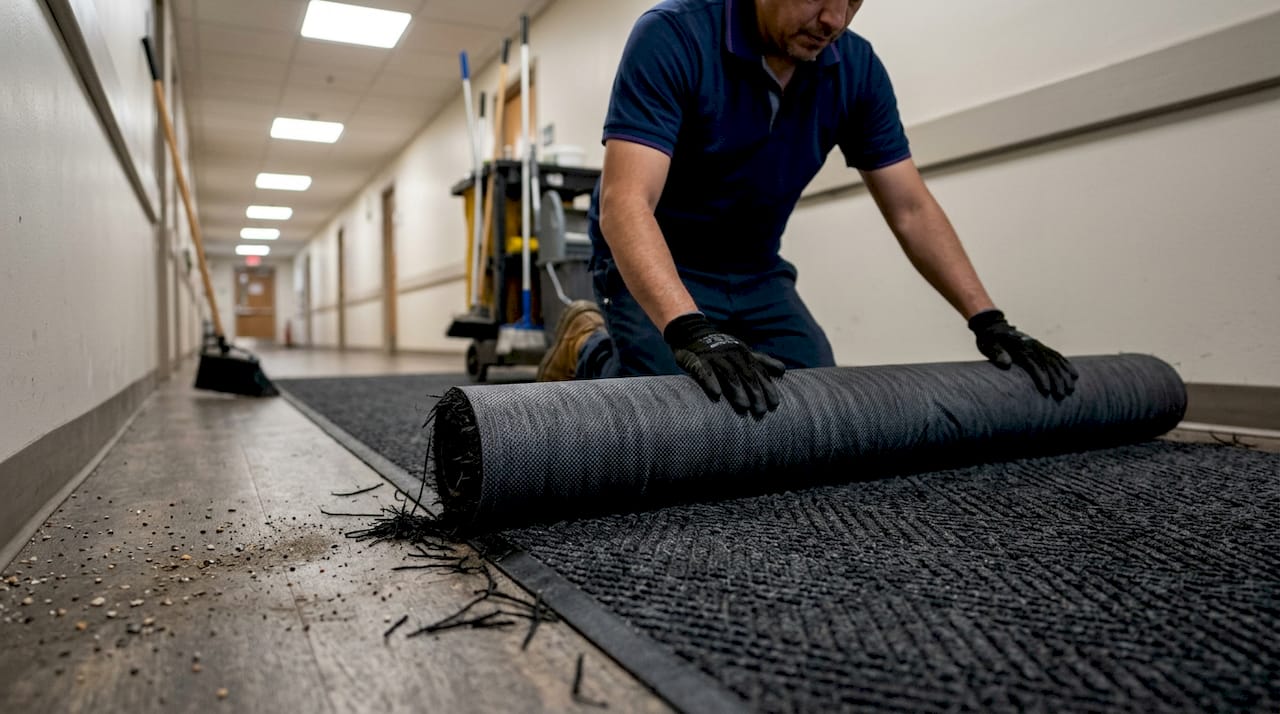
The Classic Solutions Plus builds on the base model with enhanced fiber density and a more aggressive scraping surface. It handles heavier soiling loads without matting down, which makes it the better fit for facilities with high foot traffic in wet or muddy conditions. Think school hallways, medical facilities, or large retail stores with outdoor-to-indoor transition zones.
Action Mat
The Action Mat is purpose-built for industrial environments. It absorbs oil, fluid, and coolant rather than just water. Manufacturing floors, automotive service bays, and food processing zones benefit most from this specialized design. It is not the right call for a corporate lobby, but in an industrial setting it is a standout performer.
Statistic callout: Entrance mats that use bi-level fiber construction retain significantly more moisture per square foot than flat-pile alternatives, reducing the frequency of floor mopping cycles in adjacent interior zones.
Pro Tip: In kitchens, wet processing areas, or any zone where liquids other than water are present, choose a mat specifically rated for chemical or oil resistance. General-purpose mats degrade quickly in those environments.
Super mat comparison table: Features at a glance
With detailed profiles covered, here is a side-by-side view of how these mats stack up on the metrics that matter most to facility buyers. Commercial walk-off mats provide substantial ROI by reducing floor damage and maintenance costs, and this table reflects where that value comes from.
| Feature | Classic Solutions | Classic Solutions Plus | Action Mat | WaterHog Max |
|---|---|---|---|---|
| Durability rating | High | Very High | Very High | High |
| Water absorption | Strong | Very Strong | Moderate | Very Strong |
| Slip resistance | Good | Very Good | Excellent | Very Good |
| Ease of cleaning | Easy | Easy | Moderate | Easy |
| Logo/branding option | Yes | Yes | No | Yes |
| Best environment | Indoor entry | Heavy indoor traffic | Industrial/wet floors | Indoor/outdoor entry |
| Price tier | Mid | Mid-High | Mid | Mid-High |
| Eco-friendly option | No | No | No | Yes |
A few things stand out here. The Action Mat leads on slip resistance because its surface is designed for fluid-contaminated floors, not just rain moisture. The Classic Solutions Plus offers the best combination of fiber density and branding flexibility, making it a top pick for facilities that want both safety and professional appearance. The WaterHog Max stands apart for its eco-friendly construction and outdoor-grade durability.
Use this table to shortlist two options, then verify sizing and installation requirements before committing to an order.
Which super mat fits your facility? Making the final call
With a clear comparison on the table, the next step is matching the right product to your specific facility type and use case.
Scenario-based recommendations:
- Corporate lobby or office entryway: Classic Solutions or Classic Solutions Plus. Both deliver a clean, professional look with strong moisture control. Add a logo mat at the primary entrance for brand reinforcement.
- Retail store with outdoor-to-indoor transition: Classic Solutions Plus or WaterHog Max. High traffic and seasonal moisture require heavy fiber density and aggressive drainage.
- Manufacturing or industrial floor: Action Mat. Oil, coolant, and chemical resistance are non-negotiable in these environments. Pair with anti-fatigue mats in workstation zones to protect staff well-being and productivity.
- Food service or commercial kitchen: Action Mat with a chemical-resistant rating. Standard fiber mats break down in high-grease or sanitizer-heavy environments.
- Gym, healthcare, or education facility: Classic Solutions Plus for high-traffic corridors. Consider reviewing options for mats for standing environments in reception or staff areas.
Anti-fatigue matting is crucial for industrial staff well-being and productivity, particularly in zones where workers stand for extended periods.
Decision steps:
- Measure your space accurately, including transition edges and door clearance.
- Assess specific hazards: water, oil, heavy foot traffic, or wheeled carts.
- Factor in branding needs at entrance points.
- Check warranty terms and replacement part availability.
- Get input from your cleaning or maintenance team before finalizing the order.
Pro Tip: Involve your cleaning staff early in the selection process. They know which mat types pile up with debris, which backing materials slip on your floors, and which sizes create tripping edges. Their input can save you a costly swap-out after installation.
What most facility managers miss about super mats
Most purchasing decisions for commercial mats start and end with price per square foot. That is understandable. Procurement has budget targets. But it is also where many facilities quietly lose money.
Regular mat updates can drastically reduce long-term liability claims from slips and falls. That is a measurable financial benefit that rarely appears in a simple mat comparison. When you skip a quality mat to save $80 at purchase and then absorb one slip-related incident with associated costs, the math shifts dramatically.
Branding is another underused variable. A logo mat at your entrance is not decorative. It signals professionalism to clients, reinforces brand consistency, and functions as a safety barrier. Facilities that treat mat selection as a visual and ergonomic investment consistently report better staff morale and improved visitor perception.
From a mat safety perspective, warranty terms and multi-zone compatibility deserve far more attention than they get. A mat that works in your lobby but fails in your loading corridor forces you to manage two separate replacement schedules. Standardizing on one product family across zones reduces complexity and negotiating leverage improves at volume.
“The mat that costs the least upfront often costs the most in liability, replacement frequency, and staff time. Think in years, not line items.”
Find your ideal super mat solution at Mats4U
Mats4U carries a full range of commercial and industrial floor mats designed to meet the performance standards covered in this guide. Whether you need premium custom logo mats for a branded entryway or a high-drainage option like the WaterHog Max Herringbone Mat for outdoor transition zones, the product selection is built for commercial buyers with specific requirements. The team at Mats4U can help you match product specifications to your facility layout, traffic levels, and maintenance setup. Explore all super mat solutions with free delivery on orders over $100 and Made in the USA options available across key product categories.
Frequently asked questions
What is a super mat and how does it differ from standard mats?
A super mat is engineered for extra durability, slip resistance, and moisture control, making it the right fit for high-traffic commercial environments where standard mats wear out quickly. Super mats optimize safety and durability over standard options in demanding conditions.
How do I choose the best super mat for my facility?
Evaluate traffic levels, specific hazards, mat size requirements, branding needs, and cleaning routines before selecting a product. Proper selection criteria ensure optimum mat performance across the full product lifespan.
Can super mats be customized for branding or special dimensions?
Yes. Many super mats support custom logo printing and can be ordered in non-standard dimensions to fit exact floor layouts. Custom matting supports unique sizing and company branding across a range of product types.
How often should super mats be replaced in a high-traffic area?
Most super mats last between two and five years depending on traffic volume and maintenance frequency. Mat longevity depends on traffic volume and maintenance routines, so inspect mats quarterly for signs of fiber compression or backing wear.
Are super mats difficult to clean or maintain?
Most commercial super mats are designed for straightforward vacuuming or hose-down cleaning, though maintenance needs vary by product type and location. Ease of maintenance is a key design feature across the commercial super mat category.
Recommended
- Best high-traffic mat options to boost safety: 2026 guide – Mats4U USA
- High-traffic area design tips to boost facility efficiency in 2026 – Mats4U USA
- Complete Guide to High Traffic Mats for Businesses – Mats4U USA
- High traffic mat solutions to boost safety and cleanliness – Mats4U USA
- How to maintain hygienic wall surfaces: a facility guide


