


Not all mats labeled eco-friendly deliver the same environmental or safety benefits. Many products use buzzwords without substantive backing, leaving facility managers uncertain about which options truly align with sustainability goals and operational needs. Choosing the right mat requires understanding material differences, lifecycle impacts, and practical performance factors. This guide clarifies how natural fibers, recycled synthetics, and emerging materials compare in durability, safety, and environmental responsibility. You will learn to evaluate certifications, balance trade-offs, and implement procurement strategies that enhance both facility safety and sustainability in 2026.
Table of Contents
- Materials And Sustainability Of Eco-Friendly Mats
- Nuances And Trade-Offs In Eco-Friendly Mat Selection
- Best Practices For Procuring And Maintaining Eco-Friendly Mats
- Summary Of Eco-Friendly Mat Benefits And Implementation Tips
- Explore Our Premium Eco-Friendly Mat Solutions
Key takeaways
| Point | Details |
|---|---|
| Material categories | Natural fibers like coir and cork are biodegradable, while recycled PET and rubber reduce landfill waste but persist longer. |
| Safety considerations | Mold risk with natural fibers, allergy potential with latex, and slip resistance vary by material and environment. |
| Procurement criteria | Certifications like GRS and OEKO-TEX, plus Environmental Product Declarations, validate sustainability claims. |
| Maintenance impact | Proper cleaning protocols and machine-washable options maintain hygiene and extend mat lifespan. |
| Lifecycle balance | Matching mat type to facility conditions optimizes both environmental impact and practical performance. |
Materials and sustainability of eco-friendly mats
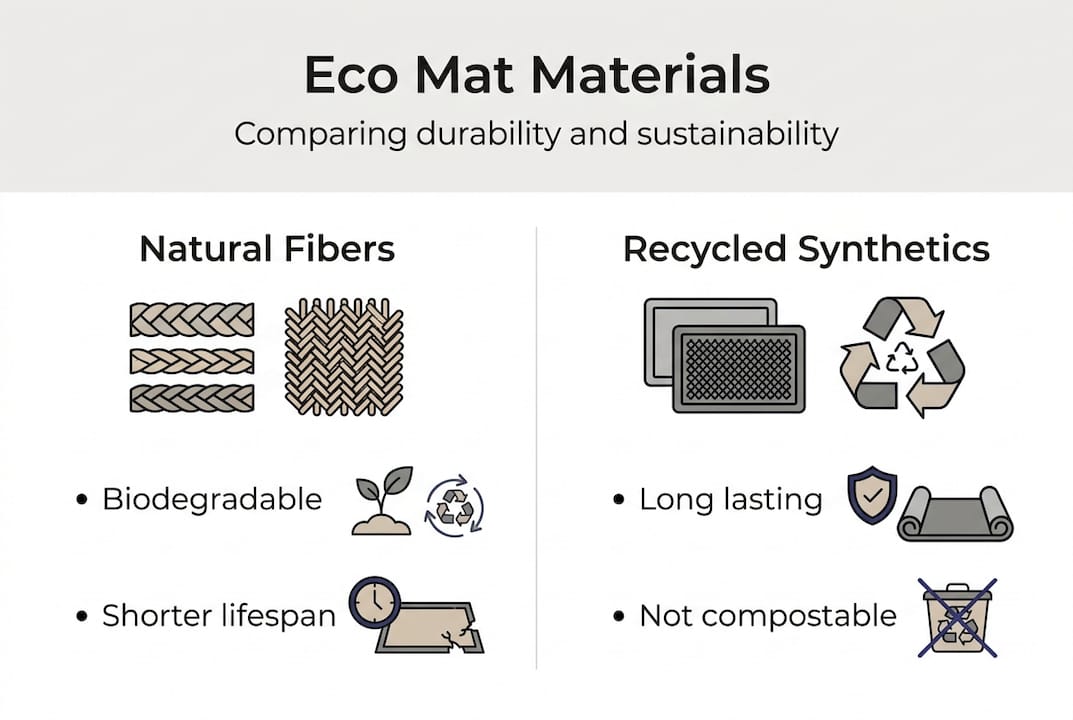
Understanding what makes a mat truly eco-friendly starts with knowing the materials. Eco-friendly mats primarily use natural fibers or recycled materials. Natural options include coir from coconut husks, sisal from agave plants, cotton from organic farming, and cork harvested from tree bark without harming the tree. These materials are biodegradable and come from renewable sources, making them attractive for facilities prioritizing end-of-life compostability.
Recycled materials offer a different sustainability angle. Post-consumer PET transforms plastic bottles into durable mat fibers, while recycled rubber repurposes old tires. These options reduce landfill waste and give new life to materials that would otherwise persist in the environment for centuries. However, they are not biodegradable, creating a trade-off between waste reduction during production and persistence after disposal.
The table below compares common mat materials across key sustainability metrics:
| Material | Biodegradable | Source | Environmental Impact |
|---|---|---|---|
| Coir | Yes | Coconut husk waste | Renewable, low processing energy |
| Cork | Yes | Tree bark harvest | Renewable, carbon-sequestering trees |
| Recycled PET | No | Post-consumer bottles | Diverts plastic waste, energy-intensive processing |
| Recycled Rubber | No | Used tires | Reduces tire waste, non-renewable base |
| Organic Cotton | Yes | Farmed fibers | Renewable, water-intensive cultivation |
Pro Tip: Favor mats with natural fibers if your facility can compost at end-of-life. Consider recycled synthetics when durability and long-term use matter more than biodegradability.
Material choice directly impacts your facility’s sustainability goals and the mat’s functional lifespan. Natural fibers typically break down within months to a few years under composting conditions, while recycled synthetics can last decades in service but centuries in landfills. Procurement decisions should weigh these factors against your organization’s environmental commitments and operational requirements.
Exploring eco friendly mats benefits reveals how material selection influences not just sustainability but also performance in real-world facility conditions. The next section examines critical trade-offs that affect safety and practicality.
Nuances and trade-offs in eco-friendly mat selection
Eco-friendly does not mean one-size-fits-all. Each material category brings specific challenges that facility managers must navigate to avoid compromising safety or performance. Coir mats, celebrated for biodegradability, can develop mold when exposed to excessive moisture. In hospitality lobbies or retail entryways with high foot traffic during wet weather, this mold risk impacts hygiene and air quality. Regular inspection and rotation become essential maintenance tasks.
Recycled synthetic mats solve the durability puzzle but create a different environmental question. These mats can withstand years of heavy use without degrading, making them cost-effective over time. Yet when they finally reach end-of-life, they persist in landfills for centuries. Facilities committed to circular economy principles may struggle with this permanence, even though the mats reduced waste during production.

Allergy considerations add another layer. Natural rubber latex mats, often marketed as eco-friendly, pose risks for users with latex sensitivities. In educational facilities or healthcare settings where diverse populations interact with mats daily, this safety concern can outweigh environmental benefits. Thermoplastic elastomer mats offer a compelling alternative, producing significantly less carbon during manufacturing compared to traditional rubber while remaining fully recyclable.
The comparison table below highlights these practical trade-offs:
| Mat Type | Durability | Biodegradable | Safety Considerations | Carbon Footprint |
|---|---|---|---|---|
| Coir | Moderate | Yes | Mold risk in wet conditions | Low |
| Recycled PET | High | No | Chemical off-gassing initially | Moderate |
| Natural Rubber | High | Partial | Latex allergy potential | High |
| TPE | High | No (recyclable) | Hypoallergenic | Low |
| Cork | Moderate | Yes | Antimicrobial, low allergen | Very Low |
Pro Tip: Balance environmental impact with practical safety by matching mat type to facility conditions. Use cork or TPE in moisture-controlled interiors, reserve coir for covered outdoor areas, and avoid latex in public spaces with high user diversity.
Facility-specific conditions determine which trade-offs matter most. A hotel lobby in a rainy climate demands mold-resistant materials, while a yoga studio prioritizes hypoallergenic options. Retail environments with extreme foot traffic need durability that justifies longer landfill persistence. Understanding these nuances prevents costly mistakes where eco-friendly intentions clash with operational reality.
For facilities exploring specialized applications, sustainable yoga mat options demonstrate how material selection adapts to user needs. The following section translates these insights into actionable procurement and maintenance strategies.
Best practices for procuring and maintaining eco-friendly mats
Smart procurement starts with verifying sustainability claims through credible documentation. Environmental Product Declarations provide transparent lifecycle data, quantifying impacts from raw material extraction through manufacturing and disposal. Life Cycle Assessment data and certifications validate that a mat’s environmental benefits are real, not marketing spin. Request these documents from suppliers before committing to large orders.
Certifications offer standardized benchmarks. The Global Recycled Standard confirms that recycled content meets strict traceability and environmental requirements. OEKO-TEX certification ensures mats are free from harmful chemicals, protecting both users and the environment. These third-party validations save facility managers from conducting independent material testing while building confidence in supplier claims.
Testing mats under actual facility conditions prevents expensive mistakes. Pilot programs reveal how mats perform with your specific foot traffic patterns, cleaning protocols, and environmental conditions. Evaluate slip resistance on your flooring type, durability under your traffic volume, and hypoallergenic properties with your user population. A mat that excels in a manufacturer’s lab may fail in your lobby.
Machine-washable mats simplify maintenance in hospitality and education facilities where hygiene standards are non-negotiable. Regular cleaning prevents dirt buildup that degrades fibers and creates slip hazards. Mats that require professional cleaning or replacement after soiling create hidden costs that undermine their sustainability value.
Follow these procurement steps:
- Define your facility’s specific needs including traffic volume, moisture exposure, and user sensitivities.
- Evaluate suppliers based on transparency, certifications, and willingness to provide EPD and LCA data.
- Pilot test shortlisted mats in representative facility areas for at least 30 days.
- Establish maintenance protocols including cleaning frequency, inspection schedules, and replacement criteria.
- Monitor performance metrics such as slip incidents, cleaning costs, and mat lifespan to refine future purchases.
Pro Tip: Collaborate with suppliers who provide transparent data and support facility-specific safety and sustainability goals. The best partners offer technical guidance, not just product catalogs.
Maintenance extends mat life and preserves safety features. Vacuum or shake out loose debris daily to prevent abrasive wear. Deep clean according to manufacturer specifications, typically weekly or biweekly depending on traffic. Rotate mats between high and low traffic areas to equalize wear patterns. Replace mats when slip resistance degrades or fibers show significant breakdown, as worn mats create liability risks.
Exploring eco friendly floor mats guide and floor mat cleaning guidance provides deeper insights into selecting and maintaining mats that deliver lasting value. The next section synthesizes these practices into clear implementation benefits.
Summary of eco-friendly mat benefits and implementation tips
Eco-friendly mats deliver measurable advantages when selected and maintained properly. They contribute significantly to reducing landfill waste while supporting corporate social responsibility initiatives that matter to stakeholders. Facilities demonstrate environmental commitment through visible, practical choices that employees and visitors experience daily.
Proper selection balances competing priorities. Biodegradability matters for facilities with composting programs, while durability takes precedence in high-traffic environments where frequent replacement would waste resources. Safety considerations like slip resistance and hypoallergenic properties protect users while meeting regulatory requirements. Facility-specific conditions such as moisture levels and user demographics determine which material trade-offs make sense.
Implementing certified, tested mats with clear maintenance plans maximizes these benefits. Certifications provide assurance, testing reveals real-world performance, and maintenance protocols preserve both safety and appearance. This systematic approach transforms eco-friendly mats from a feel-good purchase into a strategic facility management decision.
Top benefits of eco-friendly mats:
- Environmental impact: Reduce landfill waste through biodegradable materials or recycled content that diverts waste streams.
- Cost savings: Durable mats last longer, reducing replacement frequency and total cost of ownership.
- Enhanced safety: Proper material selection minimizes mold, allergens, and slip hazards specific to your facility.
- Compliance: Meet sustainability policies and green building certifications like LEED with documented environmental benefits.
- Reputation: Visible commitment to sustainability enhances brand perception among environmentally conscious customers and employees.
Practical implementation tips for facility managers:
- Monitor mat condition through regular inspections, documenting wear patterns and safety performance.
- Train staff on proper cleaning techniques and schedules to extend mat life and maintain hygiene.
- Conduct periodic procurement reviews to assess whether current mats still meet facility needs as conditions change.
- Share sustainability metrics with stakeholders, quantifying waste reduction and environmental benefits.
- Stay informed about emerging materials and certifications that may offer improved performance or sustainability.
For facilities seeking specialized solutions, eco friendly yoga mat options illustrate how targeted material choices address unique requirements. The following section connects these insights to specific product solutions.
Explore our premium eco-friendly mat solutions
Putting these principles into practice becomes easier with mats designed specifically for commercial durability and environmental responsibility. Our WaterHog drainable border mat combines recycled content with superior moisture management, ideal for high-traffic entryways in hospitality and retail. The drainable design prevents water pooling that can lead to mold, addressing a key concern with eco-friendly materials.
For facilities seeking brand visibility alongside sustainability, custom premium floor mats allow you to incorporate logos and messaging while choosing eco-responsible materials. This combination supports both marketing and environmental goals without compromise.
The WaterHog Max Herringbone Mat offers exceptional durability for education and industrial facilities where heavy foot traffic demands long-lasting performance. Its construction maximizes mat lifespan, reducing replacement frequency and total environmental impact. Explore these solutions to enhance safety and sustainability in your facilities.
Frequently asked questions
Which materials are truly the most environmentally friendly for mats?
Natural fibers like coir and cork rank highest for environmental friendliness because they are biodegradable and come from renewable sources. Cork offers the added benefit of carbon sequestration as trees continue growing after harvest. Recycled PET reduces landfill waste by repurposing plastic bottles but is not biodegradable, creating a trade-off between waste diversion and end-of-life impact.
How do I assess the durability of an eco-friendly mat for high-traffic areas?
Look for mats with tested slip resistance, wear resistance ratings, and relevant safety certifications like NFSI or ASTM standards. Request performance data showing mat lifespan under specific traffic volumes similar to your facility. Consider pilot testing mats in actual facility conditions for 30 to 60 days before committing to large orders, as real-world performance often differs from laboratory results.
What maintenance practices keep eco-friendly mats safe and effective?
Regular cleaning prevents mold growth and fiber degradation that compromise both safety and appearance. Vacuum or shake out debris daily, and deep clean weekly or biweekly depending on traffic volume. Machine-washable mats are ideal for hospitality and education facilities where hygiene standards are critical. Rotate mats between high and low traffic areas to equalize wear, and replace them when slip resistance degrades. For detailed protocols, see our floor mat cleaning guide.
Can recycled material mats match the performance of traditional synthetic mats?
Yes, modern recycled material mats often match or exceed traditional synthetic performance in durability and safety. Recycled PET fibers can be engineered for high wear resistance, while recycled rubber provides excellent slip resistance and cushioning. The key is selecting mats from manufacturers who invest in quality processing and provide performance testing data. Some recycled mats outperform virgin material alternatives while delivering environmental benefits.
How do I balance cost with sustainability when selecting mats?
Focus on total cost of ownership rather than initial purchase price. Durable eco-friendly mats may cost more upfront but last longer, reducing replacement frequency and labor costs. Calculate the cost per year of service, including cleaning and maintenance expenses. Mats that prevent slip and fall incidents also reduce liability costs. Many facilities find that premium eco-friendly mats deliver better long-term value than cheaper alternatives that require frequent replacement.
Recommended
- Environmentally Friendly Yoga Mats: Key Factors for Facilities – Mats4U USA
- 7 Best Eco Friendly Yoga Mat Options for Facility Managers – Mats4U USA
- Eco Friendly Yoga Mat: Sustainable Choices for Facilities – Mats4U USA
- Eco-friendly yoga mats: choose sustainable options (2026) – Mats4U USA
- SafeStep PlayMat™ – Schokdempende speelvloer voor veilig spelen – De Baby- en Kinderwinkel


