


Many facility managers assume eco-friendly floor mats can’t withstand the relentless foot traffic of commercial environments. This misconception keeps sustainable options off procurement lists, despite mounting evidence that modern green mats deliver both environmental responsibility and commercial-grade durability. You’ll discover how recycled rubber, coconut coir, and other sustainable materials perform in high-traffic settings, learn to compare mat types based on your facility’s specific needs, and gain practical selection and maintenance strategies that maximize both lifespan and sustainability benefits.
Table of Contents
- Key takeaways
- Understanding eco-friendly floor mats: materials and durability
- Comparing popular eco-friendly floor mat options for commercial facilities
- Selecting and maintaining eco-friendly mats for optimal performance
- Explore eco-friendly mats designed for commercial durability
- Frequently asked questions
Key Takeaways
| Point | Details |
|---|---|
| Durable eco mats | Modern eco friendly mats blend recycled materials with engineering designed for commercial grade durability. |
| Recycled rubber strength | Recycled rubber mats use shredded tires and industrial waste to resist abrasion, chemicals, and heavy foot traffic. |
| Coconut coir scraping power | Coconut coir mats provide aggressive dirt scraping while maintaining their texture and biodegrading completely at end of life. |
| Sample testing advised | Request test samples and place them in high traffic zones for two weeks to evaluate wear patterns dirt retention and edge curling. |
| Maintenance extends lifespan | Regular cleaning and proper maintenance maximize mat life and amplify sustainability benefits. |
Understanding eco-friendly floor mats: materials and durability
When you hear eco-friendly, you might picture flimsy products that prioritize the planet over performance. That’s outdated thinking. Today’s eco-friendly floor mats combine recycled materials with engineering designed specifically for commercial abuse. An eco-friendly mat earns that label through sustainable sourcing, reduced environmental impact during manufacturing, recyclability at end of life, or all three.
Recycled rubber stands as the workhorse of sustainable commercial matting. Manufacturers transform old tires and industrial rubber waste into dense, resilient mats that handle forklift traffic and constant foot flow without degrading. The vulcanization process that made those tires nearly indestructible in the first place transfers directly to mat performance. You get the same chemical resistance, weather tolerance, and physical toughness that kept those tires rolling for years.
Coconut coir represents nature’s answer to heavy-duty scraping. These stiff fibers from coconut husks grow naturally coarse and durable, perfect for aggressive dirt removal at building entrances. Unlike synthetic fibers that eventually mat down, coir maintains its scraping texture through years of use. The material biodegrades completely at end of life, eliminating landfill concerns that plague petroleum-based alternatives.
Natural fibers like jute and cotton offer moderate-traffic solutions with complete biodegradability. While they won’t survive loading dock conditions, they excel in office lobbies, retail spaces, and other areas where appearance matters as much as function. Modern treatments enhance their moisture resistance and extend usable life without compromising their environmental profile.
Pro Tip: Request test samples before committing to large orders. Place them in your highest-traffic zones for two weeks and evaluate wear patterns, dirt retention, and edge curling under real conditions.
The misconception about eco-friendly durability stems from early-generation products that prioritized sustainability over performance. Modern materials science changed that equation. Recycled rubber mats now outlast many virgin-material alternatives because the recycling process allows manufacturers to blend rubber types for optimal characteristics. You might get truck tire rubber for abrasion resistance combined with industrial conveyor belt material for flexibility.
Comparing popular eco-friendly floor mat options for commercial facilities
Three material categories dominate the commercial eco-friendly mat market, each offering distinct advantages for specific applications. Understanding these differences helps you match mat characteristics to your facility’s unique demands.
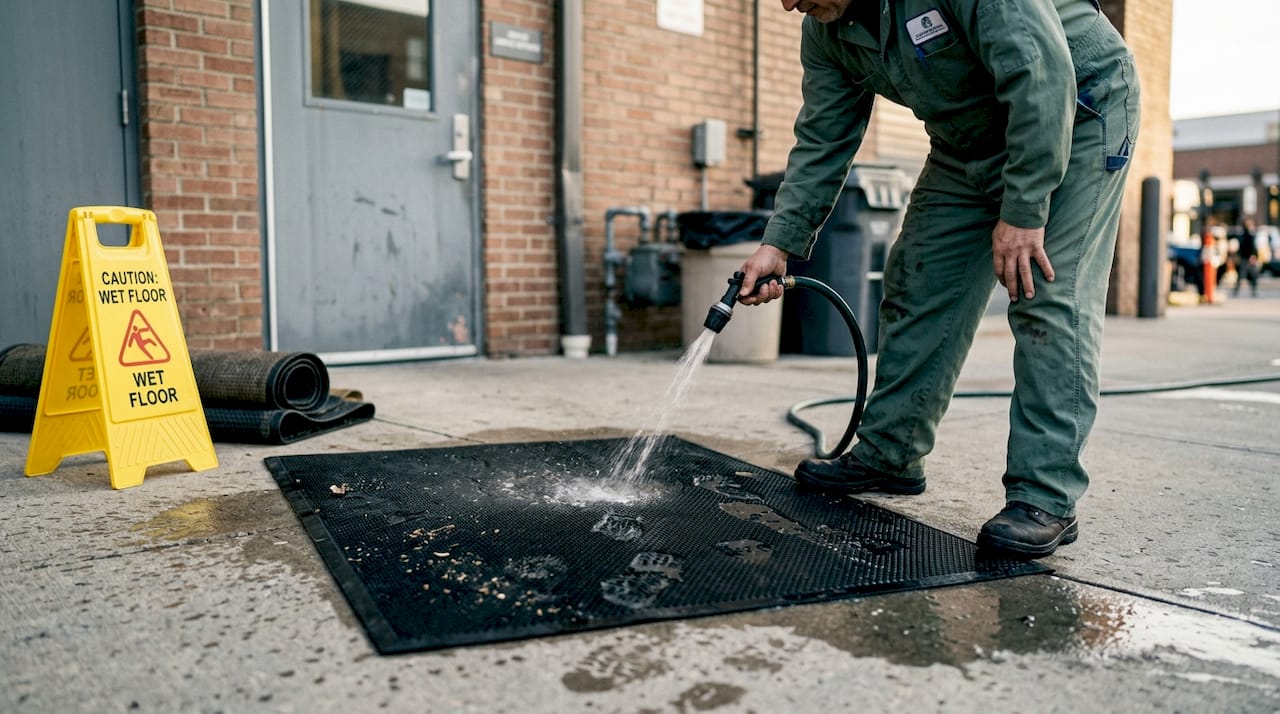
Recycled rubber mats deliver unmatched versatility across commercial environments. They handle extreme temperature swings from freezing loading docks to sun-baked entryways without cracking or warping. Chemical resistance makes them ideal for manufacturing facilities where oils, solvents, and cleaning agents contact flooring daily. The weight and density provide excellent stay-put performance even under heavy cart traffic. Maintenance couldn’t be simpler: hose them down, let them dry, and they’re ready for another shift.
Coconut coir mats excel at one critical job: aggressive dirt and moisture removal before contaminants spread into your facility. The natural fibers scrape shoe treads more effectively than synthetic alternatives, trapping dirt and reducing slip hazards in wet conditions. They work best in covered entryways where direct rain exposure stays minimal. The aesthetic appeals to facilities emphasizing natural, organic branding. Cost runs higher than rubber, but the superior scraping performance often justifies the investment at primary entrances.
PET polyester mats transform recycled plastic bottles into functional matting through an impressive manufacturing process. These mats offer excellent moisture absorption, making them perfect for interior zones just past your scraper mats. The fibers resist mold and mildew better than natural alternatives, critical in humid climates or facilities with moisture challenges. They launder easily in commercial washers, allowing you to maintain appearance standards in customer-facing areas.
Recycled rubber advantages:
- Extreme durability in all weather conditions
- Chemical and oil resistance for industrial settings
- Low maintenance requirements
- Excellent cost per year of service
- Available in various thicknesses for different applications
Recycled rubber considerations:
- Heavier weight complicates handling during cleaning
- Limited aesthetic appeal compared to fiber mats
- Initial rubber smell fades but may concern some users
Coconut coir advantages:
- Superior scraping and dirt removal performance
- Natural, biodegradable composition
- Attractive appearance for customer areas
- Excellent moisture absorption
- Maintains texture over years of use
Coconut coir considerations:
- Higher initial cost than rubber alternatives
- Requires covered installation to prevent weather damage
- Moderate durability compared to rubber
- Limited chemical resistance
PET polyester advantages:
- Made from abundant recycled plastic waste
- Machine washable for easy maintenance
- Mold and mildew resistant
- Good moisture absorption
- Wide range of colors and patterns available
PET polyester considerations:
- Lower durability than rubber or coir
- Best suited for interior, moderate-traffic areas
- Requires more frequent replacement
- May show wear patterns in high-traffic zones
| Mat Type | Durability Rating | Best Use Case | Maintenance Level | Typical Lifespan | Sustainability Score |
|---|---|---|---|---|---|
| Recycled Rubber | Excellent | All weather, high traffic | Low | 5-10 years | High |
| Coconut Coir | Very Good | Covered entrances | Moderate | 3-7 years | Very High |
| PET Polyester | Good | Interior zones | Moderate | 2-5 years | High |
Selecting and maintaining eco-friendly mats for optimal performance
Choosing the right mat requires matching material properties to your specific operational demands. Follow this systematic approach to ensure your selection delivers both sustainability and performance.
Step 1: Assess traffic patterns and volume. Count foot traffic during peak hours at each entrance or zone. High-traffic areas exceeding 500 people daily demand recycled rubber durability. Moderate zones between 100-500 people work well with coir or quality PET mats. Low-traffic areas under 100 daily visitors accommodate any eco-friendly option based on aesthetic preferences.
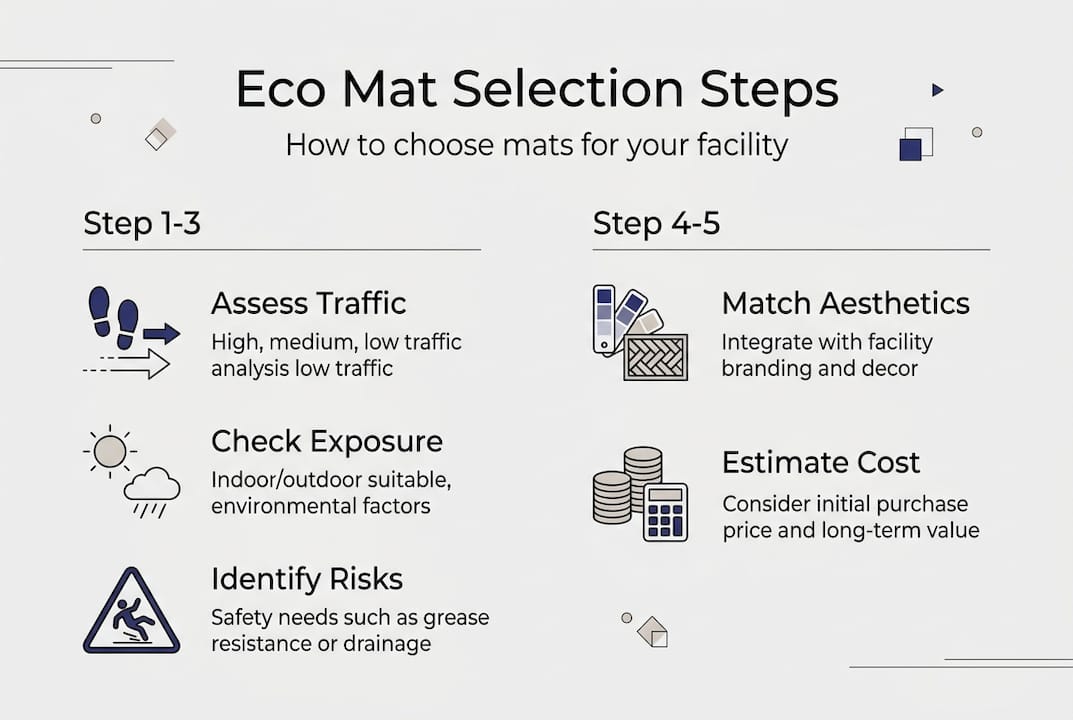
Step 2: Evaluate environmental exposure. Outdoor and covered outdoor locations need weather-resistant materials like recycled rubber. Interior zones allow more material flexibility. Consider seasonal challenges like snow melt, rain tracking, or summer dust. Facilities in humid climates benefit from mold-resistant options.
Step 3: Identify contamination concerns. Manufacturing environments with oil, chemicals, or metal shavings require rubber’s chemical resistance. Food service facilities need materials that tolerate frequent sanitizing. Healthcare settings demand antimicrobial treatments and easy deep-cleaning capabilities.
Step 4: Match aesthetics to brand standards. Customer-facing areas often justify premium coir or decorative PET mats that align with your facility’s image. Back-of-house zones prioritize function over appearance. Consider custom logo mats for branding opportunities at main entrances.
Step 5: Calculate total cost of ownership. Compare initial purchase price against expected lifespan and maintenance costs. A premium rubber mat costing twice as much but lasting three times longer delivers better value. Factor in labor costs for cleaning and replacement when comparing options.
Pro Tip: Install a mat system rather than a single mat. Place aggressive scraper mats outside, moisture-absorbing mats in transition zones, and decorative mats in interior spaces for optimal contamination control.
Maintenance directly impacts both mat lifespan and sustained environmental benefits. Proper care maximizes performance while preventing premature replacement that undermines sustainability goals. Vacuum or sweep mats daily in high-traffic areas to remove surface debris before it grinds into fibers. This simple step can double mat lifespan by preventing abrasive particles from cutting fiber bonds.
Deep clean mats weekly or biweekly depending on soil load. Rubber mats tolerate pressure washing or simple hosing followed by air drying. Coir mats benefit from beating or vigorous shaking to dislodge embedded dirt, though you can also hose them if drainage allows complete drying. PET mats often machine wash, making them ideal for facilities with commercial laundry capabilities.
Inspect mats monthly for edge curling, fiber loss, or backing deterioration. Address curling immediately by weighing edges or replacing affected sections before tripping hazards develop. Rotate mats quarterly in areas with uneven wear patterns, moving less-worn sections into high-traffic zones. This practice extends total system life by distributing wear across all mat surfaces.
Replace mats when they no longer perform their primary function effectively. A scraper mat that stops removing dirt efficiently needs replacement regardless of remaining structural integrity. Moisture-absorbing mats that stay saturated have lost capacity. Don’t wait for complete failure, as degraded mats create safety hazards and allow contaminants to spread into your facility.
Explore eco-friendly mats designed for commercial durability
We engineer floor mats that prove sustainability and commercial performance aren’t competing priorities. Our WaterHog Drainable Border Mat combines recycled content with aggressive moisture removal, perfect for entrances where water tracking creates slip hazards. The raised rubber border contains water while drainage channels prevent saturation.
For maximum dirt-stopping power, the WaterHog Max Diamond Mat features premium fibers that capture debris while maintaining professional appearance through years of heavy use. When branding matters, our Premium HD Printed Custom Floor Mat lets you showcase your logo while meeting sustainability goals. Contact our team to discuss mat solutions tailored to your facility’s specific traffic patterns, environmental challenges, and performance requirements.
Frequently asked questions
What materials are best for eco-friendly floor mats in heavy traffic?
Recycled rubber delivers the best combination of durability and environmental benefits for heavy commercial traffic. The material withstands forklift loads, constant foot traffic, and harsh weather while diverting waste from landfills. Coconut coir provides excellent performance in covered high-traffic entrances where aggressive scraping matters more than extreme durability. Natural fibers work well in moderate-traffic interior zones where appearance and complete biodegradability align with facility values.
How can eco-friendly mats improve facility safety and hygiene?
Mats with aggressive dirt-trapping capabilities reduce slip hazards by removing moisture and debris before they spread across smooth flooring surfaces. The scraping and absorption happen at controlled entry points rather than throughout your facility. Some eco-friendly mats incorporate antimicrobial treatments derived from natural sources, inhibiting bacterial growth without harsh chemicals. This combination of physical contamination control and biological protection creates safer, cleaner environments for employees and visitors.
What maintenance practices prolong the life of eco-friendly floor mats?
Daily vacuuming or sweeping removes abrasive particles that cut fibers and accelerate wear. Regular washing prevents soil buildup that degrades backing materials and reduces mat effectiveness. Rotate mats every three months to distribute wear evenly across all surfaces, preventing isolated failure points. Replace mats when cleaning no longer restores performance rather than waiting for structural failure. Proper installation on level surfaces prevents edge curling that creates tripping hazards and accelerates deterioration.
Are there certifications to verify eco-friendly floor mats’ sustainability?
GreenGuard certification confirms mats meet strict indoor air quality standards, ensuring they don’t release harmful volatile organic compounds into your facility. This matters especially in healthcare, education, and other sensitive environments. Cradle to Cradle certification evaluates the entire product lifecycle from material sourcing through end-of-life recycling or disposal. NSF certification verifies recycled content claims and environmental manufacturing practices. Always request certification documentation rather than accepting marketing claims, as third-party verification provides accountability that self-certification lacks.


