


TL;DR:
- Proper floor protection can significantly reduce long-term costs and safety risks.
- Matching materials to specific risk factors ensures effectiveness and prevents damage.
- Implementing a proactive maintenance system maximizes ROI and extends floor life.
Floor protection is rarely the first line item facility managers scrutinize, yet it consistently drives some of the largest operational costs in commercial and industrial buildings. VCT floor waxing costs dramatically more over time than modern protection strategies, often reaching hundreds of thousands of dollars over a decade in mid-size facilities. Poor choices in matting, coverings, or maintenance schedules translate directly into slip injuries, floor replacement bills, and production downtime. This guide delivers practical, evidence-based floor protection strategies so you can cut costs, reduce risk, and keep your facility running without interruption.
Table of Contents
- Understanding your facility’s floor protection needs
- Core floor protection strategies: Materials and coverings
- Preventive maintenance: Maximizing floor protection and ROI
- Special situations: Cracks, repairs, and unique threats
- Why most facilities underestimate floor protection—and pay for it later
- Protect your facility with proven solutions
- Frequently asked questions
Key Takeaways
| Point | Details |
|---|---|
| Choose the right protection | Match materials and coverings to your facility’s usage, risk, and environment for optimal results. |
| Prioritize preventive maintenance | A structured, consistent maintenance routine significantly reduces long-term costs and wear. |
| Leverage entry matting | High-performance entry mats capture most dirt and moisture, extending floor life and boosting safety. |
| Address special risks proactively | Tackle cracks, equipment areas, and sensitive zones with tailored, evidence-backed solutions. |
| Invest for the long term | Modern protection strategies outperform traditional methods, delivering measurable return on investment. |
Understanding your facility’s floor protection needs
Before selecting a product or program, you need a clear picture of what your floors are actually up against. Traffic volume, load type, moisture exposure, and regulatory requirements all shape the right solution. A hospital corridor faces different threats than a loading dock, and matching your protection to those specifics is the only way to avoid costly mismatches.
Start by categorizing your risk factors:
- Traffic type: Foot traffic only, wheeled equipment, pallet jacks, or forklifts each demand different load ratings and surface materials.
- Environmental conditions: Wet processing areas, chemical spills, grease, or freeze-thaw cycles require coverings rated for those specific exposures.
- Use timeline: Temporary protection for a renovation differs from a permanent installation in a production zone.
- Regulatory requirements: Healthcare facilities may require antimicrobial surfaces; food production zones need non-porous, food-safe materials.
As the heavy-duty floor protection guide outlines, reusable and heavy-duty protections must be matched to surface type, use timeline, and area classification to deliver reliable results. Mismatching causes real damage. Impermeable mats placed over slightly damp concrete trap moisture underneath, accelerating adhesive failure and mold growth. Breathable options solve that problem but offer less impact resistance.
Choosing the wrong protection is not a minor inconvenience. It can void floor warranties, create slip hazards, and accelerate surface degradation far faster than no protection at all.
For facilities managing warehouse flooring solutions, the priority shifts toward load distribution and durability under rolling equipment. Entry and transition zones are a separate concern, requiring non-slip flooring rated for wet conditions and heavy foot traffic simultaneously. Map your facility by zone, assign risk categories to each area, and then select materials with specifications that match.
Core floor protection strategies: Materials and coverings
With your facility’s needs mapped, the next step is selecting the right material. The three primary options for temporary commercial and industrial protection are corrugated plastic board, paperboard, and heavy-duty rubber mats. Each has a specific use case where it outperforms the others.
Material comparison: Temporary floor protection options
| Material | Best use case | Liquid resistance | Reusable | Impact rating |
|---|---|---|---|---|
| Corrugated plastic board | Construction, renovation | High | Yes | High |
| Paperboard | Uncured wood, hardwood | Low (breathable) | No | Medium |
| Heavy-duty rubber mats | Entry zones, industrial areas | High | Yes | Very high |
Corrugated plastic, paperboard, and rubber mats are the leading options for temporary floor protection during projects or renovations, each suited to different surface and risk profiles. For permanent upgrades, epoxy coatings, rubber flooring, and vinyl tile offer long-term chemical and impact resistance in production and processing zones.
Here is how to select the right covering for your situation:
- Construction or renovation zones: Use corrugated plastic board for high impact and liquid protection over finished floors.
- Uncured or wood subfloors: Select breathable paperboard to allow off-gassing without trapping moisture.
- Entry and walk-off zones: Install heavy-duty rubber or Waterhog-style mats to capture dirt and moisture before it spreads.
- High-traffic corridors: Choose commercial vinyl or rubber tiles rated for continuous rolling loads.
- Chemical or liquid exposure zones: Specify epoxy coatings with a chemical-resistant topcoat matched to your specific exposure.
Pro Tip: Entry mats and walk-off systems can reduce up to 80% of tracked-in dirt before it reaches your main floor surface, which directly lowers wear rates and cleaning frequency. That single intervention often pays for itself within the first quarter.
For a broader look at material performance across settings, reviewing commercial floor care methods gives additional context on maintenance compatibility with each material type. Your choice of covering also affects what cleaning equipment and chemicals are safe to use, so factor that into the decision early. Check best flooring for high traffic areas for surface-specific performance data.
Preventive maintenance: Maximizing floor protection and ROI
Materials and coverings only perform as well as the maintenance program behind them. A structured preventive approach consistently outperforms reactive repairs on every measurable metric. Predictive maintenance reduces downtime by 52.7% and defects by 78.5%, numbers that translate directly into labor savings and reduced floor replacement costs.
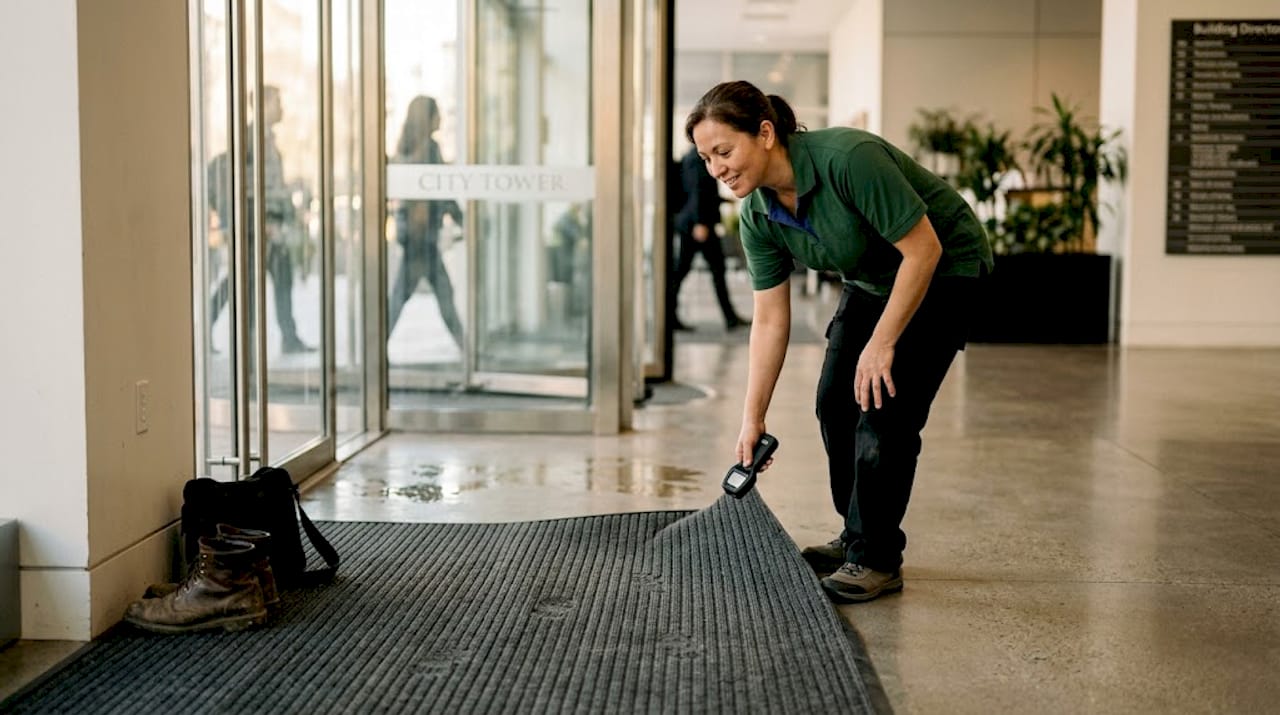
A workable maintenance schedule should operate on three timeframes:
Sample preventive floor maintenance schedule
| Frequency | Task | Purpose |
|---|---|---|
| Daily | Dry sweep, spot mop, mat inspection | Remove abrasives, catch spills early |
| Weekly | Wet mop, edge cleaning, mat rotation | Prevent buildup, extend mat life |
| Monthly | Deep scrub, drain inspection, condition check | Catch structural issues before they worsen |
| Annually | Sealer reapplication, full surface inspection | Protect substrate, document condition |
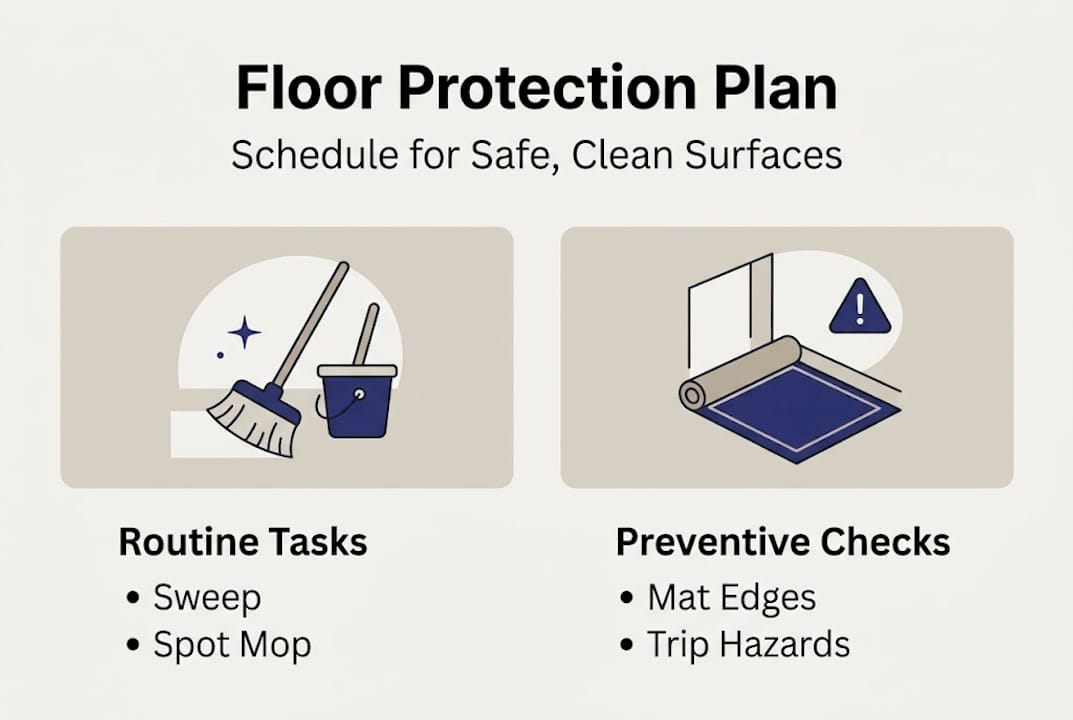
Daily, monthly, and annual schedules build the cost-efficient, layered protection approach that consistently outperforms reactive programs. The key is documentation. Without written logs, inconsistencies go unnoticed until they become expensive repairs.
Here are the four steps to building a maintenance program that holds up:
- Assign clear ownership. Every zone should have a named responsible party, not just a department.
- Log every inspection. Date, condition rating, and action taken. This creates the paper trail needed to catch patterns.
- Train staff on early warning signs. Surface softening, edge lifting on mats, discoloration, and new surface sounds all signal problems worth catching early.
- Schedule annual reviews. Compare current floor condition to baseline photos and adjust the program based on what the data shows.
Pro Tip: Facilities that integrate trip hazard reduction checks into their weekly walk-throughs catch mat edge curl and surface irregularities before they become OSHA reportable incidents. Pair that with anti-fatigue mat deployment in standing work zones to address both safety and ergonomic risk simultaneously.
For additional context on floor treatment chemistry and its role in protection cycles, the floor treatment overview covers sealers, finishes, and strip-and-recoat programs in practical detail.
Special situations: Cracks, repairs, and unique threats
Even a well-managed floor protection program will encounter damage. Cracks, delamination, and surface deterioration each require targeted responses. Getting the identification step right matters most, because applying the wrong repair method to the wrong crack type accelerates the failure instead of stopping it.
The two primary crack categories in industrial and commercial concrete floors:
- Static cracks: These have stopped moving. They result from shrinkage during curing or historical settlement. Rigid epoxy fillers work well here.
- Dynamic cracks: These continue to move with thermal expansion, load cycling, or active settlement. Rigid fillers will re-crack quickly. Dynamic cracks require flexible fillers, and joint filling should wait 60 to 90 days post-pour for best results.
Never fill a dynamic crack with a rigid product. The movement will shear the repair within weeks, leaving a wider, more contaminated void than the original crack.
For healthcare environments, the material list narrows significantly. You need antimicrobial surface coatings or mats with built-in antimicrobial treatment, seamless surfaces to prevent bacterial harborage, and moisture-impermeable options that still allow for hospital-grade disinfectant use without surface degradation.
Heavy equipment zones present a different challenge. Constant point-loading from forklifts or machinery compresses and fractures surface coatings over time. Reinforced rubber flooring or epoxy with aggregate broadcast provides better resistance than standard coatings in these zones. Review the heavy-duty floor protection guide for load-rating specifications matched to equipment types.
Facilities with newly poured concrete also need to account for curing time before applying any coating or permanent covering. Applying sealers or coatings before the concrete reaches the correct moisture content causes adhesion failures within months. The concrete maintenance guide covers moisture testing protocols and acceptable thresholds by coating type.
Why most facilities underestimate floor protection—and pay for it later
The most common mistake we see is treating floor protection as a one-time purchase rather than an ongoing system. Managers select a mat or coating, install it, and move on. When problems surface six months later, the response is reactive repair, which costs more and fixes less than the original prevention would have.
Reactive approaches look cheaper in the budget line item. They are not. A slip-and-fall claim alone can exceed the cost of a full facility matting program many times over. Entry matting and routine inspections consistently rank as the highest-ROI interventions available to facility managers, yet they are routinely deprioritized in favor of visible capital projects.
Investing in high-quality entry mats and predictive maintenance brings the strongest ROI in heavy traffic and industrial settings. The facilities that internalize this shift from product to system thinking are the ones that see sustained cost reductions year over year. Build the industrial matting ROI case using your own cleaning frequency data and injury records. The numbers make the argument better than any general benchmark.
Protect your facility with proven solutions
Implementing the strategies covered here starts with having the right products on hand. At Mats4U.com, you will find commercial-grade matting built for exactly the environments described in this guide. The WaterHog Max entrance mat is a field-proven walk-off solution for high-traffic entry zones, engineered to capture moisture and debris before it reaches your main floor. For standing work zones, the anti-fatigue mat addresses both ergonomic risk and surface protection in a single product. Free delivery on orders over $100 and a full range of custom and industry-specific options make it straightforward to match the right solution to your facility’s exact requirements.
Frequently asked questions
What is the most cost-effective floor protection for high-traffic commercial areas?
Entry matting systems capture up to 80% of tracked-in dirt, delivering strong ROI by reducing floor wear and cutting cleaning frequency and cost.
How does preventive maintenance reduce facility costs?
Predictive maintenance cuts downtime by 52.7% and defect rates by 78.5%, resulting in fewer emergency repairs and a significantly longer floor lifespan.
Which floor covering should I use during construction or renovation?
Reusable corrugated plastic boards provide the best impact and liquid resistance for most construction settings, while breathable paperboard is the preferred choice for protecting uncured wood floors where moisture release must not be blocked.
What’s the best way to repair floor cracks in industrial settings?
Identify the crack type first. Dynamic cracks need flexible fillers, and joint filling in new concrete should wait 60 to 90 days after pouring to ensure proper adhesion.
How do protective floor coatings compare to traditional VCT waxing for cost savings?
Molecular sealers are over 80% less expensive to maintain than VCT waxing over a 10-year period, making them the clear long-term choice for mid-size and large commercial facilities.
Recommended
- Heavy Duty Floor Protection: A Practical Guide to Safe, Durable Floori – Mats4U USA
- Your Actionable Guide to High-Impact Gym Floor Protection – Mats4U USA
- High Traffic Floor Tiles: Reducing Costs and Risks – Mats4U USA
- Safety Scrape™ Mat - Slip-Resistant, Durable Floor Mat for Tough Environments – Mats4U USA


