


Most facility managers assume a standard 3x5 entrance mat protects their floors. The reality? Small mats capture only 30% of dirt tracked into commercial spaces. Undersized matting forces maintenance teams to clean floors multiple times daily, driving up labor costs and accelerating floor wear. Selecting the right entrance matting solution requires understanding material performance, strategic placement, and maintenance protocols that align with your facility’s traffic patterns. This guide delivers actionable insights on sizing, material selection, and lifecycle management to reduce cleaning frequency and extend floor lifespan.
Table of Contents
- Why mat size and placement matter for dirt and moisture control
- Choosing the right entrance mat materials for your facility
- Maintaining high-performance entrance mats: Cleaning and lifecycle strategies
- Real-world examples: Application of entrance matting solutions in industrial settings
- Explore commercial matting solutions for your facility
- Frequently asked questions
Key Takeaways
| Point | Details |
|---|---|
| Proper mat length | Mats should span at least 15 feet to capture most dirt and prevent facility floor damage. |
| Material selection | Choose nylon for indoor, rubber for outdoor, polypropylene for quick-drying, and nitrile for oil/grease-prone areas. |
| Regular maintenance | Daily vacuuming, weekly extraction, and prompt replacement after rain will maximize mat performance and lifespan. |
| Seasonal adjustments | Summer high traffic increases mat abrasion, so enhance cleaning and choose longer mats during peak periods. |
| Expert-tailored solutions | Industrial and retail settings benefit most from customized material, placement, and maintenance strategies. |
Why mat size and placement matter for dirt and moisture control
The difference between effective and ineffective entrance matting comes down to coverage. Research confirms that mats must cover 6-8 steps or 15 feet minimum to capture the majority of dirt and moisture before it reaches interior floors. Anything shorter allows contaminants to bypass the mat entirely.
Small 3x5 mats create a false sense of protection. They capture roughly 30% of tracked debris, leaving 70% to spread across lobbies, hallways, and workspaces. This oversight translates directly into higher maintenance costs. Custodial teams spend more time mopping, floor finishes degrade faster, and replacement cycles shorten.
The 15/30/45-foot rule provides a practical framework for sizing commercial entrance matting based on traffic volume:
- 15 feet: Minimum for standard office traffic (100-300 entries daily)
- 30 feet: Medium-traffic retail or institutional facilities (300-800 entries daily)
- 45 feet: High-traffic industrial, transportation, or large retail spaces (800+ entries daily)
Placement strategy matters as much as size. Position mats to cover the natural walking path from exterior doors through vestibules and into main corridors. For facilities with multiple entry points, prioritize the highest-traffic entrance first, then expand coverage as budget allows.
Key placement considerations:
- Extend matting through vestibules and 10-15 feet into interior spaces
- Cover both sides of revolving doors to capture dirt on entry and exit
- Place secondary mats at elevator banks and stairwell entrances in multi-story buildings
- Secure edges with beveled borders or recessed wells to prevent tripping hazards
- Ensure mats lie completely flat without curling or bunching
“Mats must cover 6-8 steps or 15 feet minimum; small 3x5 mats capture only 30% of dirt tracked indoors.”
| Mat Size | Dirt Capture Rate | Ideal Application |
|---|---|---|
| 3x5 feet | ~30% | Residential only |
| 6x10 feet | ~55% | Low-traffic office |
| 15+ feet | 80-90% | Commercial/industrial |
| 30+ feet | 90-95% | High-traffic retail |
For facilities with seasonal traffic spikes, consider modular matting systems that allow you to extend coverage during peak periods and reduce it during slower months. This flexibility optimizes both performance and budget. Consult our high-traffic entrance mats guide for detailed specifications on sizing for specific facility types.
Choosing the right entrance mat materials for your facility
Material selection determines how well your entrance matting performs under specific environmental conditions. Each material offers distinct advantages for moisture absorption, dirt scraping, chemical resistance, and durability.
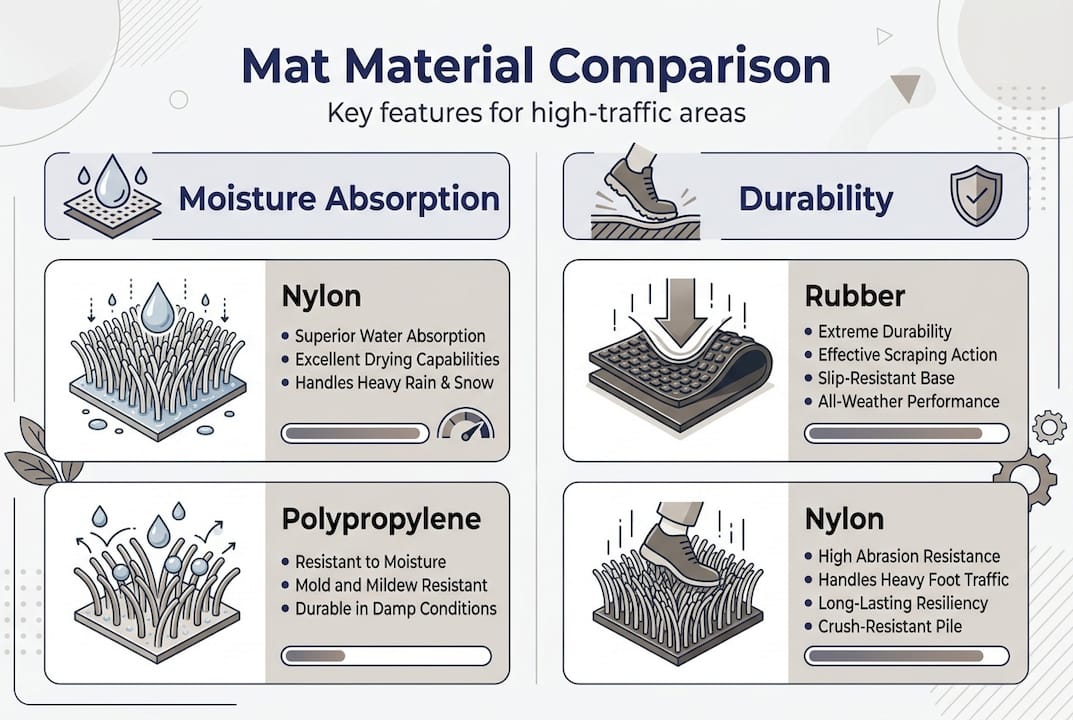
Nylon excels in high-traffic indoor applications. The fiber structure resists crushing under constant foot traffic while maintaining scraping effectiveness. Nylon mats dry faster than natural fibers and hold up well in climate-controlled environments. They’re the standard choice for office lobbies, healthcare facilities, and educational institutions where appearance and performance both matter.
Rubber delivers unmatched durability for outdoor and industrial settings. It withstands temperature extremes, heavy equipment traffic, and direct weather exposure without degrading. Rubber’s aggressive tread patterns scrape mud, snow, and debris effectively. Loading docks, manufacturing entrances, and exterior walkways benefit most from rubber matting.
Polypropylene offers rapid drying and mildew resistance, making it ideal for humid climates or facilities with limited mat maintenance resources. The synthetic fiber sheds water quickly and resists bacterial growth. Polypropylene works well in food service, hospitality, and coastal facilities where moisture control is critical.
Nitrile rubber provides oil and grease resistance essential for automotive shops, machine shops, and industrial kitchens. Standard rubber and nylon mats break down when exposed to petroleum products and cooking oils. Nitrile maintains its structure and effectiveness in these challenging environments.
Material selection by condition:
- Heavy foot traffic (500+ entries/day): Nylon with rubber backing
- Outdoor exposure: 100% rubber with drainage holes
- Wet climates: Polypropylene or nylon with moisture barrier
- Oil/grease exposure: Nitrile rubber compound
- Extreme cold: Rubber (remains flexible below freezing)
- Chemical cleaning: Nitrile or treated nylon
| Material | Moisture Absorption | Scraping Power | Durability | Best Use |
|---|---|---|---|---|
| Nylon | High | Excellent | Very Good | Indoor high-traffic |
| Rubber | Low | Excellent | Excellent | Outdoor/industrial |
| Polypropylene | Medium | Good | Good | Humid environments |
| Nitrile | Low | Very Good | Excellent | Oil/grease areas |
Pro Tip: Facilities using strong chemical cleaners or deicers should specify chemical-resistant backing materials. Standard rubber backing can degrade when exposed to harsh cleaning agents, causing mats to separate or curl at edges.
Backing material affects mat stability and floor protection. Rubber backing prevents slipping on smooth surfaces but may leave marks on certain floor finishes. Vinyl backing works better for facilities concerned about floor staining. Cleated backing provides superior grip on carpet or textured surfaces.
For comprehensive guidance on matching materials to your specific facility requirements, review our resources on indoor entrance floor mats, best commercial entrance mats, and outdoor entrance mat options.
Maintaining high-performance entrance mats: Cleaning and lifecycle strategies
Even the best entrance matting fails without proper maintenance. Saturated mats stop absorbing moisture and compacted dirt reduces scraping effectiveness. A structured maintenance program keeps mats performing at peak capacity and extends their usable life by 40-60%.
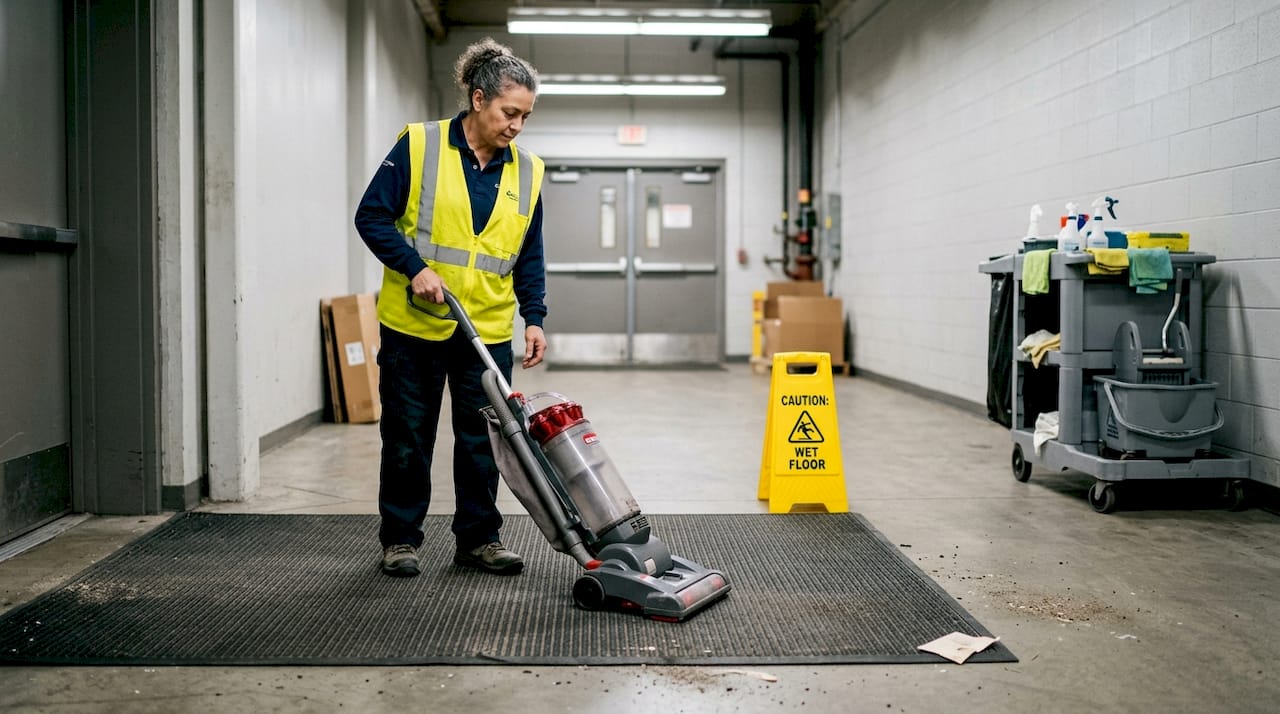
Weekly extraction cleaning removes embedded dirt and moisture that daily vacuuming misses. High-traffic facilities should extract mats twice weekly during peak seasons. Use commercial extraction equipment with appropriate cleaning solutions for your mat material. Avoid harsh chemicals that break down fibers or backing.
Daily vacuuming prevents surface dirt from working deeper into mat fibers. Use a commercial upright vacuum with beater bar for nylon mats. For rubber mats, a shop vacuum or power broom works better. Vacuum in multiple directions to lift dirt from all fiber angles.
Mat rotation distributes wear evenly across your matting system. Swap high-traffic sections with lower-traffic areas monthly. This simple practice can double mat lifespan by preventing localized crushing and fiber breakdown.
Seasonal challenges require adjusted maintenance protocols. Summer traffic increases mat abrasion by 30-40% due to sand, grit, and dry soil particles. These abrasive contaminants act like sandpaper on mat fibers. Increase vacuuming frequency and consider adding secondary scraper mats during summer months.
Rain events saturate mats quickly. Replace or extract saturated mats immediately after heavy rain to maintain dirt capture effectiveness. Wet mats transfer moisture to floors rather than absorbing it. Keep backup mats on hand for quick swaps during weather events.
Maintenance schedule for high-traffic facilities:
- Daily: Vacuum all entrance mats in morning before peak traffic
- Twice weekly: Extract or deep clean primary entrance mats
- Weekly: Inspect for wear, damage, or curling edges
- Monthly: Rotate mat positions to distribute wear
- Quarterly: Evaluate mat performance and replace worn sections
- Seasonally: Adjust cleaning frequency based on weather and traffic patterns
Pro Tip: Implement a mat rotation system where you maintain three sets of mats: one in use, one in cleaning/drying, and one as backup. This ensures you always have clean, dry mats in place without service interruptions.
Document mat maintenance in your facility management system. Track cleaning dates, replacement costs, and performance issues. This data helps justify budget requests and identifies patterns that inform future purchasing decisions.
For detailed guidance on selecting mats that match your maintenance capabilities, explore our articles on choosing entrance floor mats, indoor vs outdoor doormats, and outdoor vs indoor mat comparison.
Real-world examples: Application of entrance matting solutions in industrial settings
Theory becomes practical when you see how facilities apply these principles. Three scenarios demonstrate how proper matting selection and placement solve common challenges.
Manufacturing facility: A 200,000-square-foot automotive parts manufacturer struggled with floor damage near loading docks and production entrances. They installed 40-foot rubber mat runs at each of four main entrances. Within three months, floor cleaning frequency dropped from twice daily to once daily. Annual floor refinishing costs decreased by $18,000. The heavy-duty rubber matting withstood forklift traffic and oil exposure that destroyed previous nylon mats.
Retail complex: A shopping center with 12 tenant spaces replaced undersized 4x6 mats with 20-foot polypropylene mat systems at main entrances. The quick-drying material handled high foot traffic during rainy periods without becoming saturated. Customer slip-and-fall incidents dropped 65% in the first year. Tenant complaints about tracked dirt decreased significantly.
Logistics warehouse: A distribution center processing 500+ truck deliveries daily installed rubber scraper mats at dock doors and nylon absorption mats in office areas. The two-stage system captured mud and debris at entry points before it reached interior spaces. Warehouse floor sweeping requirements dropped from three times daily to once daily. The facility extended floor coating life by an estimated two years.
Common matting mistakes and their consequences:
- Undersizing mats: Results in 70% of dirt bypassing protection, requiring 2-3x more floor cleaning
- Wrong material selection: Nylon mats in oil-exposed areas degrade within months instead of lasting years
- Neglecting maintenance: Saturated mats transfer moisture to floors, increasing slip hazards and floor damage
- Poor placement: Mats positioned off the natural walking path provide minimal dirt capture
- Ignoring seasonal needs: Fixed matting systems fail during weather extremes when protection matters most
“Selecting entrance matting without considering traffic patterns, environmental conditions, and maintenance capabilities leads to premature failure and wasted investment. Match material properties to actual facility conditions.”
These examples illustrate a consistent pattern: facilities that invest in properly sized, correctly specified entrance matting systems see measurable returns through reduced maintenance costs, extended floor life, and improved safety metrics. The initial investment in quality matting pays back within 12-18 months through operational savings.
For additional insights on implementing effective matting strategies, review our guide on improving facility safety with mats.
Explore commercial matting solutions for your facility
Applying these entrance matting principles starts with selecting products engineered for commercial and industrial demands. Our matting solutions address the specific challenges facility managers face in high-traffic environments.
The WaterHog Max Grand mat combines aggressive scraping with high-capacity moisture absorption. Its rubber reinforced face nubs remove debris while polypropylene fibers trap moisture. Available in lengths up to 60 feet, it meets the coverage requirements for even the highest-traffic facilities.
Facilities seeking brand reinforcement alongside functionality benefit from custom logo mats. These mats deliver the same dirt-trapping performance as standard commercial mats while displaying your company identity. They’re particularly effective in corporate lobbies, retail entrances, and hospitality settings where first impressions matter.
For areas where employees stand for extended periods, the Comfort Premier anti-fatigue mat reduces strain while providing slip resistance. Manufacturing facilities, retail checkout areas, and food service operations use these mats to improve worker comfort and safety simultaneously.
Our product specialists help you specify the right matting configuration for your facility’s unique requirements. We consider traffic volume, environmental conditions, maintenance capabilities, and budget constraints to recommend solutions that deliver measurable performance improvements.
Frequently asked questions
How long should entrance mats be for maximum dirt capture?
Mats should cover at least 6-8 steps or 15 feet minimum to capture most dirt and moisture in high-traffic areas. Facilities with 800+ daily entries should extend coverage to 30-45 feet.
Which material is best for heavy-duty outdoor entrance mats?
Rubber is most durable and weather-resistant for high-traffic outdoor and industrial use. It withstands temperature extremes and heavy equipment traffic without degrading.
How often should commercial entrance mats be cleaned?
Vacuum daily, extract weekly, and rotate or replace mats after heavy rain or increased traffic periods. High-traffic facilities should extract twice weekly during peak seasons.
What’s the impact of summer traffic on mat wear and maintenance?
Summer traffic increases mat abrasion by 30-40%, so follow the 15/30/45-foot rule for sizing and clean more frequently. Sand and grit act like sandpaper on mat fibers.
Should I use different mats for indoor and outdoor areas?
Yes. Rubber mats work best outdoors for scraping and durability, while nylon mats excel indoors for moisture absorption and appearance. A two-stage system captures debris at entry points before it reaches interior spaces.
Recommended
- Complete Guide to High Traffic Entrance Mats – Mats4U USA
- Solvent-Free Adhesives for Entrance Mat and Edging Installations | Safe & Strong – Mats4U USA
- Entrance Matting Commercial: The Ultimate Guide for Businesses – Mats4U USA
- Elevate Safety and Slash Costs with the Right Floor Mats Entrance – Mats4U USA


