


TL;DR:
- Prolonged standing on hard floors causes workplace fatigue, which anti-fatigue mats can prevent by enhancing circulation and posture. Selecting mats with appropriate density, material, and design based on environment ensures ergonomic benefits, reduces joint strain, and improves worker productivity. Incorporating mats into safety and wellness programs, alongside education and maintenance, maximizes their effectiveness and supports overall health and safety initiatives.
Prolonged standing on hard concrete or tile floors is one of the most overlooked sources of workplace fatigue, and the ergonomic benefits of anti-fatigue mats are far more significant than most employers realize. These mats are not comfort accessories you place under a workstation to look considerate. They are functional ergonomic tools that directly affect circulation, posture, joint load, and employee output. If you manage a facility where workers spend hours on their feet, whether in manufacturing, retail, food service, or a clinical lab, this guide gives you the factual, practical case for making anti-fatigue mats a core part of your workplace health strategy.
Table of Contents
- Key Takeaways
- Ergonomic benefits of anti-fatigue mats: the physiology behind them
- Choosing the right mat: materials, density, and design
- Practical benefits for employees and overall productivity
- Integrating mats into your workplace wellness program
- My take on why workplaces keep getting this wrong
- Mats4U anti-fatigue solutions built for the workplace
- FAQ
Key Takeaways
| Point | Details |
|---|---|
| Mats trigger micro-movements | Cushioned surfaces prompt subtle leg muscle activity that keeps blood circulating and reduces fatigue. |
| Mat density matters as much as softness | Too soft a mat creates instability; the right compression ratio delivers both comfort and postural support. |
| Environment dictates material choice | Industrial, wet, and lab environments each require different mat compositions for safety and durability. |
| Mats belong in wellness programs | Combining mats with footwear policies and posture guidance measurably lowers absenteeism and errors. |
| Bundling procurement saves money | Pairing mat purchases with site surveys and maintenance contracts improves compliance and reduces total cost. |
Ergonomic benefits of anti-fatigue mats: the physiology behind them
Most people assume an anti-fatigue mat works simply because it feels softer underfoot. The actual mechanism is more specific and more useful to understand.
When a worker stands on a rigid floor, the leg and lower back muscles hold a fixed, contracted position for extended periods. Blood pools in the lower limbs, oxygen delivery to muscle tissue slows, and fatigue sets in faster than most managers expect. Soft floors encourage micro-movements in leg muscles, which act as pumps that push blood upward and keep circulation active. This continuous low-level muscle engagement prevents the “concrete stance” that causes swelling and soreness.
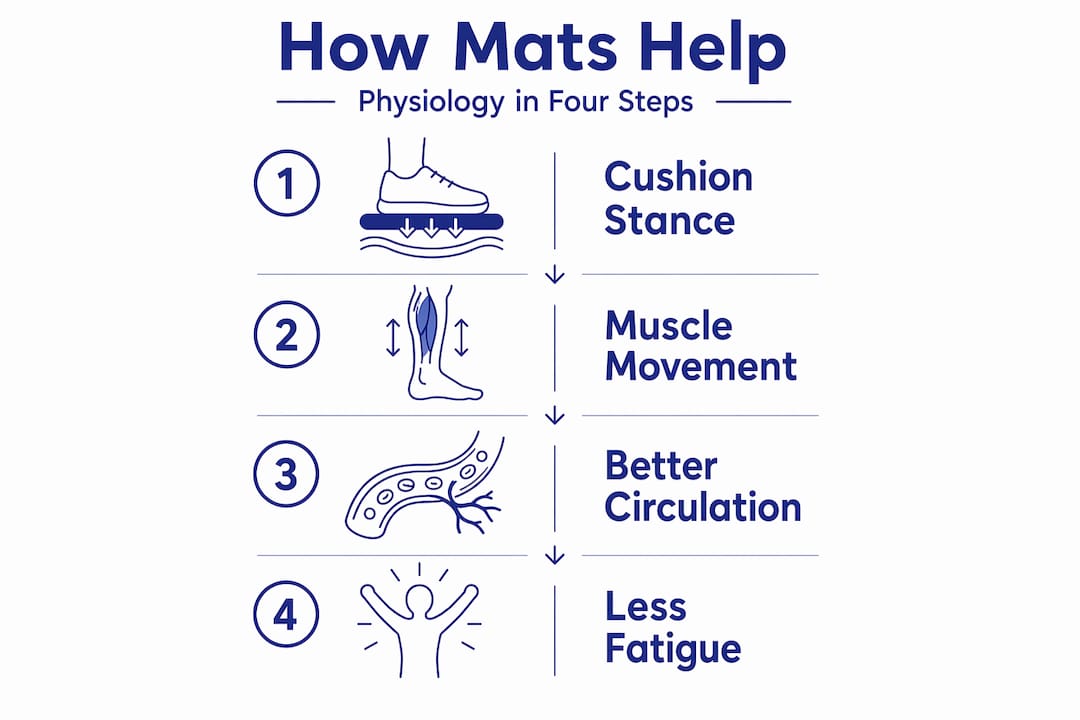
The benefits extend beyond circulation. Anti-fatigue mats distribute pressure more evenly across the feet, knees, and spine, reducing the concentrated load that causes joint strain over a long shift. The result is less foot burning, less leg heaviness, and reduced tension in the lower back. These are not subjective impressions. Research on surgical teams found decreased pain and fatigue levels when anti-fatigue mats were used during procedures requiring prolonged standing.
Here is what this means structurally for your workforce:
- Reduced static posture loading on lumbar vertebrae
- Lower compressive force on knee cartilage during extended shifts
- Improved venous return from the lower legs, reducing end-of-shift swelling
- Decreased activation threshold for fatigue-related errors in repetitive tasks
Pro Tip: Place mats at every fixed standing station, not just the longest ones. Fatigue begins accumulating within 90 minutes of standing on hard flooring, even at stations workers visit intermittently.
Choosing the right mat: materials, density, and design
Understanding anti-fatigue mat benefits means nothing if you purchase the wrong product. This is where many procurement decisions go wrong.
The single most critical specification is density-to-compression ratio. A mat that compresses more than 30 percent under body weight becomes unstable, forcing the ankle and knee to compensate for the shifting surface. Too soft a mat introduces instability and erodes the very ergonomic benefits you paid for. You need a mat that yields just enough to encourage micro-movement without creating a balance challenge.
| Mat Type | Best Environment | Key Properties | Cleaning Needs |
|---|---|---|---|
| EVA foam | Office, retail, light assembly | Lightweight, good compression response | Wipe clean, avoid harsh solvents |
| Rubber | Industrial, warehouse, food processing | High durability, slip resistance, oil resistant | Hose down, chemical safe |
| Vinyl foam composite | Hospitality, labs, healthcare | Moisture resistant, anti-microbial options | Damp mop, low-residue cleaner |
| Gel-core rubber | Prolonged standing workstations | Maximum cushion with stability layer | Wipe or hose depending on backing |
Material selection depends heavily on environment. Mats in wet or chemical environments must resist oils, moisture, and cleaning agents while maintaining slip resistance. A rubber mat rated for wet environments in a food processing facility will outlast an EVA foam product within a month in the same setting.
For industrial applications, look for mats with beveled edges, grease-resistant surfaces, and compression ratings that match shift length. A worker standing for four hours needs more compression resilience than one rotating through a station every 45 minutes.
Pro Tip: Request compression test data from your supplier, not just thickness measurements. A 3/4-inch mat with the right foam density outperforms a 1-inch mat made from inferior material.
Practical benefits for employees and overall productivity
The benefits of anti-fatigue flooring show up in two places: how workers feel during a shift, and how they perform after one.
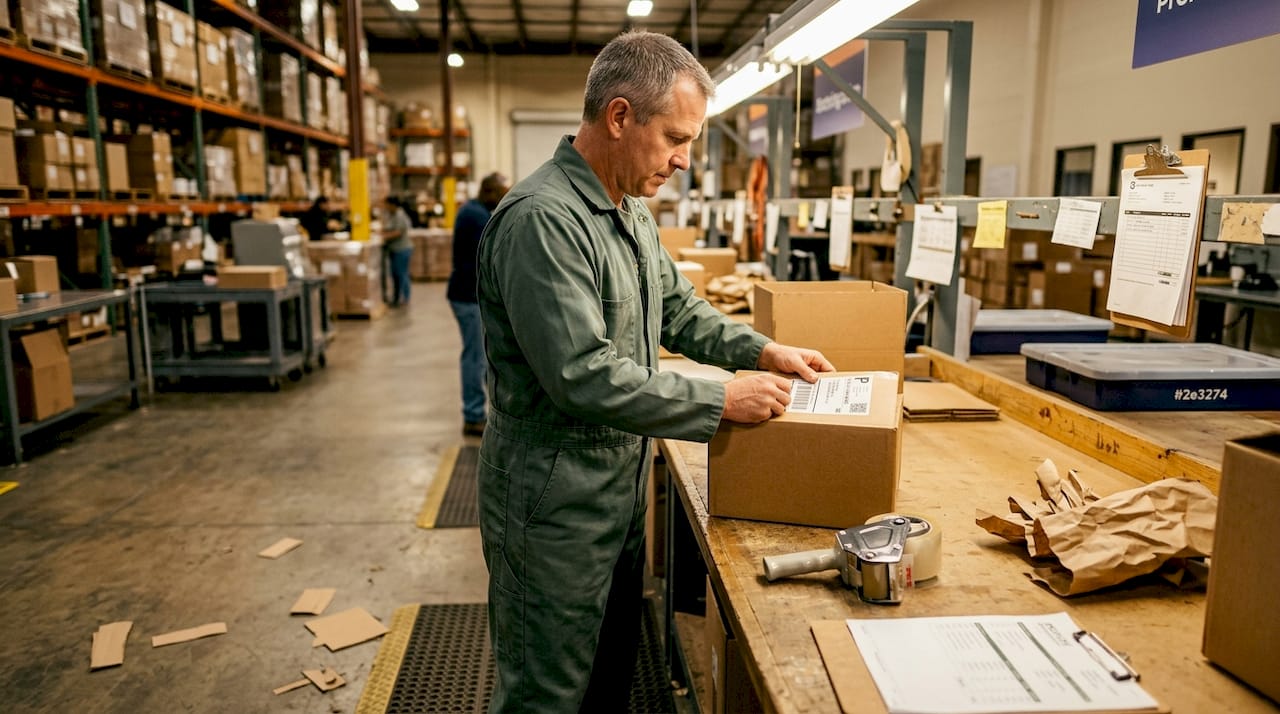
Anti-fatigue mats improve standing posture, which decreases spinal loading and supports hip and shoulder alignment. Workers who are not fighting chronic lower back discomfort maintain focus longer, make fewer errors in repetitive tasks, and report higher job satisfaction. That last point has direct implications for retention in high-turnover roles like warehouse picking, food prep, and retail floor operations.
The productivity case is concrete:
- Workers in assembly and production report fewer end-of-shift complaints when standing on ergonomic mats, leading to more consistent output quality
- Ergonomic mats reduce absenteeism and contribute to measurable safety improvements in industrial settings
- Surgical and clinical teams using anti-fatigue mats during long procedures sustain attention and precision longer than those standing on tile floors
- Retail staff on their feet for six-hour shifts report less leg heaviness and foot pain, which correlates directly with customer interaction quality
This is not just about physical comfort. A fatigued worker takes longer to complete tasks, makes more judgment errors, and becomes a safety risk in environments with machinery or sharp instruments. The ergonomic benefits of standing mats extend to risk management, not just HR wellness metrics.
Integrating mats into your workplace wellness program
Purchasing mats is the easy part. Getting full value from them requires a structured approach.
-
Conduct a standing workstation audit. Walk every department and identify every station where an employee stands for more than 60 continuous minutes per shift. Include checkout counters, assembly lines, prep stations, lab benches, and reception areas. This gives you an accurate mat requirement by location and shift duration.
-
Pair mats with a footwear policy. Anti-fatigue mat usage delivers stronger results when combined with supportive footwear guidelines. A worker in flat-soled shoes on a quality mat gets meaningful relief. The same worker in properly cushioned occupational footwear on the same mat gets significantly more.
-
Educate employees on correct usage. Workers sometimes push mats aside because they find them unusual at first. A brief orientation explaining how the micro-movement effect works increases adoption and prevents mats from being stored under desks instead of used.
-
Bundle procurement with maintenance. Bundling mat procurement with floor surveys and maintenance service contracts improves regulatory compliance and reduces total cost over multi-year agreements. Many commercial suppliers offer site assessments that verify correct mat placement and spec compliance.
-
Review OSHA mat standards as part of your safety documentation. Anti-fatigue mat specifications can be incorporated into your general safety program, particularly in environments subject to inspection.
Combining mats with posture and footwear policies has measurable impact on productivity and absenteeism. This also contributes to ESG reporting, where documented investments in worker health and safety are increasingly reviewed by partners and stakeholders.
Pro Tip: Set a mat replacement schedule based on compression recovery, not just appearance. A mat that looks intact but no longer springs back after 30 seconds of foot pressure has lost most of its ergonomic value.
My take on why workplaces keep getting this wrong
I’ve seen the same pattern repeat across facilities: a warehouse installs high-spec workstations, invests in ergonomic seating for the office staff, and then leaves production line workers standing on painted concrete all day. The mats, if present, are often the cheapest option available, selected based on price per square foot rather than compression specifications.
What I’ve learned from watching workplaces that actually improved outcomes is that the mindset shift matters more than the mat budget. When HR and facilities treat anti-fatigue mats as safety equipment rather than floor decor, the entire procurement process changes. Specifications get written. Suppliers get asked for data. Replacement cycles get scheduled.
The workplaces that saw real improvement were not necessarily the ones that spent the most. They were the ones that matched the right mat to the right environment, educated their workforce on why it matters, and built mat maintenance into their broader safety program. The common pitfall I keep seeing is the overly soft mat purchased because it “felt comfortable” in a showroom, which then creates balance issues for workers who stand on it for a full shift.
My advice: treat the ergonomic benefits of anti-fatigue mats the same way you would treat any other safety investment. Specify it. Measure it. Maintain it.
— Werner
Mats4U anti-fatigue solutions built for the workplace
If you are ready to move from understanding the benefits to selecting the right products, Mats4U carries a full range of commercial and industrial anti-fatigue mats matched to workplace requirements. The Comfort Premier Mat is engineered for extended standing with a density profile that balances cushion and stability. For environments with drainage needs or wet conditions, the Comfort Flow drainage mat delivers slip resistance alongside ergonomic support. Workers who need maximum cushioning during long shifts will find the Cushion Complete Mat effective for all-day standing comfort. All products ship free on orders over $100, and the Mats4U team can assist with spec writing and site-specific recommendations to match your facilities and workforce needs.
FAQ
What does an anti-fatigue mat actually do for workers?
An anti-fatigue mat encourages subtle micro-movements in leg muscles that promote blood circulation and reduce the static posture loading that causes fatigue, joint pain, and lower back tension during extended standing.
How do I know if a mat is too soft?
If a mat compresses more than 30 percent under body weight or does not return to its original shape within 30 seconds after pressure is removed, it is too soft and will cause instability rather than ergonomic support.
What work environments benefit most from anti-fatigue mats?
Any workplace where employees stand for 60 or more continuous minutes benefits directly, including manufacturing floors, retail counters, commercial kitchens, clinical labs, and reception areas.
Can anti-fatigue mats reduce workplace absenteeism?
Yes. Ergonomic mats reduce physical fatigue and musculoskeletal discomfort, and facilities that pair mat programs with footwear policies and posture training report lower absenteeism and improved productivity.
How often should anti-fatigue mats be replaced?
Replace mats when compression recovery drops noticeably, typically every one to three years depending on usage intensity, rather than waiting for visible surface wear to appear.


