


TL;DR:
- Mats prevent slips through friction, drainage, and edge stability.
- Worn or contaminated mats increase slip and trip hazards.
- Proper inspection, maintenance, and correct selection enhance mat safety effectiveness.
A mat on the floor feels like a solved problem. Most facility managers place one at an entrance or a wet workstation and consider the slip risk managed. But worn or dirty mats can be as hazardous as bare floors, which means a mat that looks functional may actually be creating new risk. This article breaks down the real mechanics of how mats reduce slip incidents, the conditions that cause them to fail, and the practical steps you can take to keep your facility genuinely safer. If you manage a commercial or industrial space, this is the evidence-based framework you need.
Table of Contents
- How mats actually prevent slips: The science explained
- Common matting pitfalls: When mats fail and why
- Selecting the right mat for your facility
- Making mats last: Maintenance best practices for safety
- The real key: Mats are a tool, not a cure-all, for slip prevention
- Explore mat solutions for your facility
- Frequently asked questions
Key Takeaways
| Point | Details |
|---|---|
| Friction and drainage matter | Mats prevent slips mainly by increasing friction and draining surface liquids efficiently. |
| Mat failure is common | Worn, dirty, or misplaced mats can cause as many accidents as bare floors. |
| Right selection is critical | Choose mats based on traffic, environment, material, and certified slip resistance for best results. |
| Maintenance extends protection | Regular cleaning, inspection, and timely replacement are essential to keep mats safe. |
| Mats are part of a system | Effective slip prevention combines mats, cleaning routines, footwear policies, and staff involvement. |
How mats actually prevent slips: The science explained
Mats reduce slip risk through three core mechanisms: friction, drainage, and edge stability. Understanding each one helps you evaluate whether a mat is actually doing its job or just filling floor space.
Friction is the primary mechanism. When a shoe contacts a mat surface, the texture and material create resistance that prevents the foot from sliding. Slip resistance and friction are directly linked: higher friction means lower slip probability. Rubber and nitrile mats consistently outperform PVC on wet surfaces because their molecular structure maintains grip even when contaminated with moisture.
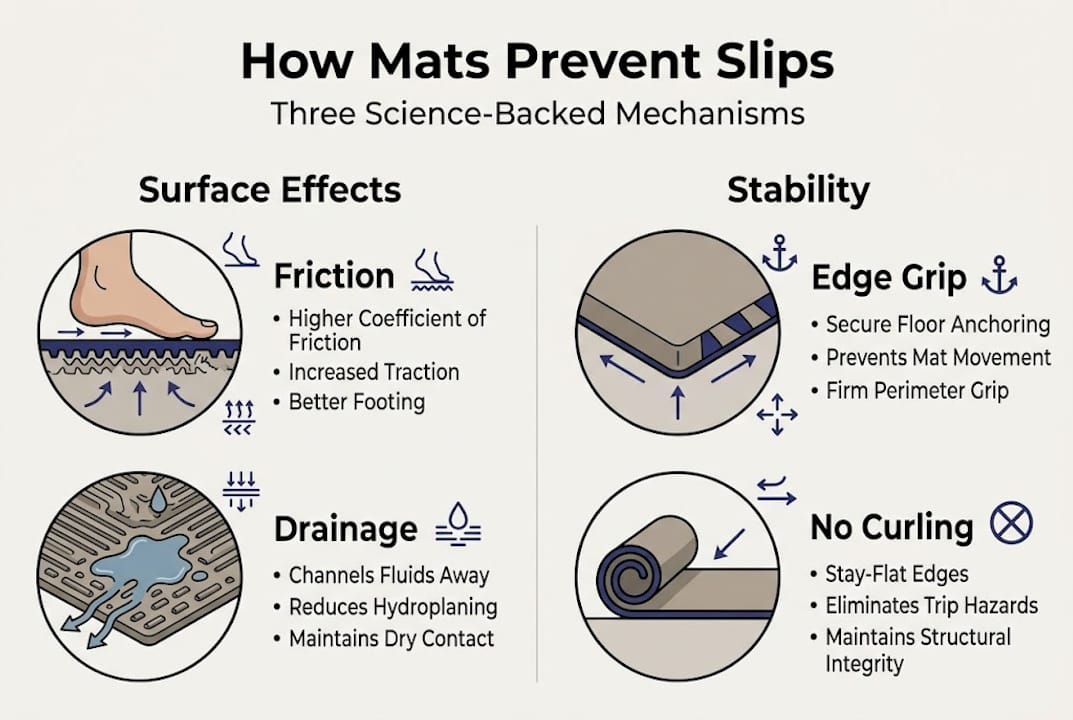
Drainage channels are the second factor. In wet environments, water pooling under or on a mat creates a hydroplaning effect, where the shoe rides on a thin film of liquid rather than gripping the surface. Mats with molded drainage channels or open-grid designs disperse liquid downward and away from the walking surface. This keeps the top layer dry and grippy.
Edge stability is often overlooked. A mat that shifts, buckles, or curls at the edges creates a trip hazard that can be worse than no mat at all. Beveled edges and non-slip rubber backing hold the mat flat and create a smooth transition from floor to mat surface. Our anti-slip floor mats guide covers these design features in detail.
Material selection also matters significantly. Here is a quick comparison:
| Material | Best environment | Slip resistance | Durability |
|---|---|---|---|
| Rubber | Wet, oily, heavy traffic | High | Very high |
| Nitrile rubber | Chemical exposure zones | Very high | High |
| PVC/vinyl | Dry, light traffic | Moderate | Moderate |
| Polypropylene | Entrances, low moisture | Moderate | High |
“All sources agree that mats work by improving friction and drainage between the shoe and the floor surface.”
To verify a mat’s performance before purchase, look for DCOF (Dynamic Coefficient of Friction) ratings. A DCOF value above 0.42 is the standard threshold for level walking surfaces in commercial settings. Pendulum test values above 36 are considered low slip risk. These numbers give you objective data rather than relying on marketing claims. Review our slip resistance basics resource for a full breakdown of testing methods.
Pro Tip: Ask suppliers for third-party DCOF or pendulum test results before committing to a mat product. Manufacturer-run tests and independent lab results can differ significantly.
- Rubber mats maintain grip in wet and oily conditions
- Drainage channels prevent liquid buildup on the walking surface
- Beveled edges eliminate trip hazards at mat transitions
- DCOF ratings above 0.42 indicate safe performance for level surfaces
- Non-slip backing prevents mat migration under foot traffic
Common matting pitfalls: When mats fail and why
Even a well-chosen mat stops working under the wrong conditions. Knowing the failure modes helps you catch problems before they cause incidents.
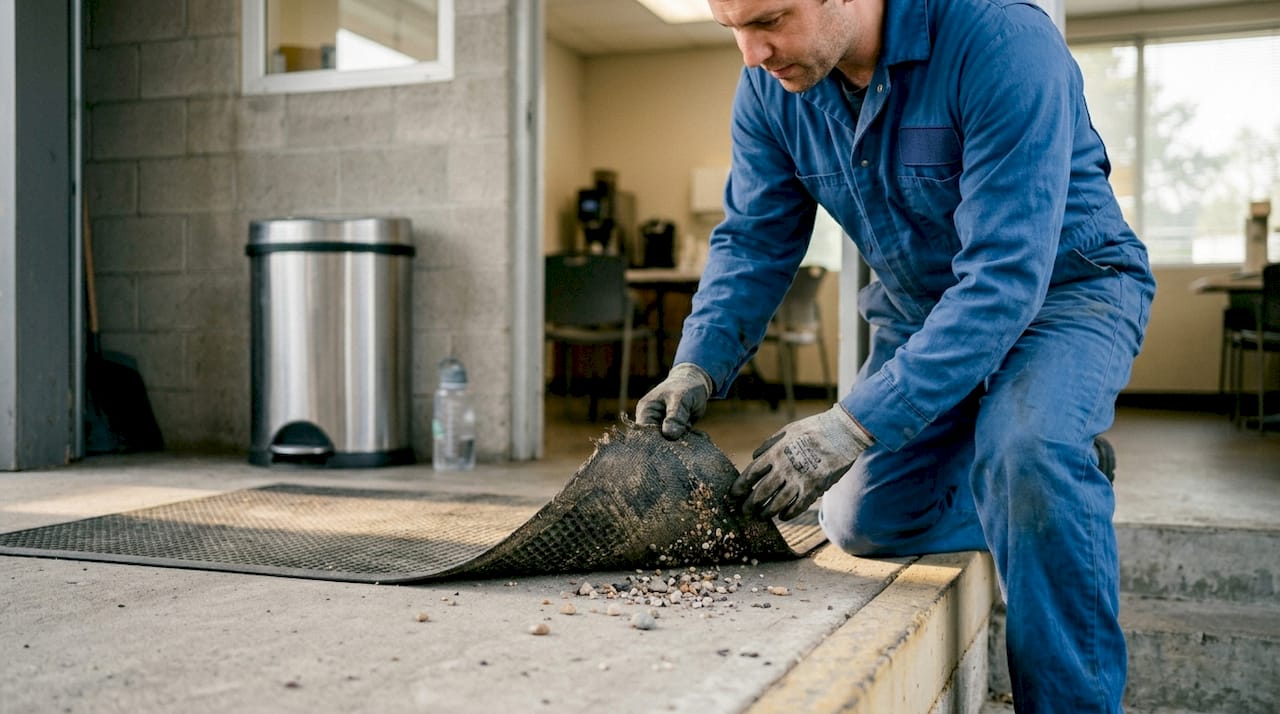
Wear degradation is the most common issue. Mat surfaces lose their texture and grip over time. Industry data suggests mats can degrade significantly after approximately 75,000 footfalls, which is roughly equivalent to the lifespan of a quality pair of work boots. In a high-traffic facility entrance, that threshold can be reached in weeks. Worn, dirty, or poorly installed mats increase trip hazards rather than reducing them.
Contamination is the second major failure mode. Oil, grease, and fine particulate dirt fill the surface texture of a mat, effectively smoothing it out. A rubber mat coated in kitchen grease offers almost no more grip than a bare tile floor. This is a particular risk in food processing, commercial kitchens, and automotive service areas.
Wrong material for the environment creates hidden danger. PVC mats in wet areas become slick. Mats with fabric tops in oily zones absorb contaminants and hold them against the walking surface. Matching material to environment is not optional; it is a safety requirement. See our guidance on avoiding slippery floors for environment-specific recommendations.
Here is a comparison of effective versus failed mat scenarios:
| Scenario | Mat condition | Risk level |
|---|---|---|
| Rubber mat, clean, beveled edges | Effective | Low |
| Rubber mat, oil-contaminated | Failed | High |
| PVC mat in wet entrance | Marginal to failed | High |
| Worn fabric mat, curling edges | Failed | Very high |
| Open-grid mat in wet zone, maintained | Effective | Low |
Steps to diagnose mat failure in your facility:
- Walk the mat and feel for reduced surface texture underfoot
- Inspect edges for curling, buckling, or separation from the floor
- Check the underside for worn or missing non-slip backing
- Look for visible contamination: oil sheen, embedded dirt, or discoloration
- Compare current DCOF or pendulum test results against the mat’s original specification
“Mats that are worn, soiled, or incorrectly positioned can increase the risk of trips and falls rather than reducing them.”
Regular slip resistance guidance from occupational safety authorities consistently emphasizes scheduled inspection as a non-negotiable part of any mat program. Build that inspection into your existing safety audit schedule.
Selecting the right mat for your facility
Choosing the correct mat starts with an honest assessment of your environment. Not every mat works in every setting, and the wrong choice can create risk rather than reduce it.
Assess your environment first. Is the area primarily dry, intermittently wet, or consistently exposed to liquids or oils? High-traffic zones need mats rated for heavy use. Wet areas need drainage. Oily environments need nitrile or rubber with chemical resistance. Correct mat material and features are critical for effectiveness in each unique setting.
Key selection criteria:
- Certified slip resistance: Look for DCOF ratings or pendulum test results from independent labs
- Beveled edges: A minimum 20-degree bevel reduces trip risk at mat transitions
- Material match: Rubber or nitrile for wet and oily zones; vinyl for dry, light-traffic areas
- Drainage design: Open-grid or channeled surfaces for wet environments
- Non-slip backing: Suction-cup or cleated rubber backing prevents mat movement
- Size and coverage: Mat must cover the full hazard zone, not just part of it
For standing workstations in wet or slippery environments, anti-fatigue mat considerations add another layer of criteria, including cushioning, drainage, and surface texture specific to stationary workers.
For heavy industrial zones, review our industrial non-slip mats category for options rated for chemical exposure, heavy equipment traffic, and extreme wear.
Pro Tip: Use high-visibility colors like yellow or safety orange for mats in transition zones or near machinery. Color contrast improves hazard awareness and supports your facility’s visual safety communication system.
Map your mat plan to specific zones: building entrances, locker rooms, commercial kitchens, production floors, loading docks, and restrooms each have different requirements. A single mat type rarely covers all of them.
Making mats last: Maintenance best practices for safety
A mat program without a maintenance schedule is incomplete. Wear, lack of cleaning, and deferred replacement directly increase accident rates. The good news is that a structured maintenance routine is straightforward to implement.
Maintenance steps for busy facility floors:
- Daily: Shake out or vacuum entrance mats to remove surface debris
- Weekly: Scrub mats with appropriate cleaning solution based on mat material; avoid harsh solvents on rubber
- Monthly: Perform a full visual and tactile inspection for wear and edge condition
- Quarterly: Conduct a formal DCOF or slip resistance check on high-risk mats
- Annually: Review mat placement maps against current facility traffic data and update as needed
Integrate mat maintenance into your existing facility safety audits. This creates accountability and a documented record that supports compliance reporting. Testing protocols for mats are well established and can be incorporated into standard audit checklists.
For anti-fatigue and industrial mats, review our anti-fatigue mat upkeep guidance for material-specific cleaning and replacement schedules.
Signs your mat needs replacing:
- Surface texture is visibly worn smooth
- Edges are curling or no longer lying flat
- Non-slip backing is cracked, peeling, or missing in sections
- Mat retains odor or visible contamination after cleaning
- DCOF test result falls below 0.42
- Mat has exceeded manufacturer-recommended traffic volume
Log replacement dates and traffic estimates for each mat location. This data helps you forecast replacement cycles, budget accurately, and demonstrate due diligence in safety audits. Your slippery floor accident prevention strategy is only as strong as the maintenance program behind it.
The real key: Mats are a tool, not a cure-all, for slip prevention
Here is the part most mat suppliers will not tell you. The best mat on the market loses most of its value when it sits in a facility with poor cleaning practices, untrained staff, or inadequate footwear policies. We have seen facilities invest in premium rubber matting and still record slip incidents because the mats were never cleaned and workers wore smooth-soled shoes.
Mats complement but do not substitute for cleaning and footwear controls. This is not a disclaimer. It is a practical reality that shapes how effective your mat program will be.
The facilities with the best safety records treat mats as one layer in a broader system. That system includes scheduled cleaning, appropriate footwear requirements, staff training on hazard reporting, and regular safety audits. Mats should not be viewed as permission to reduce investment in those other controls. They are an addition to a layered approach, not a replacement for it. Review our guidance on integrated safety solutions for a broader framework.
Explore mat solutions for your facility
Applying the right mat in the right location starts with having access to products built for commercial and industrial demands. The WaterHog Max Grand Half Oval Mat delivers high-traffic entrance performance with superior drainage and a rubber-reinforced border. For standing workstations, the Cushion Complete Mat combines anti-fatigue support with slip-resistant backing. Need branded coverage for lobbies or reception areas? Premium Custom Floor Mats offer full customization without compromising safety performance. All products ship free on orders over $100 and are Made in the USA.
Frequently asked questions
What features should I look for in an anti-slip mat for a wet area?
Choose mats with certified slip resistance ratings, drainage channels, and beveled edges, made from rubber or nitrile. The right material and design greatly enhance slip protection in wet environments.
How often should facility mats be replaced?
Replace mats when you observe visible wear, loss of surface texture, curling edges, or contamination that cleaning cannot remove. Wear reduces mat effectiveness after heavy use, with degradation often beginning around 75,000 footfalls.
Do mats eliminate the need for regular cleaning in slip-prone areas?
No. Mats reduce risk but do not replace consistent cleaning and footwear controls. Mats complement but do not substitute for other safety measures.
Is there a standard way to test mat slip resistance?
Yes. DCOF (Dynamic Coefficient of Friction) and pendulum slip tests are the standard evaluation methods. DCOF and pendulum tests are widely recognized by occupational safety authorities for objective mat performance assessment.


