


Cleaning commercial mats might seem straightforward, but nearly 90 percent of dirt in american buildings is tracked inside on footwear. Mats like Waterhog serve as the first defense against this grime, yet without proper care, they lose effectiveness quickly. Understanding each step of the cleaning process helps preserve your investment, improve hygiene, and keep high-traffic areas looking professional and safe for everyone.
Table of Contents
- Step 1: Gather Necessary Cleaning Supplies
- Step 2: Remove Loose Dirt and Debris
- Step 3: Apply Approved Cleaning Solution
- Step 4: Rinse and Extract Excess Water
- Step 5: Inspect and Dry for Reuse
Quick Summary
| Attention-Grabbing Insight | Clear Explanation |
|---|---|
| 1. Gather Essential Cleaning Supplies | Assemble a powerful vacuum, neutral cleaner, and protective gear to prepare for effective mat cleaning. |
| 2. Regularly Remove Loose Dirt | Consistently vacuum and shake the mat to prevent dirt buildup, especially in high-traffic areas. |
| 3. Use Approved Cleaning Solutions | Apply a compatible, neutral cleaner to avoid damaging the mat while ensuring thorough cleaning. |
| 4. Rinse and Extract Excess Water | Thoroughly rinse the mat with cold water and extract moisture to prevent residue and promote quick drying. |
| 5. Inspect and Dry Properly for Reuse | Lay the mat flat in a well-ventilated area to dry, conducting a final inspection before placing it back into service. |
Step 1: Gather Necessary Cleaning Supplies
Before diving into mat cleaning, gathering the right equipment is your first critical move. Think of this as prepping your cleaning arsenal for a successful mission. You’ll want to collect supplies that will make your Waterhog mat cleaning process efficient and thorough.
Start by assembling a comprehensive cleaning kit that includes specific cleaning tools designed for commercial floor maintenance. Your essential lineup should include a powerful vacuum cleaner with strong suction, a sturdy mop bucket, a neutral floor cleaner specifically formulated for commercial mats, a robust carpet cleaning brush, and personal protective equipment like gloves and safety glasses. For deeper cleaning challenges, consider having a carpet extractor or pressure washer on standby.
Pro tip: Not all cleaning supplies are created equal. Select cleaning solutions that are compatible with Waterhog mat materials to prevent potential damage. Avoid harsh chemicals that might degrade the mat’s fibers or backing. When in doubt, consult the manufacturer’s recommended cleaning guidelines or reach out to their customer support for specific advice. Your goal is to clean effectively while preserving the mat’s appearance and functionality.
With your cleaning supplies assembled, you’re now ready to move on to the next phase of mat maintenance.
Step 2: Remove Loose Dirt and Debris
It’s time to tackle the initial layer of dirt and debris that has accumulated on your Waterhog mat. This step is crucial for preparing the mat for a deeper clean and preventing ground in grime from becoming more stubborn.
Regular vacuuming is your first line of defense against dirt buildup. Start by using a vacuum with strong suction and move systematically across the entire mat surface. Pay extra attention to high traffic areas and corners where dirt tends to collect. For a more thorough approach, turn the mat over and shake it vigorously to dislodge embedded particles before vacuuming the top surface again.
Pro tip: Invest in a vacuum with adjustable height settings to ensure optimal contact with the mat’s surface. Different mat pile heights require different vacuum approaches. If your mat is particularly thick or textured, use a vacuum with a brush attachment to help lift and remove dirt more effectively. Quick and consistent debris removal not only keeps your mat looking clean but also extends its overall lifespan and performance.
With loose dirt now removed, you’re ready to move on to the next stage of your mat cleaning process.
Step 3: Apply Approved Cleaning Solution
With loose dirt now cleared, you are ready to apply a targeted cleaning solution that will restore your Waterhog mat to its pristine condition. This critical stage requires precision and careful product selection to ensure optimal cleaning without compromising the mat’s integrity.
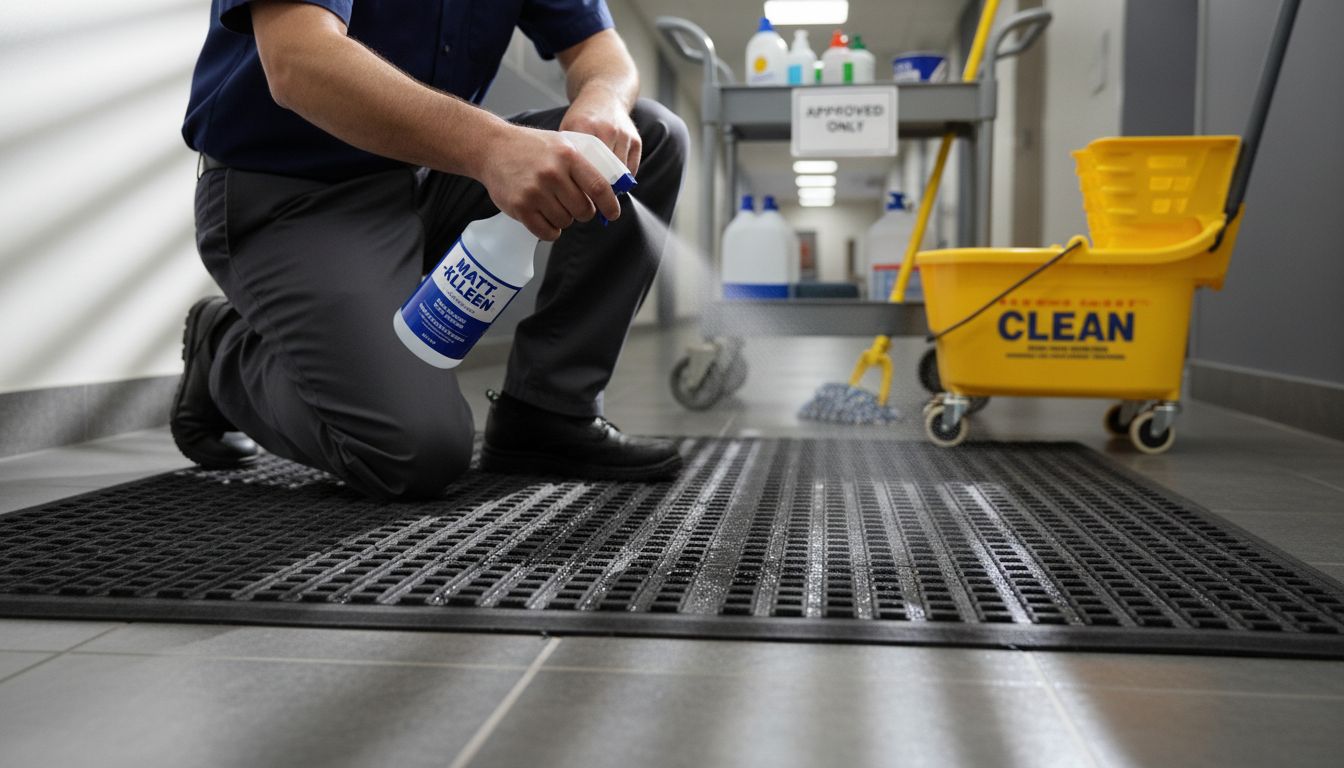
Deep cleaning of commercial mats demands using an approved neutral cleaner specifically formulated for commercial floor coverings. Begin by selecting a cleaning solution compatible with your mat’s specific material. Dilute the cleaner according to manufacturer instructions, ensuring you use the correct concentration to avoid potential damage. Apply the solution evenly across the mat using a soft brush or microfiber mop, working in systematic sections to guarantee complete coverage.
Pro tip: When selecting a cleaning solution, always prioritize products designed for commercial use that are gentle yet effective. Avoid harsh chemicals that might degrade the mat’s fibers or backing. Understanding floor mats cleaner functionality can help you make informed choices about product selection and application techniques. Test the cleaning solution on a small, inconspicuous area first to ensure it does not cause discoloration or unexpected damage.
With the cleaning solution thoroughly applied, you are now prepared to move forward with the next stage of mat maintenance.
Step 4: Rinse and Extract Excess Water
With the cleaning solution thoroughly applied, you now enter a critical phase of mat maintenance that will determine the final quality of your cleaning process. Proper rinsing and water extraction are essential to prevent residue buildup and ensure your Waterhog mat dries quickly and effectively.
Deep cleaning processes require thorough rinsing to remove all traces of cleaning solution. Begin by using cold water and carefully rinse the entire mat surface, ensuring you eliminate all chemical residues. A carpet extractor or wet vacuum is your best tool for extracting excess water. Move systematically across the mat, using overlapping strokes to guarantee complete water removal. Pay special attention to areas that tend to retain more moisture such as edges and dense fiber sections.
Pro tip: The key to successful water extraction is patience and technique. Work slowly and methodically, allowing the extractor to pull maximum moisture from the mat fibers. Avoid oversaturating the mat or leaving standing water, which can lead to potential mold or mildew growth. If you do not have a professional carpet extractor, a wet vacuum with strong suction can be an effective alternative. The goal is to leave your mat as dry as possible without causing fiber damage.
With excess water successfully removed, you are now ready to proceed to the final stages of mat cleaning and restoration.
Step 5: Inspect and Dry for Reuse
You are in the final stages of mat restoration, where careful inspection and proper drying will determine the success of your cleaning process. This crucial phase ensures your Waterhog mat is ready to return to service in peak condition.
After deep cleaning, mats must be thoroughly dried and inspected to meet cleanliness standards. Lay the mat flat to dry, positioning backed mats face down, which helps maintain the mat’s shape and prevents potential moisture retention. Choose a well ventilated area with consistent air circulation to accelerate the drying process. As the mat dries, conduct a detailed visual inspection for any remaining dirt patches, stains, or areas that might require additional attention.

Pro tip: Patience is key during the drying process. Avoid rushing by using direct heat sources like hairdryers or placing the mat in direct sunlight, which can damage the fibers or cause uneven shrinkage. If possible, use fans to create gentle air movement around the mat. Once completely dry, perform a final tactile and visual inspection to ensure the mat is clean, fresh, and ready to be returned to its designated commercial space. The goal is a mat that looks pristine and feels completely dry to the touch.
With your Waterhog mat now cleaned, dried, and inspected, you have successfully completed a comprehensive maintenance process that will extend its lifespan and performance.
Protect Your Investment with the Right Waterhog Mats and Care
Keeping your Waterhog mats clean and well-maintained is essential to extend their durability and keep your commercial spaces safe and inviting. The challenges of regular dirt removal, using approved cleaning solutions, and proper drying highlight the need for quality mats designed specifically to withstand tough environments. If you want mats that hold up well to cleaning routines and high traffic, choosing the right Waterhog products matters.
Explore the full range in our Shop All Waterhog Mats – Mats4U USA collection to find mats engineered for heavy use and easy maintenance. Whether you need durable Waterhog Diamond mats with enhanced dirt-trapping or versatile Waterhog Tiles for modular setups, we have you covered. Act now to benefit from competitive pricing and free delivery on orders over $100 at Mats4U.com. Invest in quality mats that simplify your cleaning steps and keep your commercial space looking its best.
Frequently Asked Questions
How often should I wash my Waterhog mat for commercial spaces?
It is recommended to wash your Waterhog mat every 30 to 60 days, depending on foot traffic. Regular cleaning helps maintain its appearance and prevents dirt buildup, extending the mat’s lifespan.
What supplies do I need to clean a Waterhog mat?
To effectively clean a Waterhog mat, gather supplies such as a vacuum cleaner, mop bucket, neutral floor cleaner, carpet cleaning brush, and personal protective gear like gloves and safety glasses. Assemble these items before beginning the cleaning process to ensure a thorough clean.
How do I remove loose dirt from a Waterhog mat?
Start by vacuuming the mat with strong suction, covering the entire surface systematically. For a deeper clean, turn the mat over and shake it vigorously to dislodge any debris before vacuuming again.
What cleaning solution should I use on my Waterhog mat?
Use a neutral floor cleaner specifically formulated for commercial mats to avoid damage. Dilute the solution according to the manufacturer’s instructions and apply it evenly across the mat, using a soft brush to ensure complete coverage.
How do I properly rinse and extract water from a cleaned Waterhog mat?
Rinse the mat with cold water to remove all cleaning solution, then use a carpet extractor or wet vacuum to remove excess water. Work slowly and methodically, ensuring the mat is as dry as possible to prevent mold growth.
What should I do after cleaning and rinsing my Waterhog mat?
Inspect the mat for any remaining dirt or stains and ensure it is completely dry before returning it to service. Lay the mat flat in a well-ventilated area to dry, avoiding direct heat sources that could damage the fibers.
Recommended
- How to Clean a Waterhog Mat for Long-lasting Performance – Mats4U USA
- What Is a Waterhog Mat? Benefits for Businesses Explained – Mats4U USA
- What is a Waterhog Mat? Understanding Its Benefits – Mats4U USA
- How to Clean Waterhog Mats for Businesses and Facilities – Mats4U USA
- Essential Outdoor Mattress Care Instructions for Comfort – Hazli Collection


