


Most American leisure facilities face increasing safety demands as poolside slip incidents remain a leading cause of visitor injuries. For facility managers, the challenge is not just keeping decks dry but choosing mats that withstand constant exposure to water, UV rays, and cleaning chemicals. This guide reveals how modern non slip poolside mats deliver durability and comfort, reducing accident rates by up to 60 percent while creating a welcoming environment guests appreciate.
Table of Contents
- What Are Non Slip Poolside Mats?
- Types of Poolside Mats Available
- Essential Safety and Comfort Features
- Compliance With ADA and Safety Standards
- Cost Considerations and Maintenance Tips
- Common Mistakes and How to Avoid Them
Key Takeaways
| Point | Details |
|---|---|
| Non Slip Poolside Mats Enhance Safety | These mats are designed to prevent slip and fall accidents around pools by providing a secure, textured surface that maintains traction when wet. |
| Types of Mats for Specific Needs | Different types of poolside mats exist, including rubber drainage mats, modular tile mats, roll-out safety mats, and specialized commercial mats, each tailored for specific facility requirements. |
| ADA Compliance is Essential | Ensuring that poolside mats meet ADA guidelines is crucial for accessibility and safety, including proper thickness and stability to accommodate individuals with mobility challenges. |
| Regular Maintenance Saves Costs | Implementing routine inspections and maintenance can significantly extend the life of poolside mats and reduce potential liability related to slip incidents. |
What Are Non Slip Poolside Mats?
Non slip poolside mats are specialized safety surfaces designed to prevent slip and fall accidents in wet environments around swimming pools, spas, and aquatic facilities. These innovative floor coverings create a secure walking surface by utilizing unique textured materials that maintain traction even when exposed to water, sunscreen, and other slippery substances.
Poolside mats typically feature advanced engineering focused on water displacement and friction control. Understanding non slip floor mats for wet areas reveals they are constructed with drainage channels, raised surface patterns, and moisture-wicking materials that quickly move liquid away from walking surfaces. The primary goal is to reduce the risk of accidents by providing a stable, grippy surface that helps prevent potentially dangerous slip incidents.
These safety mats come in multiple design configurations tailored to specific facility needs. Some key characteristics include:
- Raised rubber or synthetic surfaces with aggressive tread patterns
- UV resistant materials for outdoor pool environments
- Quick drying fabrics that resist mold and mildew
- Modular designs allowing for custom fit around pool edges and walkways
- Chemical resistant constructions that withstand pool cleaning agents
Pro tip: Always select non slip poolside mats with drainage holes and raised surface textures to maximize water dispersion and minimize slip risks.
Types of Poolside Mats Available
Poolside mats come in several specialized configurations designed to address specific safety and environmental challenges in aquatic facilities. Anti slip pool mats for safer commercial pool decks demonstrate the critical importance of selecting the right mat type for different pool environments.
The primary categories of poolside mats include:
- Rubber Drainage Mats
- Thick, interlocking rubber surfaces
- Excellent water drainage capabilities
- Highly durable and resistant to pool chemicals
- Ideal for high-traffic commercial pool areas
- Modular Tile Mats
- Interlocking square or rectangular sections
- Customizable configurations
- Quick installation and replacement
- Available in multiple textures and colors
- Roll-Out Safety Mats
- Continuous surface coverage
- Easy to clean and maintain
- Lightweight and portable
- Suitable for temporary or permanent installations
- Specialized Commercial Mats
- Enhanced grip patterns
- UV and chlorine resistant
- Designed for specific facility requirements
- Meets Americans with Disabilities Act (ADA) guidelines
Pro tip: Always measure your specific pool deck area and consider foot traffic patterns before selecting a poolside mat to ensure optimal safety and performance.
Here’s how the main types of poolside mats differ for facility management purposes:
| Mat Type | Best For | Durability | Key Facility Benefit |
|---|---|---|---|
| Rubber Drainage Mats | High-traffic pools | Extremely durable | Maximizes water evacuation |
| Modular Tile Mats | Custom shapes/areas | Replaceable modules | Flexible fitting and repairs |
| Roll-Out Safety Mats | Temporary setups | Moderate lifespan | Quick install and removal |
| Specialized Commercial Mats | Large, public pools | Highest resistance | Meets strict ADA requirements |
Essential Safety and Comfort Features
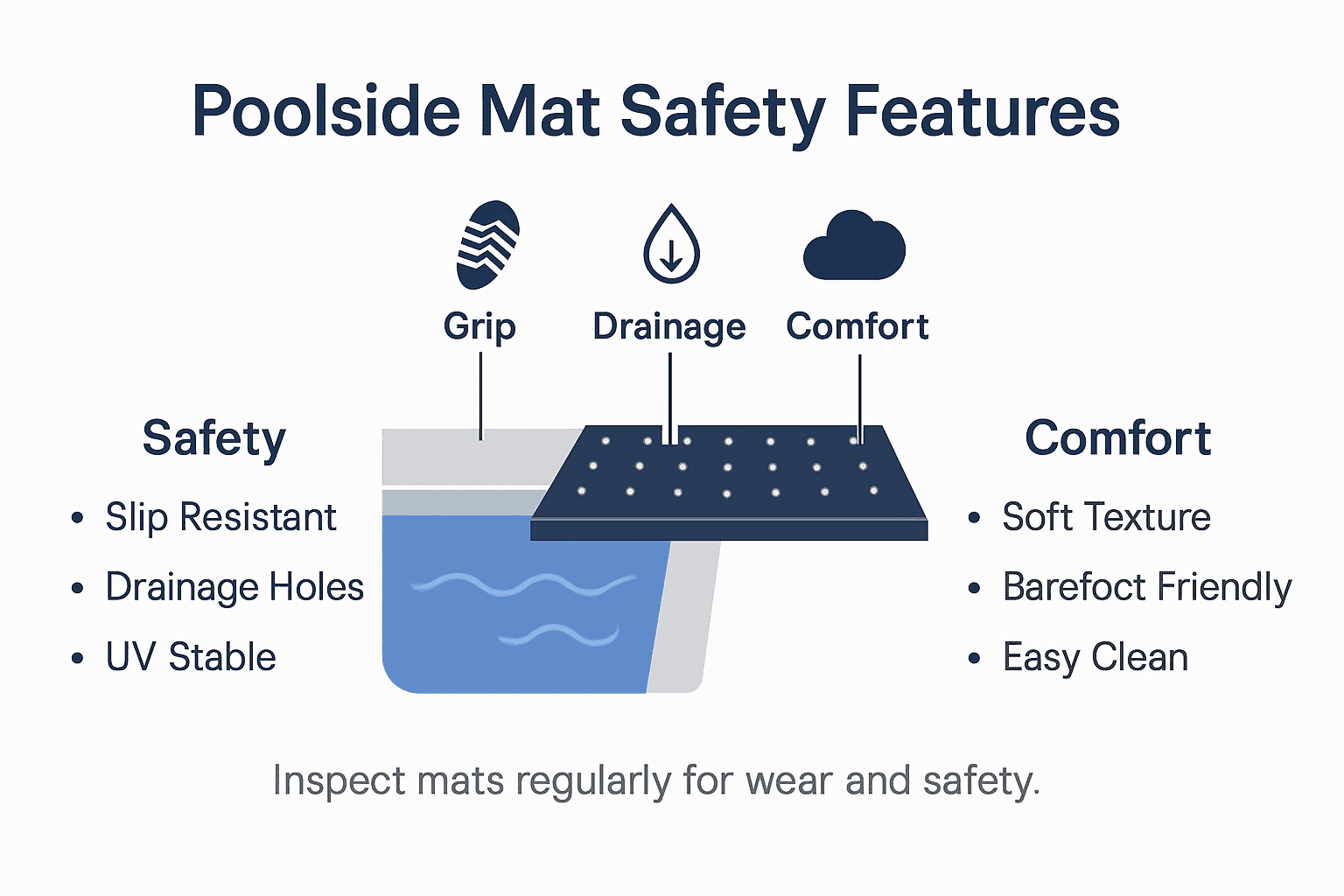
Poolside mats are engineered with multiple safety and comfort features designed to protect facility visitors and enhance overall pool deck functionality. The importance of pool mats highlights the critical role these specialized surfaces play in preventing accidents and improving user experience.
Key safety features include advanced traction technologies that significantly reduce slip risks. These mats incorporate intricate surface patterns with microscopic channels that quickly disperse water, creating immediate grip even when wet. The textured surfaces are specifically designed to:
- Provide immediate water drainage
- Create multi-directional friction points
- Minimize hydroplaning potential
- Maintain consistent traction under various moisture conditions
Beyond safety, comfort features are equally important for facility management. Modern poolside mats offer ergonomic benefits that reduce physical strain for both staff and visitors. Cushioned materials help absorb impact, provide thermal insulation against hot or cold surfaces, and create a more comfortable walking experience. Additional comfort considerations include:
- Soft yet resilient material compositions
- Temperature-resistant surfaces
- Shock absorption capabilities
- Reduced foot fatigue for extended standing
The material selection for these mats is critical. High-performance synthetic compounds resist UV degradation, chemical exposure from pool treatments, and extreme temperature variations. This ensures long-term durability and consistent performance across challenging environmental conditions.
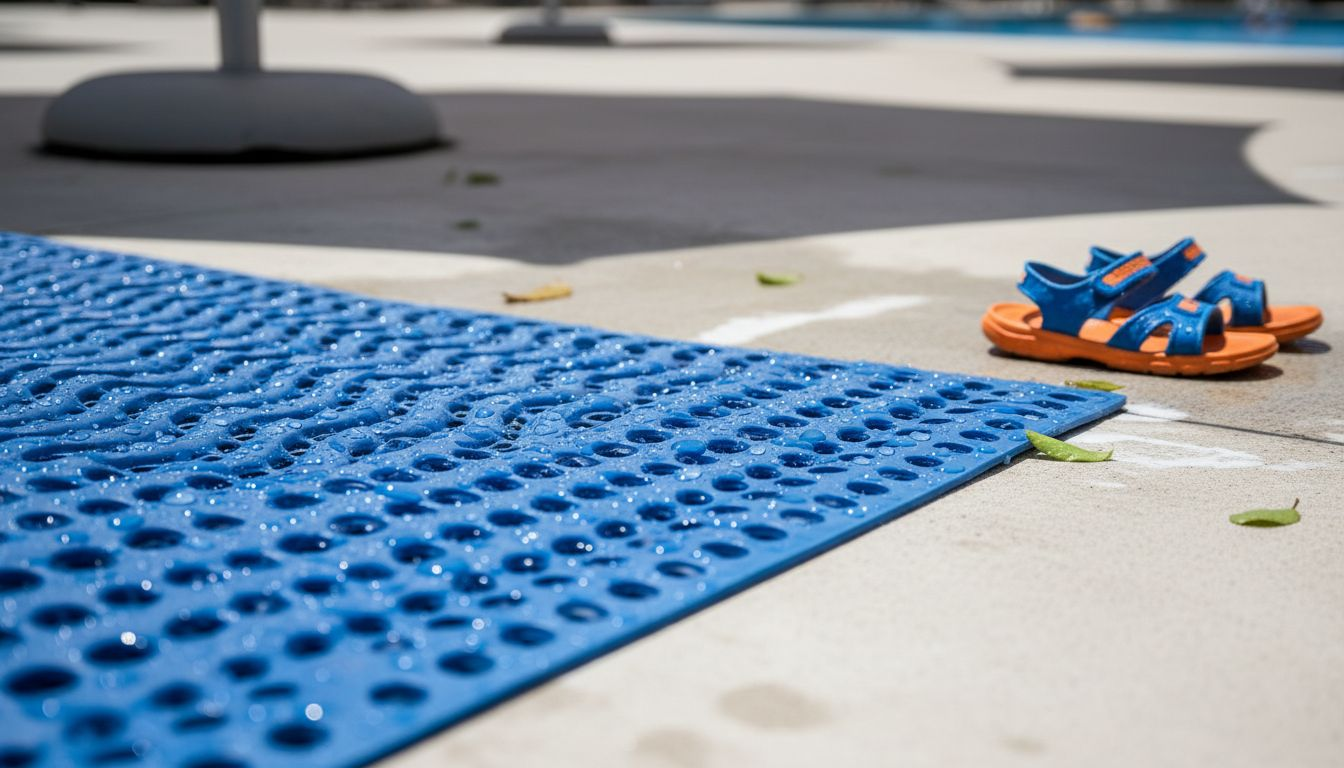
Pro tip: Select poolside mats with a minimum slip resistance rating of R11 to ensure optimal safety for facility visitors.
Compliance With ADA and Safety Standards
Poolside safety goes far beyond simple traction requirements, with rigorous standards governing accessibility and protection for all facility users. Understanding ADA floor mats for accessibility and safety reveals the critical importance of meeting specific regulatory guidelines for commercial pool environments.
The Americans with Disabilities Act (ADA) establishes precise requirements for poolside mat installations. These standards mandate specific characteristics to ensure accessibility and safety for individuals with mobility challenges:
- Maximum surface thickness of 1/2 inch
- Firm and stable surface without abrupt edges
- Smooth transitions between mat sections
- Sufficient width to accommodate wheelchairs
- Minimal tripping hazards
- Consistent color contrast for visual recognition
Safety standards extend beyond ADA requirements, incorporating additional performance metrics. Professional facilities must consider:
- Coefficient of friction ratings
- Impact absorption capabilities
- Chemical and UV resistance
- Temperature performance range
- Durability under continuous foot traffic
Material selection plays a crucial role in meeting these comprehensive standards. High-performance synthetic compounds are engineered to provide consistent performance, maintaining slip resistance and structural integrity across challenging environmental conditions. Specialized poolside mats undergo extensive testing to ensure they meet or exceed industry safety benchmarks.
Pro tip: Conduct annual safety inspections of poolside mats to verify ongoing compliance with ADA guidelines and maintain optimal facility safety standards.
Cost Considerations and Maintenance Tips
Poolside mat investments require strategic financial planning and proactive maintenance to maximize long-term value and safety. ADA compliant floor mats provide accessible solutions that demonstrate how quality directly impacts overall facility performance and cost-effectiveness.
Cost considerations for poolside mats involve multiple financial dimensions:
- Initial purchase price
- Installation expenses
- Replacement frequency
- Maintenance requirements
- Potential liability reduction
Maintenance best practices are crucial for extending mat lifespan and preserving safety standards. Regular cleaning protocols should include:
- Daily surface debris removal
- Weekly thorough washing
- Monthly comprehensive inspections
- Immediate replacement of damaged sections
- Chemical treatment resistance checks
Budgeting for poolside mats requires a comprehensive approach beyond initial cost. Facility managers should calculate total ownership expenses, considering factors like durability, replacement intervals, and potential accident prevention savings. High-quality mats might present higher upfront costs but typically offer significant long-term economic benefits through reduced maintenance and enhanced safety performance.
Material selection directly impacts maintenance complexity and ongoing expenses. Synthetic compounds with advanced engineering provide superior durability, requiring less frequent replacement and minimizing long-term financial investments. Professional facilities benefit from selecting materials engineered for continuous heavy-traffic environments.
Pro tip: Budget for professional mat replacement every 18-24 months and allocate approximately 10-15% of your annual facility maintenance budget for safety floor covering investments.
Below is a quick-reference guide to major cost and maintenance factors:
| Cost Factor | Impact on Budget | Maintenance Insight |
|---|---|---|
| Purchase Price | One-time investment | Varies by size and type |
| Replacement Cycle | Ongoing cost | Influenced by quality and usage |
| Cleaning Effort | Staff resource demand | Easier with synthetic materials |
| Safety-Driven Savings | Reduced liability risks | Fewer accidents over time |
Common Mistakes and How to Avoid Them
Poolside mat selection and maintenance involves several critical pitfalls that can compromise facility safety and user experience. Understanding non slip floor mats for wet areas highlights the nuanced challenges facility managers frequently encounter.
Common mistakes facility managers make include:
- Incorrect Size Selection
- Choosing mats that do not fully cover high-traffic zones
- Failing to measure precise pool deck dimensions
- Selecting uniform mat sizes without considering specific area requirements
- Material Compatibility Errors
- Using mats unsuitable for chlorine-rich environments
- Selecting materials with poor UV resistance
- Choosing compounds that degrade quickly under continuous moisture exposure
- Maintenance Negligence
- Infrequent cleaning and inspection
- Ignoring early signs of material deterioration
- Delaying replacement of worn or damaged mat sections
Prevention strategies require proactive approaches. Facility managers must implement systematic evaluation protocols that address potential vulnerabilities before they become significant safety risks. This includes regular comprehensive inspections, understanding material performance limitations, and developing strategic replacement schedules aligned with manufacturer recommendations.
Training staff in proper mat maintenance and selection criteria is equally crucial. Understanding the subtle differences between mat materials, recognizing early wear indicators, and knowing precise cleaning techniques can significantly extend mat lifespan and maintain optimal safety standards.
Pro tip: Create a quarterly mat inspection checklist that documents material condition, traction performance, and potential replacement timelines to minimize unexpected safety risks.
Enhance Poolside Safety with Expert Non Slip Mats
Preventing slips and falls around wet pool areas is a critical challenge for every facility manager. This article highlights the importance of selecting non slip poolside mats with advanced traction, quick water drainage, and durability against harsh conditions like UV exposure and pool chemicals. If you want to eliminate slip hazards while improving comfort for visitors and staff you need reliable mat solutions designed specifically for demanding commercial environments.
Discover a wide range of premium mats at Non Slip and Commercial Mats categories on Mats4U.com. Our mats are made in the USA using industry-leading materials that meet strict safety standards including ADA compliance. Act now to protect your facility with mats engineered for maximum grip and longevity. Explore our selection online and enjoy competitive pricing plus free delivery on orders over $100. Take the next step to safer pool areas by visiting Mats4U today.
Frequently Asked Questions
What are non slip poolside mats and how do they enhance safety?
Non slip poolside mats are specially designed safety surfaces that provide traction and prevent slips and falls around swimming pools. Their textured materials help maintain grip even when wet, minimizing the risk of accidents.
What types of non slip poolside mats are available for different facility needs?
There are several types of non slip poolside mats available, including rubber drainage mats, modular tile mats, roll-out safety mats, and specialized commercial mats. Each type is designed to cater to specific safety and environmental challenges in aquatic facilities.
How can I ensure that my poolside mats comply with ADA and safety standards?
To ensure compliance with ADA and safety standards, select mats that meet specific guidelines such as a surface thickness of no more than 1/2 inch, smooth transitions between sections, and adequate slip resistance. Regular inspections and maintenance are also essential for ongoing compliance.
What maintenance strategies should I use to extend the lifespan of my poolside mats?
Regular maintenance for poolside mats includes daily debris removal, weekly cleaning, monthly comprehensive inspections, and prompt replacement of damaged sections. These practices help maintain safety and prolong the mats’ lifespan.


