


Managing a busy commercial facility in the United States means dealing with more than daily foot traffic—water, mud, and snow can turn walkways into safety risks fast. For facility managers, choosing durable outdoor mats for wet areas is more than a housekeeping decision. These specialized mats create slip-resistant walking surfaces that prevent accidents, reduce maintenance headaches, and help maintain a cleaner environment where it matters most. Discover what sets these mats apart from ordinary options and learn which features protect your operation and your people.
Table of Contents
- What Are Outdoor Mats for Wet Areas?
- Types and Materials of Wet Area Mats
- Key Features: Slip Resistance and Drainage
- Regulations and Safety Standards in the U.S.
- Selecting and Maintaining Mats for Longevity
- Common Mistakes to Avoid with Wet Area Mats
Key Takeaways
| Point | Details |
|---|---|
| Importance of Wet Area Mats | Outdoor mats are essential in preventing slips and falls in wet environments, safeguarding workplace safety and reducing liability. |
| Types and Materials | Selecting the appropriate mat material is crucial; rubber, vinyl, and hardwood serve different applications based on environmental conditions. |
| Slip Resistance and Drainage | Effective mats require both slip-resistant surfaces and proper drainage to mitigate slipping hazards on wet surfaces. |
| Compliance with OSHA Standards | Adhering to OSHA regulations is mandatory; proper mat installation and maintenance documentation are key for compliance and safety management. |
What Are Outdoor Mats for Wet Areas?
Outdoor mats for wet areas are specialized floor coverings designed to prevent slips, trips, and falls in environments where moisture becomes a constant threat. These aren’t generic doormats—they’re engineered solutions built specifically for commercial facilities dealing with water, snow, mud, or other slippery materials. Whether you’re managing a facility entrance, locker room, or outdoor loading dock, these mats serve as your first line of defense against workplace injuries that can disrupt operations and damage your facility’s safety record.
At their core, wet area mats create slip-resistant surfaces through multiple mechanisms working together. They absorb moisture from footwear and flooring, reducing the slippery film that causes accidents. The textured surface provides traction even when wet, while the mat’s construction captures dirt and debris that might otherwise spread across your facility. Many commercial mats also feature high-contrast colors that stand out against standard flooring, creating a visual cue that alerts pedestrians to potential hazards. For facility managers, this means fewer incident reports, reduced workers’ compensation claims, and improved compliance with occupational safety standards.
The variety of wet area mat solutions available today serves different commercial needs. Some facilities require portable platforms for unstable outdoor environments, while others need permanent fixtures at main entrances and transitions. Construction sites, landscaping operations, and outdoor manufacturing areas often benefit from heavy-duty mats that can withstand constant use and equipment traffic. Indoor spaces like bathrooms, shower areas, and kitchen zones require different specifications than outdoor spaces. Understanding the specific demands of your facility’s wet areas helps you select the right mat solution rather than settling for generic options that won’t address your actual safety challenges.
Pro tip: Measure your wet area entry points and high-traffic zones before ordering—existing mats that don’t fully cover transition areas leave gaps where accidents still occur, undermining your entire safety investment.
Types and Materials of Wet Area Mats
Wet area mats come in several distinct types, each engineered for specific commercial applications and environmental challenges. The most common options you’ll encounter include rubber mats, which dominate indoor facilities because they offer excellent slip resistance and durability; vinyl and composite synthetic mats that provide affordability and easy cleaning; and hardwood construction mats used for outdoor and temporary site applications. Understanding which type fits your facility’s demands prevents you from investing in solutions that won’t withstand your actual operating conditions. A mat that works perfectly for a lobby entrance may fail completely in a loading dock or outdoor equipment yard where heavier traffic and more aggressive moisture exposure occur.
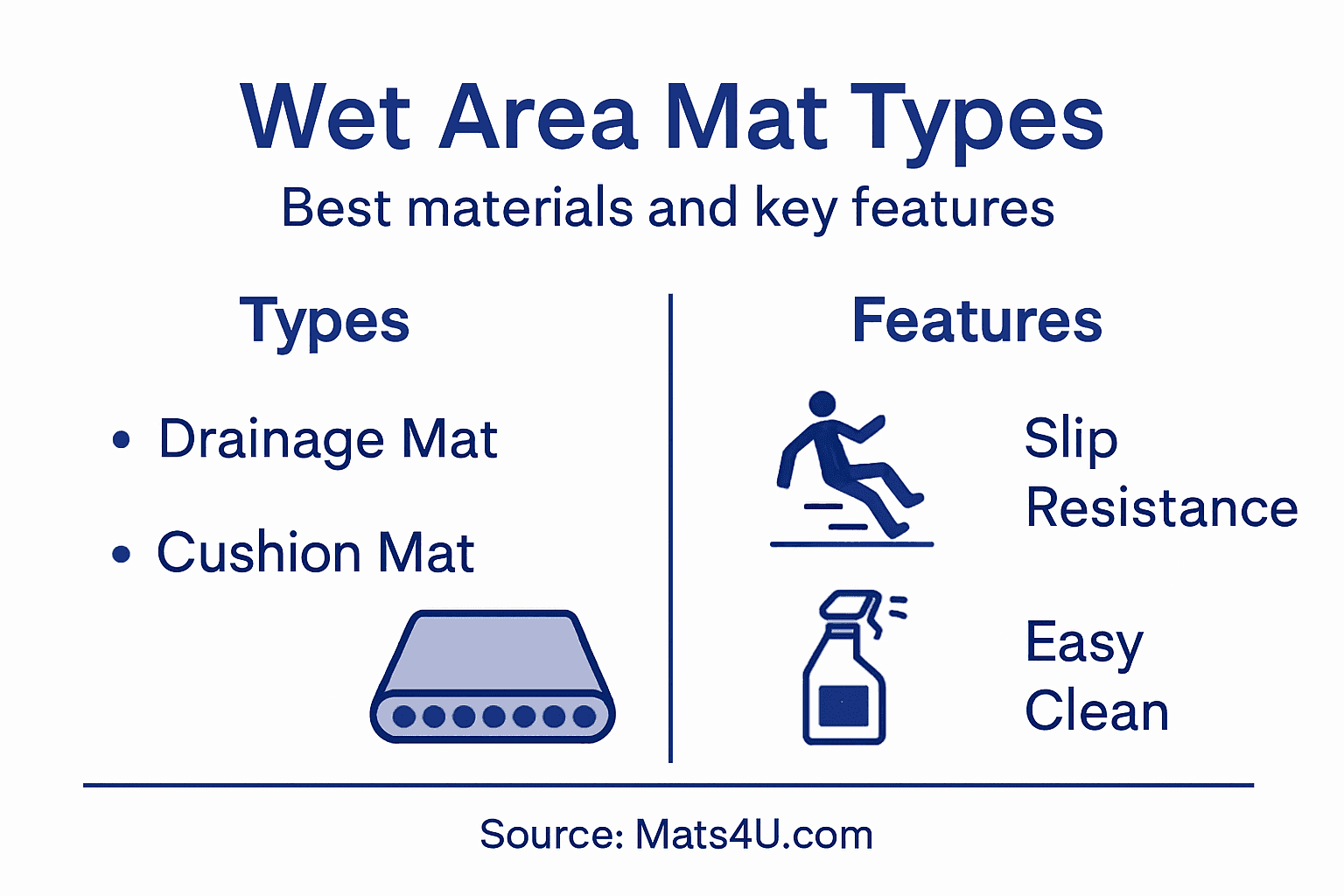
Material selection directly impacts performance and longevity in wet environments. Rubber mats designed for slip resistance provide superior ergonomic comfort and can absorb significant moisture while maintaining traction. Softer rubber compounds work well in standing areas where worker fatigue matters, while firmer rubber performs better under wheeled equipment traffic. Vinyl and composite materials offer quick drainage and resist moisture absorption, making them ideal for areas with constant water exposure like shower facilities or washdown stations. For outdoor construction sites and temporary work areas, hardwood mats bolted together create stable platforms over unstable or muddy terrain, reducing tracking and improving accessibility during wet weather.
Your selection should balance three factors: the specific hazards in each wet area, expected traffic patterns, and maintenance capacity. High-traffic indoor spaces benefit from the ergonomic properties of rubber or foam-backed materials, while drainage-critical zones need vinyl or open-weave designs. Outdoor facilities dealing with mud, snow, and heavy equipment require the durability of construction-grade hardwood mats or industrial rubber compounds. Consider also the thickness and size specifications—thinner mats work for standard doorways, while thicker cushioned options suit standing workstations. Many facility managers overlook that drainage capability matters as much as slip resistance; a mat that traps water beneath it becomes slippery itself, negating your safety investment.
Pro tip: Test mat samples in your actual wet areas before ordering full quantities—what works on a showroom floor may not handle your specific moisture levels, equipment weight, or cleaning chemicals.
Here’s a quick comparison of common wet area mat materials and where they excel:
| Material Type | Best Used In | Key Strengths | Limitation |
|---|---|---|---|
| Rubber | Indoor entrances, locker rooms | Slip resistance, comfort | May degrade in sunlight |
| Vinyl/Composite | Showers, washdown stations | Fast drainage, low cost | Not suited for heavy equipment |
| Hardwood | Outdoor, construction sites | Durability, stability | Requires bolting, not ergonomic |
Key Features: Slip Resistance and Drainage
Slip resistance and drainage form the foundation of effective wet area mat performance. These two features work together to create safe footing where water, mud, or other slippery substances would otherwise cause accidents. Without proper slip resistance, employees slide regardless of how well the mat drains. Without effective drainage, water pools on the mat surface and negates all the traction benefits your investment provides. Facility managers who understand this relationship make smarter purchasing decisions that actually reduce injury claims rather than just checking a box on a safety compliance list.
Slip Resistance Through Surface Design
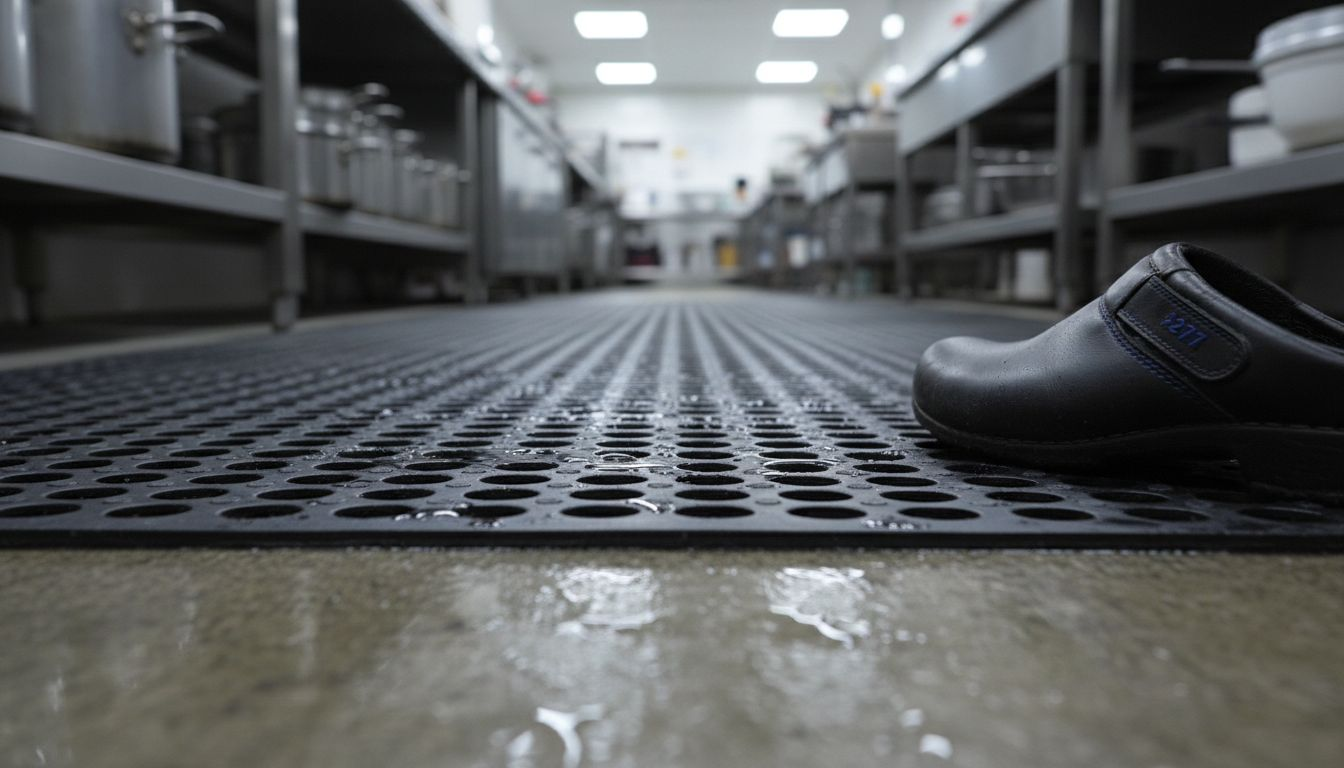
Specialized surface textures increase friction to prevent slips and falls on wet surfaces. Coarse, textured materials create more contact points between footwear and the mat, preventing the hydroplaning effect that occurs on smooth surfaces when water creates a lubricating film. The mat’s surface design must maintain traction even when saturated, which is why you cannot simply use the same materials as standard floor mats. Quality wet area mats use specialized rubber compounds or synthetic materials engineered specifically for wet environments. Testing methods like the Brungraber Mark II measure slip resistance under actual wet conditions, giving you data to compare products rather than relying on marketing claims alone.
Drainage: The Often Overlooked Essential
Proper drainage design distinguishes mats that actually work from decorative safety theater. Mats with drainage holes or channels allow water to escape rather than accumulate on the walking surface. When water pools on top of a mat, it creates the exact slippery condition you installed the mat to prevent. Think of it like mopping your floor and then immediately reopening it to foot traffic before it dries. Effective drainage prevents water accumulation that can cause slipping, working in tandem with slip-resistant materials to provide stable footing in wet or oily environments. The best mats incorporate both surface textures that repel water and structural channels that actively move moisture away from where people stand.
You should also consider color contrast as part of the safety package. Mats that stand out visually against your floor create an additional safety layer by alerting pedestrians to the transition zone. This simple feature reduces trip incidents from people not noticing where the wet area begins. Ergonomic cushioning becomes important in areas where workers stand for extended periods, as it reduces fatigue while maintaining the slip resistance and drainage capabilities that protect them from falls.
Pro tip: Check drainage performance by pouring water on mat samples during your selection process—if water sits on top rather than flowing through, the mat will fail your actual workplace conditions regardless of slip resistance ratings.
Regulations and Safety Standards in the U.S.
Compliance with federal safety regulations isn’t optional—it’s a legal requirement that directly impacts your facility’s liability exposure. The Occupational Safety and Health Administration (OSHA) establishes specific standards that apply to wet areas in commercial facilities, and failure to meet them can result in citations, fines, and increased workers’ compensation insurance premiums. Understanding what OSHA requires helps you make informed decisions about wet area mat selection and placement rather than leaving safety measures to chance or treating them as afterthoughts.
OSHA Standards and Your Obligations
OSHA regulations mandate maintaining floors clean and dry through proper drainage and the provision of mats or platforms in wet areas. Specifically, 29 CFR 1910.22 requires that employers maintain walking-working surfaces free of hazards and provide dry standing places such as mats where wet processes are used. This regulation applies across industries—from manufacturing facilities using washdown processes to commercial kitchens, bathrooms, and entryways where moisture accumulates. The standard doesn’t just suggest mats; it mandates them as a control measure when floors become wet. Employers must ensure drainage systems function properly and remain clear of obstructions that would prevent water from flowing away from walking surfaces.
The practical implication for facility managers is significant. You need documented evidence that your facility meets OSHA requirements. This means not just purchasing mats but ensuring they cover all necessary wet areas, maintaining them properly so they continue functioning, and periodically assessing whether your current solutions actually prevent water accumulation. OSHA inspectors evaluate whether your mats actually address the hazards present. A mat that sits in a high-traffic wet zone but gets saturated with water pooling on top fails inspection standards, even if the mat itself meets technical specifications. Your responsibility extends to maintenance as well—mats that become worn, deteriorated, or less effective must be replaced, not simply left in place hoping they still work.
Beyond OSHA, various industry standards and best practices guide mat selection. The American National Standards Institute (ANSI) provides guidance on slip resistance testing, ensuring products meet measurable performance criteria. Some facilities must comply with additional standards depending on their industry—healthcare facilities, for example, follow specific infection control protocols that influence mat selection. Building codes in various states and municipalities may specify additional requirements for commercial spaces. Your facility’s insurance carrier might also have specific expectations about slip-and-fall prevention measures. Treating wet area mats as a compliance checkbox rather than an integrated safety strategy leaves your facility vulnerable to accidents and regulatory action.
Pro tip: Keep documentation of mat installation dates, maintenance schedules, and replacement records—this evidence demonstrates due diligence if an accident occurs and proves you took OSHA compliance seriously to insurance adjusters and investigators.
Selecting and Maintaining Mats for Longevity
Purchasing wet area mats represents only the first step in protecting your facility. What happens after installation determines whether you get two years or ten years of performance from your investment. Facility managers who treat mats as install-and-forget items watch them deteriorate within months, requiring costly replacements and leaving gaps in safety coverage. The difference between a mat that lasts and one that fails comes down to intelligent selection upfront and consistent maintenance afterward.
Smart Selection Starts With Environment Assessment
Choosing the right mat for your specific wet area prevents premature failure before it happens. A mat selected for light foot traffic in an office restroom will degrade rapidly if placed in a high-traffic production area with heavy equipment or chemical exposure. You must evaluate the actual conditions your mats will face: the volume of daily foot traffic, the type of moisture present (water, oils, cleaning chemicals), the temperature range, and whether wheeled equipment will roll across the mat. Thicker, more durable mats cost more initially but last significantly longer in demanding environments. Conversely, specifying heavy-duty industrial mats for low-traffic areas wastes budget that could be allocated elsewhere. The best facility managers conduct a facility audit identifying different wet areas by hazard level, then specify appropriate mat types for each zone.
Maintenance That Actually Works
Regular cleaning and inspection prevent dirt buildup that reduces slip resistance and accelerates mat deterioration. Dirt and debris embedded in mat surfaces trap moisture underneath, creating conditions where mold and mildew develop while the mat loses its protective qualities. Establish a cleaning schedule matching your facility’s usage intensity—high-traffic areas may need daily cleaning while low-traffic zones might require weekly attention. When cleaning, ensure mats dry completely afterward rather than remaining damp, which extends the time moisture can degrade mat materials. Most importantly, keep drainage holes or channels clear of obstructions that would prevent water from flowing beneath the mat. Blocked drainage defeats the entire purpose of having a drainage-equipped mat.
Maintenance also means recognizing when replacement becomes necessary. Worn areas that lose texture, sections with visible deterioration, or mats that no longer drain effectively need replacement rather than continued use. Knowing how often to replace mats helps you budget replacement costs and prevents operating with compromised safety equipment. Most quality wet area mats last 2 to 5 years depending on traffic and maintenance quality. Document replacement dates to track lifespan and inform future purchasing decisions. This data also demonstrates to OSHA inspectors and insurance auditors that you actively maintain your safety infrastructure rather than hoping mats last indefinitely.
Pro tip: Set calendar reminders for quarterly mat inspections where you physically check for wear patterns, test drainage by pouring water on the mat surface, and mark any sections needing replacement before they become accident zones.
Common Mistakes to Avoid with Wet Area Mats
Wet area mat failures rarely result from defective products. They result from preventable mistakes in selection, installation, and maintenance that facility managers make repeatedly. Understanding these pitfalls protects your facility’s safety record and prevents wasting budget on solutions that won’t work. The most expensive mistake isn’t buying quality mats—it’s implementing them poorly then wondering why accidents still occur.
Installation and Coverage Errors
Facility managers frequently underestimate the coverage area needed, leaving dangerous gaps at transition points where wet areas begin. A mat that covers most of a wet zone but leaves 2 feet uncovered creates exactly the spot where slips happen most—the transition where people move from protected to unprotected surface. Equally problematic is specifying mats that are too soft or excessively thick, which creates instability rather than security. When workers feel mats compressing excessively beneath their feet, they lose confidence in their footing and may actually increase injury risk. Another common error involves inadequate drainage planning—installing mats without ensuring water flows beneath them rather than pooling on top. Failing to maintain clean walking surfaces by neglecting drainage represents a direct OSHA violation that can result in citations.
Visibility often gets overlooked entirely. Mats that match your floor color create trip hazards because workers don’t realize where the mat begins and ends. Color contrast exists for safety reasons—not aesthetics. If your floor is gray, choose a black or red mat that stands out visibly. This simple specification prevents people from catching their foot on a mat edge they never saw coming. Additionally, many facilities select mat dimensions poorly, creating edges that curl up or don’t align with doorways properly. Mats that don’t fit your space properly become tripping hazards themselves, contradicting your safety objectives.
Maintenance and Replacement Failures
Poor housekeeping undermines even excellent mat selection. Irregular cleaning schedules allow dirt buildup that reduces slip resistance while accelerating mat deterioration. Facility managers who clean mats sporadically find that they deteriorate faster than mats cleaned consistently. The actual frequency matters less than consistency—weekly cleaning on a predictable schedule preserves mats longer than sporadic cleaning whenever someone notices they look dirty. Many facilities also ignore defective mats, continuing to use visibly worn or damaged products hoping they’ll last a bit longer. Worn texture that no longer provides slip resistance, sections with visible deterioration, or mats that no longer drain effectively must be replaced, not tolerated. Operating with compromised safety equipment while waiting for budget approval puts your facility at legal and safety risk.
Finally, ergonomic benefits get ignored even though they reduce fatigue and improve safety. Thinner mats provide less cushioning, which increases worker fatigue in high-traffic standing areas. Fatigued workers make mistakes and fall more easily. Choosing appropriate mat thickness for your specific application—thin for transition areas, thicker for standing workstations—demonstrates facility managers who actually understand mat functionality rather than treating all mats as interchangeable.
Pro tip: Create a mat audit checklist documenting location, dimensions, drainage performance, condition, and last replacement date for every wet area mat—use this quarterly to catch problems before they become accident sites.
Facility managers can avoid common mat selection and maintenance errors by reviewing this summary:
| Mistake | Consequence | Recommended Action |
|---|---|---|
| Incomplete coverage | Slip hazard at uncovered edges | Measure and fully cover area |
| Poor drainage planning | Water pools create slick spots | Confirm drainage capability |
| Skipped maintenance | Deterioration and safety loss | Establish cleaning schedule |
| Ignoring visual contrast | Increased trip risks | Choose high-contrast colors |
Enhance Safety with the Right Outdoor Mats for Wet Areas
Preventing slips and falls in wet environments is a major challenge for facility managers. The article highlights the importance of mats with effective slip resistance, proper drainage, and complete coverage to reduce workplace accidents and comply with OSHA regulations. Finding durable mats that stand up to heavy foot traffic and moisture without degrading is crucial to protecting your employees and lowering injury-related costs.
At Mats4U.com, we understand these challenges and offer a wide selection of Commercial Mats specifically designed for wet areas. Our mats provide excellent traction, efficient water drainage, and long-lasting performance made here in the USA. Browse our premium Non Slip Mats for wet environments or explore our Indoor Mats collection suitable for entryways and locker rooms.
Don’t wait until an accident happens to upgrade your safety measures. Explore our trusted solutions today and take the first step toward a safer workplace with reliable mats that deliver real results.
Frequently Asked Questions
What are outdoor mats for wet areas?
Outdoor mats for wet areas are specialized flooring solutions designed to prevent slips and falls in environments where moisture is prevalent, such as entrances, locker rooms, and loading docks. They absorb moisture from footwear and flooring, enhancing safety in slippery conditions.
How do I choose the right type of wet area mat for my facility?
Selecting the right mat involves assessing the specific hazards of your environment, including the type of moisture, expected foot traffic, and whether wheeled equipment will be present. Options vary from rubber mats for indoor use to hardwood mats for outdoor sites.
What features should I look for in wet area mats?
Key features include slip resistance, effective drainage capabilities, and ergonomic cushioning. Mats should have textured surfaces to enhance traction and drainage holes to prevent water accumulation, which helps maintain safety even in wet conditions.
How can I maintain wet area mats to ensure their longevity?
Regular cleaning and inspection are essential to prevent dirt buildup that reduces slip resistance. Establish a cleaning schedule, ensure proper drainage, and replace worn or damaged mats promptly to maintain safety and extend the mats’ lifespan.
Recommended
- Understanding Mats for Wet Areas: Importance and Functionality – Mats4U USA
- Rubber Mats for Wet Areas: Safety First Solutions – Mats4U USA
- Understanding Anti Slip Mats for Wet Areas: Safety Matters – Mats4U USA
- Understanding Non Slip Floor Mats for Wet Areas – Mats4U USA
- Waterproof Mens Golf Shoes 2025: Top UK Picks & Deals – More Sports


