


TL;DR:
- Regular, scheduled maintenance extends mat lifespan and reduces slip hazards.
- Use pH-neutral cleaners and proper techniques to prevent damage and ensure safety.
- Inspection and condition monitoring are essential for timely replacement and risk management.
Floor mats in commercial and industrial facilities are your first line of defense against slip incidents, tracked-in debris, and accelerated floor wear. Yet in most facilities, mat maintenance is treated as a low-priority task — something done when the mat looks bad rather than on a planned schedule. That mindset is costly. Neglected mats curl at the edges, lose grip on the backing, flatten under compression, and can create exactly the slip hazard they were installed to prevent. This guide gives facility managers and property owners a structured, practical approach to mat maintenance that protects staff, reduces liability, and extends the usable life of every mat on your floor.
Table of Contents
- Start smart: Tools, supplies, and key prep steps
- Routine cleaning: Daily, weekly, and monthly best practices
- Material-safe techniques: Avoiding damage and slip hazards
- Inspection, troubleshooting, and when to replace
- The overlooked link between mat maintenance and facility reputation
- Get reliable mats and support for flawless maintenance
- Frequently asked questions
Key Takeaways
| Point | Details |
|---|---|
| Routine is essential | Consistent daily, weekly, and deep cleaning extends mat life and boosts safety. |
| Use safe cleaning agents | Always choose mild, material-appropriate cleaners to avoid damaging mats. |
| Inspect mats regularly | Monthly checks for wear and hidden dirt help prevent safety hazards and unnecessary replacements. |
| Replace based on condition | Swap out mats when they lose function, not just when they’re old. |
Start smart: Tools, supplies, and key prep steps
With the risks outlined, let’s begin by making sure you have the right equipment and prep for a smooth maintenance process.
Effective mat maintenance starts before any water or detergent touches a mat. Getting the right tools and supplies organized in advance means faster cleaning, better results, and fewer product-related mistakes. Review the mat maintenance tips for property managers to baseline your current process against established best practices.
Here is a quick reference table for tools organized by mat type:
| Mat type | Recommended tools | Cleaning agent |
|---|---|---|
| Entryway / Waterhog mats | Vacuum, stiff brush, pressure washer | Mild detergent, pH-neutral cleaner |
| Anti-fatigue mats | Soft cloth, mop, bucket | pH-neutral soap, warm water |
| Rubber mats | Scrub brush, low-pressure washer | pH-neutral cleaner only |
| Berber mats | Vacuum, soft brush, hand sprayer | Mild detergent, cold water |
| Logo / custom mats | Vacuum, soft cloth | Gentle upholstery cleaner |
Before starting any cleaning session, prep the work environment properly:
- Post wet floor signage in adjacent areas to alert foot traffic
- Use appropriate PPE (non-slip footwear, gloves when handling chemical cleaners)
- Remove all furniture, equipment, or obstacles near the mat area
- Check drainage paths if you plan to use water for rinsing
- Inspect the floor surface beneath each mat before repositioning
Cleaning agents must be material-appropriate to avoid degrading mat materials or reducing slip resistance. Bleach and solvents are the most common offenders. They break down rubber backing faster than normal wear does, and they strip the textured surface that provides traction. Stick to mild detergents and pH-neutral solutions across all mat types as a standard rule, and you will avoid most chemical-related damage.
Pro Tip: Stock a basic cleaning kit (vacuum, soft brush, pH-neutral cleaner, scrub brush, and microfiber cloth) in every maintenance closet across your facility. Consistent access means consistent upkeep, regardless of which staff member is on duty. You can review broader guidance on business floor mat cleaning to build a complete supply checklist.
Routine cleaning: Daily, weekly, and monthly best practices
Now that you’re prepped, let’s break down exactly what to do each day, week, and month for outstanding mat performance.
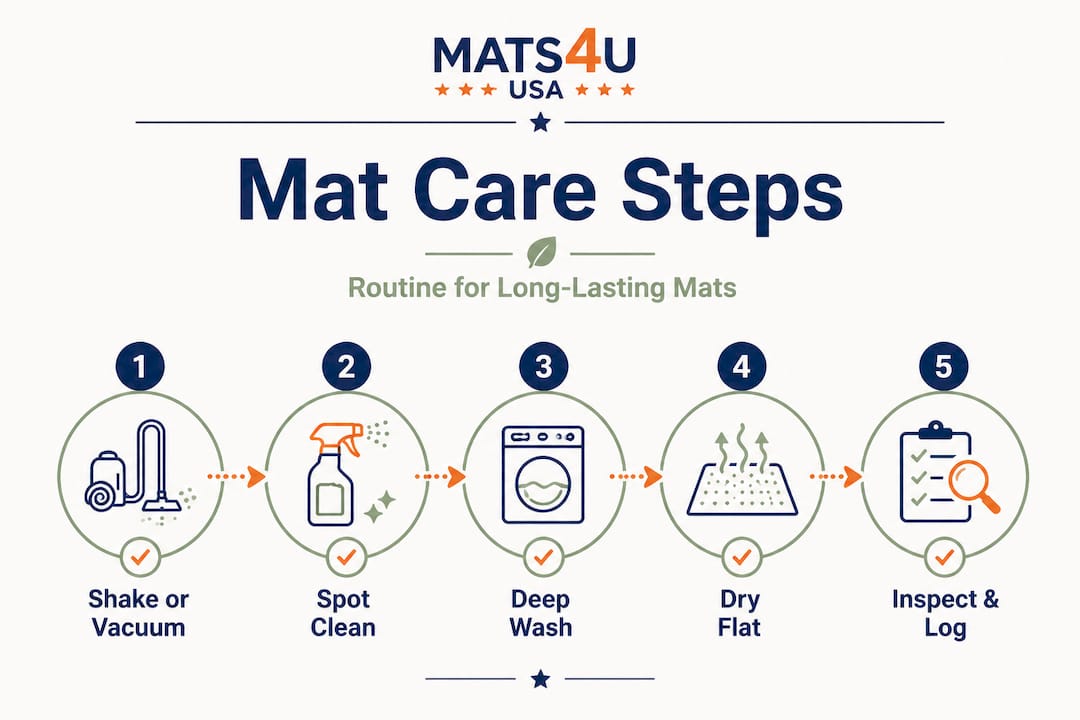
A structured time-based routine is the single most effective tool for preserving mat performance. Without it, cleaning happens reactively and inconsistently, which means problems compound before anyone notices. Here is a numbered breakdown of the core routine tasks:
-
Daily: Shake out or vacuum surface debris. For entryway mats in high-traffic buildings, this may need to happen multiple times per day during wet or muddy seasons. A quick vacuum or shake removes loose particles before they get embedded in mat fibers or act as abrasive agents underfoot.
-
Weekly: Wash mats with a mild detergent solution. Rinse thoroughly to remove all detergent residue. Leftover soap attracts dirt faster and can make mat surfaces slippery. Allow mats to fully dry before returning them to the floor.
-
Monthly: Inspect each mat for compression flattening, edge curl, backing deterioration, and visible surface wear. Take notes. Mats that show consistent deterioration at the monthly check should be flagged for closer monitoring or early replacement consideration.
-
Every 3 to 6 months: Perform a full deep clean using a pressure washer (where appropriate by material) or a professional cleaning service. High-traffic entrance mats benefit from deep cleaning every 3 to 6 months to restore appearance, maintain grip, and remove deeply embedded contaminants that routine cleaning does not reach.
The table below compares best-practice schedules across the three most common commercial mat types:
| Cleaning task | Entryway mats | Anti-fatigue mats | Rubber mats |
|---|---|---|---|
| Daily shake/vacuum | Yes | Yes | Yes |
| Weekly detergent wash | Yes | Yes | Yes |
| Monthly inspection | Yes | Yes | Yes |
| Deep clean frequency | Every 3 to 6 months | Every 3 to 4 months | Every 4 to 6 months |
| Pressure washing | Suitable for most | Not recommended | Low-pressure only |
| Air dry required | Yes | Yes | Yes |
Anti-fatigue mats have their own specific needs. Best practices for anti-fatigue mats include daily surface wiping, weekly mild-detergent cleaning with thorough rinsing, and regular checks for edge lift and surface wear. These mats are often placed in kitchens, production lines, and workstations where grease, oils, and food debris accumulate rapidly. Skipping the daily wipe on anti-fatigue mats in those environments creates hygiene and slip risks simultaneously.
Pro Tip: Schedule weekly mat washing at shift changes rather than during peak activity hours. Moving mats during low-traffic windows reduces the time any floor area is left without mat coverage, which matters most at wet or oily entryways.
Review the full guidance on effective floor mat cleaning routines to build a schedule tailored to your facility layout and foot traffic levels. For outdoor or all-weather mat types, the approach differs slightly, and the guidance on clean all weather mats covers those specifics.
Material-safe techniques: Avoiding damage and slip hazards
With routines in place, focusing on the right cleaning techniques preserves mats and keeps your facility safer for everyone.
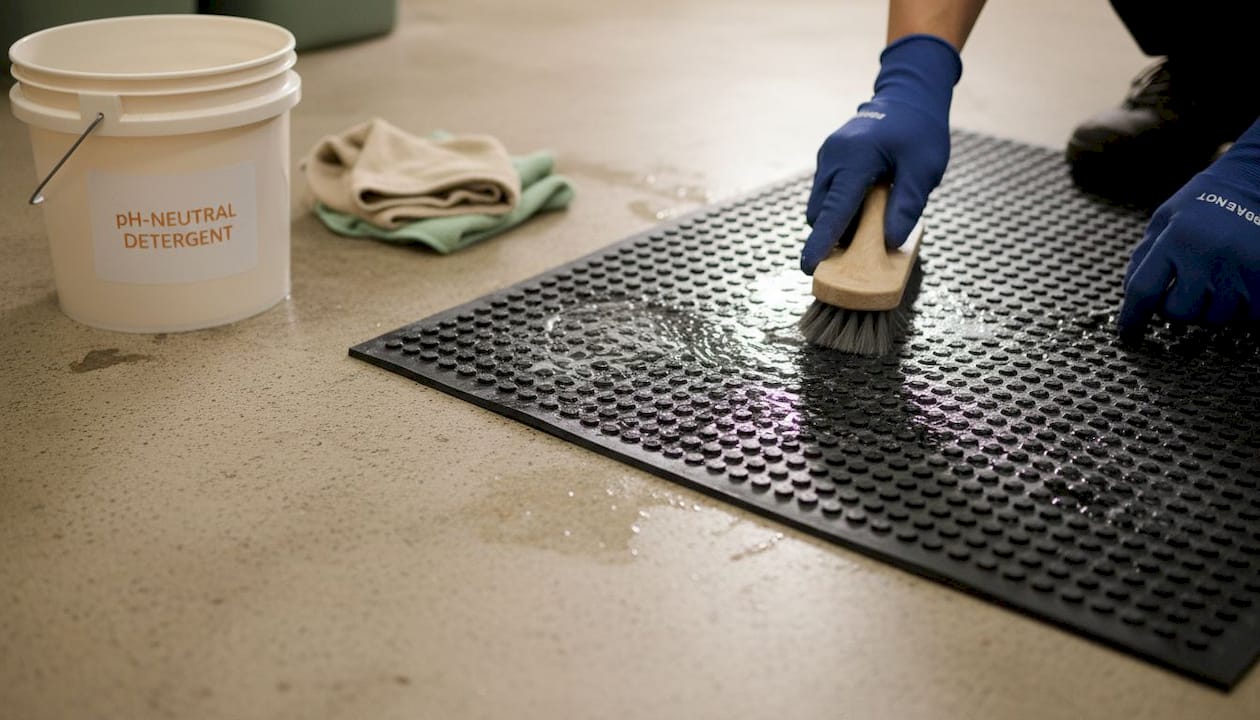
Using the wrong cleaning product or method is one of the most common causes of premature mat failure in commercial facilities. The damage is often invisible at first, showing up weeks later as loss of grip, surface cracking, or backing separation. Here is a direct breakdown of what to do and what to avoid:
Do:
- Use pH-neutral cleaners for rubber, anti-fatigue, and vinyl-backed mats
- Use mild detergent with cold or warm water for Berber and entryway fiber mats
- Rinse thoroughly after every wash cycle to remove all cleaning agent residue
- Hang mats vertically to air dry whenever possible — this drains water evenly and avoids distortion
- Test any new cleaning product on a small corner of the mat before full application
Do not:
- Use bleach or chlorine-based products on any mat type
- Apply solvent-based cleaners to rubber or foam anti-fatigue mats
- Leave mats in direct sunlight for extended drying periods — UV exposure degrades rubber backing significantly faster
- Stack wet mats on top of each other, which traps moisture and promotes mold and mildew growth
- Run anti-fatigue or foam mats through commercial washing machines — the mechanical action breaks down the foam core
Always air dry thoroughly after washing. A mat returned to the floor while still damp can reduce slip resistance and generate odors within 24 hours, especially in enclosed or low-ventilation areas.
Material-appropriate cleaning agents are the standard that prevents both chemical damage and safety failures. This applies equally to pressure washing. High-pressure water cleaning works well for heavy-duty rubber mats and Waterhog-style entryway mats, but should be kept at low to medium pressure settings. High-pressure jets can force water into mat backing layers and separate them from the surface material, causing delamination.
For lighter mat types — Berber, logo mats, and thin foam anti-fatigue styles — hand cleaning with a soft brush and mild detergent is safer than any mechanical method. If you manage gym or fitness facilities, the specific approach to cleaning gym floor mats covers material-safe techniques for rubber and foam fitness floor surfaces.
Inspection, troubleshooting, and when to replace
Learning solid cleaning techniques is important, but to truly get the most from your mats, a robust inspection routine is a must.
Cleaning keeps mats functional, but only inspections tell you whether a mat is still doing its job. Here is a step-by-step inspection process you can standardize across your facility:
-
Lift the mat fully. Do not inspect from the edges only. Remove it from position and set it aside.
-
Check the floor underneath. Trapped dirt beneath mats can abrade flooring surfaces and affect mat stability over time. If the floor under a mat is consistently dirty or wet, the mat is not performing its capture function effectively.
-
Inspect the mat underside. Look for backing cracks, worn areas, loose rubber grippers, or signs of mold and mildew growth. Any backing failure means the mat will shift underfoot and becomes a slip hazard.
-
Check the mat surface. Look for deep compression (fibers or foam no longer recovering height), edge curling, surface tears, or visible color fading that indicates UV or chemical exposure.
-
Test grip. Place the mat on the floor and apply light lateral pressure. It should resist movement. A mat that slides easily has lost its slip-resistance function.
Common issues and what they signal:
- Persistent odor: Moisture trapped in backing or foam core. Increase drying time and check for drainage issues in the mat placement area.
- Loss of grip: Backing wear, chemical damage, or mat age. Evaluate for replacement.
- Visible surface tears or holes: Mechanical damage from high-traffic equipment (carts, dollies). Consider a heavier-duty mat specification for that location.
- Edge curl: Mat has been repeatedly folded or dried improperly. Minor curl can sometimes be reversed with proper drying, but severe curl is a trip hazard and the mat should be replaced.
- Compression with no recovery: The foam or fiber core has degraded and will not provide effective cushioning or moisture capture.
Pro Tip: Keep a simple mat condition log at your facility. Record the mat location, date of last deep clean, and any issues noted at each monthly inspection. This log supports replacement budget planning and provides documentation in the event of a slip incident or insurance review.
Replacement decisions should be based on condition indicators rather than fixed time schedules. Most commercial mats last 2 to 5 years under heavy use, but a mat in a moderate-traffic area with consistent maintenance may remain functional well beyond that range. The reverse is also true — a mat in an industrial setting with chemical exposure or heavy equipment traffic may need replacement in under a year. Use the condition, not the calendar, as your primary guide. For a broader reference, the commercial mat cleaning guide includes additional inspection guidance and replacement benchmarks.
The overlooked link between mat maintenance and facility reputation
Most facility managers view mat maintenance as a hygiene task. Keep the mats clean, avoid complaints, move on. That framing undersells the actual impact of this work.
Mats are positioned at every high-traffic point in a building: entryways, elevators, workstations, kitchens, restrooms. They are among the first things a visitor sees and the last surface a worker contacts before reaching their station. A mat that is stained, curled, or visibly degraded communicates something about the facility’s operational standards — not just its cleanliness.
Facilities with documented mat maintenance programs consistently report fewer slip-and-fall incidents. That is not an accident. Regular inspection cycles catch hazards before they result in claims. Properly maintained mats hold their grip, stay flat, and capture moisture effectively. The liability cost difference between a well-maintained mat program and a reactive one shows up in insurance premiums, legal exposure, and staff downtime.
There is also a direct connection between mat condition and employee morale, particularly in manufacturing, food service, and healthcare environments where workers stand for extended periods. Anti-fatigue mats that have lost compression no longer reduce fatigue. Workers notice. The effective floor mat cleaning discipline is directly tied to the functional performance employees depend on daily.
The uncomfortable reality is that most facilities underinvest in mat maintenance because the cost of doing it right is visible (labor time, supplies, replacement mats) while the cost of doing it poorly is distributed across slip claims, floor repairs, increased mat replacement frequency, and reduced staff wellbeing. Running those numbers almost always favors investment in proactive maintenance.
Get reliable mats and support for flawless maintenance
If you’re ready to raise your facility’s standards, consider partnering with trusted mat providers for maintenance made easy.
Mats4U.com supplies commercial and industrial facilities with a full range of durable, high-performance floor mats built for demanding environments. Whether you need custom logo floor mats for branded entryways, anti-fatigue mats for standing workstations, or durable entryway mats capable of handling extreme foot traffic, the product range covers every commercial application. All orders over $100 qualify for free delivery, and products are Made in the USA. Upgrading to purpose-built mats from the start reduces maintenance burden, extends replacement cycles, and gives you mats designed to hold up under your specific conditions.
Frequently asked questions
How often should high-traffic floor mats be deep cleaned?
Deep cleaning every 3 to 6 months is the standard recommendation for high-traffic entrance mats, though mats in extremely busy or wet environments may require more frequent cycles.
What cleaning agents are safe for rubber floor mats?
Use pH-neutral detergents or mild soap with warm water, and avoid bleach and solvents entirely, as they break down rubber compounds and reduce surface traction over time.
Why inspect the underside of a floor mat?
Dirt trapped under mats acts as an abrasive against the floor surface and can cause the mat to shift, both of which create safety hazards that a surface-only inspection would miss.
When is it time to replace a commercial floor mat?
Replace a mat when you observe edge curling, significant compression loss, backing damage, or loss of slip resistance. Condition-based replacement decisions are more reliable than replacing on a fixed schedule.


