


A long shift on a hard kitchen floor can leave even the most dedicated team exhausted and sore. For facility managers across the United States, tackling employee fatigue is about more than comfort—it’s about staff morale, safety, and productivity. Proper cushioned anti-fatigue mats actively reduce pain and fatigue from prolonged standing by absorbing the pressure that comes with working in busy restaurant environments, making them a smart investment for any operation that values efficient, healthy teams.
Table of Contents
- What Are Restaurant Anti Fatigue Mats?
- Types and Materials of Restaurant Mats
- Key Features That Improve Comfort and Safety
- How to Choose the Right Mat for Your Needs
- Costs, Maintenance, and Common Mistakes
- Alternatives to Anti Fatigue Mats Explained
Key Takeaways
| Point | Details |
|---|---|
| Importance of Anti-Fatigue Mats | Anti-fatigue mats significantly reduce discomfort and fatigue for staff who stand for long periods, improving overall morale and efficiency. |
| Material and Design Choices | Selecting the right material and thickness is crucial; cushioned rubber provides durability and support, while slip resistance ensures safety. |
| Maintenance is Essential | Regular cleaning and inspection of mats prolong their lifespan and maintain their effectiveness in reducing fatigue and avoiding accidents. |
| Consider Workplace Dynamics | Tailor mat choices based on specific kitchen areas and employee movements to maximize comfort and minimize fatigue for all staff members. |
What Are Restaurant Anti Fatigue Mats?
Restaurant anti-fatigue mats are specialized floor coverings designed to reduce the physical strain on staff who spend hours standing during their shifts. Unlike regular floor mats that simply protect surfaces, these mats are engineered with cushioned materials, typically rubber or foam compounds, that absorb the pressure and impact from constant standing on hard surfaces like concrete or tile. When your kitchen crew is on their feet for 8, 10, or even 12 hours straight, the difference between standing on bare flooring and standing on a properly designed anti-fatigue mat translates directly into reduced pain, soreness, and fatigue by the end of the shift.
The core function of these mats centers on shock absorption and pressure distribution. Your employees’ legs, feet, and lower back bear tremendous stress during a shift, especially in high-traffic areas like the line, prep station, or dishwashing station. Anti-fatigue mats cushion feet by absorbing the force that would otherwise transfer directly through their body when they stand on unforgiving hard surfaces. This cushioning effect works because the mat’s material slightly compresses and then recovers with each step or weight shift, creating a cycle that engages small stabilizer muscles in the legs and feet. This muscle engagement actually improves circulation and reduces the blood pooling that leads to tired, achy legs. The key balance, though, is getting the right thickness and density. A mat that’s too soft can actually cause additional strain because staff have to work harder to maintain stability and proper posture. The best mats provide enough give to absorb pressure without being so squishy that they create balance problems.
Restaurant anti-fatigue mats come in various materials and configurations to fit different kitchen layouts and station requirements. You might deploy thicker mats at the grill station where staff stands in place for long periods, while choosing thinner, more durable options in high-traffic walkway areas. Some facilities use a modular approach with smaller mat sections that can be positioned exactly where they’re needed most. The cushioning design reduces pain and fatigue by protecting workers from the constant pounding that bare feet and soft-soled shoes endure. Many facility managers also pair floor mats with complementary solutions like quality chef shoes with arch support for staff who move throughout the kitchen, creating a comprehensive approach to reducing fatigue across your entire operation.
The practical impact of installing anti-fatigue mats extends beyond just physical comfort. When your staff experiences less pain and fatigue during their shifts, work morale improves. People who aren’t exhausted and sore tend to make fewer mistakes, move more efficiently, and stay engaged with their work. You’ll often notice reduced call-outs on days when the kitchen is especially busy, lower turnover rates among line cooks and prep staff, and generally more positive attitudes among the team. Understanding anti-fatigue mat benefits helps you appreciate why this seemingly simple addition to your kitchen infrastructure can have outsized effects on your operation.
Pro tip: Start by installing anti-fatigue mats at your highest-traffic stations first, typically the grill, fryer, or prep areas, then expand to other zones based on staff feedback and observation of where people seem most exhausted.
Types and Materials of Restaurant Mats
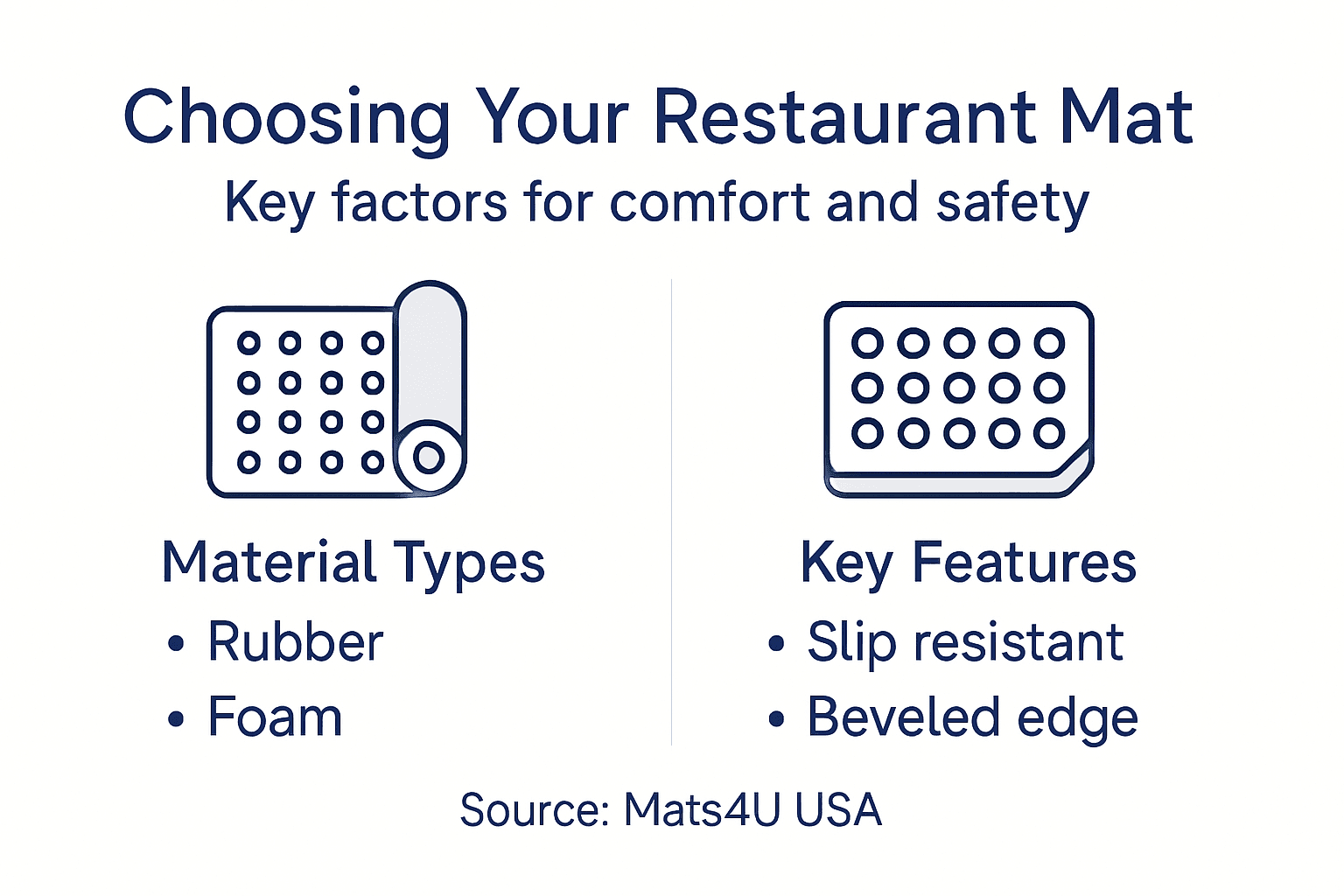
When you’re shopping for anti-fatigue mats for your restaurant, you’ll quickly realize that not all mats are created equal. The materials and construction methods vary significantly, and choosing the wrong type can mean wasting money on a product that either breaks down too quickly or doesn’t actually reduce your staff’s fatigue. The most common material you’ll encounter is cushioned rubber, which provides an excellent balance of durability, comfort, and slip resistance. Rubber mats naturally grip floor surfaces even when wet, making them ideal for kitchens where spills and splashing are constant realities. These mats come in different densities, with softer rubber providing more cushioning for stationary positions like at the grill or fryer, while firmer rubber works better in high-traffic areas where staff move frequently. Some facilities use foam composite materials, which offer lighter weight and easier handling compared to solid rubber, though they typically don’t last as long under heavy use.
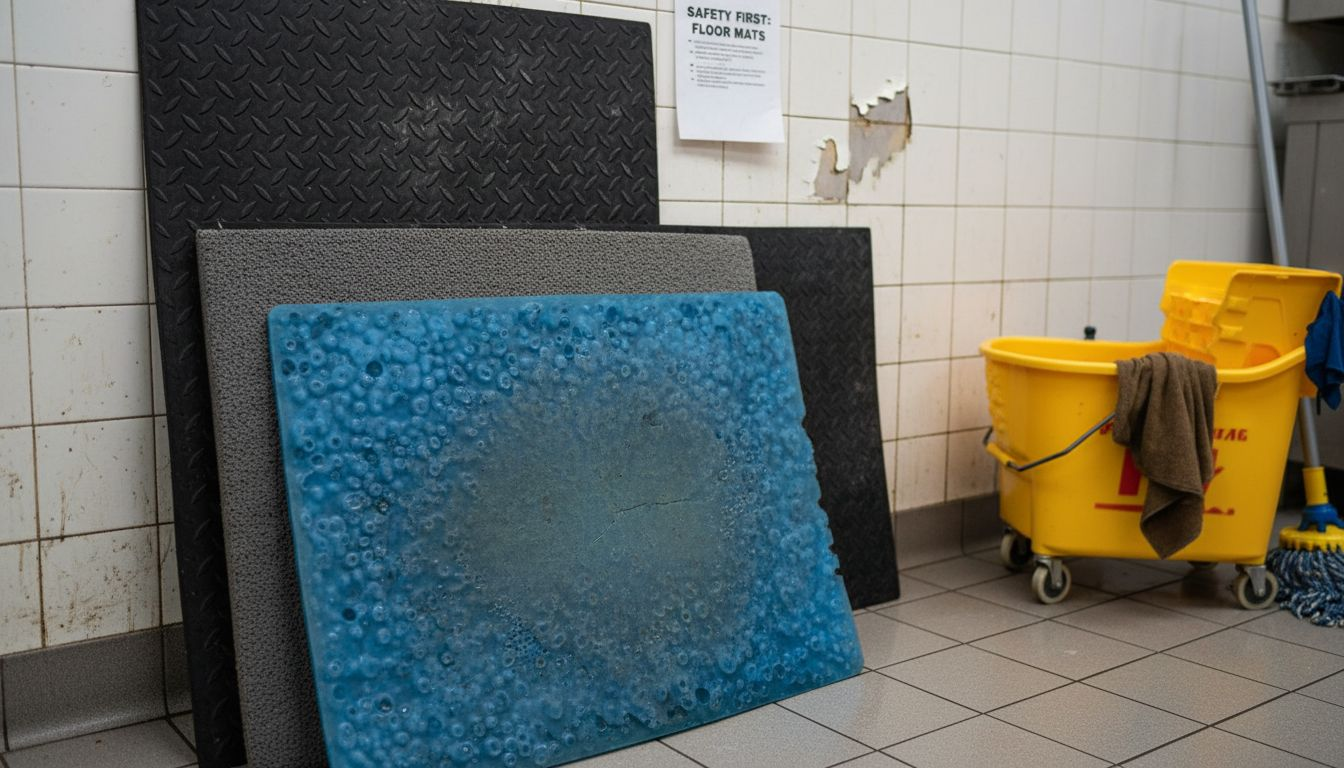
The variety in mat construction matters just as much as the base material. Anti-fatigue mats come in various materials and can be custom-sized to match your specific kitchen layout. You might deploy full-coverage mats in your dishwashing area, where water exposure is heavy and staff stands relatively stationary. Alternatively, runner-style mats work well for walkways between stations, providing protection without covering so much floor that they become a tripping hazard. Some operations use a modular approach, combining smaller rectangular mats that can be repositioned as your kitchen workflow changes or as wear patterns develop. The mat’s thickness also affects performance, with thicker mats generally offering more cushioning but potentially creating balance challenges, while thinner mats integrate more smoothly with your existing flooring.
A critical feature you cannot overlook is slip resistance, especially given the wet, oily environment of commercial kitchens. The best restaurant mats combine slip resistance with cushioning, protecting your staff from both fatigue and slip-and-fall accidents. Additionally, mats should feature high-contrast colors that stand out against your floor, making them clearly visible to your team so nobody accidentally trips over the edges. The bottom surface matters too. Quality anti-fatigue mats have either textured rubber or adhesive backing that prevents sliding on your existing floor, which is essential for safety. Some rubber mats also include drainage channels or beveled edges that help manage water and prevent water from accumulating underneath, which can create slip hazards and cause mold growth.
Beyond traditional mats, some facilities explore anti-fatigue insoles as a complementary or alternative solution, particularly for staff who move throughout the kitchen rather than standing in one location. These wearable options work similarly to floor mats by providing cushioning and support, though they require your team to remember to wear them. Most facility managers find that combining floor mats in high-use stations with quality footwear creates the most comprehensive fatigue-reduction strategy. When you’re evaluating options, consider the specific demands of each kitchen area. Your prep station might benefit from a thicker, cushioned mat where staff stands for hours, while your walk-in cooler needs a thin, slip-resistant runner that won’t interfere with cart movement. Considering your facility’s unique layout, traffic patterns, and moisture levels helps you select the right combination of mat types rather than applying a one-size-fits-all approach.
Pro tip: Test mats in high-traffic areas for 2-3 weeks before committing to a full installation, then gather feedback from your staff about comfort and any impacts on movement or balance.
Here is a comparison of common anti-fatigue mat materials and their typical uses:
| Material Type | Durability Level | Best Application Areas | Maintenance Needs |
|---|---|---|---|
| Cushioned Rubber | High | Grill, fryer, wet stations | Regular cleaning, inspect edges |
| Foam Composite | Moderate | Prep, light-use stations | Frequent replacement, gentle cleaning |
| Modular Tiles | High | Walkways, customizable zones | Light cleaning, check for shifting |
| Specialty Mats | Variable | Dishwashing, cold rooms | Occasional deep cleaning, monitor drainage |
Key Features That Improve Comfort and Safety
The best anti-fatigue mats for your restaurant aren’t just about comfort, though that matters tremendously. They’re engineered with specific features that address the dual challenge of reducing fatigue while preventing accidents in a fast-paced, wet kitchen environment. The foundation of any quality mat starts with proper cushioning thickness. This is where many facility managers make mistakes by either overshooting or undershooting. A mat that’s too soft feels comfortable initially but actually forces your staff to work harder to maintain balance and proper posture, defeating the entire purpose. The sweet spot is a mat that provides enough give to absorb the shock from prolonged standing while still offering enough firmness to support natural movement and stability. This balance allows small stabilizer muscles in the legs and feet to engage naturally, improving circulation instead of creating additional strain. Cushioning that absorbs pressure from prolonged standing directly reduces the pain and fatigue your team experiences, making the difference between staff who finish their shift with sore feet versus staff who feel relatively normal.
Safety features are equally critical, and frankly, they’re often overlooked until something goes wrong. Slip resistance is non-negotiable in a restaurant setting where grease, water, and food debris cover floors constantly. Quality mats have textured surfaces or specially treated rubber that grips floors even in the slipperiest conditions. Equally important are beveled or rounded edges that prevent the mat from becoming a tripping hazard itself. Many accidents in kitchens happen not from wet floors but from staff catching their feet on sharp mat edges, so this design detail prevents the very problem you’re trying to solve. Slip-resistant surfaces reduce the risk of falls, a particularly critical feature in food preparation areas where slip-and-fall incidents are among the most common workplace injuries. Additionally, high-contrast color schemes make mats clearly visible against your flooring, helping your team see mat boundaries and avoid awkward steps or missteps.
The ergonomic design of the mat itself matters as much as the materials. Proper mat height and beveled edges facilitate easy movement of wheeled equipment like carts and dollies, which is essential in commercial kitchens where efficiency depends on smooth workflow. Some facilities overlook this feature and end up with mats that create obstacles rather than solutions. Ergonomic support with adequate cushioning reduces stress on both legs and back by distributing pressure evenly across the foot rather than concentrating it in the heel or ball of the foot. The mat’s backing also deserves attention, with non-slip backing preventing the mat from sliding during heavy use, which can create safety hazards and make the mat bunch up uncomfortably. Some advanced mats include drainage channels or perforated surfaces that manage water accumulation, preventing standing water that can breed bacteria and create slip hazards. In extremely cold environments like walk-in coolers, some specialty mats even incorporate subtle warming elements, though this is less common in typical restaurant operations.
When you’re evaluating specific products, test them against your unique kitchen conditions. Place a candidate mat in a high-traffic area for a week and observe how your staff interacts with it. Do they navigate around it or over it naturally? Does water pool underneath? Does it shift or bunch up during service? These real-world observations matter more than specifications on a product sheet. Your staff will tell you whether the cushioning feels right, whether they’re slipping, and whether the mat height interferes with carts or creates unexpected obstacles. The goal is finding a mat that becomes invisible to your team because it works so seamlessly that they stop thinking about it and start focusing on their work.
Pro tip: Install mats in phases starting with your highest-injury-risk areas, such as the fry station or dishwashing area, then evaluate performance metrics like incident reports and staff feedback before expanding to other zones.
How to Choose the Right Mat for Your Needs
Selecting the right anti-fatigue mat for your restaurant starts with understanding your kitchen’s specific workflow and demands. Not every area of your operation needs the same mat, and investing in a one-size-fits-all solution often wastes money and fails to address actual pain points. The first step is mapping your kitchen by job function. Where do your staff members stand relatively stationary for extended periods? That’s typically your grill station, fryer, prep counter, or dishwashing area. Where do they move constantly between stations? Those walkways and transition areas have completely different requirements. Choosing the right anti-fatigue mat involves considering specific job duties, such as whether employees remain stationary or move frequently throughout their shift. For stationary positions where a cook stands at a grill for hours, you want a thicker, more heavily cushioned mat that absorbs impact and reduces fatigue. For areas where staff constantly moves between stations, a thinner, firmer mat works better because it won’t throw off balance or create an obstacle.
Environmental factors in your specific kitchen space matter just as much as the type of work being performed. Consider moisture exposure, foot traffic intensity, and the existing floor surface. A dishwashing station with standing water, grease, and constant splashing needs completely different mat properties than a dry storage area or line station. High-traffic zones like the area between your grill and your expediting pass need mats that can withstand constant use without wearing down quickly. Matching mat material and design to environmental factors like moisture, foot traffic, and floor surfaces is critical for effectiveness and longevity. If you’re placing mats on tile, concrete, or wood, each surface interacts differently with mat backing. Concrete in walk-in coolers, for instance, is cold and can be extremely slippery, so your mat choice there differs from warm kitchen line areas. A mat that works perfectly at your grill station might accumulate water and become a safety hazard in your dishwashing area. Think through each location’s unique challenges before selecting mats.
Beyond workflow and environment, evaluate the performance characteristics that matter most for your operation. When assessing options, balance cushioning support against durability and maintenance requirements. A mat with excessive cushioning might feel great initially but will compress faster and require replacement within a year, making it expensive despite a low purchase price. Slip resistance must meet your specific kitchen conditions. Some facilities need maximum slip resistance because their floors get extremely wet and greasy, while others prioritize this less heavily. Ease of cleaning is often overlooked until you realize your mat has become a dirt and grime trap that’s difficult to sanitize. Ask potential mat suppliers about cleaning requirements and whether the mat can withstand your standard cleaning procedures without deteriorating. You’ll also want to consider whether the mat works with your facility layout. Some mats come with beveled edges specifically designed to work with wheeled equipment, while others require different positioning or accommodations. If your operation uses a lot of carts and dollies, incompatible mats create workflow obstacles rather than solving problems. When budget permits, consulting with an ergonomic specialist or your workplace health and safety team can help evaluate options systematically rather than relying on guesswork or generic recommendations.
A practical approach many facility managers use is piloting different mats in specific areas before committing to a full purchase. Order samples from a couple of suppliers and install them in representative locations for two to three weeks. Gather feedback from your team about comfort, whether they notice reduced fatigue or soreness, and whether the mat creates any obstacles or safety concerns. This real-world testing reveals issues that product specifications alone never show. Your $300 spent on testing prevents you from investing thousands in mats that don’t work for your specific situation. Pay particular attention to feedback about the end of shift when fatigue is most apparent. Ask staff directly whether their feet and legs feel better, whether they’re slipping, and whether the mat height creates any movement challenges.
Pro tip: Start your mat selection process by creating a simple spreadsheet listing each kitchen area, its moisture level, foot traffic intensity, and whether staff stands stationary or moves frequently, then use this analysis to guide which mat type you select for each zone.
Costs, Maintenance, and Common Mistakes
Anti-fatigue mats represent a genuine investment in your operation, but the cost varies dramatically depending on what you choose and how you approach the purchase. Basic rubber mats for small areas might run you $150 to $300, while a comprehensive mat installation for a full kitchen can easily reach several thousand dollars. The temptation to buy the cheapest option available often backfires spectacularly. A $50 thin rubber mat that wears out in six months costs far more over time than a $200 quality mat that lasts three years. Cost considerations vary with materials and size, ranging from affordable rubber mats to more expensive cushioned or specialty designs. Before budget becomes your deciding factor, calculate the total cost of ownership rather than just the upfront purchase price. Factor in how long you expect the mat to last, replacement frequency, and maintenance costs. A facility manager I worked with once bought the cheapest mats available to save $800 upfront, then spent twice that on replacements within eighteen months and dealt with repeated staff complaints about inadequate cushioning. The math is straightforward when you track it properly.
Maintenance is where many facility managers stumble, treating mats as set-it-and-forget-it installations when they actually require consistent attention. Your mats accumulate dirt, food particles, grease, and moisture that directly undermine their effectiveness and safety. A mat that looks visibly dirty is already compromising slip resistance because that grime layer creates a slipping hazard. Maintenance involves regular cleaning to avoid slipping hazards from dirt or spills and checking mats for wear that might reduce effectiveness. Establish a maintenance schedule that fits your kitchen operations. Daily spot cleaning of visible spills and debris prevents buildup. Weekly deep cleaning using appropriate mats cleaner and a soft brush removes accumulated grime without damaging the mat surface. Check your mats regularly for signs of compression, cracking, or peeling edges. Worn cushioning reduces fatigue relief, defeating the entire purpose of having the mat. Damaged edges become tripping hazards. Preventive maintenance actually reduces your total costs by extending mat life and maintaining their ergonomic properties throughout their lifespan.
The most common mistakes facility managers make fall into three categories, and understanding them helps you avoid wasting money and creating safety problems. The first mistake is purchasing mats that are too soft. This seems counterintuitive because softer feels more comfortable initially, but overly soft mats actually increase fatigue and tripping risks. Your staff has to work harder to maintain balance and proper posture on mushy surfaces, which defeats the purpose and leads to complaints that the mats aren’t helping. The second mistake is mats that do not fit properly to your workspace. Mats positioned awkwardly in corners, underneath equipment, or in ways that interfere with workflow undermine both safety and comfort. A mat placed in front of your grill that extends into the walkway becomes an obstacle rather than a solution. The third mistake is poor mat selection for specific environments. Placing a mat designed for dry areas into your dishwashing station where standing water accumulates is a recipe for failure. The mat becomes waterlogged, loses slip resistance, and deteriorates quickly. Match your mat choice to each environment’s specific demands rather than buying one mat type for everywhere. Additionally, many facility managers neglect to involve their staff in the selection process. Your line cooks and prep staff can tell you exactly where fatigue is worst and what type of mat would actually help. Their input prevents expensive mistakes that product specifications alone never reveal.
One often overlooked aspect of total cost is the impact of mat selection on worker productivity and injury rates. A kitchen where staff experiences significantly less fatigue tends to have fewer mistakes, better morale, and lower turnover. These indirect benefits often exceed the direct cost savings from reduced workers compensation claims related to standing and fatigue. Track your baseline injury rates and sick days before installing mats, then monitor these metrics after installation. Many facilities discover that their mat investment pays for itself within twelve to eighteen months when you factor in reduced workers compensation costs, lower absenteeism, and improved productivity. Document these outcomes because they strengthen the business case for expanding your mat program or justifying the investment to ownership.
Pro tip: Schedule quarterly mat inspections using a simple checklist that notes compression level, visible damage, cleanliness, and slip resistance by walking on mats with wet shoes, then create a replacement budget based on realistic wear timelines for your specific traffic patterns.
Alternatives to Anti Fatigue Mats Explained
While anti-fatigue mats are the most common solution for reducing standing fatigue in restaurants, they’re not your only option. Understanding alternatives helps you make informed decisions about what works best for your specific kitchen environment and staff situation. The reality is that different solutions work better for different scenarios, and sometimes a combination approach yields the best results. One significant alternative is wearable anti-fatigue insoles, which provide cushioning support built directly into employees’ footwear. These work particularly well for staff members who move constantly throughout the kitchen rather than standing in one location. A line cook who spends their shift moving between the grill, prep station, and walk-in benefits more from quality insoles than from floor mats since they rarely stay in one place long enough for mats to help. Wearable anti-fatigue insoles provide cushioning support inside footwear, which suits mobile workers who cover significant distances during their shift. The advantage here is that the support travels with the employee, providing consistent cushioning regardless of where they stand. The disadvantage is that not all staff members remember to wear them consistently, and they require individual purchases for each team member, adding to labor costs.
Beyond wearable options, some facilities explore specialty footwear with built-in cushioning as part of a comprehensive fatigue-reduction strategy. Ergonomic chef shoes and work boots with proper arch support and cushioning can significantly reduce fatigue, especially when paired with quality kitchen mats in stationary work areas. Some restaurants mandate or subsidize high-quality work shoes as part of their safety program, treating them as investments in staff wellbeing rather than line-item expenses. Another emerging category includes ergonomic floor coverings and cushioned tiles designed with shock-absorbing properties similar to traditional mats. These options offer flexibility in installation and can be arranged in creative patterns or configurations that work with your specific kitchen layout. Some facilities use modular cushioned tiles in high-traffic areas, creating custom configurations that adapt to changing kitchen workflows. The trade-off is that these systems sometimes cost more per square foot than traditional rubber mats and may require different installation or maintenance approaches.
A completely different category of alternatives involves fatigue monitoring technology and wearables, which take a data-driven approach to the problem. Rather than directly reducing fatigue through cushioning, fatigue monitoring technologies track signs of fatigue such as physical symptoms non-invasively, providing employers with data to inform scheduling and workplace adjustments. This might sound like it doesn’t actually solve the fatigue problem, and honestly, it doesn’t replace physical mats or insoles. However, these systems can help you identify which staff members are reaching dangerous fatigue levels and adjust their shifts or tasks accordingly. Some restaurants use a combination approach, deploying mats in stationary areas while equipping mobile staff with quality insoles and using scheduling adjustments informed by fatigue data to optimize overall worker wellbeing. The key insight is recognizing that fatigue reduction isn’t a one-solution problem.
When evaluating alternatives, consider your kitchen’s specific conditions and your staff’s actual work patterns. A kitchen where everyone moves constantly between stations benefits more from a combination of quality footwear and insoles than from extensive floor mat installations. A kitchen with dedicated stations where staff stands relatively stationary will see more benefit from strategic mat placement. Many facility managers find that the best approach combines multiple solutions. Place mats at high-fatigue stationary areas like the grill or fryer. Equip staff who move frequently with quality insoles. Invest in ergonomic footwear as part of your safety program. Consider fatigue data when scheduling to avoid pushing staff past healthy fatigue thresholds. This layered approach addresses fatigue from multiple angles rather than relying on a single solution. It also addresses different employee preferences. Some staff members swear by floor mats and notice immediate relief. Others find that quality insoles make the real difference. Combining options ensures your entire team can find what actually works for them personally.
Pro tip: Pilot one alternative solution with a small group of staff for three weeks while maintaining your current setup for the rest of your team, then measure feedback and fatigue-related metrics to determine whether the alternative justifies broader implementation.
Use this table to quickly assess which solution fits your kitchen scenario:
| Solution Type | Primary Benefit | Ideal For | Potential Limitation |
|---|---|---|---|
| Floor Mats | Reduces fatigue, anti-slip | Stationary work zones | May obstruct carts |
| Insoles | Mobile cushioning | Constantly moving staff | Must be worn consistently |
| Specialty Footwear | Arch and heel support | All staff | Higher upfront cost |
| Monitoring Technology | Identifies fatigue hotspots | Large or busy kitchens | Does not reduce fatigue directly |
Support Your Kitchen Staff With the Best Anti-Fatigue Solutions
Long hours standing in a fast-paced restaurant kitchen lead to fatigue, soreness, and decreased morale. This article highlights the critical role of restaurant anti-fatigue mats in easing strain on your staff’s feet and legs. If you want to reduce pain, improve safety, and boost productivity in your kitchen, investing in quality mats designed to absorb pressure and prevent slips is essential. From thick cushioned rubbers to slip-resistant surfaces, the right mats transform your workspace into a comfort zone that supports employees throughout their shifts.
Explore our premium selection at Mats4U | Anti-Fatigue Mats | Collection – Mats4U USA to find durable and ergonomic options that fit every station in your kitchen. Combine comfort with safety by choosing from our Comfort Range – Mats4U USA for enhanced cushioning and slip protection. Don’t wait for fatigue to slow down your team or cause injuries — improve their work environment now.
Visit https://mats4u.com today to browse our full line of commercial floor mats built to withstand your restaurant’s demands. Get started with the right anti-fatigue mat to make every shift easier and safer for your valued staff.
Frequently Asked Questions
What are restaurant anti-fatigue mats?
Restaurant anti-fatigue mats are specially designed floor coverings that reduce physical strain on staff who stand for long periods. They are cushioned with materials like rubber or foam to absorb pressure and improve comfort.
How do anti-fatigue mats reduce fatigue?
Anti-fatigue mats absorb shock and distribute pressure evenly when staff stand on hard surfaces. This engagement of stabilizer muscles improves circulation, reducing pain and fatigue by the end of shifts.
What are the key features to look for in an anti-fatigue mat?
When choosing an anti-fatigue mat, look for proper cushioning thickness, slip resistance, beveled edges, and high-contrast colors. These features enhance both comfort and safety in a busy kitchen environment.
How should I maintain anti-fatigue mats?
Regular maintenance involves daily spot cleaning, weekly deep cleaning, and periodic inspections for wear. This ensures the mats maintain their effectiveness and safety while extending their lifespan.
Recommended
- Understanding Anti Fatigue Floor Mats for Kitchen Use – Mats4U USA
- Understanding the Benefits of Anti Fatigue Mats – Mats4U USA
- 7 Best Commercial Kitchen Mats for Safety and Comfort – Mats4U USA
- Understanding the Benefits of Brown Anti Fatigue Mats – Mats4U USA
- Manusi protectie acoperite cu latex - Krmendan


