


Slippery kitchen floors and wet entryways are more than a nuisance for any United States hospitality facility manager—they are a direct risk to staff and guest safety. In busy restaurants, moisture, spills, or grease make accidents a daily threat. Non-slip mats offer a practical barrier that protects high-traffic areas while reducing fatigue among crew on their feet for hours. This guide highlights what actually works, debunks common matting myths, and points you toward real solutions that withstand the demands of American restaurant floors.
Table of Contents
- Restaurant Non Slip Mats Defined and Debunked
- Essential Types for Restaurant Environments
- Key Features That Improve Safety and Comfort
- OSHA Regulations and Safety Requirements
- Maintenance, Costs, and Common Pitfalls
Key Takeaways
| Point | Details |
|---|---|
| Effective Placement Matters | Non-slip mats should be placed strategically in high-risk areas like kitchens and entryways to maximize safety. Simply relying on a mat at the entrance is insufficient to prevent all slip incidents. |
| Maintenance Is Crucial | Regular cleaning and inspections are essential to maintain mat effectiveness; dirty or damaged mats can create hazards instead of preventing them. Implement a consistent maintenance schedule to ensure optimal performance. |
| Select the Right Materials | Choose mats designed for specific environments and hazards, as material directly impacts their durability and slip resistance. Commercial-grade options provide better long-term value than budget alternatives. |
| Document Compliance | Maintain inspection and maintenance records to demonstrate adherence to OSHA regulations, reducing liability risks in case of accidents. Keeping thorough documentation supports a proactive safety culture. |
Restaurant Non Slip Mats Defined and Debunked
Restaurant non-slip mats are specialized floor coverings designed to prevent slips, trips, and falls in moisture-prone environments where staff and customers walk across wet or greasy surfaces daily. Unlike standard floor mats, these mats feature textured surfaces or rubberized bottoms that grip both shoe soles and the underlying flooring, creating a barrier between hazardous conditions and foot traffic. Understanding what these mats actually do separates effective safety solutions from marketing hype. The reality is straightforward: non-slip mats work by increasing friction between feet and floor surfaces, particularly in kitchens, dining areas, entryways, and corridors where liquid spills, food debris, and condensation create slip hazards.
The confusion around restaurant non-slip mats often stems from unrealistic expectations about their capabilities. Some facility managers believe a single mat placed at an entrance will solve all slip-related incidents across their entire operation. That’s simply not how they work in practice. These mats only provide protection in the specific areas where you install them. Proper placement in high-risk areas like food preparation zones, behind bars, and transition points between wet and dry areas is what actually reduces your accident rates. Additionally, a non-slip mat cannot compensate for poor cleaning practices or inadequate drainage. If your staff isn’t removing standing water or grease buildup regularly, even the best mat will eventually become slippery itself. The mat enhances safety; it doesn’t replace proper floor maintenance protocols.
Another common misconception involves color contrast and visibility. Many facilities assume any mat will work equally well regardless of color. However, selecting mats that contrast with your existing flooring significantly improves visibility, helping both staff and guests recognize the transition and adjust their gait accordingly. A dark mat on light flooring, or vice versa, creates a visual cue that heightens awareness. Furthermore, the bacterial transfer and contamination concerns in food service environments underscore why maintaining clean mats is critical. A dirty mat harbors pathogens and defeats its safety purpose entirely. You’ll want mats that are easy to clean, drain quickly, and remain hygienic throughout your service hours. Material matters too. Rubber mats offer durability and slip resistance, while certain synthetic materials provide superior water absorption and faster drying times. The most effective approach combines the right mat material, strategic placement, diligent cleaning schedules, and ongoing staff awareness training.
Pro tip: Conduct a walkthrough of your facility during peak service hours while the floors are wet, identify where staff members move fastest or where spills accumulate most frequently, then prioritize mat placement in those exact zones rather than relying on generic placement recommendations.
Essential Types for Restaurant Environments
Restaurant operations demand different mat solutions depending on where spills happen, how long staff stands in one spot, and what type of moisture or debris accumulates. The primary distinction comes down to floor mats versus runners, with runners being the longer versions designed for high-traffic corridors and pedestrian pathways. Floor mats work best in stationary spots like behind the bar, at cooking stations, or dish wash areas where employees spend extended periods on their feet. Runners excel in front-of-house dining areas, hallways between kitchen and dining room, and entryways where constant foot traffic requires continuous slip protection. Beyond this basic split, material and cushioning variations determine how well a mat performs in your specific environment. Soft rubber mats provide ergonomic comfort for staff standing for hours, reducing fatigue and joint strain, while firmer rubberized surfaces in wet or greasy areas prioritize slip resistance over cushioning.
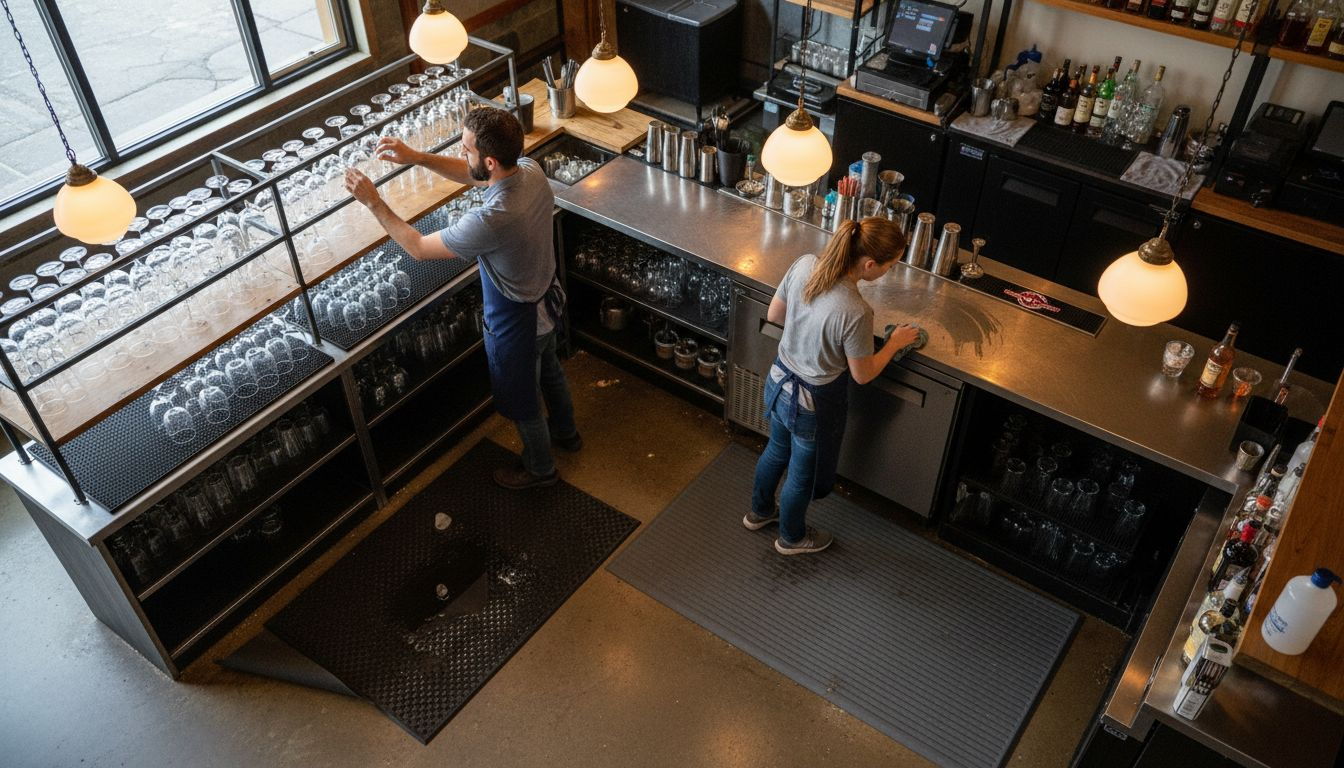
Your kitchen and food prep zones face the harshest conditions. These areas accumulate standing water, grease splatter, and constant moisture that creates a treacherous walking surface. Here, you need commercial-grade rubber mats with aggressive texturing designed specifically for wet environments. These mats drain quickly, resist oil and grease breakdown, and maintain their grip even when saturated. Dining room and front-of-house areas, by contrast, deal with different hazards like spilled beverages, water tracked in from outside, and occasional food debris. These spaces benefit from mats that balance slip resistance with aesthetics since guests see them. Entryways represent a critical transition zone where wet floors meet your dining area, making them prime locations for runner-style mats that capture moisture before it spreads throughout your restaurant.
The durability factor separates mats that perform for years from those that degrade within months. Long-term slip resistance requires testing under the wet and greasy conditions your restaurant actually experiences, not just theoretical lab conditions. Some materials lose their grip as they age, accumulate oils, or become compressed by daily foot traffic. Commercial mats from established suppliers undergo rigorous testing to confirm they maintain slip resistance over extended use, even in demanding kitchen environments. When selecting mats, look for products that specify their wet slip resistance rating and provide documentation of durability testing.
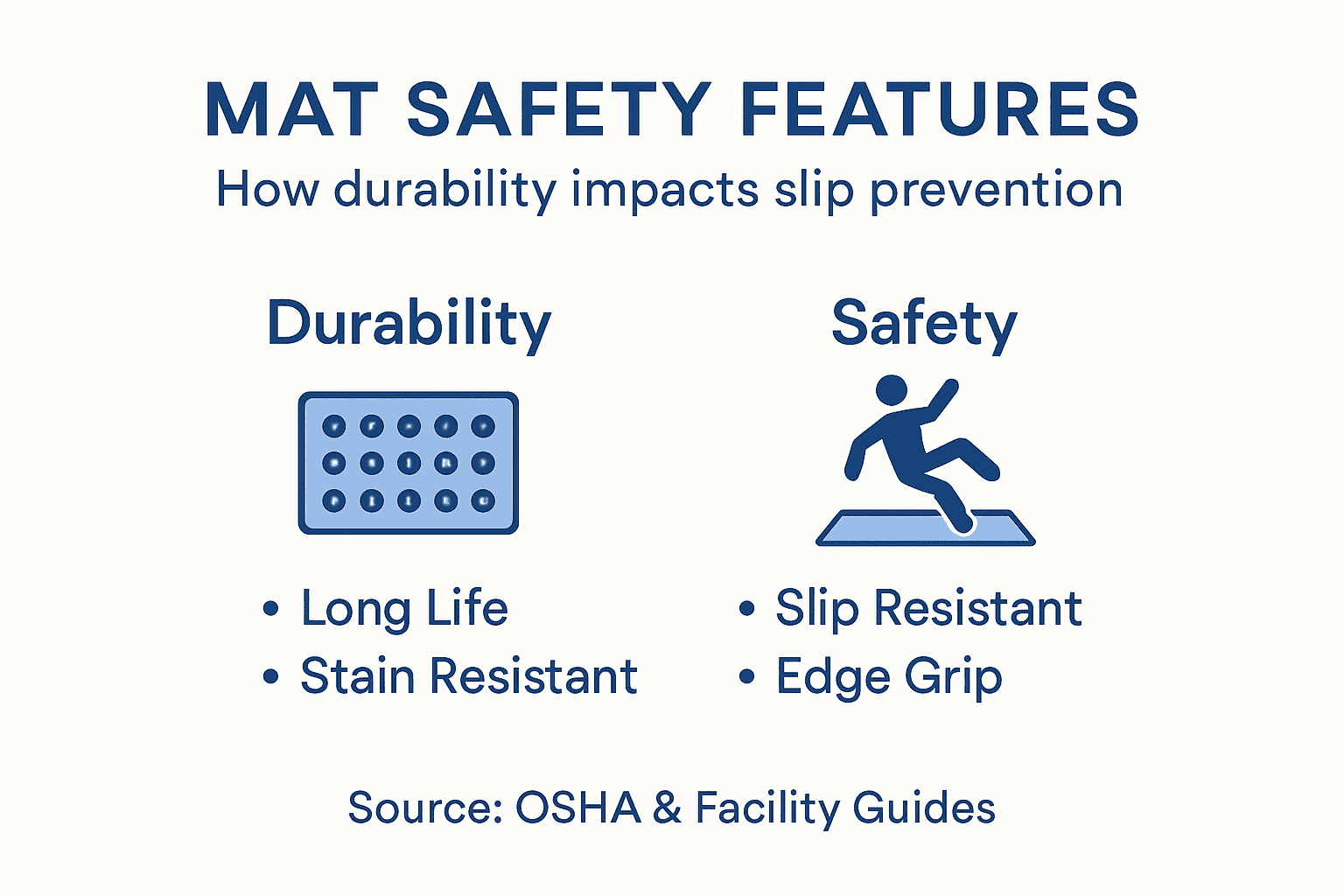
Matting type also depends on your existing flooring and facility layout. Tile floors require different mat solutions than concrete or sealed concrete, and some facilities need custom sizing to fit irregular spaces. Dense rubber mats work universally across floor types, while certain synthetic materials perform better on specific surfaces. Don’t overlook drainage capabilities either. Mats with channeled or perforated surfaces direct water away more effectively than solid designs, keeping the mat surface drier and safer longer.
Pro tip: Invest in mats designed for your specific hazard type rather than choosing generic options, and request slip resistance test results from suppliers to confirm the mat will maintain its grip under your actual operating conditions.
Here’s how different restaurant mat types compare in critical features:
| Mat Type | Best Use Area | Durability Level | Comfort Rating |
|---|---|---|---|
| Rubber Floor Mat | Kitchen, bar stations | High (years) | Moderate |
| Rubber Runner | Corridors, entryways | High (years) | Low |
| Synthetic Mat | Dining room, dry areas | Medium (months) | High |
| Channeled Mat | Wet prep zones | High (years) | Moderate |
Key Features That Improve Safety and Comfort
Not all restaurant mats perform equally, and the difference between a mediocre mat and an exceptional one comes down to specific features that directly address your operational challenges. The foundation of any effective non-slip mat is slip resistance verified through rigorous testing, not just marketing claims. A high coefficient of friction ensures your mats grip shoes and flooring consistently, even when saturated with water or grease. This matters because friction performance degrades over time as mats compress and accumulate oils. Look for mats that maintain their slip resistance rating after thousands of foot traffic cycles, proving they’ll protect your staff month after month. Beyond raw friction numbers, textured surfaces and drainage channels transform a basic mat into a safety tool. Aggressive texturing creates micro grips for shoes, while integrated channels direct standing water away from the walking surface rather than pooling beneath feet. This dual approach keeps your mats functional longer and reduces the maintenance burden on your cleaning crew.
Comfort directly impacts safety in ways many facility managers overlook. Staff working twelve-hour shifts on hard floors experience foot pain, ankle strain, and leg fatigue that clouds their attention and slows their movement, making them more prone to slips. Ergonomic cushioning addresses this by absorbing impact while maintaining stability. The trick is finding the right balance. Too soft, and the mat becomes unstable underfoot, actually increasing slip risk. Too firm, and it defeats the comfort purpose. Quality commercial mats layer different densities of rubber or foam to provide support where your staff needs it most while maintaining the grip surface they depend on. Visibility might seem like a minor feature, but contrasting colors between your mat and surrounding flooring create visual cues that alert both staff and guests to transitions and hazards. A dark mat against light tile, or a light mat on dark concrete, helps people adjust their gait subconsciously before they step onto the mat. This psychological awareness prevents many accidents that occur when people don’t realize they’re entering a different surface zone.
Standards compliance isn’t exciting, but it matters for your liability exposure. Mats designed to occupational safety standards guide how effectively they control slip and fall hazards. ISO standards ensure your mats have been evaluated against consistent benchmarks rather than cherry-picked testing conditions. When you select mats that meet recognized standards, you demonstrate due diligence if an accident occurs, showing you took reasonable precautions. Durability to withstand high foot traffic prevents the degradation that undermines safety over time. Mats that deteriorate quickly become false safety measures, appearing protective while actually failing to grip properly. Your mat’s construction quality, material composition, and backing design all influence how well it survives months of intense restaurant use without losing performance.
Pro tip: Request slip resistance test reports and durability certifications from manufacturers before purchasing, and specifically ask how friction performance changes after the mat has endured the equivalent foot traffic of six months in your type of restaurant.
OSHA Regulations and Safety Requirements
Occupational Safety and Health Administration rules exist specifically because restaurants are slip and fall hotspots. OSHA doesn’t recommend non-slip mats as optional enhancements. They’re mandated as part of your legal responsibility to maintain a safe workplace. Walking-working surfaces must remain clean, dry, and safe, and mats are one of the primary tools employers use to meet this obligation. This regulation applies directly to your restaurant, regardless of size. A single wet kitchen floor or slippery entryway creates a documented hazard that OSHA can cite you for violating 29 CFR 1910.22. The standard doesn’t specify exactly which mats to use or where they must go. That flexibility means you have discretion in implementation, but it also means the burden falls on you to make reasonable, defensible choices about mat placement and maintenance.
What OSHA absolutely requires is a documented inspection and maintenance program. You cannot simply install mats and forget about them. Your staff needs to actively inspect mats regularly, remove them when they become hazardous themselves, and repair or replace damaged units promptly. A mat that’s folded at the edges, torn, or deteriorated from grease accumulation actually becomes a trip hazard rather than a safety feature. Your maintenance logs create the evidence that you’re taking slip prevention seriously. If an employee slips on a wet floor and an OSHA investigator finds dirty, neglected mats that haven’t been cleaned or inspected in weeks, you’re establishing a pattern of non-compliance. However, if your records show you inspect mats daily, clean them regularly, and replace degraded units, you’re demonstrating due diligence. This documentation protects both your employees and your liability position. The regulation also requires that surfaces can support the intended loads, meaning your mats must be appropriate for your traffic volume and won’t shift or slide when someone steps on them.
Beyond OSHA regulations, state and local health departments sometimes impose additional requirements specific to food service establishments. Your state’s Department of Health might have rules about mat materials in food prep areas, drainage requirements, or color specifications. Some jurisdictions require non-slip mats behind cooking stations and in prep areas as part of their food safety code, separate from general OSHA requirements. Don’t assume federal rules are your only obligation. Contact your state health department and ask specifically what mat requirements apply to your facility type and location.
Implementing OSHA-compliant mat programs isn’t complicated, but it does require commitment. Start by conducting a hazard assessment of your restaurant, identifying high-risk areas where moisture accumulates or spills occur frequently. Install appropriate mats in those zones. Create a maintenance schedule documenting daily visual inspections, regular cleaning, and replacement cycles. Keep records showing when mats were installed, inspected, cleaned, and replaced. This paperwork becomes your protection if you ever face a safety citation or liability claim.
Pro tip: Document your mat maintenance program in writing, including daily inspection checklists and cleaning schedules, then actually follow it and keep records because OSHA investigators look for evidence that you’re actively managing slip hazards rather than just hoping mats prevent accidents.
Maintenance, Costs, and Common Pitfalls
Many facility managers purchase quality non-slip mats, install them strategically, then watch their effectiveness decline because they treat mats like one-time purchases rather than ongoing investments. This is the biggest pitfall. Mats don’t maintain themselves. They accumulate grease, dirt, food particles, and moisture that degrade their slip resistance. Regular maintenance including cleaning and inspecting for wear is absolutely essential to preserve functionality. A mat that hasn’t been cleaned in weeks becomes a hazard itself, with reduced grip and potential tripping from curled or buckled edges. Your cleaning protocol should include daily surface cleaning using appropriate methods for your mat material, weekly deep cleaning to remove accumulated grease and contaminants, and immediate replacement of any mat showing visible damage, tears, or permanent deformation. Think of this maintenance as part of your daily operations, not an occasional task you get to when you have spare time.
Cost calculations for mat programs confuse many facility managers because they look only at the initial purchase price. A budget mat that costs half as much as a commercial-grade option seems like smart spending until it deteriorates after six months and needs replacement. When you factor in labor costs for installation, replacement frequency, and the liability exposure from reduced slip resistance, premium mats often cost less over time. Your total cost picture includes the mat itself, cleaning supplies and equipment, staff labor hours for maintenance, replacement intervals, and the hidden cost of slip and fall incidents. A single employee injury resulting in workers compensation claims, lost productivity, and potential OSHA citations can cost thousands of dollars. Quality mats that maintain their performance for years represent insurance against these catastrophic costs. Budget roughly 15 to 25 percent of your annual mat investment for maintenance supplies and labor. If you’re spending $2,000 on mats annually, allocate $300 to $500 for proper upkeep. This investment prevents the scenario where your mats look good sitting on the floor but provide zero actual slip protection because they’re filthy and degraded.
Another common pitfall involves inconsistent maintenance standards across your facility. Your kitchen manager might take mat maintenance seriously while your front-of-house staff ignores them completely. This creates liability gaps where some areas have protected slip resistance while others have failed mats providing false security. Assign specific ownership. One person on each shift needs responsibility for mat inspection and cleaning. Document everything in a daily log that gets reviewed weekly. This creates accountability and generates the paperwork you need if an accident occurs. Additionally, many restaurants underestimate proper storage for replacement mats. Mats stacked haphazardly in corners get damaged before installation. Store them flat in a dry area to prevent warping or mildew that compromises performance. A preventive maintenance program minimizes unplanned failures and extends mat life significantly. Your program should specify cleaning frequency, inspection checkpoints, replacement timelines, and documentation requirements. This formal approach transforms mat maintenance from something that gets forgotten into a systematic process that actually happens consistently.
Cost and maintenance impact of mat program components:
| Component | Typical Cost | Maintenance Impact | Long-Term Value |
|---|---|---|---|
| Initial Mat Purchase | $80-$180 per mat | Requires regular cleaning | Reduces accident risk |
| Cleaning Supplies | $20-$50/year | Needed for daily upkeep | Extends mat lifespan |
| Staff Labor Hours | 5-10 hrs/month | For inspection and cleaning | Preserves safety |
| Replacement Mats | Every 1-3 years | Swap degraded mats | Avoids liability gaps |
Pro tip: Create a simple daily mat inspection checklist covering cleanliness, visible damage, edge curling, and proper position, then assign it to one staff member per shift with a signature requirement so you have documented evidence of active maintenance if you ever need it.
Enhance Your Restaurant Safety with Expert Mat Solutions
Keeping your restaurant floors safe from slips and falls means addressing high-traffic, moisture-prone areas with the right non-slip mats tailored for commercial use. The challenges of wet floors, grease buildup, and heavy foot traffic demand durable mats that provide proven slip resistance and ergonomic comfort. At Mats4U, we understand the importance of combining quality materials with strategic placement and ongoing maintenance to create a safer workplace for your staff and guests.
Explore our extensive range of Commercial Mats designed for demanding environments like kitchens, bars, and entryways. For staff who spend long hours on their feet, our Anti-Fatigue Mats provide essential comfort without compromising safety. Don’t wait until accidents happen or OSHA citations arise. Take action today by visiting Mats4U.com to find high-quality mats made in the USA with competitive pricing and free shipping on orders over $100. Protect your team now with professional-grade mats built to last and maintain their slip resistance under real restaurant conditions.
Frequently Asked Questions
What are restaurant non-slip mats and how do they work?
Restaurant non-slip mats are specialized floor coverings designed to prevent slips, trips, and falls by increasing friction between feet and floor surfaces, especially in areas prone to moisture and grease.
Where should I place non-slip mats in my restaurant for maximum effectiveness?
Non-slip mats should be strategically placed in high-risk areas such as food preparation zones, behind bars, and entryways to effectively reduce slip-related incidents.
How do I maintain non-slip mats to ensure they stay effective?
Regular maintenance includes daily surface cleaning, weekly deep cleaning to remove grease and contaminants, and immediate replacement of damaged mats to preserve their slip resistance.
What types of non-slip mats work best in restaurant environments?
Commercial-grade rubber mats work well in wet kitchen and prep zones, while synthetic mats are suitable for dining areas. Runners are ideal for high-traffic corridors and entryways, capturing moisture effectively.
Recommended
- Understanding Non Slip Restaurant Mats for Safety – Mats4U USA
- Non Slip Mats for Hallways: Reducing Risks in Hospitality – Mats4U USA
- Slip Resistant Mats Kitchen: Reducing Injuries and Costs – Mats4U USA
- Non Slip Kitchen Rugs – Boosting Safety in Busy Workspaces – Mats4U USA
- BEST BAKERY | Be Seen
- Comment éviter que son sac banane ne glisse de l’épaule ?


