


Most American businesses lose thousands each year due to dirty floors and slip accidents at entry points. With so many people coming and going, the simple act of walking through the door can introduce a surprising amount of dirt and moisture. A high-quality rubber mat for entryways can trap up to 80 percent of tracked-in debris, making it a key solution for maintaining safety and cleanliness while cutting cleaning costs for any busy workplace.
Table of Contents
- What Makes A Rubber Mat For Entryway Essential
- Types Of Entryway Rubber Mats For Businesses
- Key Features: Durability, Safety, And Slip Resistance
- Installation And Maintenance For High-Traffic Areas
- Comparing Rubber Mats To Alternative Entryway Solutions
- Common Pitfalls When Selecting Entryway Mats
Key Takeaways
| Point | Details |
|---|---|
| Importance of Rubber Mats | Rubber entryway mats are essential for maintaining cleanliness and safety in commercial spaces, trapping up to 80% of dirt and moisture before it spreads. |
| Types of Mats | Key categories include scraper mats for heavy debris, wiper mats for moisture absorption, and combination mats for all-in-one solutions tailored to high-traffic environments. |
| Durability and Safety Features | Premium rubber mats are designed for high foot traffic, providing excellent durability and slip resistance to minimize workplace accidents. |
| Installation and Maintenance | Proper placement and regular maintenance of rubber mats are critical for maximizing their effectiveness and ensuring long-lasting performance. |
What Makes a Rubber Mat for Entryway Essential
Rubber entryway mats serve far more than a decorative purpose. They are critical infrastructure for maintaining cleanliness, preventing accidents, and protecting interior flooring in commercial and professional environments. When strategically placed, these mats act as the first line of defense against dirt, moisture, and potential slip hazards.
The primary function of a rubber entryway mat is moisture and debris containment. As visitors walk into a facility, they track in water, snow, mud, and various particulates that can quickly damage expensive flooring surfaces. A comprehensive guide to choosing commercial mats reveals that high-quality rubber mats can trap up to 80% of incoming dirt and moisture before it spreads throughout a building. This protective barrier significantly reduces cleaning costs and maintains a professional appearance.
Safety represents another critical aspect of rubber entryway mats. Their textured surfaces and durable construction provide excellent traction, dramatically reducing slip and fall risks. Businesses face substantial liability from workplace accidents, making these mats an essential investment in both employee and visitor safety. Commercial environments like hospitals, retail spaces, educational institutions, and office buildings rely on these mats to create stable, secure entry points that minimize potential injury risks.
Beyond safety and cleanliness, rubber entryway mats offer additional benefits that make them indispensable for professional spaces. They absorb sound, provide comfort for standing personnel, and can be customized with logos or branding. Their durability means they withstand high traffic areas, making them a cost-effective solution for maintaining clean, safe, and professional entrances across diverse commercial settings.
Types of Entryway Rubber Mats for Businesses
Rubber entryway mats come in diverse configurations, each engineered to address specific commercial environmental challenges. Understanding the range of options helps businesses select the most appropriate solution for their unique entry requirements. Types of entrance mats can significantly impact facility maintenance and safety, making strategic selection critical for professional spaces.
The primary categories of rubber entryway mats include scraper mats, wiper mats, and combination mats. Scraper mats feature aggressive surface textures designed to remove heavy dirt and debris from shoes. These mats typically have deep, raised patterns that effectively dislodge mud, snow, and outdoor particulates before they enter the building. Wiper mats, in contrast, focus on absorbing moisture and trapping finer dust particles, creating a cleaner transition zone between exterior and interior spaces.
Combination mats represent the most versatile rubber entryway solution for businesses. These innovative designs integrate scraping and wiping technologies into a single mat, providing comprehensive dirt and moisture management. Ideal for high-traffic commercial environments like hospitals, retail centers, educational institutions, and office complexes, these mats offer maximum protection against floor damage and potential slip hazards.
Specialized rubber entryway mat variations include logo mats for branding, anti-fatigue mats for areas with prolonged standing, and heated mats for cold weather regions. Businesses can select from standard sizes or request custom dimensions to perfectly fit their entrance specifications. Thickness, texture, and rubber composition can also be tailored to match specific environmental demands, ensuring optimal performance and longevity in diverse commercial settings.
Key Features: Durability, Safety, and Slip Resistance
Rubber entryway mats represent a critical infrastructure investment for businesses seeking to protect their facilities and ensure visitor safety. Understanding anti-slip floor mat technologies reveals the sophisticated engineering behind these essential safety solutions. The key features of high-performance rubber mats extend far beyond simple floor covering, encompassing advanced design elements that address multiple facility management challenges.
Durability stands as the cornerstone of premium rubber entryway mats. Commercial-grade rubber materials are engineered to withstand extreme foot traffic, resist wear and tear, and maintain structural integrity under challenging environmental conditions. These mats can endure thousands of daily footsteps, temperature fluctuations, moisture exposure, and heavy industrial use without compromising their protective capabilities. The rubber’s inherent resilience allows for consistent performance in high-traffic zones like retail centers, hospitals, educational institutions, and corporate environments.
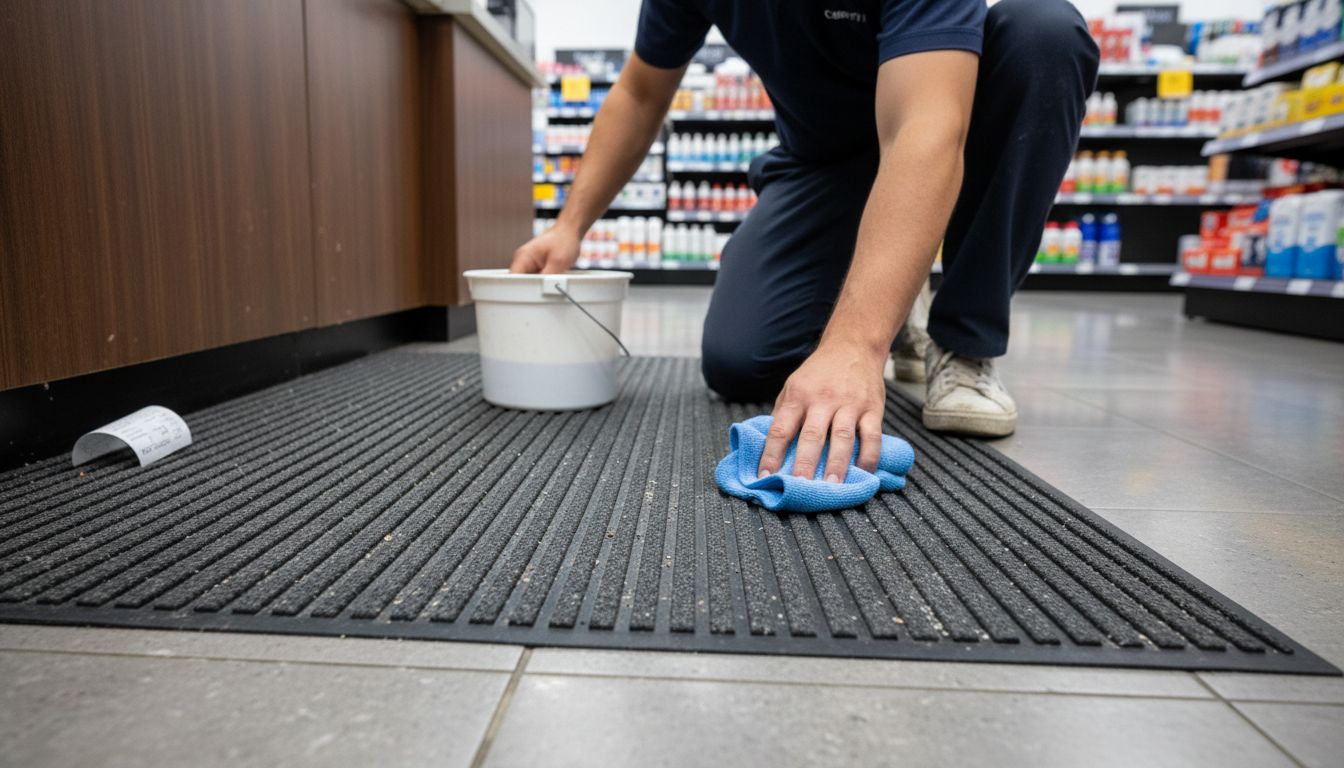
Safety features represent another critical aspect of rubber entryway mats. Advanced texture designs incorporate intricate surface patterns that dramatically reduce slip risks by channeling water, dirt, and debris away from walking surfaces. Raised treads, strategic grooves, and specialized rubber compounds work together to create maximum traction, even in wet or contaminated conditions. These safety innovations protect both visitors and employees from potential accidents, significantly reducing liability risks for businesses.
The comprehensive performance of rubber entryway mats extends beyond immediate safety considerations. Their ability to trap moisture and dirt prevents floor damage, reduces cleaning frequencies, and maintains a professional appearance. Businesses can further customize these mats with thickness variations, specific rubber compounds, and even branding elements to create a tailored solution that meets their exact environmental and aesthetic requirements. From extreme weather protection to daily maintenance reduction, rubber entryway mats offer a multifunctional solution that addresses numerous facility management challenges simultaneously.
Installation and Maintenance for High-Traffic Areas
Properly installing and maintaining rubber entryway mats requires strategic planning and precise execution to maximize their effectiveness in high-traffic commercial environments. Selecting the right mats for high-traffic areas is critical for ensuring long-term performance and safety. The installation process involves more than simply placing a mat at an entrance - it demands careful consideration of space, traffic patterns, and environmental conditions.
Installation begins with precise measurements and strategic positioning. Entrance mat placement should create a seamless transition zone that captures maximum dirt and moisture before it spreads throughout the facility. Businesses should consider mat length, ensuring at least three to four steps of coverage to effectively trap contaminants. Proper anchoring is crucial, particularly in areas with heavy foot traffic or potential tripping hazards. Some installations require recessed mat wells or surface-level mounting systems that prevent edge curling and ensure a flat, stable surface.
Maintenance represents an equally critical aspect of rubber entryway mat management. Regular cleaning protocols are essential to preserve the mat’s performance and appearance. Businesses should implement daily vacuuming or sweeping to remove loose dirt, followed by periodic deep cleaning using specialized mat cleaning solutions. Frequency of maintenance depends on traffic volume - high-traffic areas might require daily attention, while lower-traffic zones can be cleaned less frequently. Inspection for wear, tears, or surface degradation should occur monthly, with replacement scheduled before the mat loses its protective capabilities.
Technical considerations extend beyond basic cleaning. Rubber mats in high-traffic areas must be rotated periodically to ensure even wear, and businesses should maintain a backup mat to minimize downtime during cleaning or replacement. Climate and specific environmental conditions play a significant role in mat longevity - mats in wet regions or areas with extreme temperature variations may require more frequent replacement. By implementing a comprehensive maintenance strategy, businesses can maximize the lifespan and effectiveness of their rubber entryway mats, protecting both their flooring investments and visitor safety.
Comparing Rubber Mats to Alternative Entryway Solutions
Entryway flooring solutions vary dramatically in performance, with rubber mats emerging as a superior choice for businesses seeking comprehensive protection. Understanding the key differences between entrance mat options reveals why rubber mats consistently outperform traditional alternatives across multiple critical metrics. Commercial environments demand more than simple floor coverings - they require sophisticated solutions that address safety, cleanliness, and durability simultaneously.
Traditional alternatives like carpet, cotton, or synthetic fiber mats pale in comparison to commercial-grade rubber mats. Carpet mats quickly absorb moisture, becoming breeding grounds for bacteria and losing effectiveness after minimal use. Cotton mats deteriorate rapidly under heavy traffic, while synthetic options often lack the structural integrity needed for high-impact environments. Rubber mats, by contrast, offer unparalleled resilience. Their non-porous surface resists moisture absorption, prevents bacterial growth, and maintains structural integrity through thousands of footsteps, temperature variations, and harsh environmental conditions.
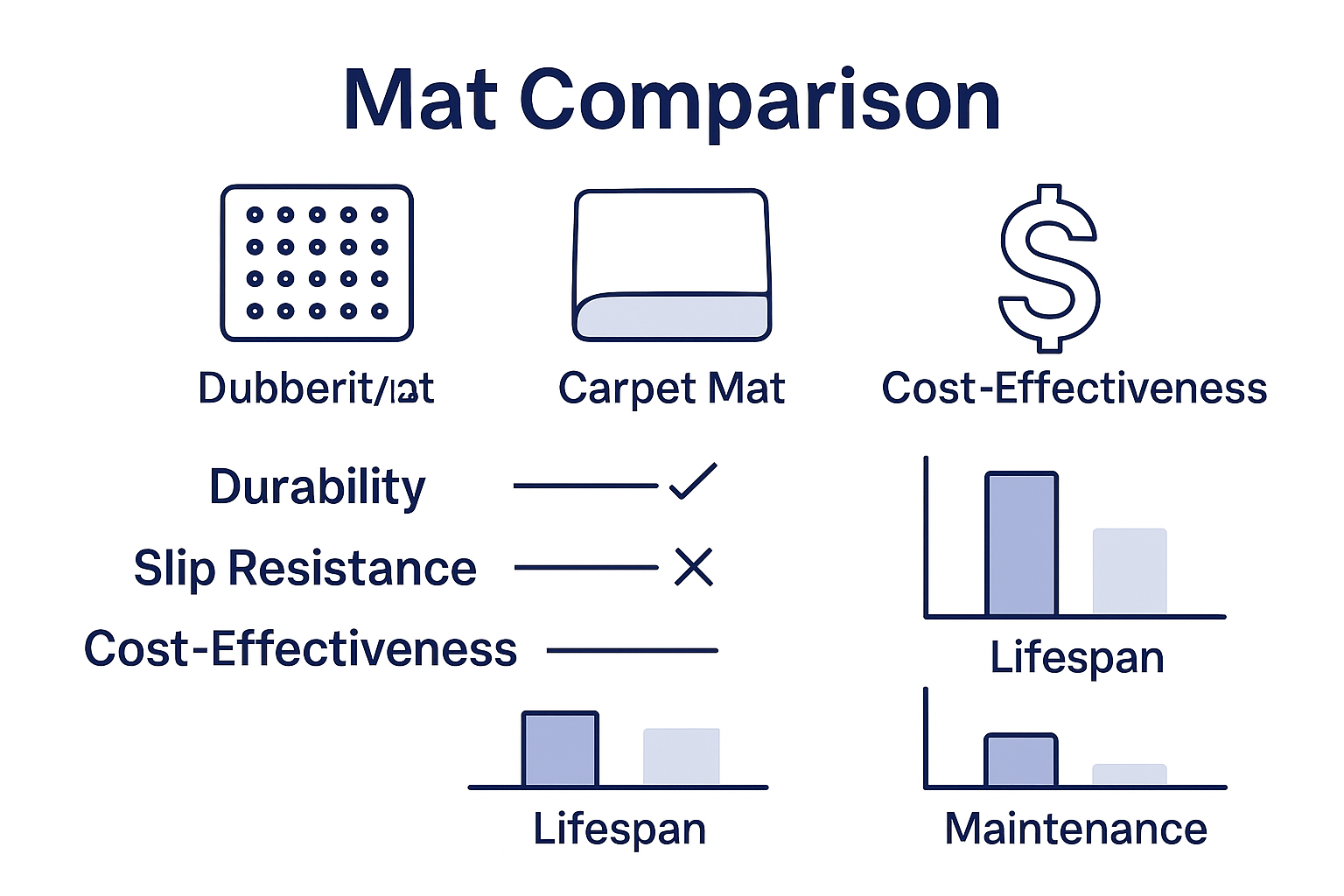
Safety represents another critical distinguishing factor between rubber mats and alternative solutions. Traditional mats frequently create slip hazards, particularly when saturated with water or dirt. Rubber mats incorporate advanced traction technologies, with intricate surface patterns that channel moisture and provide consistent grip. These design elements dramatically reduce accident risks in commercial spaces like hospitals, retail centers, educational facilities, and industrial environments. The raised textures and specialized rubber compounds create a secure walking surface that adapts to changing environmental conditions.
Beyond immediate performance considerations, rubber mats offer significant long-term economic advantages. While initial purchase prices might seem higher than traditional alternatives, their extended lifespan and reduced maintenance requirements deliver substantial cost savings. Businesses can customize rubber mats with thickness variations, specific compounds, and even branding elements. This versatility, combined with superior durability, positions rubber entryway mats as a strategic investment that protects flooring, enhances safety, and maintains a professional aesthetic across diverse commercial settings.
Common Pitfalls When Selecting Entryway Mats
Selecting the appropriate entryway mat is more complex than many businesses realize, with numerous potential missteps that can compromise safety, functionality, and long-term value. Choosing indoor entrance floor mats requires careful consideration of multiple critical factors that extend beyond simple aesthetic preferences. Businesses frequently encounter substantial challenges when navigating mat selection without a comprehensive understanding of performance requirements.
One significant pitfall involves improper size and coverage. Many organizations select mats that are too small, providing inadequate dirt and moisture capture. Effective entryway protection demands mat lengths that accommodate at least three to four walking steps, allowing sufficient surface area to trap contaminants before they spread throughout the facility. Undersized mats create false security, transferring dirt and moisture deeper into interior spaces and increasing cleaning expenses. Additionally, mats that do not properly fit entrance dimensions can create tripping hazards, potentially exposing businesses to liability risks.
Material selection represents another critical area where businesses frequently make costly mistakes. Choosing mats based solely on initial price point rather than long-term performance capabilities can lead to rapid deterioration and frequent replacements. Low-quality materials quickly break down under heavy traffic, losing their protective characteristics and becoming breeding grounds for bacteria. Businesses must evaluate mat durability, moisture resistance, traction properties, and maintenance requirements. Rubber mats with specialized compounds offer superior longevity, maintaining structural integrity and safety features through thousands of footsteps and challenging environmental conditions.
The final major pitfall involves neglecting specialized environmental requirements. Different commercial settings demand unique mat characteristics - what works perfectly in a retail center might prove inadequate in a manufacturing facility or healthcare environment. Factors like temperature variations, moisture levels, chemical exposure, and traffic intensity must inform mat selection. Businesses should conduct thorough assessments of their specific entry zone characteristics, considering factors like slip resistance, drainage capabilities, and potential customization needs. By avoiding these common selection errors, organizations can implement entryway mat solutions that genuinely protect their facilities, enhance safety, and deliver long-term economic value.
Protect Your Entryway with Commercial Rubber Mats That Truly Work
Maintaining cleanliness and safety at your commercial entryway is no small challenge Rubber mats are proven to trap dirt and moisture while reducing slip risks to protect your flooring and everyone who walks through your doors At Commercial Mats – Mats4U USA you will find a wide selection of durable rubber entryway mats designed to handle heavy foot traffic and harsh conditions without sacrificing safety or appearance
Don’t wait until slips or costly floor damage happen Choose mats tailored for your facility with superior traction and lasting performance Find the perfect fit in size and style at Indoor Mats – Mats4U USA and explore accessories that boost mat longevity at Accessories – Mats4U USA Visit Mats4U.com now for easy browsing and fast delivery Make the smart choice today to maximize entryway cleanliness and safety
Frequently Asked Questions
What are the main benefits of using rubber mats for entryways?
Rubber mats for entryways help maintain cleanliness by trapping dirt and moisture, reducing cleaning costs. They also enhance safety by providing excellent traction, minimizing slip risks, and protecting interior flooring.
How should I choose the right type of rubber mat for my business?
Select from categories like scraper mats for heavy dirt removal, wiper mats for moisture absorption, or combination mats that offer both functions. Consider your specific entryway requirements, including traffic volume and environmental conditions.
What maintenance is required for rubber entryway mats?
Regular maintenance involves daily vacuuming or sweeping to remove loose dirt, followed by deep cleaning with specialized solutions based on foot traffic levels. Monthly inspections for wear and proper rotation of mats are recommended to ensure longevity.
How do rubber mats compare to alternative entryway solutions?
Rubber mats outperform alternatives like carpet or synthetic mats in durability, moisture resistance, and slip prevention. They maintain their protective features under high foot traffic and challenging conditions, providing a more secure and effective solution.
Recommended
- A Guide to Floor Safety Mats for Workplaces – Mats4U USA
- How to Choose an Outdoor Entrance Mat: A Practical Guide – Mats4U USA
- A Guide to Choosing and Using Indoor Entrance Floor Mats – Mats4U USA
- A Practical Guide to Anti Slip Floor Mats: Improving Safety and Grip i – Mats4U USA
- Understanding Dog Safety at Home: Essential Insights – iPupPee


