


Slippery pool decks and constant moisture can turn routine maintenance into a challenge for facility managers across the United States. In busy commercial hospitality environments, finding a solution that keeps guests safe and areas sanitary is a top priority. With engineered EPDM rubber compounds designed to resist chlorine, UV rays, and heavy use, modern rubber pool mats deliver unmatched safety and hygiene for poolside settings. This guide explains how the latest rubber mat innovations address both operational and compliance needs, helping managers achieve long-lasting performance while reducing maintenance headaches.
Table of Contents
- Rubber Mat Pool Solutions Explained
- Types of Rubber Mats for Pool Areas
- Key Safety and Hygiene Features
- Compliance and Industry Standards for Pools
- Long-Term Cost and Maintenance Factors
Key Takeaways
| Point | Details |
|---|---|
| Importance of Rubber Mats | Rubber pool mats enhance safety and hygiene, significantly reducing slip risks and bacterial transmission in commercial settings. |
| Types of Rubber Mats | Different rubber mat configurations address unique challenges; puzzle mats offer flexibility, while hygiene mats actively combat bacteria. |
| Compliance Standards | Adhering to industry safety regulations is crucial; mats must meet specific performance metrics like slip resistance and chemical resilience. |
| Long-Term Cost Efficiency | Investing in high-quality rubber mats reduces long-term costs through durability and minimal maintenance needs, ensuring better financial management. |
Rubber Mat Pool Solutions Explained
Rubber pool mats represent a critical safety and hygiene solution for commercial hospitality environments, offering specialized protection against slip hazards and bacterial transmission. Advanced rubber matting technologies have revolutionized poolside safety standards, creating engineered surfaces designed to withstand challenging aquatic environments.
These sophisticated mats utilize EPDM rubber compounds specifically formulated to resist chlorine exposure, UV degradation, and constant moisture. Key performance characteristics include superior slip resistance, rapid water drainage, and antimicrobial surface treatments that prevent bacterial growth. Commercial facilities benefit from mats that not only enhance user safety but also maintain stringent hygiene protocols.
Designing effective rubber pool solutions requires understanding several critical factors. Optimal mats feature textured surfaces providing maximum traction, drainage channels preventing water accumulation, and materials resistant to chemical interactions common in pool environments. Thickness variations accommodate different traffic levels, with heavier commercial zones requiring more robust constructions capable of supporting high pedestrian volumes while maintaining slip resistance.
Pro tip: Rotate and inspect rubber pool mats quarterly to identify early wear patterns and potential safety degradation before they become significant maintenance issues.
Types of Rubber Mats for Pool Areas
Commercial pool environments require specialized rubber matting solutions that address unique safety and hygiene challenges. Rubber mat configurations range from modular puzzle designs to comprehensive universal pool systems, each engineered to meet specific operational requirements in aquatic settings.
The primary categories of rubber pool mats include puzzle mats, universal pool mats, and dedicated hygiene mats. Puzzle mats offer exceptional flexibility, allowing facility managers to create custom configurations that adapt to irregular pool deck layouts. These interlocking designs provide seamless coverage, with raised surface textures ensuring maximum slip resistance and efficient water drainage. Universal pool mats typically feature broader coverage areas, designed to withstand heavy foot traffic and provide consistent protection across entire poolside zones.
Specialized rubber mat types address specific environmental challenges. Hygiene-focused mats incorporate antimicrobial treatments that actively reduce bacterial transmission, while heavy-duty commercial mats utilize reinforced rubber compounds capable of withstanding constant moisture, chlorine exposure, and UV degradation. Some advanced designs integrate drainage channels and textured surfaces to quickly disperse water and minimize slip hazards, making them ideal for high-traffic pool areas in hotels, recreation centers, and public swimming facilities.
Here is a comparison of common types of rubber pool mats and their best applications:
| Mat Type | Best Use Location | Main Advantage |
|---|---|---|
| Puzzle Mats | Irregular pool decks | Flexible, custom configurations |
| Universal Pool Mats | Large, busy pool zones | Broad coverage, easy installation |
| Hygiene Mats | High-risk bacteria areas | Antimicrobial surfaces |
| Heavy-Duty Mats | Commercial/high traffic | Highest durability, chemical proof |
Pro tip: Measure your pool deck precisely before purchasing mats, accounting for edge spaces and potential expansion requirements to ensure complete and efficient coverage.
Key Safety and Hygiene Features
Commercial pool environments demand comprehensive safety and hygiene solutions that protect both facility operations and user health. Health and safety protocols require strategic implementation of rubber mat technologies designed to mitigate risks associated with wet environments.
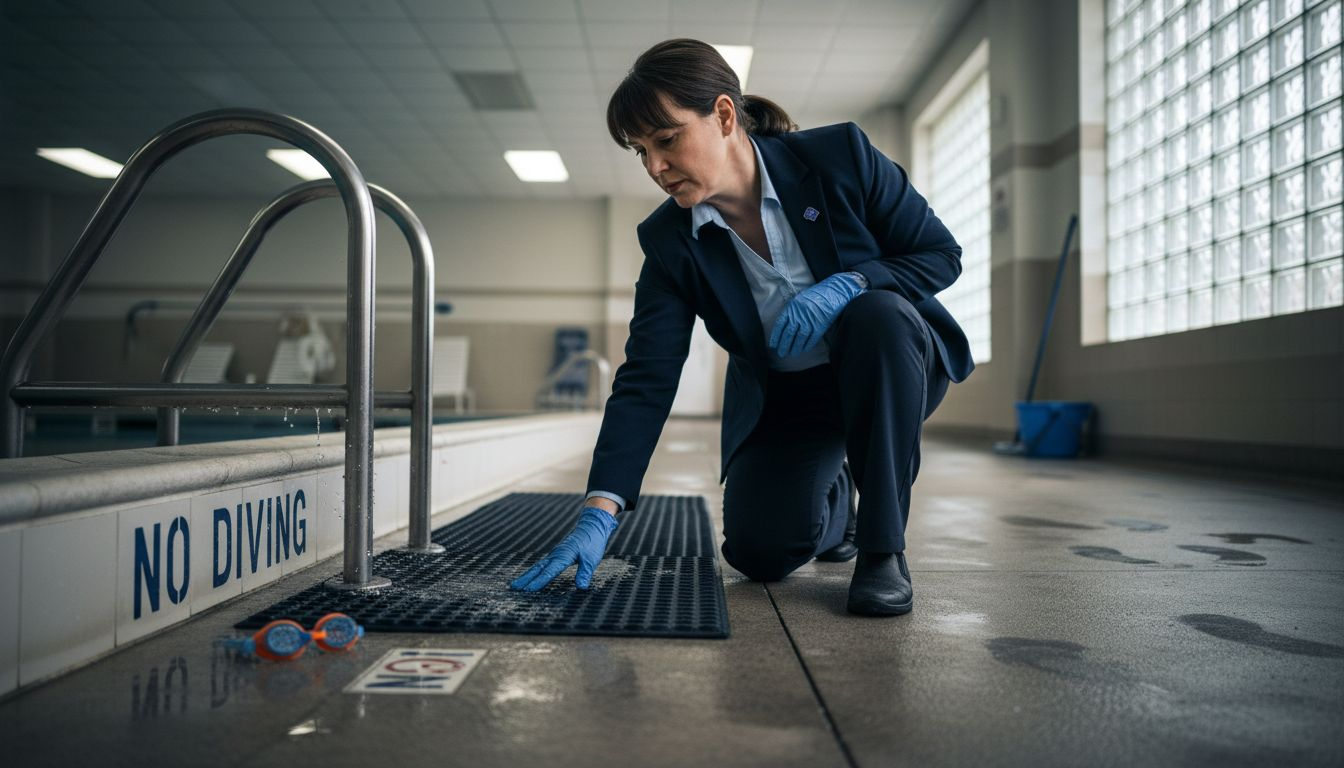
Critical safety features in pool area rubber mats include multi-layered slip resistance mechanisms. These advanced surfaces incorporate textured patterns with microscopic channels that rapidly disperse water, creating immediate traction points for bare feet and reducing potential falling hazards. Antimicrobial treatments represent another essential hygiene component, with specialized rubber compounds engineered to inhibit bacterial growth and prevent cross-contamination between pool users.
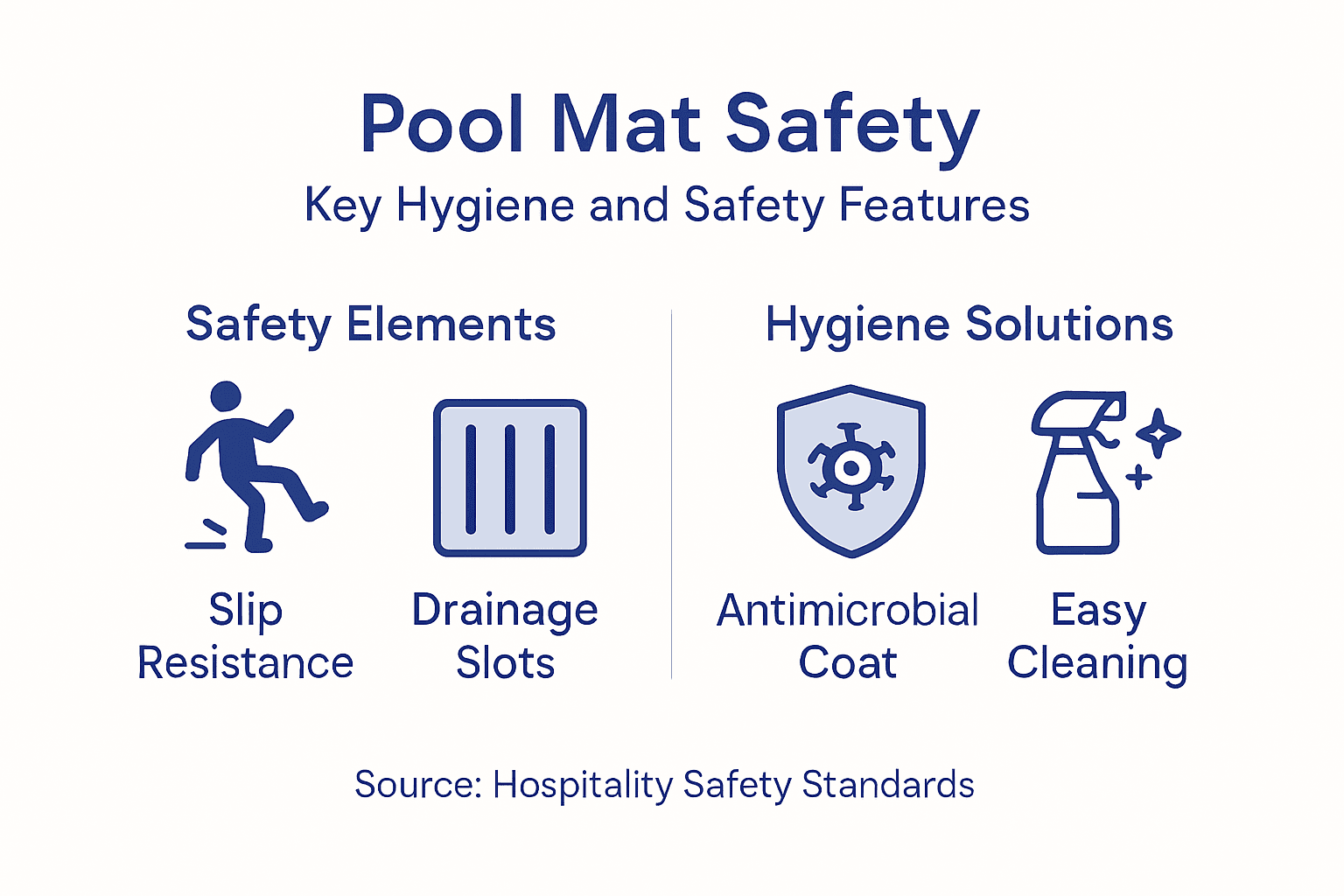
The most effective rubber mats integrate multiple safety elements simultaneously. Drainage capabilities work in concert with elevated surface designs to minimize standing water, while chemical-resistant materials maintain structural integrity despite constant exposure to chlorine, salt water, and cleaning agents. Durability becomes paramount in high-traffic pool areas, with commercial-grade mats capable of withstanding thousands of wet foot crossings without degrading surface performance or compromising safety standards.
Pro tip: Implement a weekly inspection routine to check mat surfaces for wear, potential slip hazards, and signs of bacterial buildup to maintain optimal pool area safety.
Compliance and Industry Standards for Pools
Commercial pool environments must adhere to stringent safety regulations that govern surface materials and user protection. Rubber safety surfacing standards play a critical role in meeting complex regulatory requirements designed to minimize accident risks and ensure user safety.
Industry compliance for pool matting involves multiple critical performance metrics. These include slip resistance ratings, impact absorption capabilities, drainage efficiency, and chemical resistance. Regulatory bodies such as the Americans with Disabilities Act (ADA) and the Commercial Swimming Pool Safety Act establish precise guidelines for surface materials, specifying exact requirements for texture, permeability, and load-bearing characteristics. Manufacturers must demonstrate that their rubber mat products can withstand repeated exposure to chlorine, saltwater, ultraviolet radiation, and constant foot traffic without compromising structural integrity or safety features.
The most rigorous compliance standards focus on preventing potential injuries through advanced material engineering. Commercial pool mats must pass extensive testing protocols that evaluate slip resistance under wet conditions, impact absorption for potential falls, and long-term durability. These assessments include dynamic coefficient of friction measurements, compression resilience tests, and accelerated aging simulations to ensure consistent performance throughout the product’s operational lifecycle. Hospitality facilities must carefully select rubber matting solutions that not only meet but exceed these comprehensive safety benchmarks.
Pro tip: Request detailed compliance certification documentation from manufacturers, verifying that pool mat products meet or exceed current industry safety standards before final installation.
Long-Term Cost and Maintenance Factors
Commercial facility managers understand that pool mat investments extend far beyond initial purchase prices. Rubber mat maintenance strategies reveal substantial long-term financial benefits through strategic material selection and proactive care protocols.
Economic considerations for pool mat solutions involve comprehensive lifecycle cost analysis. High-quality rubber mats demonstrate significant value through durability, reduced replacement frequency, and minimal maintenance requirements. Critical cost factors include material resilience against chemical exposure, UV degradation resistance, and ability to withstand constant moisture and foot traffic. Commercial facilities can expect premium rubber mats to maintain structural integrity for 3-5 years with proper maintenance, dramatically reducing per-year operational expenses compared to lower-grade alternative materials.
Maintenance protocols play a pivotal role in maximizing rubber mat investment potential. Routine cleaning procedures involve simple techniques like weekly sanitization, periodic deep cleaning, and systematic inspection for potential wear points. Advanced rubber compounds engineered for pool environments require minimal intervention, with most high-performance mats needing only standard detergent solutions and occasional pressure washing to maintain optimal performance. The most cost-effective strategies incorporate preventative maintenance approaches that address potential degradation before significant wear occurs.
This table highlights key cost considerations and maintenance strategies for commercial pool mats:
| Cost Factor | Long-Term Benefit | Maintenance Strategy |
|---|---|---|
| Enhanced durability | Fewer replacements, lower costs | Regular surface inspections |
| Chemical resistance | Prevents early material breakdown | Use mild detergents for cleaning |
| UV/Chlorine resilience | Stable color and structure | Occasional pressure washing |
| Preventative care | Maximized mat lifespan | Log cleaning and inspection dates |
Pro tip: Create a standardized maintenance log tracking each pool mat’s condition, cleaning dates, and replacement intervals to optimize long-term budgeting and performance management.
Elevate Pool Safety and Hygiene with Commercial Rubber Mats
Maintaining a safe and hygienic pool environment is a crucial challenge for hospitality businesses aiming to protect guests and comply with health standards. The article highlights key issues like slip hazards, bacterial growth, and chemical resistance that demand specialized solutions. At Mats4U, we understand these unique demands and offer durable, waterproof, and antimicrobial commercial mats designed to boost safety and sanitation around your pool areas.
Explore our extensive selection of Commercial Mats engineered to withstand chlorine, UV exposure, and heavy foot traffic. With products that combine superior slip resistance and easy maintenance, you can reduce risks and promote a safer guest experience. Don’t wait until wear and hazards escalate. Visit Mats4U.com now to find the right pool safety mats that meet rigorous industry standards and deliver lasting value. Take the next step toward enhancing your facility’s hygiene and safety today.
Discover how our Waterhog Mats integrate efficient water drainage and anti-slip technology for excellent poolside performance. For indoor pool areas, check our Indoor Mats collections tailored to maintain cleanliness with antimicrobial features. Trust Mats4U to support your commitment to health and safety with trusted, American-made solutions.
Frequently Asked Questions
What are the benefits of rubber mats for pool safety?
Rubber mats enhance safety by providing superior slip resistance, rapid water drainage, and antimicrobial properties that help prevent bacterial growth, making them ideal for poolside environments.
How do I choose the right type of rubber mat for my pool area?
Selecting the right mat involves considering factors such as traffic levels, environmental challenges, and specific safety needs. Options include puzzle mats for flexibility, universal mats for broad coverage, and hygiene mats with antimicrobial treatments.
How can I maintain rubber mats to ensure their longevity?
Routine maintenance is essential; implement weekly cleaning with mild detergents, periodic deep cleaning, and regular inspections to identify wear or potential slip hazards.
What compliance standards should rubber pool mats meet?
Rubber pool mats should adhere to safety regulations that include slip resistance ratings, impact absorption capabilities, drainage efficiency, and chemical resistance, ensuring they meet health and safety protocols.


