


More than 30 percent of American workplace injuries are linked to slips, trips, and falls each year. Facility managers across the United States rely on slip proof mats as a first line of defense, yet confusion and myths often surround their actual effectiveness. Cutting through the misunderstandings reveals how selecting the right slip proof mat can transform safety standards and protect the well-being of every employee in any American commercial or industrial setting.
Table of Contents
- Slip Proof Mat Definition And Common Myths
- Popular Types Of Slip Proof Mats Explained
- Essential Features For Maximum Slip Resistance
- Use Cases In Commercial And Industrial Settings
- Common Pitfalls And How To Avoid Them
Key Takeaways
| Point | Details |
|---|---|
| Varied Effectiveness of Mats | Not all slip proof mats provide the same level of protection; effectiveness depends on material, surface texture, and placement according to specific environments. |
| Myths About Slip Proof Mats | Common misconceptions include that all mats offer equal slip resistance, one design fits all, and no maintenance is needed. |
| Importance of Regular Maintenance | Continuous inspection and proper upkeep are essential to ensure mats remain effective in reducing slips and falls. |
| Strategic Mat Selection | Choosing the right mat based on workplace conditions is critical for minimizing accident risks and enhancing safety. |
Slip Proof Mat Definition and Common Myths
Slip proof mats are specialized floor coverings designed to reduce accidental slips, trips, and falls in commercial and industrial environments by providing enhanced surface traction. Despite their widespread use, numerous misconceptions persist about their functionality and effectiveness.
Contrary to popular belief, not all floor mats offer the same level of protection. The Centers for Disease Control and Prevention’s slip prevention guidelines clarify that mat effectiveness depends on multiple factors including material composition, surface texture, and appropriate placement. A mat that works perfectly in a dry warehouse might prove ineffective in a wet kitchen environment.
Common myths about slip proof mats include:
- Myth 1: All floor mats provide equal slip resistance
- Myth 2: One mat design fits every workspace
- Myth 3: Slip proof mats require no maintenance
In reality, selecting the right non slip floor mat requires careful consideration of specific workplace conditions. Factors like moisture levels, traffic patterns, and potential chemical exposures significantly impact mat performance. Regular inspection, cleaning, and replacement are crucial for maintaining optimal safety standards.
Professional facility managers understand that slip proof mats are not a one-size-fits-all solution but a strategic safety investment. By understanding their specific workplace requirements and choosing mats engineered for those precise conditions, businesses can dramatically reduce workplace accident risks and protect their most valuable asset: their employees.
Popular Types of Slip Proof Mats Explained
Workspace safety demands specialized slip proof mats designed to address unique environmental challenges. Understanding the range of available options enables facility managers to select the most appropriate protection for their specific work environments.
The Fall Prevention Foundation highlights several critical mat categories that provide comprehensive safety solutions:
- Low-Profile Mats: Minimize tripping hazards with extremely thin design
- Cushioned Mats: Provide shock absorption and reduce worker fatigue
- Textured Surface Mats: Offer enhanced grip in moisture-prone areas
- Sensor-Activated Mats: Provide advanced monitoring capabilities
Anti slip floor mats are particularly crucial in environments with high moisture or potential chemical exposure. Industrial settings like manufacturing floors, commercial kitchens, and healthcare facilities require specialized mat designs that address specific safety challenges.
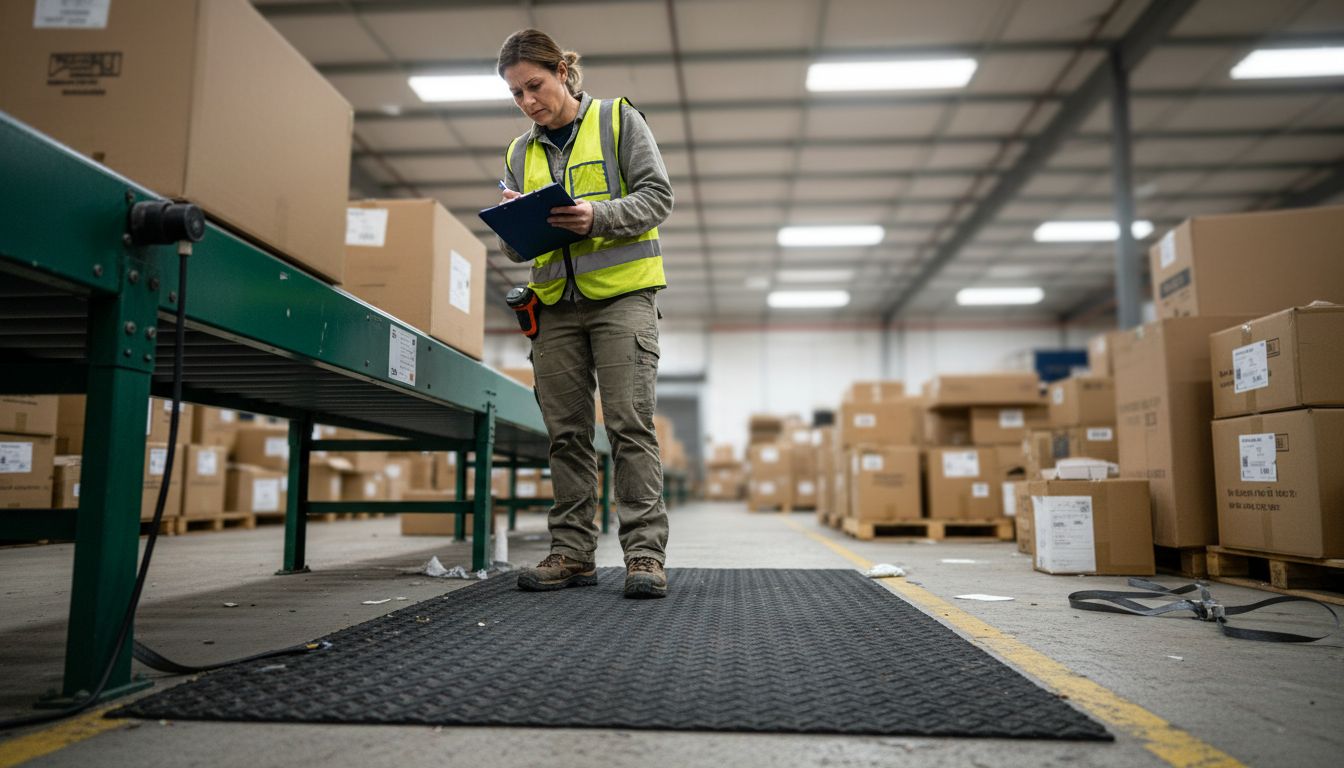
Beyond basic slip prevention, advanced mat technologies now incorporate ergonomic features that protect worker health. Cushioned mats with targeted pressure distribution can reduce joint stress, while textured surfaces provide reliable traction even under challenging conditions. Professional facility managers recognize these mats as strategic investments in workplace safety, not just simple floor coverings.
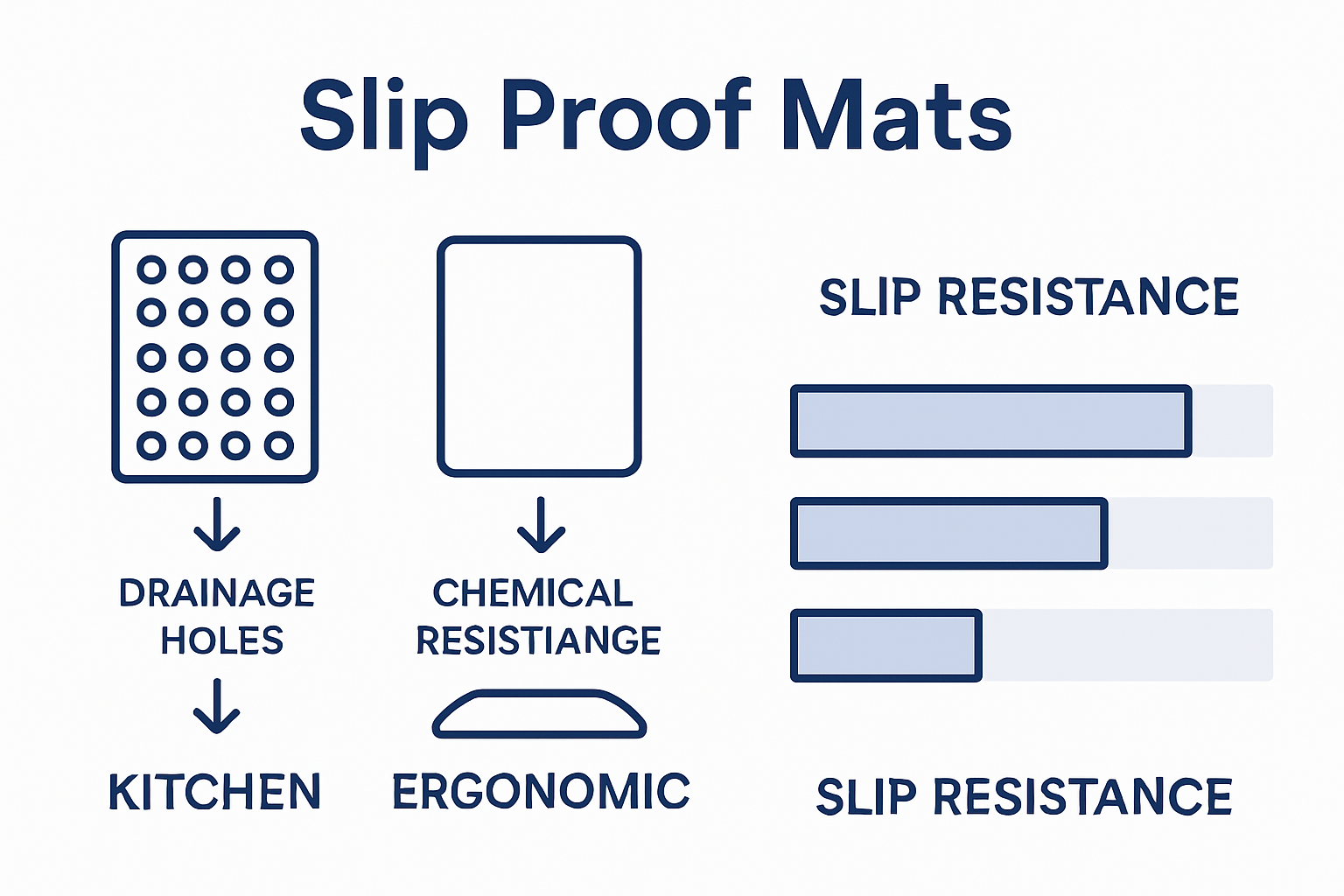
Essential Features for Maximum Slip Resistance
Maximizing workplace safety requires a comprehensive understanding of slip resistant mat technologies that go far beyond simple floor coverings. The right mat can mean the difference between a secure work environment and a potential accident waiting to happen.
The National Safety Council’s research identifies critical design features that ensure optimal slip resistance:
- Beveled Edges: Prevent tripping and facilitate smooth transitions
- Dual-Sided Slip Resistance: Ensure stability from multiple angles
- Chemical-Resistant Materials: Maintain performance in challenging environments
- Textured Surface Design: Maximize traction under varying conditions
Slip resistance standards demand more than just surface-level protection. The CDC’s workplace safety guidelines emphasize that effective mats must provide sufficient coverage to remove contaminants and maintain secure placement to prevent unexpected movement.
Professional facility managers recognize that slip resistance is a dynamic concept. Modern mat technologies incorporate advanced materials and ergonomic designs that adapt to specific workplace environments, transforming floor safety from a passive protection measure to an active risk management strategy. Regular inspection, proper maintenance, and strategic mat selection are key to creating a comprehensive slip prevention system.
Use Cases in Commercial and Industrial Settings
Slip proof mats serve critical safety functions across diverse workplace environments, each requiring specialized solutions tailored to unique operational challenges. From manufacturing floors to healthcare facilities, strategic mat selection can dramatically reduce workplace accidents and enhance worker productivity.
The Delaware Valley Safety Council highlights specific mat applications that address complex workplace safety needs:
- Manufacturing Environments: High-grip mats with chemical resistance
- Healthcare Facilities: Antimicrobial mats with drainage capabilities
- Food Processing Areas: Oil-resistant mats with enhanced traction
- Warehouse Spaces: Heavy-duty mats supporting equipment movement
- Retail Environments: Decorative mats with embedded safety features
Understanding non slip restaurant mats demonstrates how specialized flooring solutions can transform workplace safety. Anti-fatigue mats with ergonomic designs provide critical support in areas requiring prolonged standing, reducing worker strain and potential injury risks.
Industrial safety extends beyond simple floor covering. Advanced mat technologies now incorporate intelligent design elements like beveled edges, moisture-wicking surfaces, and shock-absorbing materials. These innovations transform workplace mats from passive safety components into active risk management tools that protect both personnel and organizational productivity.
Common Pitfalls and How to Avoid Them
Workplace mat safety requires vigilant attention to detail and proactive management. Even well-intentioned safety measures can become potential hazards if not implemented and maintained with precision.
The CDC’s Slip, Trip, and Fall Prevention guide reveals critical mistakes that compromise mat effectiveness:
- Inadequate Mat Size: Leaving critical floor areas unprotected
- Improper Mat Placement: Creating unexpected tripping risks
- Neglecting Regular Maintenance: Allowing mat deterioration
- Inappropriate Mat Selection: Using mats unsuited to specific environments
Slip resistance standards emphasize that the National Safety Council recommends addressing potential pitfalls through strategic selection and consistent evaluation. Mats with curled edges, insufficient traction, or inappropriate material composition can transform safety investments into potential liability risks.
Professional facility managers understand that mat safety is an ongoing process. Regular inspections, timely replacement, and environment-specific selections are crucial. Mats must be viewed not as static floor coverings but as dynamic safety systems that require continuous monitoring, cleaning, and strategic positioning to effectively mitigate workplace accident risks.
Enhance Workplace Safety with Expert Slip Proof Mat Solutions
Safety is the foundation of every successful workspace. This article highlights the critical need for specialized slip proof mats that address unique environmental challenges such as moisture, chemical exposure, and heavy foot traffic. Businesses aiming to reduce slip and fall incidents must consider factors like textured surfaces, chemical-resistant materials, and proper mat placement to protect their employees effectively. Understanding these essential features ensures your investment delivers both safety and comfort.
At Mats4U.com, you can explore a wide selection of high-quality Non Slip mats designed for industrial and commercial settings. Our mats combine durability and advanced slip resistance technology to suit your workplace needs. Don’t let improper mat selection or maintenance undermine your safety efforts. Act now to secure your environment with mats that meet rigorous safety standards. Visit Mats4U USA today and discover solutions tailored for safer, more productive workspaces.
Frequently Asked Questions
What are slip proof mats?
Slip proof mats are specialized floor coverings designed to prevent slips, trips, and falls by providing enhanced surface traction in various commercial and industrial environments.
How do I choose the right slip proof mat for my workspace?
Selecting the right slip proof mat requires consideration of factors such as the specific workplace conditions, moisture levels, traffic patterns, and potential chemical exposures to ensure optimal performance.
What maintenance do slip proof mats require?
Slip proof mats need regular inspection, cleaning, and timely replacement to maintain their effectiveness and safety standards. Neglecting maintenance can compromise their slip-resistance capabilities.
What types of slip proof mats are available?
There are several types of slip proof mats including low-profile mats for reducing tripping hazards, cushioned mats for shock absorption, textured surface mats for enhanced grip, and sensor-activated mats for monitoring safety conditions.
Recommended
- Understanding Anti Slip Mats for Wet Areas: Safety Matters – Mats4U USA
- Understanding Non Slip Floor Mats for Wet Areas – Mats4U USA
- Understanding Non Slip Restaurant Mats for Safety – Mats4U USA
- A Practical Guide to Anti Slip Floor Mats: Improving Safety and Grip i – Mats4U USA
- 7 Common Restaurant Hazards You Need to Know - Probe IT


