


Most facility managers assume all entrance mats do roughly the same job. They look similar on a spec sheet, and the price differences seem hard to justify. That assumption costs money. Waterhog mats use a specific construction that standard commercial doormats simply cannot match, and the gap shows up in slip incident reports, cleaning labor hours, and mat replacement cycles. The bi-level design traps dirt below shoe level, holding up to 1.5 gallons of water per square yard, which is a measurable performance standard, not a marketing claim. This guide breaks down exactly what makes Waterhog mats different, how they compare to alternatives, and where they deliver the strongest return for your facility.
Table of Contents
- Core features that define Waterhog mats
- How Waterhog mats outperform alternatives
- Application scenarios: Where Waterhog mats deliver maximum value
- Maintenance and lifecycle costs of Waterhog mats
- Shop Waterhog mats at Mats4U.com
- Frequently asked questions
Key Takeaways
| Point | Details |
|---|---|
| Industry-leading dirt capture | Waterhog mats’ bi-level design captures more dirt and water than competitors for cleaner, safer floors. |
| Built for durability | Reinforced nubs and dense fabric make Waterhog mats last up to five years, even in busy facilities. |
| Certified safety | Waterhog mats are NFSI certified, significantly reducing slip risks in commercial buildings. |
| Lower lifecycle costs | Waterhog mats outlast competitors and reduce replacement and maintenance expenses. |
Core features that define Waterhog mats
With those misconceptions cleared up, let’s break down the features that set Waterhog mats apart for demanding environments.
The construction of a Waterhog mat is built around four core elements that work together to handle heavy foot traffic, moisture, and debris simultaneously.
- Bi-level surface design: The raised fabric loops and lower channels work together to scrape debris off shoe soles and hold it below foot level, preventing tracked-in dirt from spreading across your floors.
- Reinforced rubber nubs: Molded rubber support structures underneath the fabric prevent the mat from compressing flat under repeated foot traffic, maintaining scraping effectiveness over time.
- Water dam border: A raised rubber perimeter contains moisture and debris within the mat surface, preventing runoff onto surrounding flooring.
- High fabric weight: Fabric weight ranges from 24 to 30 oz per square yard, which directly correlates to dirt-holding capacity and surface durability.
On performance, the numbers are specific. The water dam border holds up to 1.5 gallons per square yard, and rubber-reinforced nubs support durability up to 5 years in heavy commercial use. That is a significant maintenance and replacement cost reduction compared to standard mats that typically need replacement every 12 to 18 months.
For safety compliance, Waterhog mats carry NFSI certification with a coefficient above 0.60 and a British Pendulum score above 36. These are the benchmarks that matter when your legal team reviews slip-and-fall liability. Understanding non-slip mat safety standards and anti-slip mat standards helps you specify the right product with confidence.
Statistic: A mat with a coefficient of friction above 0.60 meets NFSI high-traction certification, the threshold recommended for commercial entryways to reduce slip-and-fall incidents.
Pro Tip: Specify Waterhog mats at primary entry points first. These zones take the most abuse and generate the highest cleaning labor costs. Concentrating your investment here maximizes both safety impact and lifecycle savings before expanding to secondary corridors.
For ongoing upkeep, reviewing mat maintenance tips for commercial properties gives you a structured cleaning schedule that protects your investment.
How Waterhog mats outperform alternatives
Now that you understand the signature features, let’s see how Waterhog stacks up against other solutions in the market.
Facility managers frequently evaluate Waterhog against 3M Nomad mats and generic commercial doormats. The performance gap is documented. Waterhog traps 30% more dirt than 3M Nomad and lasts 40% longer than standard commercial mats, which translates directly into fewer replacements and lower total cost of ownership over a five-year period.
| Feature | Waterhog | 3M Nomad | Generic commercial mat |
|---|---|---|---|
| Dirt holding capacity | Up to 1.5 gal/sq yd | Moderate | Low |
| Durability | Up to 5 years | 2 to 3 years | 12 to 18 months |
| Slip resistance | NFSI certified, >0.60 CoF | Varies by model | Typically uncertified |
| Water dam border | Yes, reinforced rubber | No | No |
| Fabric weight | 24 to 30 oz/sq yd | 18 to 22 oz/sq yd | 10 to 16 oz/sq yd |
| Lifecycle cost (5 yr) | Low | Medium | High |
The lifecycle cost column is where purchasing agents find the clearest justification for budget approval. A generic mat at a lower unit price replaced three times over five years costs more in product, labor, and disposal than a single Waterhog mat maintained properly. For a detailed side-by-side breakdown, the Waterhog mat comparisons guide provides additional data points by mat type and application.
If you are evaluating specific products, the Waterhog Max Diamond is a strong candidate for high-volume entry points where both aesthetics and performance are priorities.
Application scenarios: Where Waterhog mats deliver maximum value
Understanding performance metrics is only part of the equation. Let’s connect features to real facility challenges and priorities.
Waterhog mats perform across a wide range of commercial and industrial settings, but certain environments see the strongest return.
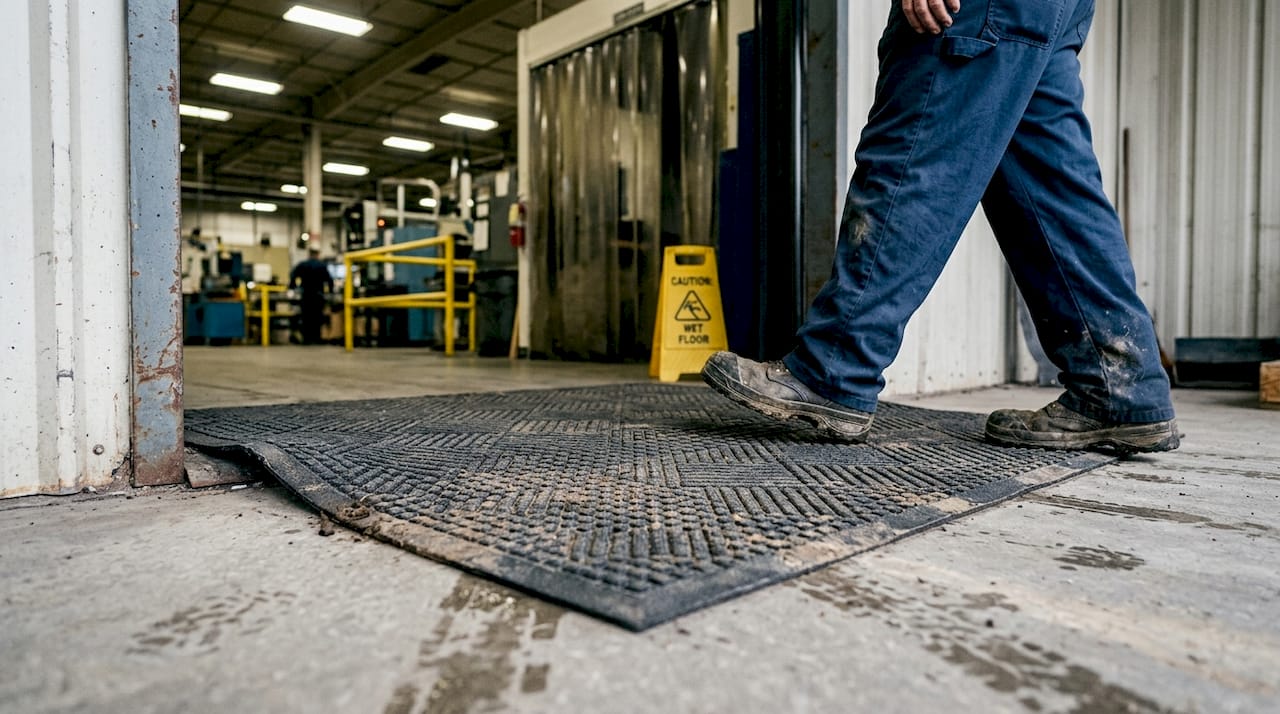
High-traffic entry lobbies are the primary use case. Office buildings, hospitals, schools, logistics hubs, and manufacturing facilities all share the same entry challenge: high foot volume combined with outdoor debris and moisture. The water dam border and bi-level design trap water and soil effectively in these busy entryways, keeping interior floors cleaner and reducing janitorial labor.
Key application environments include:
- Office building lobbies: High morning and evening foot traffic with weather-related moisture in winter and rainy seasons.
- Hospital and healthcare facilities: Infection control protocols require effective soil and moisture capture at every entry point.
- Schools and universities: Heavy student traffic with outdoor debris tracked in across multiple entry doors simultaneously.
- Manufacturing and logistics facilities: Oily or wet production floors adjacent to entry zones demand certified slip resistance.
- Retail and hospitality: Aesthetic options including patterns, borders, and custom branding maintain brand standards while delivering functional performance.
For wet or oily production areas, the drainable border mat variant handles fluid drainage more aggressively. For mudroom-style transition zones in industrial settings, the Diamondcord mat provides aggressive scraping action on heavy boot traffic.
Pro Tip: In wet production environments, layer a Waterhog mat at the entry transition zone with an anti-fatigue mat further inside the work area. The Waterhog handles moisture and debris capture while the anti-fatigue mat supports employee wellness during long standing shifts. This two-mat approach also reduces the risk of workers carrying moisture from entry zones into production areas. See how non-slip mats support productivity in industrial settings for more on this layered approach.
Maintenance and lifecycle costs of Waterhog mats
A mat’s value is only as good as its long-term performance and upkeep. Let’s talk about the real numbers.
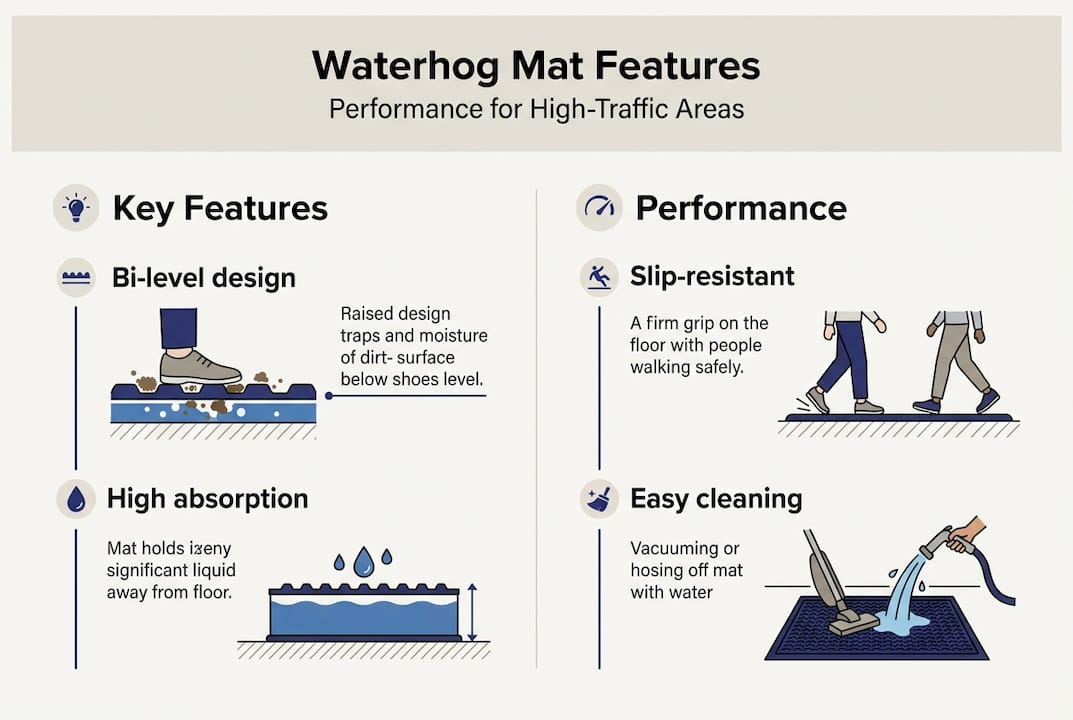
Waterhog mats last up to 5 years in heavy commercial use when maintained on a consistent schedule. That durability claim depends on following a structured cleaning routine.
Recommended cleaning sequence:
- Daily vacuuming: Remove loose surface debris before it compacts into the fabric. A commercial upright vacuum with a beater bar works best on the bi-level surface.
- Weekly inspection: Check the water dam border for debris buildup and clear drainage channels to maintain moisture containment.
- Monthly extraction cleaning: Use a hot water extraction machine to deep-clean the fabric pile and remove embedded soil. This restores scraping effectiveness and extends fabric life.
- Spot cleaning as needed: Address spills or staining immediately with a neutral pH cleaner to prevent fiber degradation.
- Rotation: If you use multiple mats at a single entry point, rotate them to distribute wear evenly and extend the overall service life of each mat.
For a full cleaning protocol, the maintenance guide for Waterhog mats covers product-specific recommendations by mat type.
Lifecycle cost comparison over 5 years:
| Cost category | Waterhog | Generic commercial mat |
|---|---|---|
| Unit purchase cost | Higher upfront | Lower upfront |
| Replacements needed (5 yr) | 1 | 3 to 4 |
| Total product cost (5 yr) | Low | High |
| Cleaning labor per year | Low (durable surface) | Higher (faster degradation) |
| Slip incident liability risk | Low (NFSI certified) | Higher (uncertified) |
| Total 5-year cost | Lower overall | Higher overall |
The labor savings alone justify the upfront cost difference for most facilities. A mat that degrades quickly requires more frequent deep cleaning, more frequent replacement logistics, and more staff time managing the process. Waterhog’s construction reduces all three variables.
Statistic: Replacing a standard commercial mat three times over five years, including labor for removal and installation, typically costs 60 to 80% more than maintaining a single Waterhog mat over the same period.
Shop Waterhog mats at Mats4U.com
Mats4U.com stocks a full range of Waterhog mats sized and configured for commercial entry points, production floors, and specialty applications. Every order over $100 ships free, and all products are Made in the USA. Whether you need a standard entry mat for a single lobby or a facility-wide specification across multiple buildings, the product catalog includes options by size, color, border style, and custom branding. Purchasing agents can browse by application type, compare specifications side by side, and place orders directly through the site. If you are ready to reduce slip incidents, cut cleaning labor, and extend your mat replacement cycle, the Waterhog product line at Mats4U.com is the direct path to those outcomes.
Frequently asked questions
How long do Waterhog mats last in commercial entryways?
Waterhog mats last up to 5 years in high-traffic commercial settings when maintained on a consistent cleaning schedule. Proper vacuuming and periodic extraction cleaning are the primary factors that determine service life.
Are Waterhog mats really slip-resistant?
Yes. Waterhog mats are NFSI certified high-traction with a coefficient of friction above 0.60, which meets the standard for commercial entryways. This certification is relevant for facilities managing slip-and-fall liability.
How much water can Waterhog mats absorb?
The water dam border holds up to 1.5 gallons per square yard, containing moisture within the mat surface rather than allowing it to spread onto surrounding flooring.
Are Waterhog mats easy to clean?
Yes. Routine vacuuming handles daily debris, and periodic hot water extraction restores the fabric pile. The reinforced construction resists degradation from repeated cleaning, which keeps maintenance labor low over the mat’s full service life.
Recommended
- WaterHog Max Herringbone Mat - Durable & Stylish Entrance Mat – Mats4U USA
- How to Clean Waterhog Mats for Businesses and Facilities – Mats4U USA
- WaterHog® Mat - Heavy Traffic Commercial Entrance Mat 50-70 Characters – Mats4U USA
- WaterHog Max Grand Mat - Durable Entrance Floor Mat with Half Oval – Mats4U USA


