


TL;DR:
- Choosing the right Waterhog runner depends on fiber density, water containment, and traffic volume for optimal durability. Proper sizing, placement, and maintenance significantly extend the runner’s lifespan and effectiveness in commercial settings. Selecting models with appropriate features—such as water dam borders and washability—ensures efficient dirt and moisture control while preventing slip hazards.
Choosing the right waterhog runner for a commercial property sounds straightforward until you realize how many variables actually matter. Fiber density, water containment capacity, door clearance, cleaning compatibility, and traffic volume all factor into whether a mat performs for three months or three years. Property managers who pick based on price alone tend to replace runners twice as often, which costs more in the long run. This guide covers the key selection criteria, detailed reviews of top models, a side-by-side comparison, and situational recommendations so you can make a confident, informed decision.
Table of Contents
- Key takeaways
- 1. What to look for in a waterhog runner
- 2. The Waterhog Classic runner
- 3. The Waterhog Classic Diamond runner
- 4. The Waterhog Max Diamond runner
- 5. The Waterhog Max Herringbone runner
- 6. The Waterhog Drainable Border runner
- 7. The washable Waterhog Honeycomb runner
- 8. Comparing waterhog runner models side by side
- 9. Situational recommendations for specific commercial settings
- What I have learned about getting value from waterhog runners
- Get the right waterhog runner from Mats4u
- FAQ
Key takeaways
| Point | Details |
|---|---|
| Water containment matters most | Look for raised water dam borders that contain moisture and prevent tracking across floors. |
| Not all runners are machine washable | Verify product-specific care instructions before purchasing to avoid damaging both the mat and your equipment. |
| Size and placement affect performance | Leave adequate clearance from walls and plan split points carefully in long hallways to reduce tripping risks. |
| Material quality drives longevity | Crush-resistant fiber construction with rubber backing prevents slipping and extends the useful life of any runner. |
| Match the model to traffic level | Heavy foot traffic demands higher fiber density and thicker construction than moderate-traffic corridors require. |
1. What to look for in a waterhog runner
Before comparing specific models, you need a clear set of criteria. Waterhog mats are not all built the same, and the differences matter a great deal in commercial settings.
Fiber density and rubber backing. The crush-resistant fiber design uses alternating thick and thin fibers to scrape dirt from shoes and channel moisture downward, away from foot traffic. The rubber backing prevents slipping and keeps the runner positioned under heavy use. Both features are non-negotiable for any high-traffic entrance or corridor.
Water absorption capacity. Waterhog Classic mats can retain up to 6.5 liters of water per square meter before the surface becomes saturated. The raised water dam border is what makes this possible. It acts as a physical barrier that prevents moisture spillage beyond the mat’s edge, which protects surrounding flooring from water damage.
Cleaning compatibility. This is where many purchasing decisions go wrong. Washing non-compatible mats in a commercial machine can damage both the mat and the washer. Some Waterhog runners support machine washing in front-loading commercial units. Others require vacuuming or hosing off only. Always verify before you buy.
Size and thickness. Standard runner widths run between two and three feet. Thickness affects door clearance directly. A mat that prevents a door from opening fully is a liability, not an asset.
Mildew and fade resistance. Waterhog mats resist mildew, shedding, and fading and are designed for year-round indoor and outdoor use. Many models also use recycled polyester, which adds an environmental consideration for sustainability-focused properties.
Pro Tip: Before ordering, measure your door clearance precisely. A mat thickness of 3/8 inch is generally safe for standard commercial doors, but thicker models may require a door sweep adjustment.
2. The Waterhog Classic runner
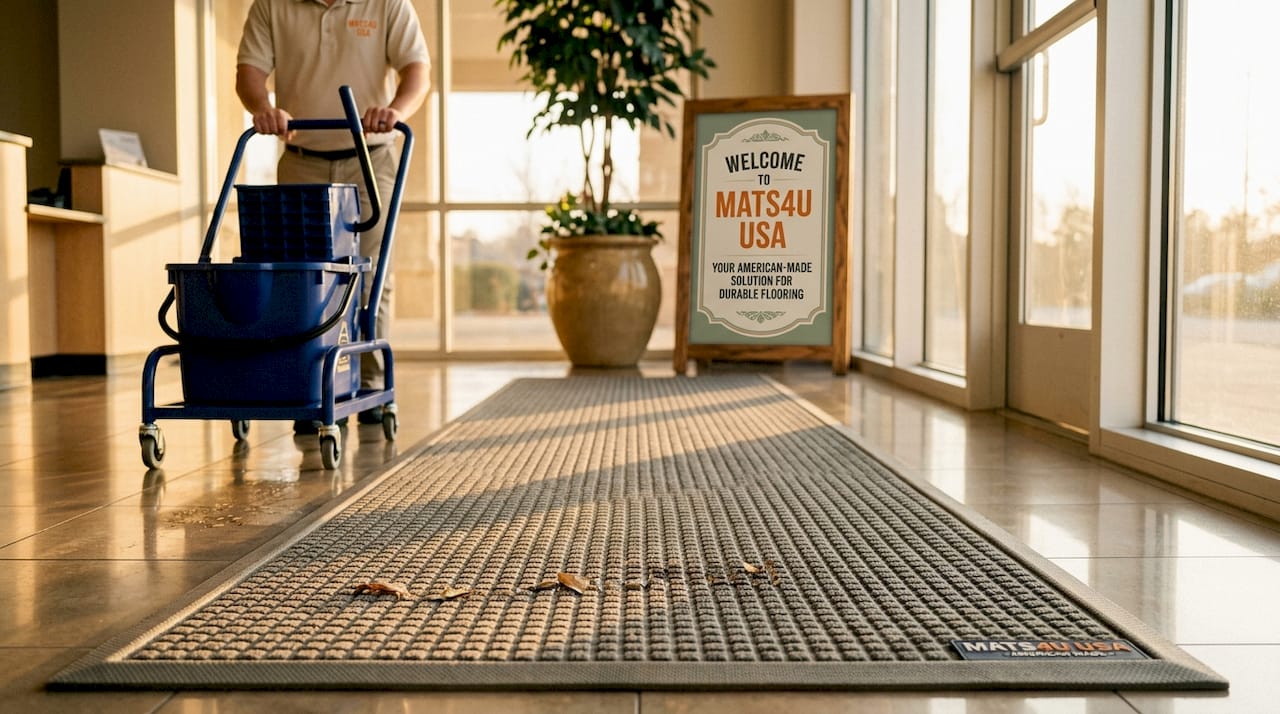
The Waterhog Classic is the baseline model that most commercial buyers start with, and for good reason. Its bi-level surface design traps dirt and moisture below the walking surface, which stops debris from being redistributed with each footstep. It is available in a wide range of sizes and colors, making it adaptable to most commercial entrances.
This model performs best at main building entrances, retail storefronts, and facility lobbies where consistent, heavy foot traffic is the norm. It handles wet weather conditions reliably and the rubber backing keeps it firmly in place on hard flooring. Maintenance is straightforward: vacuum weekly and hose off as needed. It is not machine washable, so factor that into your cleaning protocol.
3. The Waterhog Classic Diamond runner
The Diamond pattern is a variation on the Classic that adds a more refined visual texture without compromising function. The WaterHog Diamond Mat features the same water dam border and rubber backing as the Classic but with a pattern that reads as more polished in professional settings like hotel lobbies, corporate offices, and medical facilities.
Performance specifications are comparable to the Classic. The main reason to choose Diamond over Classic is aesthetic alignment with a more formal environment. It comes in multiple colorways and is available in runner dimensions suitable for long corridors. Cleaning follows the same protocol: vacuum and hose off, no machine washing.
4. The Waterhog Max Diamond runner
The Max series represents a step up in construction density. The WaterHog Max Diamond uses heavier face weight fiber construction, which means more material per square inch absorbing and trapping dirt. This matters in extremely high-traffic environments like hospitals, transit hubs, and large retail centers where a standard mat would show wear within months.
The Max Diamond is also built with eco-friendly materials, using recycled content in the fiber construction. For properties with sustainability reporting requirements, this is a relevant specification. It is available in runner formats and handles both indoor and outdoor exposure without degradation. Cleanup is the same: vacuum and hose off.
5. The Waterhog Max Herringbone runner
The Max Herringbone combines the heavy-duty construction of the Max series with a herringbone weave pattern that appeals to properties where design consistency is a priority alongside function. Think boutique hotels, upscale office buildings, and residential properties with high-end common areas.
The herringbone pattern provides the same dirt-scraping and moisture-containment performance as other Max models. The visual difference is significant enough that many property managers choose this model specifically when the runner placement is highly visible to tenants or guests. Available in runner dimensions with the standard raised border and rubber backing.
6. The Waterhog Drainable Border runner
The Drainable Border Mat solves a specific problem that other models do not address: what happens when the mat itself becomes saturated in very high-moisture environments. Rather than retaining water at the border, this model channels water downward through the mat structure, making it ideal for outdoor use during heavy rain seasons.
This is the right choice for covered outdoor entrances, building vestibules that see direct rain exposure, and any location where standing water on the mat surface is a safety concern. The trade-off is that it requires drainage infrastructure beneath the mat or placement in an area where water dispersal will not cause a secondary problem.
7. The washable Waterhog Honeycomb runner
For properties that need a runner they can fully clean on-site with commercial laundry equipment, the washable Waterhog runner is the answer. This model is specifically designed to be cleaned in commercial front-loading machines, which simplifies the maintenance workflow considerably for facilities with laundry capabilities.
The Honeycomb surface pattern provides effective dirt scraping and moisture management while being compatible with machine washing. It carries the same raised water dam border that can contain up to 1.5 gallons of water per square yard. This model is well suited for healthcare facilities, food service environments, and any commercial space with strict hygiene standards that require regular deep cleaning rather than surface maintenance.
8. Comparing waterhog runner models side by side
Use this table to match your operational needs to the right model.
| Model | Best use | Water containment | Cleaning method | Traffic level |
|---|---|---|---|---|
| Waterhog Classic | Retail, general commercial | High (6.5 L/sq meter) | Vacuum, hose off | Heavy |
| Waterhog Classic Diamond | Corporate, medical, hotels | High | Vacuum, hose off | Heavy |
| Waterhog Max Diamond | Hospitals, transit, large retail | Very high | Vacuum, hose off | Very heavy |
| Waterhog Max Herringbone | Upscale offices, boutique hotels | Very high | Vacuum, hose off | Heavy |
| Waterhog Drainable Border | Outdoor entrances, vestibules | Draining design | Hose off, drain | Heavy, wet environments |
| Washable Waterhog Honeycomb | Healthcare, food service | High (1.5 gal/sq yard) | Machine washable | Moderate to heavy |
Pro Tip: If you manage multiple properties with different traffic levels, standardize on the Max series for your top-tier locations and the Classic for secondary entrances. This keeps your procurement and maintenance processes consistent while matching product performance to actual need.
9. Situational recommendations for specific commercial settings
Matching the model to the setting eliminates most post-purchase regret. Here is how to think through the decision:
Extremely heavy foot traffic (500 or more people per day): Use the Waterhog Max Diamond or Max Herringbone. The higher face weight holds up under sustained pressure where standard models compress and lose performance over time. Read through the benefits of Waterhog mats before finalizing your spec for these environments.
Moderate traffic with budget constraints: The Waterhog Classic runner delivers strong performance at a lower price point. It is the right choice when you need reliable dirt and moisture control without the premium cost of the Max series.
Healthcare or food service: The washable Waterhog Honeycomb is the only logical choice here. Machine washability is not a convenience. It is a compliance requirement in most regulated environments.
Outdoor or semi-outdoor entrances: The Drainable Border model handles direct moisture exposure without saturation. For covered exterior walkways, the Classic or Max Diamond also perform well.
Long hallways: When one continuous runner is not practical, using two shorter runners is often more manageable and safer. Plan split points so seams do not fall at doorway thresholds, which creates a tripping hazard. Leave at least 3 inches from walls on each side to avoid a crowded visual.
Preventing movement and slipping: Rug tape or rug pads under any runner in a high-traffic zone prevent shifting and reduce noise. This applies regardless of whether the runner has rubber backing, particularly on polished tile or hardwood.
What I have learned about getting value from waterhog runners
I have worked with property managers who replaced runners every 18 months and others who got five years from the same mat. The difference was almost never the model they chose. It was how they sized and placed it, and whether they had a real maintenance schedule.
The single most common mistake I see is buying a runner that is too short for the entrance. A mat that does not cover the full width of a doorway allows dirty shoes to bypass the scraping surface entirely. You want at least 80 percent of foot traffic to land on the mat on entry. That usually means going wider and longer than your first instinct.
The second mistake is ignoring cleaning frequency. Waterhog mats are forgiving, but a mat loaded with compacted dirt stops absorbing moisture. Vacuuming twice a week in a heavy-traffic setting is not excessive. It is what keeps the bi-level fiber structure doing its job.
My contrarian view: do not try to extend the life of a heavily worn runner past its useful point. A mat with compressed fibers and a cracked backing is not protecting your floors. It is a slip hazard and a visual liability. The cost of a replacement runner is less than the cost of a slip-and-fall incident or the floor refinishing you will need when moisture gets through.
The resources at Waterhog mat essentials reinforce this perspective well. Know your product, maintain it consistently, and replace it on schedule.
— Werner
Get the right waterhog runner from Mats4u
Mats4u stocks a full range of Waterhog runner mats designed for commercial and industrial use, from the Classic series to the Max line with heavier fiber construction. Every model ships with free delivery on orders over $100, and all products are Made in the USA.
Whether you need a durable entryway mat for a high-traffic entrance or a washable runner for a regulated facility environment, Mats4u has the specifications to match. The Max Herringbone runner is a top pick for commercial properties that need both performance and visual quality. Browse the full selection at Mats4u.com to find the model and size that fits your property.
FAQ
What makes a waterhog runner different from a standard runner mat?
Waterhog runners use a bi-level fiber construction with raised water dam borders that trap dirt and contain moisture. Standard runner mats typically lack these structural features and perform poorly in wet or high-traffic conditions.
How often should a waterhog runner be cleaned in a commercial setting?
Vacuum at least twice per week in heavy-traffic areas and hose off monthly or after heavy rain exposure. Machine-washable models like the Honeycomb can be laundered in commercial front-loading equipment as needed.
Can all waterhog runners be used outdoors?
Most Waterhog runners handle outdoor use well due to their mildew and fade resistance. The Drainable Border model is specifically built for high-moisture outdoor settings where standard retention-style borders would become saturated.
What size waterhog runner do I need for a hallway?
Standard runner widths are two to three feet. For long hallways, using two shorter runners is more practical than a single long runner. Position split points away from doorway thresholds to avoid tripping risks.
Are waterhog runners slip-resistant on polished floors?
Yes. The rubber backing on Waterhog runners prevents movement on hard surfaces. In very high-traffic zones or on polished tile, adding rug tape or a non-slip pad beneath the runner provides additional security and reduces noise.


