


Standing for eight hours drains your employees. But using anti-fatigue mats can reduce worker fatigue by more than half during that same shift, according to OSHA. This guide explains what anti-fatigue mats are, how they work, their measurable benefits, common myths that waste money, and how to select the right mats for your industrial facility.
Table of Contents
- Understanding Anti-Fatigue Mats: Definition And Function
- How Anti-Fatigue Mats Work: The Science Behind The Comfort
- Health And Productivity Benefits Of Anti-Fatigue Mats
- Common Misconceptions About Anti-Fatigue Mats
- Comparing Anti-Fatigue Mat Materials And Designs
- Case Studies: Real-World Impacts Of Anti-Fatigue Mats
- Practical Implementation: Choosing And Installing Anti-Fatigue Mats
- Explore Premium Anti-Fatigue Mats For Industrial Facilities
Key Takeaways
| Point | Details |
|---|---|
| Definition | Anti-fatigue mats are ergonomic floor mats designed to reduce physical strain for workers standing long hours. |
| Science | They promote micro-movements that boost blood circulation and redistribute pressure across feet and legs. |
| Benefits | Workers experience up to 54% less lower limb fatigue, reduced pain, fewer injuries, and improved productivity. |
| Materials | Rubber offers durability, polyurethane provides softer cushioning, and gel delivers premium comfort for varying needs. |
| Selection | Choose mats between 3/8 to 1 inch thick based on your environment, avoiding overly thick mats that increase tripping risk. |
Understanding Anti-Fatigue Mats: Definition and Function
Anti-fatigue mats are specialized ergonomic floor mats engineered to reduce the physical stress workers experience when standing for extended periods. Unlike standard floor mats that primarily prevent slips or protect flooring, these mats actively combat fatigue through their cushioning properties and design.
The key difference lies in how they function. Regular mats provide a barrier between feet and hard floors. Anti-fatigue mats differ from regular mats by promoting subtle muscle movements to reduce fatigue, creating a dynamic surface that engages leg muscles continuously.
Common materials include rubber, polyurethane, and gel. Each offers distinct benefits for cushioning, durability, and pressure redistribution. Rubber mats excel in harsh industrial environments. Polyurethane provides softer cushioning for lighter duty applications. Gel mats deliver premium comfort but require careful placement.
Distinguishing features that set these mats apart include:
- Cushioning layers that compress and rebound under foot pressure
- Surface textures encouraging micro-movements in leg muscles
- Pressure redistribution technology spreading weight evenly across the mat
- Slip-resistant surfaces maintaining safety in wet or oily conditions
- Ergonomic thickness ranges optimized for comfort without instability
Understanding what anti-fatigue mats do helps you distinguish genuine ergonomic solutions from basic floor coverings. This distinction matters when investing in worker health and productivity improvements.
How Anti-Fatigue Mats Work: The Science Behind the Comfort
The effectiveness of anti-fatigue mats stems from basic human physiology. When you stand still on hard concrete, blood pools in your legs because muscle contractions that normally pump blood back to your heart decrease dramatically.
Anti-fatigue mats create a slightly unstable surface that your body constantly adjusts to maintain balance. Micro-movements stimulated by anti-fatigue mats increase blood circulation and reduce musculoskeletal strain, according to OSHA research. These tiny movements keep leg muscles engaged, pumping blood efficiently throughout your shift.
Pressure redistribution represents the second critical mechanism. Hard floors concentrate body weight on small contact points at your heels and balls of your feet. This concentration causes pain and fatigue. Quality mats spread pressure across the entire foot surface, dramatically reducing localized stress.
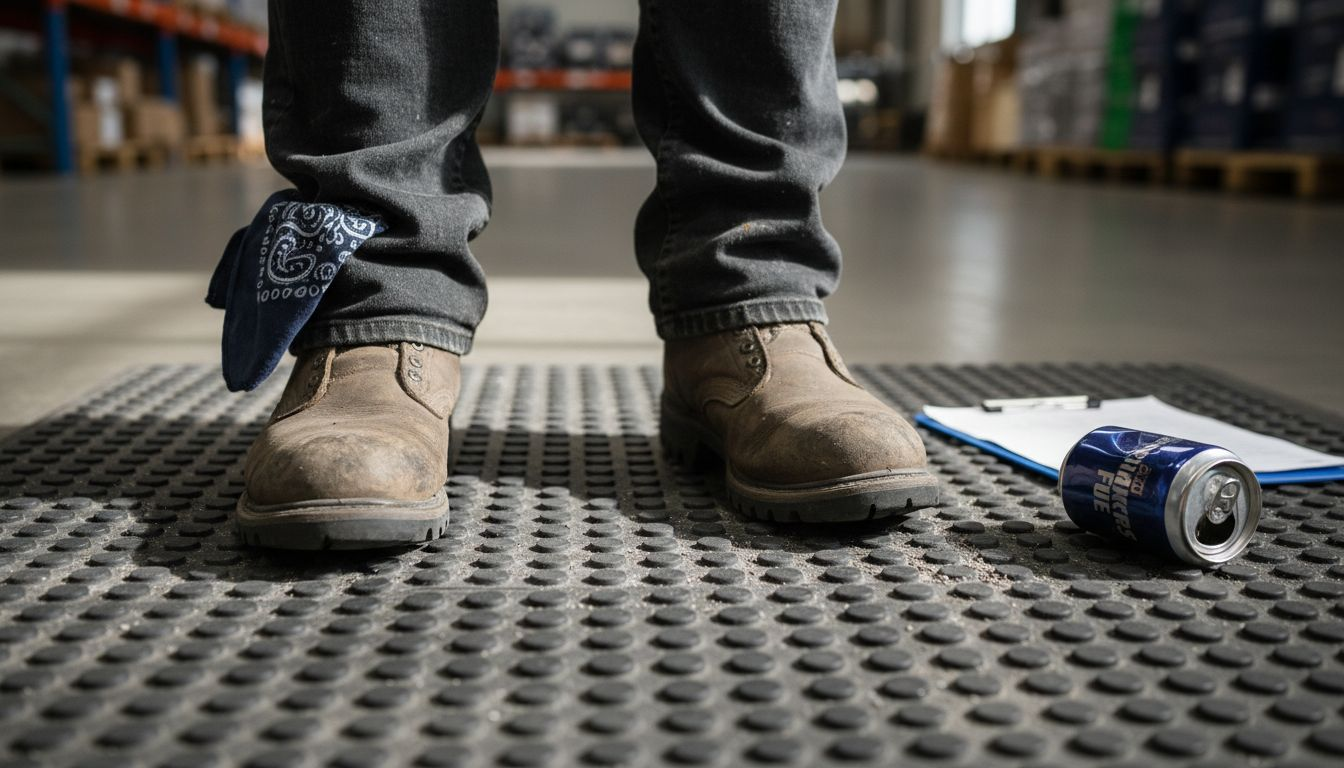
Thickness matters more than many buyers realize. The optimal range sits between 3/8 to 1 inch. Mats within this range provide sufficient cushioning without creating instability. Thinner mats fail to deliver adequate comfort. Thicker mats ironically increase fatigue by forcing muscles to work harder maintaining balance.
Pro tip: Test mat thickness by standing on it for several minutes. You should feel supported but stable, not like you’re balancing on a waterbed. If you feel wobbly, the mat is too thick for safe use.
The benefits of anti-fatigue mats extend beyond immediate comfort to long term health outcomes. Workers experience less chronic pain, fewer injury claims, and sustained energy throughout their shifts when proper mats support them.
Health and Productivity Benefits of Anti-Fatigue Mats
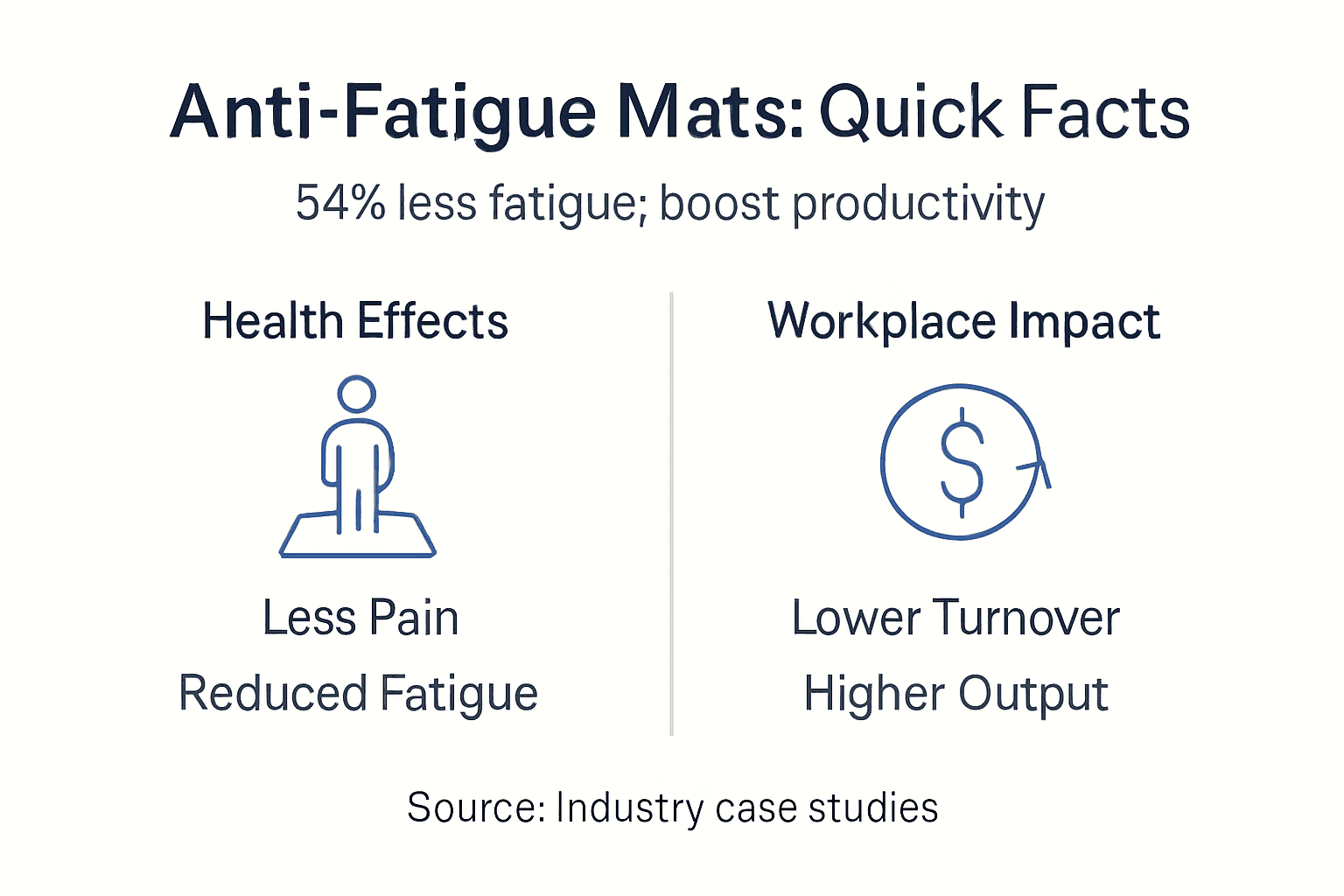
The data supporting anti-fatigue mats is compelling. Users standing on anti-fatigue mats report up to 54% reduction in lower limb fatigue after 8 hours, according to OSHA studies. This isn’t marginal improvement. It’s transformative for worker wellbeing.
Real world implementations show equally impressive results. Warehouse case studies show 28% pain reduction and 12% productivity boost after mat installation, Industry Today reported. These metrics translate directly to your bottom line through reduced absenteeism and increased output.
Musculoskeletal disorders represent one of the costliest workplace injury categories. Anti-fatigue mats serve as frontline prevention, reducing strain on feet, legs, lower back, and even neck muscles. When workers hurt less, they miss fewer days and file fewer expensive injury claims.
Key benefits facility managers observe include:
- Significant reduction in lower body discomfort and end of shift fatigue
- Increased worker focus and attention to detail throughout long shifts
- Fewer workers’ compensation claims related to standing injuries
- Improved employee morale and job satisfaction scores
- Better retention rates in physically demanding positions
Workers standing 8 hours on anti-fatigue mats experience 54% less lower limb fatigue compared to standing on concrete floors.
The anti-fatigue mat benefits compound over time. Initial comfort improvements lead to sustained health benefits. These health benefits drive productivity gains that justify the investment many times over. Following OSHA ergonomic recommendations for mat use ensures compliance while protecting your workforce.
Common Misconceptions about Anti-Fatigue Mats
Several myths about anti-fatigue mats lead buyers to make poor decisions. Understanding what’s true versus what’s marketing hype saves money and protects your workers.
-
Thicker mats always provide better comfort. Reality check: Mats thicker than 1.5 inches increase tripping and fatigue risk; optimal thickness is 3/8 to 1 inch, according to Ergonomics.org. Excessive thickness forces constant balance adjustments that tire workers faster than hard floors.
-
Any floor mat delivers anti-fatigue benefits. Standard entrance mats, carpet remnants, and basic rubber runners lack the engineered cushioning and rebound properties that define true anti-fatigue mats. The material composition and construction method determine effectiveness, not just presence of padding.
-
Mats eliminate all standing-related discomfort. Anti-fatigue mats significantly reduce fatigue but they’re not magic carpets. A comprehensive ergonomic strategy includes proper footwear, periodic sitting breaks, stretching routines, and workstation adjustments alongside mat use.
Many facilities waste budgets on thick, soft mats thinking more cushioning equals better results. These overly plush surfaces actually increase instability and fatigue. Workers expend extra energy maintaining balance instead of focusing on their tasks.
Pro tip: Request material specifications and thickness measurements before purchasing. Verify the mat falls within the recommended 3/8 to 1 inch range. Check whether the material suits your environment’s chemical exposure, temperature extremes, and cleaning requirements.
Understanding material importance in anti-fatigue mats prevents costly mistakes. The right material for a dry assembly line differs drastically from what works in a wet food processing plant or chemical warehouse.
Comparing Anti-Fatigue Mat Materials and Designs
Choosing the right material determines whether your investment delivers lasting value or fails within months. Each material offers distinct advantages for specific industrial applications.
| Material | Durability | Cushioning | Cost | Best Use Cases |
|---|---|---|---|---|
| Rubber | Excellent (10+ years) | Good | Moderate | Heavy industrial, welding, manufacturing floors |
| Polyurethane | Good (3 to 5 years) | Excellent | Higher | Light assembly, inspection stations, laboratories |
| Gel | Moderate (2 to 4 years) | Superior | Highest | Premium workstations, control rooms, offices |
Rubber mats offer high durability and good cushioning; polyurethane offers softer cushioning but less durability, according to material science research. Your choice depends on balancing initial cost against replacement frequency and environmental demands.
Durability expectations vary dramatically. Rubber mats can last up to 10 years in heavy industrial use when properly maintained. Polyurethane mats typically require replacement every 3 to 5 years. Gel mats, while offering superior comfort, degrade faster under heavy traffic.
Surface texture and design features enhance effectiveness:
- Diamond plate or textured surfaces provide slip resistance in wet conditions
- Beveled edges reduce tripping hazards at mat perimeters
- Drainage holes prevent liquid pooling in food service or wet manufacturing
- Antimicrobial treatments inhibit bacteria growth in sanitary environments
- Interlocking designs allow custom sizing for irregular workspaces
Thickness interacts with material properties. A 1/2 inch rubber mat feels firmer than a 1/2 inch polyurethane mat because rubber compresses less. Match firmness to your workers’ preferences and job demands. Assembly work requiring precision benefits from firmer surfaces. Less demanding tasks allow softer cushioning.
Explore anti-fatigue mat materials comparisons and review expert anti-fatigue mat comparison guides before committing to large orders. Recent material science advances continue improving durability and performance.
Case Studies: Real-World Impacts of Anti-Fatigue Mats
Theory matters less than results. Real facilities implementing anti-fatigue mats document impressive outcomes that validate the investment.
A Midwest automotive parts warehouse installed rubber anti-fatigue mats across packing stations where workers stood 8 to 10 hour shifts. Warehouse case studies report 28% pain reduction and 12% productivity boost after anti-fatigue mat implementation, matching results from multiple facilities. Worker surveys showed significant improvements in end of shift energy levels.
Implementation timeline and outcomes from documented cases:
- Week 1: Workers report immediate comfort improvements and reduced foot pain
- Month 1: Measurable decline in fatigue related errors and quality issues
- Quarter 1: Workers’ compensation claims for lower body strain drop significantly
- Year 1: Productivity metrics show sustained 10 to 15% improvement over baseline
- Multi-year: Reduced turnover in standing positions saves recruitment costs
A West Coast food processing plant faced high turnover in inspection stations requiring 6 hour standing shifts. After installing polyurethane anti-fatigue mats with drainage, employee retention improved by 34% over the following year. Exit interviews previously cited physical discomfort as the primary resignation reason.
Manufacturing facilities report that worker feedback drives expansion of mat programs. Initial test deployments in high complaint areas demonstrate value, leading to facility wide rollouts. The return on investment becomes obvious within months through reduced absenteeism and improved morale.
Explore various anti-fatigue mat use cases showing successful deployments across industries. Additional insights from Aeoncut case study research demonstrate broader ergonomic investment benefits.
Practical Implementation: Choosing and Installing Anti-Fatigue Mats
Successful mat programs require strategic planning beyond simply purchasing products. Follow these steps for optimal results:
-
Assess your standing areas. Identify workstations where employees stand for 2+ consecutive hours. Measure dimensions and note environmental factors like moisture, oils, or temperature extremes.
-
Select appropriate materials and thickness. Match mat specifications to your environment using the comparison frameworks outlined earlier. Prioritize durability in high traffic zones. Proper mat placement and material choice reduce fatigue effectively and comply with OSHA recommendations.
-
Install mats strategically. Place mats directly where workers stand most, not randomly across floors. Secure mats to prevent sliding. Ensure beveled edges face walkways to prevent tripping.
-
Educate your workforce. Explain how mats work and encourage proper use. Workers who understand the ergonomic principles become advocates for program expansion.
-
Maintain mats consistently. Establish cleaning schedules appropriate to your environment. Remove debris that degrades materials. Replace worn mats before they lose effectiveness.
Pro tip: Regular maintenance extends mat lifespan significantly. Weekly cleaning prevents premature breakdown. Monthly inspections catch damage early. Annual replacement budgets for high wear areas prevent performance gaps.
Prioritize high use zones for initial investment if budget constrains full facility coverage. Target areas generating the most fatigue complaints or injury claims. Success in these zones builds momentum for broader implementation.
Review the comprehensive floor mat selection guide and specialized industrial anti-fatigue mat guide for detailed selection frameworks tailored to facility management needs.
Explore Premium Anti-Fatigue Mats for Industrial Facilities
You now understand how anti-fatigue mats reduce worker fatigue by over 50%, the science behind their effectiveness, and how to select the right mats for your facility. Implementing these solutions transforms standing work from an endurance test into a sustainable part of healthy employment.
Explore industrial anti-fatigue mats designed specifically for demanding manufacturing and warehouse environments. Review detailed guidance on how to select floor mats matching your unique operational requirements. Consider premium custom floor mats that combine ergonomic benefits with professional branding, reinforcing safety culture while enhancing facility appearance.
What Is Anti-Fatigue? Frequently Asked Questions
What are the main benefits of anti-fatigue mats in industrial settings?
Anti-fatigue mats reduce lower limb fatigue by up to 54%, decrease musculoskeletal pain by roughly 28%, and boost productivity by approximately 12% in warehouse environments. They also lower workers’ compensation claims and improve employee retention.
How do I determine the right thickness for an anti-fatigue mat?
Choose mats between 3/8 to 1 inch thick for optimal balance of cushioning and stability. Thicker mats increase tripping risk and fatigue by forcing constant balance adjustments. Test mats before bulk ordering to ensure workers feel supported without wobbling.
Can anti-fatigue mats prevent all standing-related discomfort?
No, mats significantly reduce but don’t eliminate standing fatigue. Combine mats with proper footwear, regular breaks, stretching routines, and workstation adjustments for comprehensive ergonomic protection. Think of mats as one critical component in a complete strategy.
How often should anti-fatigue mats be replaced?
Rubber mats last up to 10 years in industrial settings with proper maintenance. Polyurethane mats typically need replacement every 3 to 5 years. Gel mats degrade faster at 2 to 4 years. Replace mats when compression recovery slows, surfaces crack, or edges curl.
Are there OSHA standards regarding anti-fatigue mat usage?
OSHA doesn’t mandate anti-fatigue mats but strongly recommends them as an ergonomic control for standing workstations. OSHA guidelines emphasize mats as effective tools for reducing musculoskeletal disorders and improving workplace safety when workers stand for extended periods.
Recommended
- Understanding the Benefits of Anti Fatigue Mats – Mats4U USA
- What Does Anti Fatigue Mat Do? Understanding Its Benefits – Mats4U USA
- Understanding Anti Fatigue Mats OSHA Standards – Mats4U USA
- Understanding Anti Fatigue Floor Mats for Kitchen Use – Mats4U USA
- 7 Ways Workplace Wellness Programs Support Smooth Moves - Onyx Removals


