


Many facility managers assume all mats perform equally under heavy use, only to face premature wear, safety hazards, and mounting replacement costs. Selecting the right high traffic mat involves understanding material durability, design functionality, and lifecycle value. This guide clarifies how different mat types, from nylon to rubber, address specific challenges in commercial environments. You’ll learn to match mat features to your facility’s traffic patterns, moisture levels, and safety requirements. By the end, you’ll know how to invest in mats that deliver lasting protection and cleanliness.
Table of Contents
- Key takeaways
- Understanding high traffic mat materials and durability
- How high traffic mats work: design zones and functionality
- Choosing the right mat for your facility: environment and traffic considerations
- Maximizing value and lifespan: maintenance and lifecycle cost insights
- Explore premium high traffic mat options at Mats4U
- Frequently asked questions
Key Takeaways
| Point | Details |
|---|---|
| Durability varies by material | Different mat materials offer varying abrasion resistance and lifespans, so choose based on traffic level and environment. |
| Three zone mat system | A three zone design uses scraper, wiper, and cushion to progressively remove dirt and moisture. |
| Lifecycle cost matters | Evaluating total cost of ownership, including replacement and labor, yields better value than upfront price alone. |
| Thickness and texture impact safety | Proper mat thickness and texture reduce slip risks in wet areas and prevent damage in heavy use zones. |
Understanding high traffic mat materials and durability
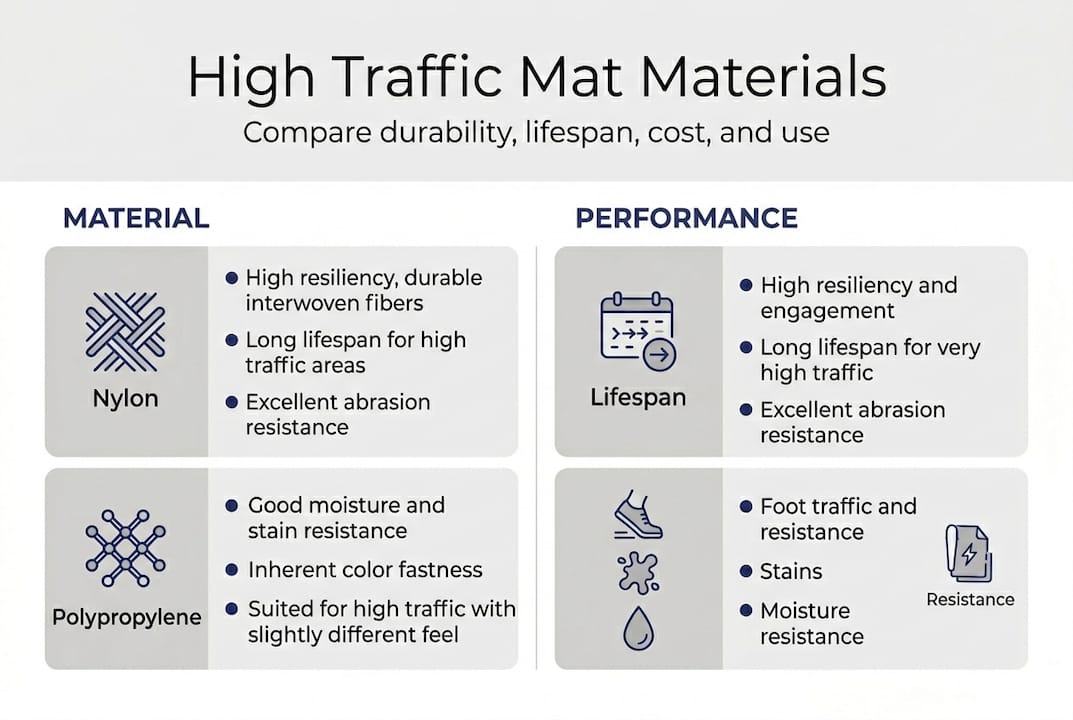
Choosing the right material determines whether your mats last months or years under constant foot traffic. Nylon offers 50% better abrasion resistance and 25% longer lifespan over polypropylene, making it the premium choice for entrances seeing 500 or more daily entries. The fiber structure in nylon mats creates superior dirt-trapping capacity, with studies showing nylon traps 40% more dirt than polypropylene alternatives.
Polypropylene remains popular for moderate traffic areas due to lower cost, but its shorter lifespan means more frequent replacements. Rubber and nitrile mats dominate industrial settings where heavy equipment, oils, and extreme conditions demand maximum resilience. These materials offer thickness ranging from 3/8 inch to 3/4 inch, with tensile strength exceeding 1000 PSI in quality products. Aluminum mats excel outdoors, resisting UV degradation and weather damage that destroys other materials within months.
The environment dictates material selection as much as traffic volume. Wet areas require mats with drainage features and water resistance, while dry indoor spaces benefit from fiber mats that capture fine dust particles. Industrial facilities using forklifts or pallet jacks need rubber mats with specific durometer ratings, typically 60-70A, to prevent punctures and tears. Outdoor entryways demand UV-stabilized materials that maintain structural integrity through temperature swings and precipitation.
Material performance comparison:
| Material | Abrasion Resistance | Typical Lifespan | Best Use Case | Cost Factor |
|---|---|---|---|---|
| Nylon | Excellent | 3-4 years | High traffic indoor | Higher upfront |
| Polypropylene | Good | 1-2 years | Moderate traffic | Lower upfront |
| Rubber/Nitrile | Superior | 5+ years | Industrial/outdoor | Medium to high |
| Aluminum | Excellent | 10+ years | Outdoor scraping | Highest |
Lifecycle cost analysis reveals surprising value differences. A nylon mat costing $80 that lasts four years delivers better value than a $40 polypropylene mat requiring replacement every 18 months. Factor in labor costs for swapping mats, disposal fees, and the safety risks during transition periods. The high traffic mats guide emphasizes calculating cost per year of service rather than focusing solely on purchase price.
Pro Tip: Test mat samples in your highest traffic zone for 30 days before bulk ordering. Visual wear patterns and dirt retention reveal real-world performance better than manufacturer specs alone.
Material selection also impacts cleaning requirements and overall facility maintenance. Nylon fibers release trapped dirt more easily during vacuuming compared to polypropylene, reducing the time staff spend on mat care. Rubber mats require simple hosing but may retain odors in certain environments. Understanding these practical differences helps you choose mats that fit both your budget and your maintenance capabilities. The high traffic entrance mats guide provides detailed material specifications for various commercial applications.
How high traffic mats work: design zones and functionality
Effective high traffic mats use a three-zone system that removes progressively finer contaminants as people walk across them. A 3-zone system includes scraper fibers or rubber to remove dirt, wiping fibers for moisture, and cushioned cores to reduce muscle fatigue. Each zone employs specific materials and textures engineered for distinct cleaning functions.
Zone breakdown:
- Scraper zone: Stiff bristles or raised rubber patterns dislodge large debris, mud, and grit from shoe treads. This zone typically uses polypropylene or rubber with aggressive texture.
- Wiper zone: Medium-stiffness fibers absorb moisture and capture smaller particles. Nylon excels here due to superior absorption and dirt retention.
- Absorber zone: Soft, dense fibers or cushioned rubber provides final moisture removal while offering comfort underfoot. This zone often incorporates anti-fatigue properties.
The absorber zone delivers unexpected benefits beyond cleaning. Research shows anti-fatigue mats reduce muscle fatigue, particularly in the back, when used properly. Compression levels around 6% provide optimal support, cushioning joints without creating instability. Employees standing for extended periods experience measurably less discomfort, which translates to better focus and fewer workplace injury claims.
Mat thickness and density determine anti-fatigue effectiveness. Mats between 3/8 inch and 5/8 inch thick offer the sweet spot for most commercial applications. Thinner mats fail to provide adequate cushioning, while excessively thick mats create tripping hazards and make walking difficult. The material composition matters too, with closed-cell foam and nitrile rubber outperforming basic rubber in long-term resilience.
Key functionality factors:
- Fiber density affects how much dirt the mat can hold before requiring cleaning
- Backing material prevents mat migration on smooth floors
- Beveled edges reduce trip hazards while maintaining cleaning effectiveness
- Drainage holes in rubber mats prevent water pooling in wet environments
The three-zone system works best when mats are sized appropriately for the space. Entrance mats should extend at least 12 feet into a building to allow multiple steps across all zones. Shorter mats force people to take fewer steps, reducing the cleaning effectiveness dramatically. Some facilities use multiple mats in sequence, positioning scraper mats outside and wiper/absorber mats inside.
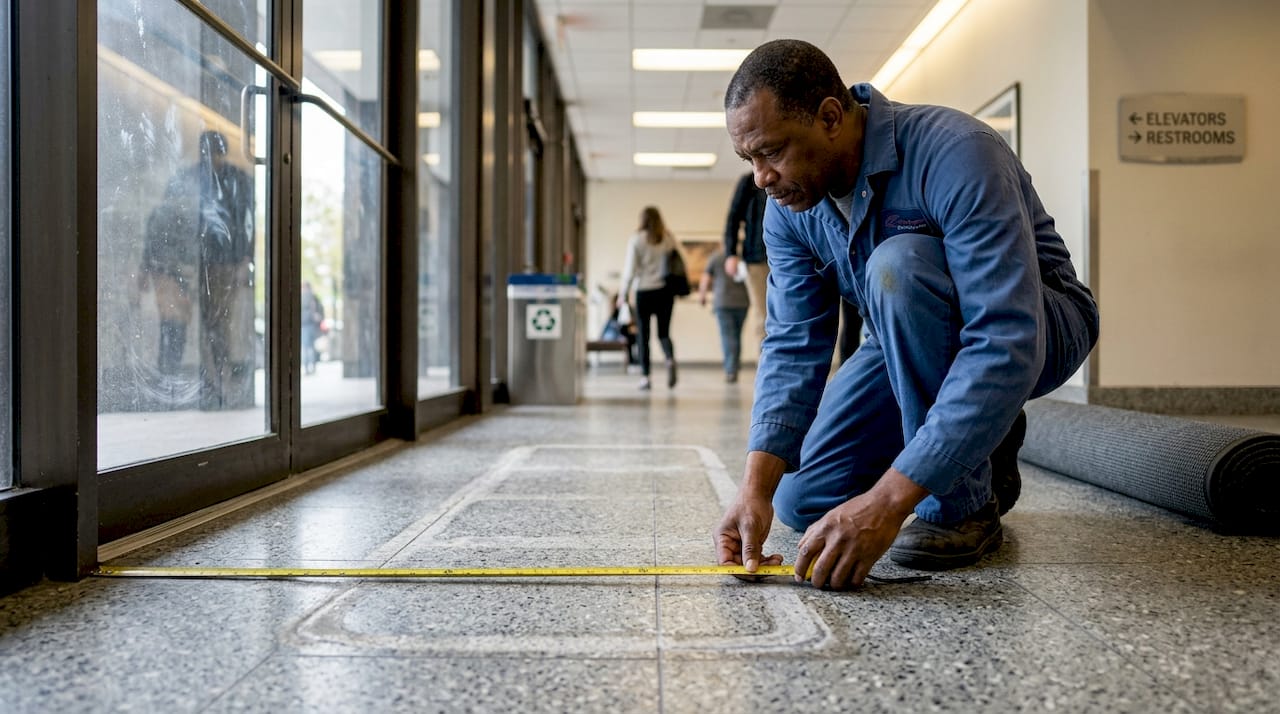
Pro Tip: Place your heaviest-duty scraper mat outside the door where it handles the worst debris. This protects your more expensive interior mats from premature wear while maximizing overall system performance.
Understanding zone functionality helps you troubleshoot performance issues. If floors remain wet despite mats, your wiper and absorber zones may be saturated or improperly sized. If fine dust accumulates indoors, the wiper zone may lack sufficient density to capture small particles. The anti fatigue mats industrial resource explains how to optimize both cleaning and comfort in demanding environments.
Choosing the right mat for your facility: environment and traffic considerations
Matching mat specifications to your facility’s unique conditions prevents costly mistakes and safety incidents. Traffic volume, moisture levels, equipment use, and environmental exposure all influence which mat type delivers optimal performance. A mat perfect for a carpeted office lobby fails catastrophically in a manufacturing plant with forklift traffic.
Traffic volume dictates minimum material quality and thickness requirements. Facilities with 200-500 daily entries can use standard polypropylene mats, while locations exceeding 500 entries demand nylon or rubber construction. Heavy industrial settings need thicker rubber mats with specific durometer (60-70A) and tensile strength (>1000 PSI) to withstand equipment loads. Underspecifying mat durability leads to rapid deterioration, creating slip hazards and tracking dirt throughout your facility.
Environmental factors require specific design features. Outdoor mats should be UV-stabilized polypropylene; wet areas require drainage or open-ring designs to prevent water accumulation. Indoor climate-controlled spaces benefit from dense fiber mats that capture fine particles without drainage needs. Loading docks and transitional areas need mats resistant to temperature fluctuations and capable of handling both indoor and outdoor contaminants.
Environment-specific mat selection:
| Environment Type | Recommended Material | Key Features | Common Pitfalls |
|---|---|---|---|
| Outdoor entrance | UV-stabilized polypropylene or aluminum | Drainage, weather resistance | Using indoor-only mats that degrade |
| Wet/pool areas | Rubber with drainage holes | Slip resistance, quick drying | Solid mats that pool water |
| Industrial/warehouse | Heavy-duty rubber or nitrile | High durometer, chemical resistance | Soft mats damaged by equipment |
| Office/retail | Nylon or polypropylene blend | Dirt retention, aesthetic appeal | Undersizing for traffic volume |
Equipment use creates specialized requirements often overlooked during mat selection. Carts, dollies, and wheeled equipment need mats with smooth transitions and sufficient rigidity to prevent wheel binding. Studded tires or metal cleats on snow boots destroy soft mats quickly, requiring harder rubber compounds in winter climates. Facilities using floor scrubbers must choose mats that withstand regular wetting and mechanical agitation without delaminating.
Base flooring compatibility affects mat performance and longevity. Rubber mats on vinyl flooring can cause discoloration through plasticizer migration, while mats on carpet require different backing materials than those on tile. The high traffic flooring commercial spaces guide explains how to coordinate mat systems with underlying floor materials for maximum effectiveness.
Pro Tip: Conduct a 24-hour observation of your entrance during different weather conditions. Note what contaminants actually enter, how much moisture accumulates, and what equipment passes over the area. This real-world data trumps generic recommendations.
Lifecycle cost analysis becomes critical when comparing options. A $200 industrial rubber mat lasting seven years costs $28.57 annually, while a $75 polypropylene mat replaced every two years costs $37.50 annually plus labor. The high traffic mats comparison shows how premium materials often deliver superior long-term value despite higher upfront investment.
Maximizing value and lifespan: maintenance and lifecycle cost insights
Proper maintenance extends mat lifespan dramatically while preserving safety and cleaning effectiveness. Neglected mats saturate with dirt, lose their texture, and create slip hazards within months regardless of material quality. Regular care routines keep mats functioning at peak performance for their entire rated lifespan.
Cleaning frequency depends on traffic volume and environmental conditions. High-traffic entrance mats require daily vacuuming to remove loose debris and weekly deep cleaning with extraction equipment. Rubber mats benefit from hosing and scrubbing every few days, while anti-fatigue mats need regular inspection for compression set and surface damage. Saturated mats stop absorbing moisture and dirt, essentially becoming decorative floor coverings that fail their primary function.
Essential maintenance practices:
- Vacuum fiber mats daily in high-traffic areas to prevent dirt compaction
- Extract or hose mats weekly to remove embedded contaminants
- Rotate mats periodically to distribute wear evenly across the surface
- Inspect backing and edges monthly for delamination or curling
- Replace mats showing visible wear patterns before safety becomes compromised
Lifecycle cost calculations reveal the true value of mat investments. Nylon mats last 3-4 years with 500+ daily entries, costing $20-38 per year per square unit lifecycle. Compare this to polypropylene mats requiring replacement every 18 months at $40-60 per year when factoring purchase price, installation labor, and disposal costs. The analysis shifts dramatically when you include the hidden costs of inadequate mats like increased floor cleaning, slip-and-fall incidents, and tracked debris damaging interior finishes.
Installation quality affects performance as much as material selection. Mats placed on incompatible flooring or in improperly sized spaces fail prematurely regardless of construction quality. Ensure adequate coverage for traffic patterns, secure mats to prevent shifting, and use appropriate underlayments when needed. The high traffic mats guide provides detailed installation specifications for different facility types.
“Prioritize total lifecycle cost over upfront price for best value and safety. A cheaper mat replaced frequently costs more than a quality mat maintained properly over years.”
Warranty terms indicate manufacturer confidence in durability. Quality mats typically carry warranties of one to five years depending on material and application. Read warranty terms carefully, as many exclude damage from improper maintenance or use outside specified conditions. Document your maintenance practices to support warranty claims if premature failure occurs.
Pro Tip: Create a mat maintenance log tracking cleaning dates, condition assessments, and any incidents. This documentation helps identify performance patterns, optimize replacement timing, and provides evidence for warranty claims or liability defense.
Replacement timing requires balancing cost efficiency with safety. Mats showing visible wear, permanent compression, torn fibers, or curled edges need immediate replacement regardless of age. Waiting until complete failure risks slip-and-fall incidents that cost far more than proactive replacement. Schedule mat assessments quarterly and budget for replacements based on observed wear rates rather than arbitrary timelines.
Explore premium high traffic mat options at Mats4U
Now that you understand material performance, design functionality, and lifecycle value, you can select mats that truly protect your facility. Mats4U offers solutions combining durability with customization options that reinforce your brand while maintaining safety. Explore premium custom floor mats that deliver professional appearance alongside exceptional dirt retention. For areas where employees stand for extended periods, the cushion complete mat provides anti-fatigue benefits without sacrificing cleaning performance. High-traffic entryways benefit from proven solutions like the waterhog max grand half oval mat, engineered specifically for demanding commercial environments. Free delivery on orders over $100 makes upgrading your facility’s mat system more accessible.
Frequently asked questions
What materials are best for outdoor high traffic mats?
UV-stabilized polypropylene and aluminum provide the best outdoor performance due to superior weather resistance. These materials withstand temperature fluctuations, precipitation, and sun exposure without degrading. Drainage features are essential to prevent water accumulation that creates slip hazards and accelerates material breakdown.
How does an anti-fatigue mat benefit employees in heavy traffic areas?
Anti-fatigue mats reduce erector spinae muscle fatigue during prolonged standing, measurably decreasing back discomfort and injury risk. Optimal compression around 6% provides cushioning without creating instability or walking difficulty. The anti fatigue mats industrial guide explains proper selection for different work environments.
What maintenance practices extend the life of high traffic mats?
Regular vacuuming removes loose debris before it embeds in fibers, while weekly extraction or hosing eliminates accumulated moisture and ground-in dirt. Proper installation with compatible backing prevents premature edge curling and delamination. Periodic inspections catch wear patterns early, allowing rotation or replacement before safety becomes compromised.
How long should entrance mats be for effective dirt removal?
Entrance mats should extend at least 12 feet into the building to allow multiple steps across all cleaning zones. Shorter mats reduce effectiveness dramatically because people take fewer steps, limiting the scraping, wiping, and absorbing actions. Some facilities use multiple mats in sequence for optimal contaminant removal.
When should I replace a high traffic mat?
Replace mats showing visible wear patterns, permanent compression, torn fibers, curled edges, or loss of cleaning effectiveness. Safety concerns should trigger immediate replacement regardless of mat age. Budget for proactive replacement based on quarterly condition assessments rather than waiting for complete failure.


