


Over three million workplace injuries occur annually in American commercial settings, with slips and falls ranking among the top causes. For facility managers, keeping high-traffic areas safe is not just about compliance but about protecting employees and customers. Understanding how durable non-slip counter mats work—and why the right choice matters—empowers American businesses to reduce accidents and improve long-term safety standards.
Table of Contents
- Defining Non Slip Counter Mats And Their Purpose
- Types Of Non Slip Counter Mats For Facilities
- Key Materials And Safety Features Explained
- Where And How To Use Counter Mats In Business
- Choosing, Maintaining, And Avoiding Common Pitfalls
Key Takeaways
| Point | Details |
|---|---|
| Enhance Safety | Non slip counter mats prevent slips and falls, crucial for maintaining a safe workplace in wet or hazardous environments. |
| Types Matter | Different mat types, such as rubber or cushioned ergonomic mats, suit specific industrial needs, enhancing safety and comfort. |
| Regular Maintenance | Consistent inspections and timely replacements of mats are essential to sustain their slip resistance and effectiveness. |
| Strategic Placement | Placing mats in high-traffic areas and ensuring they contrast with floor surfaces increases visibility and reduces hazards. |
Defining Non Slip Counter Mats and Their Purpose
Non slip counter mats are specialized floor coverings engineered to enhance workplace safety by preventing accidental slips and falls. These critical safety components are designed to provide reliable traction in environments where floors might become slick or hazardous. Slip-resistant surfaces are essential for reducing workplace accidents, particularly in areas exposed to water, oil, or other potentially slippery substances.
These mats serve multiple critical functions beyond simple slip prevention. They are strategically constructed with specialized materials and textures that grip surfaces and provide stability for workers standing in high-traffic areas. Commercial environments like manufacturing floors, kitchens, assembly lines, and reception areas benefit significantly from these protective floor coverings. Safety standards require consistent slip resistance throughout a mat’s entire lifecycle, ensuring ongoing protection even after extensive use.
The primary design objectives of non slip counter mats include:
- Minimizing workplace accident risks
- Providing ergonomic support for workers
- Creating stable walking surfaces
- Reducing potential liability from slip-related injuries
- Offering comfort during extended standing periods
Pro tip: Regularly inspect and replace non slip counter mats to maintain optimal safety performance and traction in your workspace.
Types of Non Slip Counter Mats for Facilities
Industrial facilities require specialized non slip counter mats tailored to specific workplace environments. Floor mats and runners represent two primary categories designed to prevent workplace accidents, each serving unique safety and ergonomic functions. Floor mats typically cover limited areas and provide localized protection, while runners are elongated mats strategically placed in high-traffic corridors and walkways.
The diversity of non slip counter mats extends across multiple industrial settings. Commercial environments utilize different mat types based on specific functional requirements, including:
- Rubber cabinet mats for kitchen and food preparation areas
- Heavy-duty carpet mats with anti-slip backing for manufacturing zones
- Cushioned ergonomic mats for workstations with prolonged standing
- Entrance mats for cleaning and initial traction control
- Specialized industrial mats designed for chemical resistance
Each mat type is engineered with specific materials and surface textures to address unique workplace challenges. Rubber mats offer superior grip and durability, while cushioned variants provide comfort during extended work periods. The selection depends on factors like moisture exposure, chemical interactions, foot traffic intensity, and specific industry safety standards.
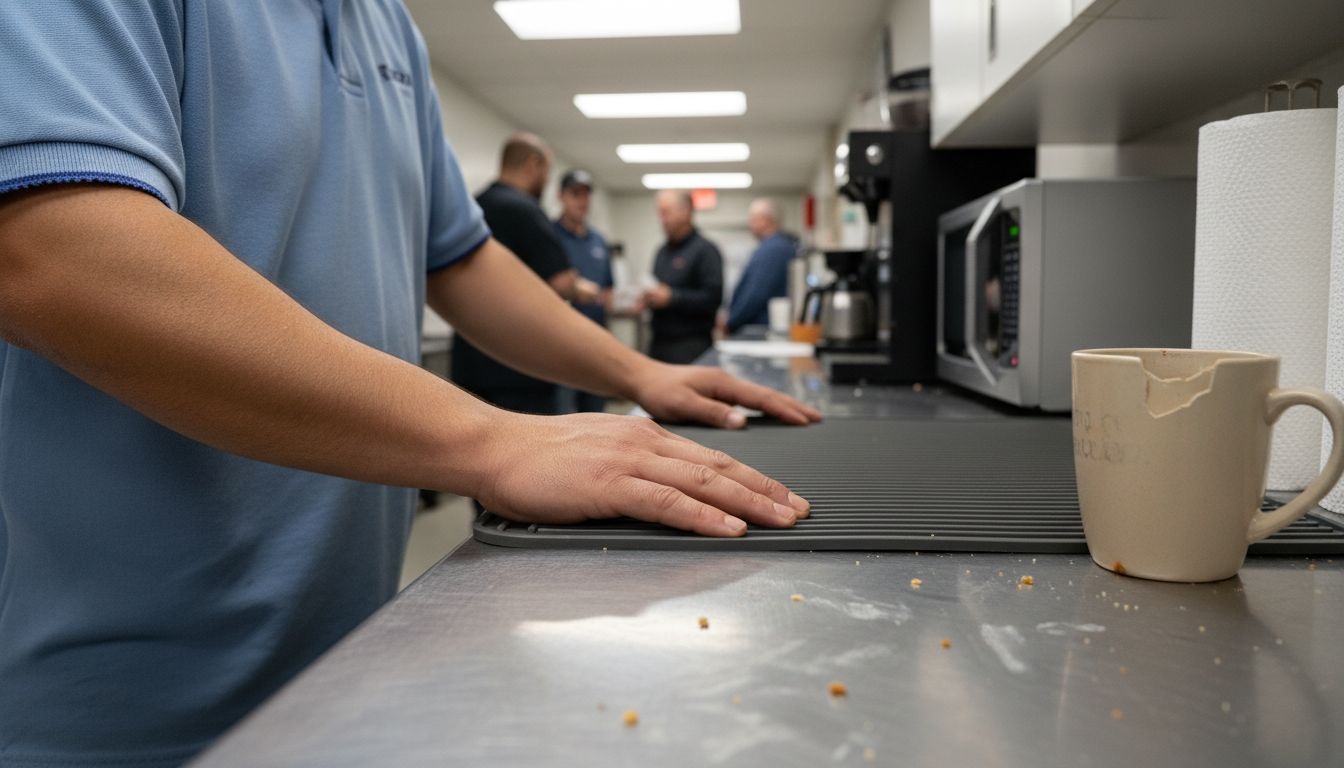
The following table compares key types of non slip counter mats and their ideal business applications:
| Mat Type | Best Use Case | Typical Material | Unique Benefit |
|---|---|---|---|
| Rubber cabinet mats | Kitchens/Food prep | Soft rubber | Withstands moisture |
| Carpet-backed mats | Manufacturing/Entry areas | Durable carpet | Reduces noise and dust |
| Cushioned ergonomic | Workstations | Foam/rubber blend | Enhances worker comfort |
| Industrial specialty | Chemical processing zones | Composite rubber | Resists chemicals/spills |
Pro tip: Conduct regular workplace assessments to match non slip counter mat types precisely with your facility’s unique environmental and safety requirements.
Key Materials and Safety Features Explained
Non slip counter mats are engineered with sophisticated materials designed to maximize workplace safety and worker comfort. Soft and cushioned rubber remains the primary material choice, offering exceptional durability and slip resistance, particularly in environments exposed to moisture or potential contaminants. The strategic selection of materials directly impacts a mat’s performance, with rubber providing superior traction and resilience against workplace hazards.
Industrial mat materials range from rubber and nylon to composite technologies, each selected to address specific workplace challenges. Key safety features include:
- Textured surface designs for maximum grip
- Chemical-resistant backing to prevent degradation
- Ergonomic cushioning to reduce worker fatigue
- Temperature-adaptive materials for extreme environments
- Antimicrobial treatments for hygienic protection
The engineering behind non slip counter mats goes beyond simple floor coverage. Advanced mats incorporate sophisticated design elements like raised surface patterns, beveled edges to prevent tripping, and specialized compounds that maintain friction even when wet or contaminated. Workplace safety professionals prioritize mats that offer consistent performance across diverse environmental conditions, ensuring reliable protection for workers in dynamic industrial settings.
See the summary below outlining critical mat features and their importance for workplace safety:
| Feature | Safety Impact | Maintenance Needed |
|---|---|---|
| Slip resistance | Prevents falls and injuries | Regular inspections |
| Beveled edges | Minimizes tripping hazards | Monitor for wear |
| Chemical resistance | Protects against degradation | Clean after spills |
| Antimicrobial treatment | Reduces bacteria spread | Routine sanitization |
Pro tip: Conduct quarterly inspections of non slip counter mats to verify their continued effectiveness and replace them before material degradation compromises safety.
Where and How to Use Counter Mats in Business
Workplace safety requires strategic placement of non slip counter mats in areas prone to potential hazards. Businesses should prioritize mat installation in high-traffic locations where floors can become slippery due to water, oil, or other contaminants, such as building entrances, production areas, and customer service zones. The primary goal is creating safer, more ergonomic work environments that protect both employees and visitors.
Counter mats play a critical role in enhancing workplace ergonomics and safety at customer interaction points. Key areas for non slip counter mat implementation include:
- Customer service counters
- Reception areas
- Production workstations
- Food preparation zones
- Manufacturing assembly lines
- Warehouse shipping and receiving areas
- Lobby and entryway spaces
Effective mat placement goes beyond simple slip prevention. These specialized floor coverings must be strategically positioned to create visual contrast with surrounding floor surfaces, ensuring maximum visibility and awareness. Managers should consider factors like mat color, texture, and specific workplace conditions when selecting and positioning non slip counter mats. Proper installation involves ensuring complete surface coverage in high-risk areas, with careful attention to edge alignment to prevent potential tripping hazards.
Pro tip: Rotate and inspect non slip counter mats quarterly to assess wear patterns and maintain optimal safety performance in your workplace.
Choosing, Maintaining, and Avoiding Common Pitfalls
Selecting the right non slip counter mat requires careful consideration of multiple critical factors. Businesses must evaluate slip resistance, cushioning, durability, and appropriate sizing to ensure optimal workplace safety. The wrong mat can create more hazards than it prevents, making thoughtful selection crucial for maintaining a secure work environment.
Effective mat maintenance involves addressing multiple environmental factors that impact floor safety. Common pitfalls to avoid include:
- Ignoring mat edge conditions that can cause tripping
- Using mats with deteriorating slip resistance
- Neglecting regular cleaning and inspection
- Selecting inappropriate mat materials for specific environments
- Failing to replace worn or damaged mats
Successful non slip counter mat management requires a proactive approach. Facility managers should implement systematic inspection protocols, tracking mat wear patterns and replacing mats before they compromise workplace safety. This involves monitoring mat conditions, addressing potential trip hazards, and ensuring consistent friction performance across different workplace environments. Proper selection and maintenance are not just about preventing slips, but creating a comprehensive safety strategy that protects employees and reduces potential liability risks.
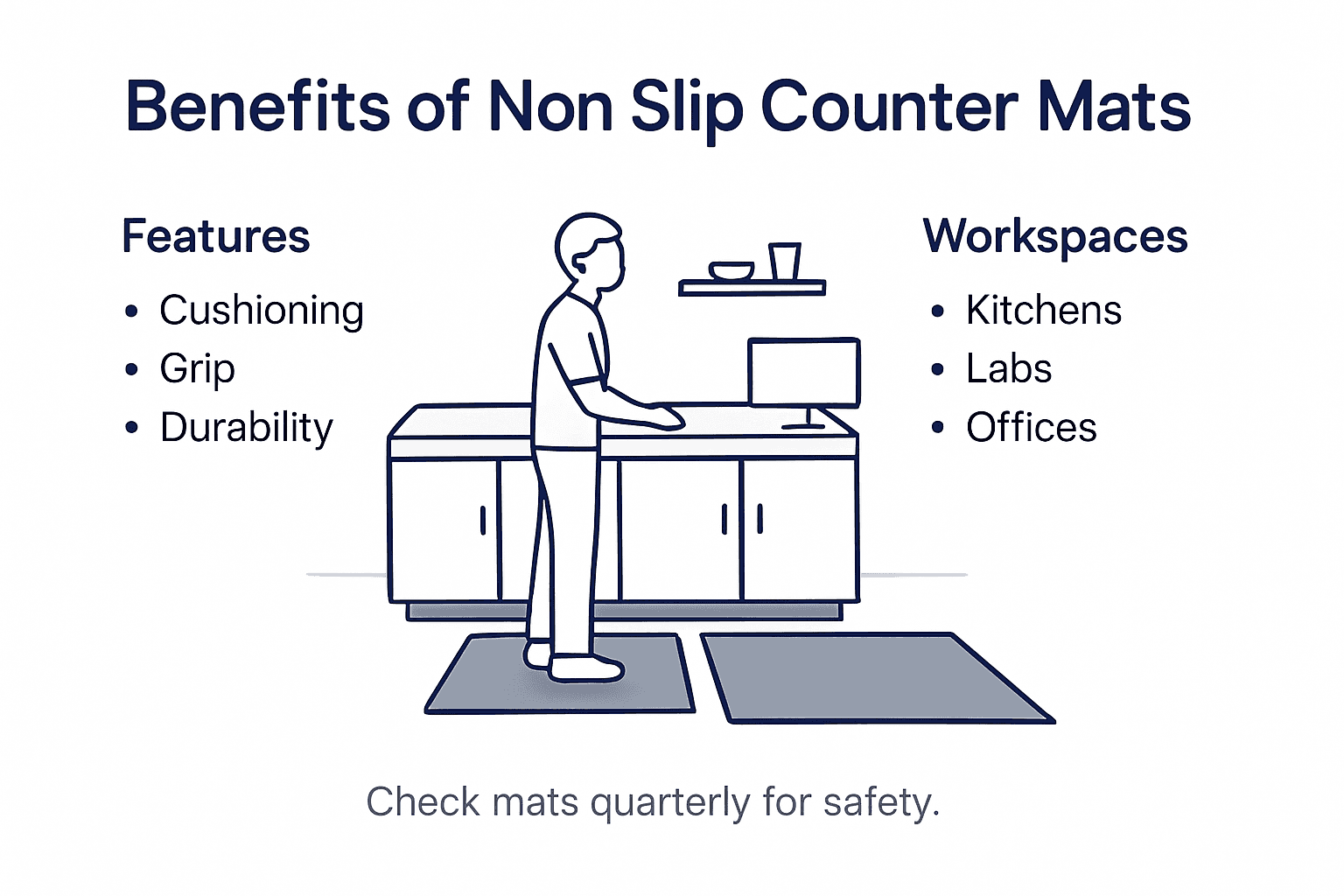
Pro tip: Develop a quarterly mat inspection checklist that tracks wear, slip resistance, and potential safety hazards to maintain optimal workplace protection.
Secure Your Workspace with Durable Non Slip Counter Mats
Workplace safety demands reliable solutions to prevent slips, falls, and fatigue during long hours of standing. This article highlights the importance of non slip counter mats that provide slip resistance, ergonomic comfort, and chemical durability to high-traffic commercial and industrial environments. If you want to minimize accident risks and create stable walking surfaces, choosing the right mats with slip-resistant surfaces and cushioned support is essential.
Explore a wide range of Non Slip mats designed specifically for areas exposed to moisture, oils, and heavy foot traffic. At Mats4U.com, you will find premium solutions made in the USA that combine durability, safety, and comfort. Don’t wait for an accident or employee fatigue to become costly issues—browse our selection today to find customized floor mats that suit your unique workspace needs and benefit from free delivery on orders over $100.
Visit Mats4U now and take the first step towards a safer, more productive workplace with mats engineered for performance and protection.
Frequently Asked Questions
What are non slip counter mats used for?
Non slip counter mats are designed to enhance workplace safety by preventing slips and falls in environments that may have slick surfaces, providing reliable traction and stability for workers.
What types of environments benefit from using non slip counter mats?
Non slip counter mats are particularly advantageous in industrial environments such as manufacturing floors, kitchens, assembly lines, reception areas, and anywhere moisture, oil, or other contaminants are present.
How do I choose the right non slip counter mat for my workplace?
When selecting a non slip counter mat, consider factors like slip resistance, cushioning, durability, and the specific environmental challenges your workplace presents, such as moisture exposure or chemical interactions.
How often should non slip counter mats be inspected and replaced?
It’s recommended to conduct regular inspections, ideally quarterly, to assess the condition of non slip counter mats. Replace them if they show signs of wear or if their slip resistance diminishes to ensure ongoing safety.
Recommended
- Understanding Anti Slip Mats for Wet Areas: Safety Matters – Mats4U USA
- Anti Slip Kitchen Floor Mats: Ensuring Safety in Hospitality – Mats4U USA
- Understanding Non Slip Restaurant Mats for Safety – Mats4U USA
- Understanding Non Slip Floor Mats for Wet Areas – Mats4U USA
- Defining Custom Workwear – Elevating Team Safety and Image - Custom T-Shirts and Embroider in Utah | Pulse Merch
- What Is Workwear? A 2025 Guide for Hardworking Professionals - WorkWear Comfort


